Executive Overview
Against a blistering, unyielding backdrop of contemporary Wales caught in the grips of an unprecedented global heatwave, the BBC’s adaptation of Liz Jensen’s 2009 novel, The Rapture, carves out a harrowing psychological space. The five-part television series transcends standard eco-thriller tropes, weaving a dense, multifaceted narrative that examines the friction between state-sanctioned energy policies, grassroots climate activism, manufactured spiritual movements, and deep-seated personal trauma.
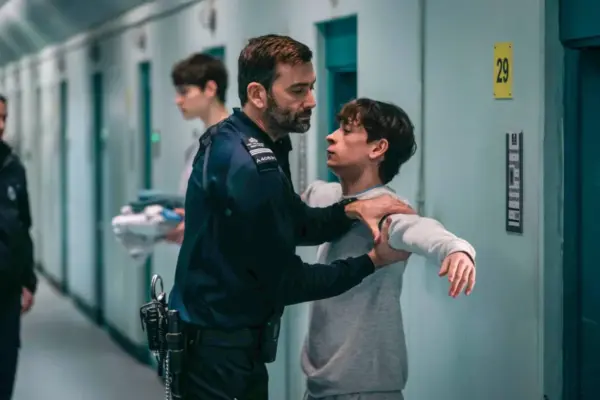
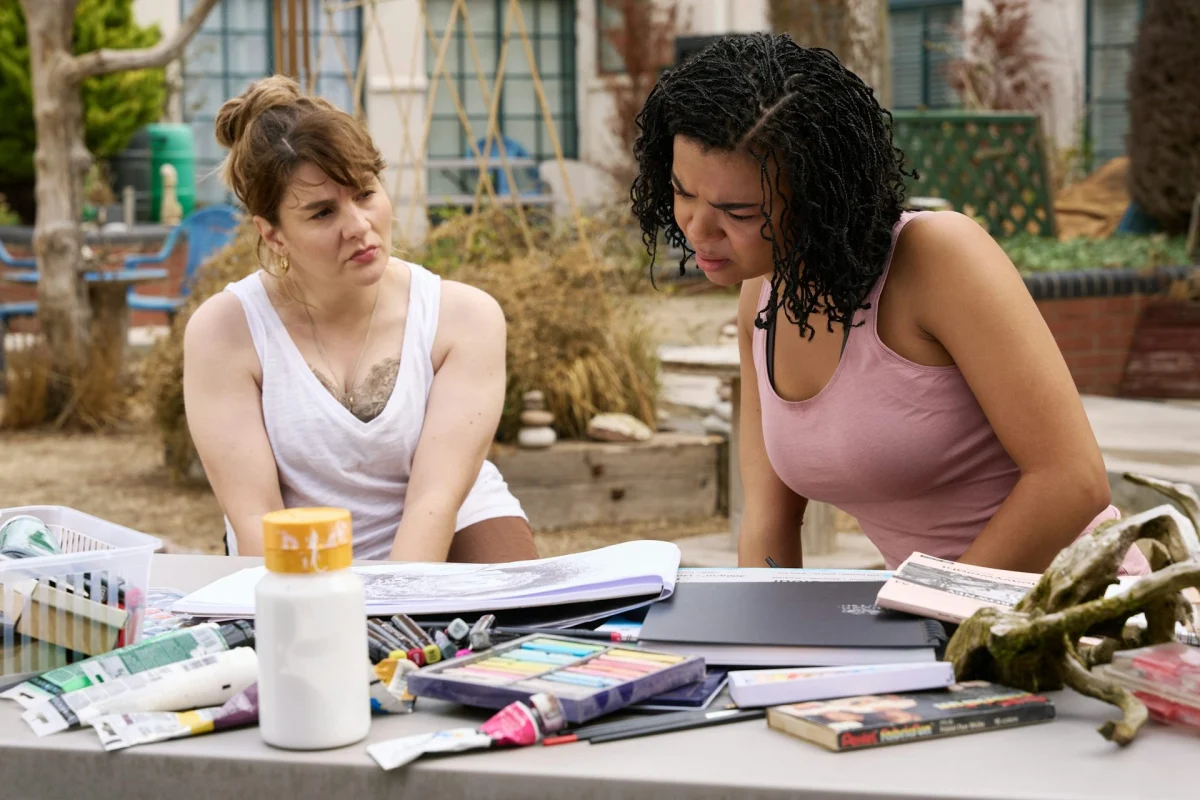
At the center of the story is Dr. Gabrielle Fox (portrayed by Ruth Madeley), a psychologist who returns to clinical practice at an adolescent internment unit two years after a catastrophic accident that claimed her husband’s life and left her paralyzed from the waist down. Fox is assigned to evaluate 16-year-old Bethany (India Amarteifio), a teenager accused of the brutal matricide of her mother using a screwdriver. Found drenched in blood at the crime scene, Bethany vehemently denies the murder, despite having drawn a chilling, prophetic sketch of the fatal attack a week prior.
Far from being a straightforward murder mystery, The Rapture uses this violent domestic tragedy as a prism through which to explore society-wide anxieties. The series tackles the psychological toll of climate collapse, the mechanics of modern political propaganda, the rise of post-Christian spiritual movements designed to neutralize eco-anxiety, and the ethical compromises of local governance. By anchoring its high-stakes geopolitical commentary in raw, deeply flawed human characters, the series forces viewers to confront a discomfiting reality: in an era of cascading ecological and political crises, the personal is invariably, inextricably political.
Detailed Chronology & Narrative Arc
The Return of Dr. Fox and the Weight of the Past
The narrative opens by establishing an atmosphere of environmental and psychological suffocation. Wales is suffocating under a perpetual heatwave, with temperature stamps consistently exceeding 40°C—signaling a direct, ongoing threat to human life. Infrastructure bends under the strain; solar panels blanket rooftops, wind turbines spin lazily over parched landscapes, and giant electricity pylons loom over neat, suburban homes like dystopian monuments.
It is into this stifling environment that Dr. Gabrielle Fox steps back into professional life. Struggling to adapt to her new reality as a wheelchair user, Fox is haunted by profound survivor’s guilt over the accident that killed her husband. Her internal vulnerabilities make her an intensely compelling protagonist, but also a dangerously fragile one. Driven by a relentless need for intellectual stimulation and perhaps seeking a distraction from her own grief, Fox accepts the high-profile case of Bethany.
The Crime, the Cult, and the Climate Front
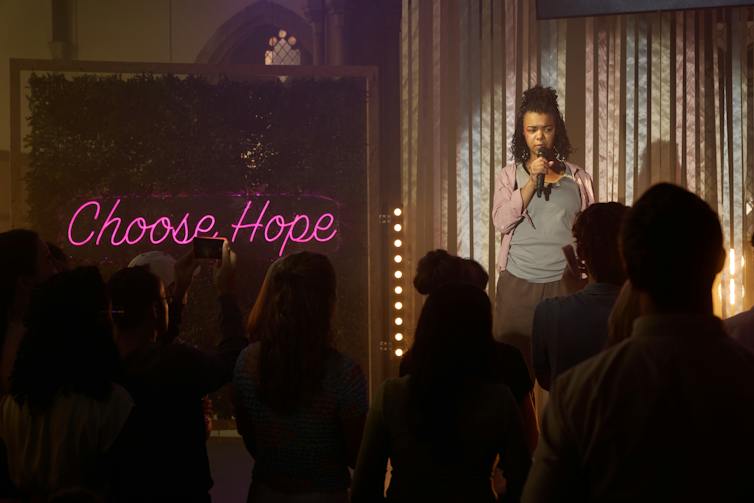
Bethany is no ordinary patient. She is the daughter of the founders of "The Faith Way," a immensely successful, tech-savvy spiritual movement. The movement’s omnipresent slogan, "Choose Hope," floods social media algorithms, serving as a powerful ideological counterweight to the radical warnings issued by the "Climate Front"—an eco-activist organization staging aggressive street protests and legal challenges against fossil fuel extraction.
Bethany stands accused of plunging a screwdriver into her mother’s eyes and chest. Yet, her clinical presentation complicates the state’s narrative. Fox discovers that a week before the murder, Bethany sketched the exact sequence of the crime with uncanny precision. This introduces a volatile supernatural or visionary element into the clinical setting, dividing viewers and driving Fox down a dangerous rabbit hole of investigation.
As Fox digs deeper, she crosses numerous professional boundaries, driven by an impulsive streak and a desperate desire for clarity. She attends public speeches by local MP Caroline Wren, monitors clandestine video posts from the Climate Front, and uncovers disturbing links between corporate interests, political opportunism, and spiritual manipulation.
Power Plays and the Erosion of Truth
The central mystery deepens as political forces mobilize against the Climate Front. Parliament prepares to vote on proscribing the eco-activist group as a terrorist organization. The activists themselves—falsely accused of violent extremism—suspect they are victims of systematic state infiltration designed to delegitimize their message in the public eye.

The narrative reveals that the local windfarm project championed by regional leaders is little more than corporate greenwashing. The energy conglomerate behind the renewable facade is simultaneously lobbying for permits to open aggressive new oil drilling operations in the North Sea. Meanwhile, local MP Caroline Wren rationalizes these fossil fuel extensions through the lens of energy security and regional job creation, leveraging her own family’s painful history of deindustrialization following the closure of local coal mines.
When Fox ultimately uncovers evidence suggesting Bethany possesses genuine visionary capacities, the psychological thriller pivots toward a broader metaphor. Just as Fox must reconcile with the grief of her past, Bethany must shoulder the immense psychological burden of an eco-apocalyptic future she did nothing to create. By the final episodes, the series unmasks Bethany’s visions not as madness, but as a visceral manifestation of climate anxiety and parental repression—cementing her status not as a murderer, but as a tragic prophet demanding truth and accountability.
Supporting Context & Metrics: The Intersection of Fiction and Current Affairs
While The Rapture employs high-drama elements—such as alleged matricide, prophetic visions, and shadowy cults—its underlying themes mirror the real-world psychological and political complexities of the 21st-century climate crisis.
Societal Resilience and Cognitive Biases
Psychological research consistently demonstrates that human brains are not naturally wired to process overwhelming, systemic complexity on a global scale. When confronted with abstract figures regarding rising carbon ppm, melting ice caps, or shifting ocean currents, individuals frequently experience cognitive fatigue, fatalism, or denial.
Media artifacts like The Rapture bypass this cognitive resistance by translating macro-level systemic issues into micro-level human dramas. By focusing on interpersonal conflict, grief, generational betrayal, and corporate greed, the series makes abstract climate anxiety immediately relatable. It leverages common human experiences and shared values to bridge the gap between scientific consensus and public engagement.
The Rise of Post-Christian Spiritual Enterprise
The fictional "Faith Way" movement represents a sophisticated sociological phenomenon: the rise of post-Christian spiritual enterprises that capitalize on collective anxiety. In an age marked by economic precarity and ecological dread, traditional institutions often struggle to provide immediate comfort. Movements like The Faith Way step into this vacuum, weaponizing catchy slogans like "Choose Hope" to soothe public panic while intentionally depoliticizing systemic crises. By framing climate anxiety as a spiritual failure rather than a political reality, these organizations effectively neutralize radical activism and channel public energy into safe, conformist channels managed through algorithmic clickbait.
The Socioeconomic Dilemma of Transition
The character of MP Caroline Wren highlights a genuine, highly debated dilemma in contemporary transition economics: the tension between rapid decarbonization and regional economic survival. Communities historically reliant on heavy industry—such as coal mining regions in Wales and northern England—often view aggressive environmental policies as an existential threat to their livelihoods. When politicians justify continued fossil fuel extraction or the construction of high-impact infrastructure (such as data centers near protected natural areas) under the banner of job creation and local regeneration, they tap into very real, legitimate working-class fears. The challenge for modern policymakers remains reconciling green-transition strategies with the immediate economic security of vulnerable populations.
Official Statements & Industry Reception
The BBC’s adaptation of The Rapture has sparked significant debate across cultural and environmental spheres, drawing commentary from television critics, psychologists, and environmental sociologists alike.
Speaking on the challenges of adapting Liz Jensen’s complex text for television, executive producers emphasized the necessity of grounding speculative elements in gritty realism:
"We wanted to ensure that the supernatural or visionary elements felt earned within the psychological framework of the characters. This isn’t just about a murder in a Welsh town; it’s about how systemic societal pressures—climate dread, political manipulation, and corporate greenwashing—fracture the minds of the most vulnerable among us."
Environmental psychologists have similarly praised the series for its nuanced depiction of "eco-grief" and climate anxiety among adolescents. Dr. Aris Thorne, a researcher specializing in ecological psychology, noted:
"The media often caricatures young climate activists as hysterical or overly simplistic. The Rapture—despite its thriller trappings—captures the genuine weight of generational injustice. Bethany’s struggles mirror the real psychological trauma reported by teenagers facing an unstable planetary future while adults bicker over economic expediency."
Meanwhile, political commentators have drawn parallels between the fictional parliamentary debate over proscribing the "Climate Front" and real-world legislative crackdowns on peaceful civil disobedience by environmental groups in the United Kingdom and Europe. The debate underscores a growing friction between democratic rights to protest and the state’s protection of corporate energy interests.
Future Outlook: Implications for Climate Storytelling and Public Engagement
As global temperatures continue to break historical records and extreme weather events become normalized, cultural production is undergoing a profound shift. The traditional boundaries separating science fiction, political drama, and contemporary realism are rapidly dissolving.
The Rapture serves as a signpost for the future of narrative media. As audiences become increasingly fatigued by dystopian escapism that offers no pathway to agency, storytelling is moving toward narratives that emphasize shared responsibility, accountability, and the reclamation of personal power.
Key Takeaways for the Future of Eco-Media:
- The Personalization of Systemic Crises: Future narratives must continue to bridge the gap between global environmental metrics and individual human emotion, making climate change legible through the lens of family dynamics, mental health, and community survival.
- Exposing Greenwashing and Institutional Complicity: As corporate PR machines become more sophisticated, cultural critiques must expose the nuanced mechanisms—such as weaponized spirituality and false energy transitions—that pacify public resistance.
- Fostering Agency Over Despair: Effective storytelling must move beyond doomsaying. By depicting characters who ultimately demand truth and justice despite overwhelming odds, media can inspire audiences to channel their eco-anxiety into constructive civic engagement.
Ultimately, The Rapture demonstrates that the most potent thrillers of the 21st century will not rely on monsters hiding in the dark, but on the very real, systemic forces reshaping our planet—and the resilient human minds attempting to navigate them.