Executive Overview
Period dramas occupy a unique space in contemporary cinema, bridging the chasm between historical recreation and modern emotional resonance. Few authors lend themselves to this delicate balancing act quite as effectively as Jane Austen. With her sharp wit, acute social commentary, and deeply human character arcs, Austen’s universe remains a favorite playground for filmmakers seeking to unpack the timeless complexities of class, romance, and familial duty.
Yet, translating the late-18th and early-19th centuries to the modern screen is an exercise fraught with tension. Filmmakers continually grapple with a fundamental question: Should the production prioritize absolute historical fidelity to alienate modern viewers, or should it lean into contemporary sensibilities to forge an immediate, visceral connection with the audience?
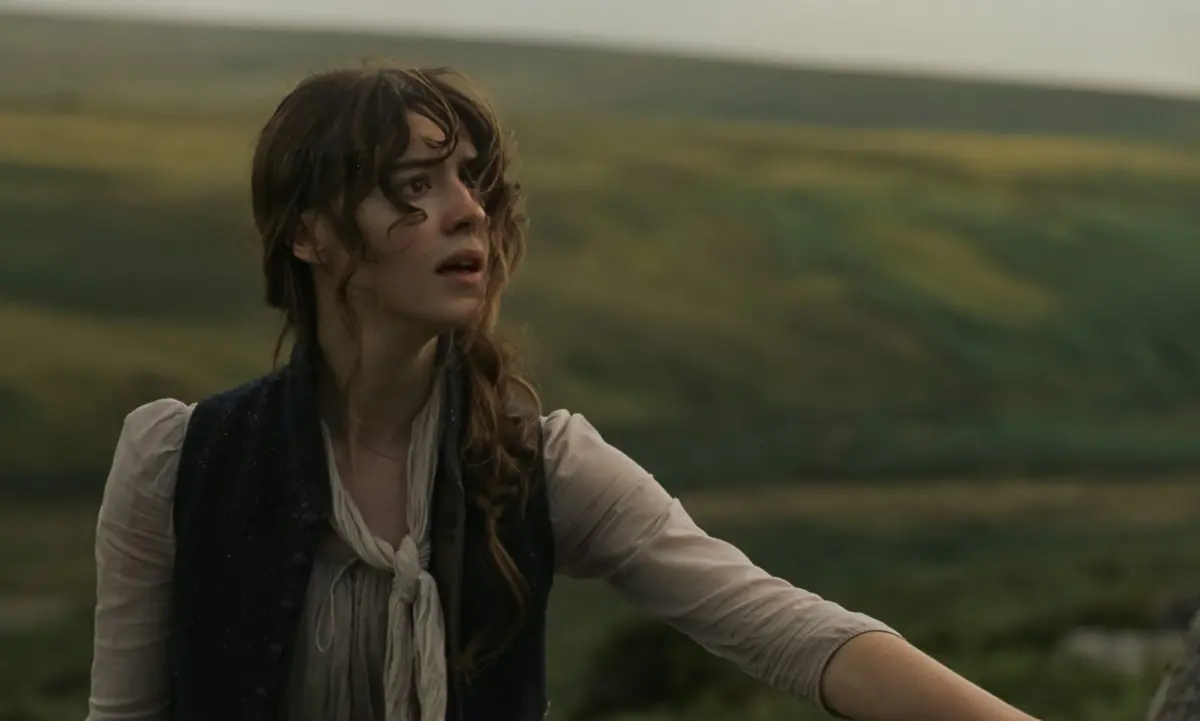
Enter Georgia Oakley’s new cinematic adaptation of Sense and Sensibility. Visually, the film is an undeniable triumph. Its expansive pastoral landscapes, moody seascapes, and meticulously textured interiors create a sensory wonderland that instantly transports viewers into the heart of the Georgian era. The production design conjures a breathtaking world for sisters Elinor (Daisy Edgar-Jones) and Marianne Dashwood (Esmé Creed-Miles) as they navigate grief, financial precarity, and the turbulent waters of early romance.
However, a closer examination of the film’s cultural mechanics reveals a significant departure from historical reality—one that ripples through the very core of Austen’s social critique. By prioritizing modern emotional expression over period-accurate social codes, particularly in the film’s styling and choreography, Oakley sacrifices a critical layer of Austen’s world-building.
In Georgian and Regency society, the body was not merely a vessel for private emotion; it was a public billboard displaying status, civility, and moral worth. Hair was pinned, posture was regulated, and dance was a calculated strategic arena where fortunes, reputations, and matches were made or broken. When Oakley substitutes these rigid historical structures with avant-garde choreography and modern emotional catharsis, the illusion cracks. The result is a visually stunning film that occasionally stumbles over its own modern footwear, pulling the discerning viewer out of the candlelit parlors of the 1790s and dropping them squarely back into the 21st century.
Detailed Chronology & Production Analysis
To understand where Oakley’s adaptation diverges from historical norms, it is helpful to trace how the production constructs its visual and kinetic language, and where those choices clash with the societal realities of Austen’s writing.
Phase One: Establishing the Pastoral Illusion
From its opening sequences, the adaptation invests heavily in aesthetic immersion. The pond scene at Norland House Park—complete with stately, moss-grown stone steps and wild purple flora—establishes a tone of romantic melancholy. Cinematography, lighting, and costume design work in tandem to evoke the texture of the Georgian gentry. Every fabric choice, from heavy wools to delicate muslins, speaks volumes about the financial realities and social standing of the Dashwood family.
However, even in these early visual cues, cracks in historical accuracy begin to form. Consider the hair styling of the two sisters. Elinor sports soft, controlled waves, while Marianne’s hair is famously unkempt and stringy. While these choices efficiently signal the sisters’ contrasting temperaments—Elinor’s prudence versus Marianne’s wild romanticism—they ignore the absolute rigidity of Georgian grooming standards. For women of the gentry, hair was a physical manifestation of politeness. Loose, unpinned locks were largely relegated to the private sphere, illness, or societal abandonment. Even in moments of profound grief, social expectations dictated that appearance remain orderly to signify self-control and civility.
Phase Two: The First Dance Sequence and the "Hop"
The tension between modern creative license and historical precision reaches a fever pitch during the film’s dance sequences. Dance was not a casual recreational activity in the Georgian era; it was the primary public theater of courtship and social navigation.
In the film, the characters engage in a "hop"—a term that carries significant historical baggage. In Austen’s original 1811 novel, formal "hops" as depicted in the film are largely absent, substituted instead by structured balls. When Sir John Middleton (Turlough Convery) mentions to Marianne that Mr. Willoughby (Frank Dillane) danced at "a little hop in the park" from eight o’clock until four in the morning without sitting down, it is presented as a charming testament to Willoughby’s passion. Historically, however, this should have served as a blaring red flag for Marianne and her family.
During the late 18th century, formal country dances and assemblies were the domain of the refined upper and middling ranks. Informal "hops," by contrast, were frequently associated with the "meaner sorts." The physical action of hopping directly opposed the core tenets of Georgian decorum, which valued gliding, controlled footwork, restrained posture, and graceful spatial awareness. By blending traditional country dance steps with jarring modern choreography, the film’s first dance sequence sacrifices cultural context for kinetic exuberance.
Phase Three: The London Ballroom Climax
The apex of this choreographic divergence occurs in the London ballroom scene, where Elinor finds herself dancing with Edward Ferrars (George MacKay). In both Austen’s text and historical reality, the formal ball was the absolute epitome of embodied politeness.
In a Georgian ballroom, every movement was heavily coded. Serpentine lines, precise footwork, and measured eye contact signaled not only a partner’s competence on the dance floor but their suitability as a life partner. It was a physical conversation governed by strict etiquette, where losing control of one’s body equated to losing control of one’s social standing.
Yet, Oakley’s adaptation—choreographed by avant-garde movement director Holly Blakey—throws this playbook out the window. Rather than executing the regulated, geometric formations of the period, the characters engage in exaggerated sweeping arms, dramatic lifts, and over-arched backbends. These movements belong firmly in the realm of modern musical theater.
While Blakey defended her approach by stating that the choreography needed to feel like "an expression of how the girls were feeling," this psychological indulgence fundamentally misunderstands the period. To a Georgian audience, expressing raw, unbridled internal emotion through physical contortion in public would have been viewed not as romantic liberation, but as a catastrophic social failure.
Supporting Context & Metrics: The Sociological Weight of Georgian Dance
To fully grasp why these choreographic choices matter, one must examine the sociological weight attached to movement and posture in late-18th-century Britain.
The Curriculum of Courtship
In the Georgian era, dance instruction was a mandatory part of a polite education, beginning in early childhood. Boys and girls spent countless hours mastering:
- Posture: Upright, unyielding spine alignment indicating moral uprightness.
- Formations: Strict adherence to geometric patterns that mirrored the ordered nature of society itself.
- Footwork: Precise, understated steps that demonstrated physical self-mastery.
- Eye Contact: Controlled, meaningful glances that operated within the strict boundaries of modesty and flirtation.
A lack of bodily comportment did not merely look awkward; it signified ineptitude, meekness, and social inferiority.
Comparative Adaptation Analysis
Jane Austen adaptations have long wrestled with how to portray this physical culture. The table below highlights how various filmmakers have approached dance and physical decorum across different cinematic and television interpretations:
| Adaptation / Project | Primary Approach to Movement & Dance | Historical Accuracy vs. Artistic License | Impact on Audience Immersion |
|---|---|---|---|
| Emma (2020) | Intimate, restrained; characters lock eyes and fingers within traditional country dance boundaries. | High; respects Regency-era spatial and physical constraints. | Enhances romantic tension without breaking period authenticity. |
| The Other Bennet Sister (TV) | Comedic realism; characters (like Mary Bennet) visibly count their steps and struggle with formations. | High; highlights the nervous anxiety of learning mandatory social skills. | Grounds the viewer in the authentic awkwardness of the period. |
| Bridgerton (Recent Seasons) | Flashy, anachronistic pop-cover balls with hybrid Regency-meets-contemporary choreography. | Low; prioritizes modern spectacle and emotional bombast. | Deliberately modern; completely abandons historical pretense for fantasy. |
| Sense and Sensibility (Oakley, 2024) | Avant-garde, expressive movement featuring lifts, dramatic backbends, and contemporary flows. | Moderate to Low; uses modern choreography to externalize internal grief and passion. | Creates a jarring juxtaposition that pulls viewers out of the 1790s aesthetic. |
As this comparison illustrates, while contemporary shows like Bridgerton lean fully into historical fantasy, adaptations that strive for aesthetic realism—such as Oakley’s Sense and Sensibility—suffer a unique friction when modern movement infiltrates an otherwise meticulously crafted 18th-century environment.
Official Statements & Creative Rationales
The artistic divide over movement in period pieces has sparked significant discussion among creators, historians, and choreographers.
Defending the avant-garde approach, choreographer Holly Blakey articulated her vision in promotional features for the film, explaining the necessity of modern expression:
"It was vital that whatever we were doing inside the choreography […] did feel like an expression of how the girls were feeling."
This philosophy aligns with a modern cinematic trend that prioritizes emotional truth over historical fact. In contemporary storytelling, characters must physically manifest their internal psychic states to engage modern audiences who are accustomed to psychological realism in media.
Conversely, cultural historians and Austen scholars argue that this approach strips away the very pressures that make Austen’s heroines so compelling. In Austen’s world, emotional repression is the drama. The agony of Elinor Dashwood lying silent while hiding her heartbreak, or Marianne’s grief being constrained by the rigid walls of polite society, derives its power precisely from the impossibility of physical or emotional outbursts.
By allowing the characters to burst through these constraints via modern dance and unpinned hair, the adaptation inadvertently robs the narrative of its primary source of tension: the crushing weight of societal expectation.
Future Outlook: The Evolution of the Period Drama
As we look toward the future of period filmmaking, Georgia Oakley’s Sense and Sensibility serves as a fascinating case study in the ongoing evolution of the genre.
The success of visually breathtaking, stylistically hybridized period pieces proves that audiences are hungry for fresh interpretations of classic texts. Younger generations, in particular, may find rigid historical accuracy dry or exclusionary, preferring the emotional immediacy and kinetic energy of modern movement applied to historical canvases.
However, the critique leveled against Oakley’s choreography highlights a vital lesson for future directors: immersion is a fragile ecosystem. When a film invests millions of dollars and countless hours into recreating the light, texture, sound, and atmosphere of the 1790s, every anachronism acts as a fracture in the looking glass.
Future adaptations of Austen and her contemporaries will undoubtedly continue to walk this tightrope. The challenge moving forward will not be choosing between history and art, but finding ways to let historical forms do the emotional heavy lifting. After all, in the hands of a master like Jane Austen, the strictest rules of etiquette and the most rigid steps of a country dance were never limitations on human emotion—they were the very stage upon which true passion played out.