Executive Overview
For decades, the global ecological narrative has been dominated by the cold calculus of empirical data. Scientists track carbon dioxide parts per million, map accelerating deforestation rates, and log catastrophic biodiversity loss with clinical precision. Yet, numbers and graphs alone have consistently failed to bridge the profound psychological gap between humanity and the unfolding planetary crisis. True awareness—and the urgent behavioral shifts required to avert total ecological collapse—hinges on something far more fundamental: a revolution in language.
Enter Phoebe Giannisi, a towering figure in contemporary literature whose work bridges the ancient and the modern, the human and the non-human. Trained as an architect and steeped in classical studies, Giannisi operates as a poet, classicist, performance artist, and environmentalist. Through a radical body of eco-poetry, she dissolves the artificial boundaries that separate human civilization from the living world. By anchoring her environmental messaging in ancient Greek mythology, modern genetics, site-specific performances, and rich acoustic field recordings, Giannisi offers a compelling masterclass in what it means to coexist on a vulnerable, finite earth.
Her work rejects the long-held delusion that human beings stand apart from nature as benevolent stewards or omnipotent masters. Instead, Giannisi insists that we are composite, tangled entities whose survival is fundamentally bound to the health of the landscapes we inhabit. As her upcoming performances and translated works—including Cicada (2022), Chimera (2024), and Goatsong (2025)—continue to gain international acclaim, her artistic framework offers a vital new blueprint for navigating the climate era.
Detailed Chronology: The Evolution of Giannisi’s Environmental Poetics
The trajectory of Phoebe Giannisi’s work is marked by a deep, lifelong engagement with landscape, materiality, and the shifting relationship between human history and ecological reality.
2012–2013: The Genesis of Performative Ecology
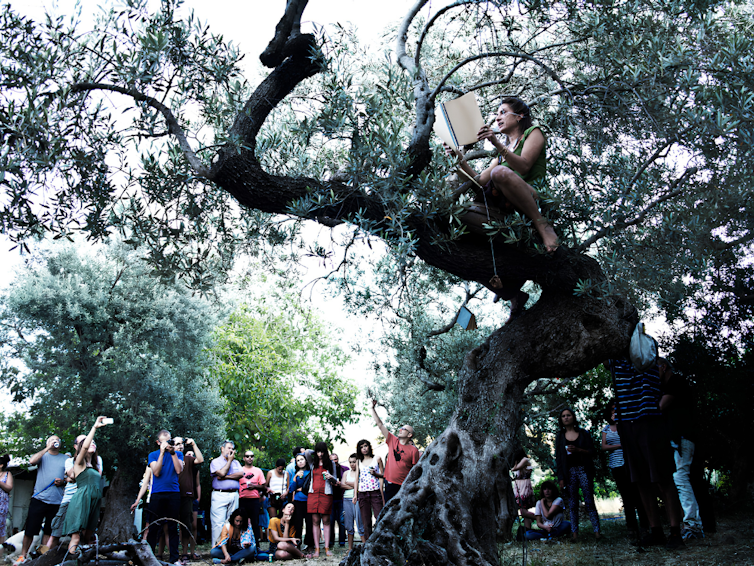
Giannisi’s early site-specific interventions on mainland Greece set the foundation for her later poetic explorations. Utilizing her own body as a primary medium for environmental memory, she began staging performances that deliberately subverted the traditional, dominant human gaze. In iconic works from this era, she would cover her head with woven baskets or traditional cloths, intentionally blinding herself to open up a vulnerable, sensory-driven relationship with her surroundings. These early experiments signaled a departure from page-bound poetry into a living, breathing acoustic and physical geography.
2016–2017: Aigis II and Architectural Parchment
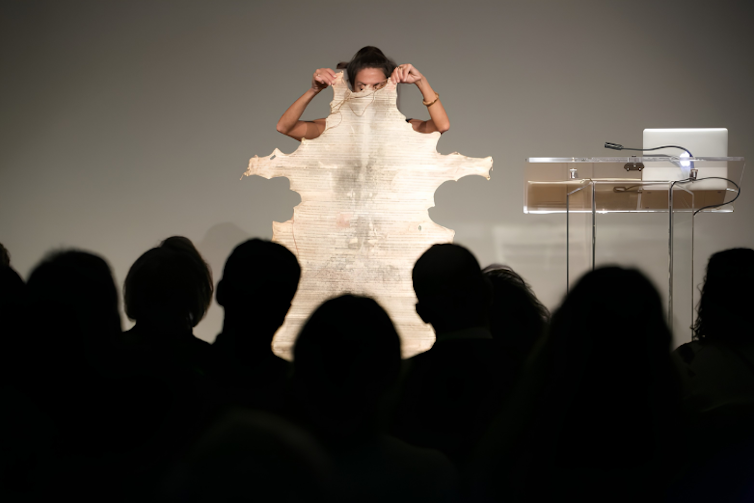
In 2016, Giannisi brought her immersive performance style to international audiences, notably at the Onassis Antigone Festival in New York, where she wielded her poetic aigis. This culminated in her 2017 installation Aigis II at the Panourgias Museum in Amfissa, Greece. Here, Giannisi pushed the boundaries of book arts and material poetry by inscribing her verses onto semitransparent goatskin parchment. On one side of the hide, she meticulously traced traditional transhumance migration routes; on the other, she etched poetry. Visitors handling the parchment experienced a tactile collision where the written word and the geography of the earth ghosted one another through animal skin.
2022: Cicada and Non-Human Testimony
With the publication of her second poetry collection, Cicada (translated into English in 2022), Giannisi shifted her focus toward direct non-human subject matter. The protagonist of the collection is the cicada itself. Giannisi layers classical texts by philosophers and poets like Plato and Archilochus, alongside haikus from Japanese master Bashō, directly against field observations of the insect’s life cycle and its droning, hypnotic mating calls. In Giannisi’s hands, the cicada’s song ceases to be mere ambient noise and transforms into an authoritative environmental testimony—a non-human language demanding immediate human attention.
2023–2024: Harvard Residency and the Release of Chimera
In October 2023, Giannisi brought her spatial approach to poetry to the Center of Hellenic Studies at Harvard University, staging readings that demonstrated how language can be moved off the page and into a shared physical architectural space.
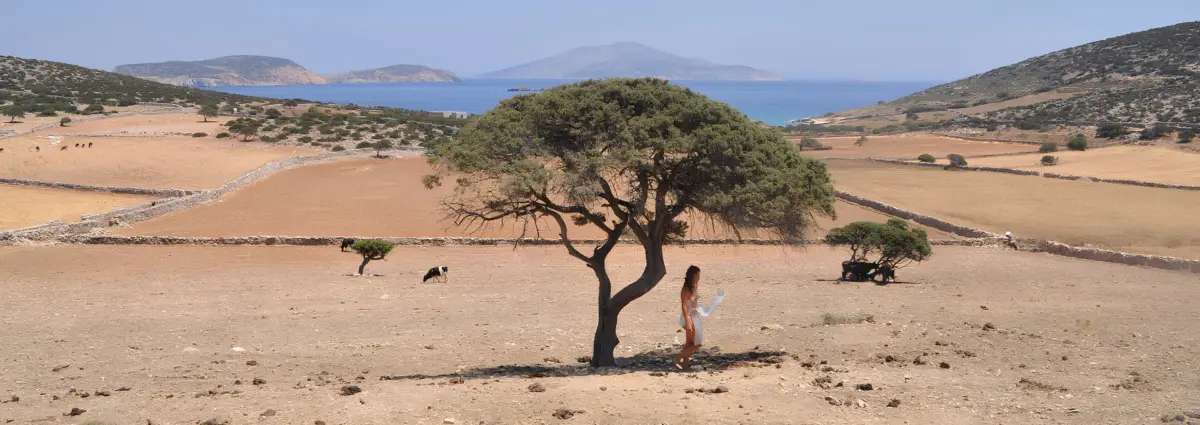
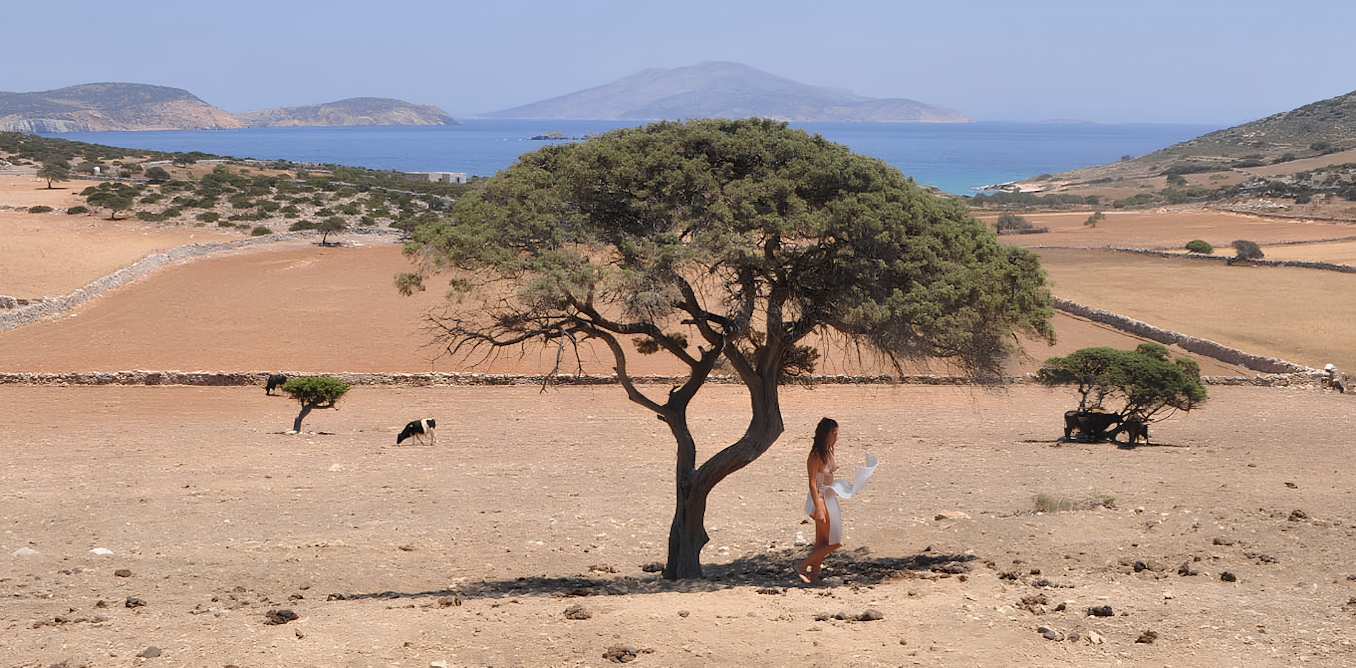
This momentum culminated in the 2024 release of her third major collection, Chimera. In this work, Giannisi deepens her focus by tracking the ancient traditions of northern Greece’s Vlach herding communities—nomadic pastoralists who seasonally drive their livestock between mountain peaks and valley pastures. Eschewing romanticized pastoral tropes, Giannisi constructs a rigorous archive of shared survival, weaving together state records, regional oral histories, and her own field recordings of shepherd cries, herd bellows, passing motorcycles, and the grinding crunch of modern cement mixers.
2025–Present: Goatsong and Global Academic Engagement
The publication of Goatsong in 2025 cemented Giannisi’s reputation as a pioneer of polyphonic eco-poetry. Abandoning the solitary, ego-driven narrator, her poems operate as fully functioning ecosystems where human and non-human voices hold absolute equal weight. This philosophy continues to travel globally, with forthcoming academic engagements at institutions such as the University of Bristol, where Giannisi and her translator Brian Sneeden continue to test the resonance of classical myth within contemporary architectural and ecological spaces.
Supporting Context & Metrics: The Science of the Chimera
To fully grasp the revolutionary nature of Giannisi’s poetry, one must examine the scientific and cultural underpinnings of her central motif: the chimera.
In classical Greek mythology, the Chimera was a terrifying, fire-breathing monster composed of disparate animal parts—the head of a lion, the body of a goat, and the tail of a serpent. For centuries, Western culture has used the term to denote an illusion, an impossible abstraction, or a grotesque aberration. Giannisi, however, radically flips this definition, reframing the chimera not as a monstrous myth, but as an undeniable biological and ethical reality.
+-----------------------------------------------------------------+
|                   THE SPECTRUM OF CHIMERISM                     |
+---------------------------------+-------------------------------+
| CLASSICAL MYTHOLOGY             | MODERN GENETICS               |
| • Fire-breathing beast          | • Microchimerism              |
| • Part lion, goat, serpent      | • Cells living permanently    |
| • Symbol of wild danger         |   inside another organism     |
+---------------------------------+-------------------------------+
|                                |                 /             |
|                                |                /              |
|                 v               v               v               |
|          PHOEBE GIANNISI’S ECO-POETRY & PHILOSOPHY              |
|  • Dissolves borders between human and non-human                |
|  • Rejects human exceptionalism and mastery                     |
|  • Establishes a "multiple body" of ecological entanglement     |
+-----------------------------------------------------------------+
In Chimera (2024), Giannisi draws a direct, unbroken line from Homer’s legendary descriptions to the cutting-edge scientific phenomenon of microchimerism—the proven biological reality wherein cells from one organism live permanently inside the body of another. Humans, her poetry insists, are fundamentally collaborative, multi-species entities. As she writes in Chimera II:
Call me Chimera.
A being composed of
other beings
A being with different genetic codes
incorporated.
Various genes connected
in one body.
Multiple body.
This biological reality carries profound ethical implications. If human beings are physically and ecologically tangled with the world around us, then the traditional Western view of nature as an external resource to be exploited collapses. To pollute a river, clear-cut an ancient forest, or destabilize a marine soundscape is not merely damaging an external asset; it is an act of self-harm—tearing apart our own multi-species body.
Furthermore, Giannisi’s integration of oral histories from Vlach herding communities taps into urgent socio-economic metrics regarding land use and the protection of the "commons." Across southern Europe and the globe, traditional pastoralism and nomadic land management are being systematically dismantled by industrial expansion, real estate development, and unchecked economic profit. Giannisi’s acoustic and textual archives serve as a bulwark against this erasure, bearing witness to the devastating loss of biodiversity driven by anthropogenic climate change.
Official Statements and Critical Perspectives
The cross-disciplinary resonance of Giannisi’s work has drawn praise from leading classicists, translators, and literary critics worldwide.
Hosting Giannisi at Harvard University’s Center of Hellenic Studies, academic hosts noted the rare spatial precision she brings to the literary arts. Observers remarked that watching Giannisi perform is akin to witnessing architecture in motion—words do not merely sit passively on a printed page; they occupy spatial dimensions, reverberating off stone walls, skin parchment, and human eardrums alike.
Brian Sneeden, Giannisi’s primary English translator, has emphasized the immense linguistic challenge and reward of rendering her polyphonic texts into English. Sneeden notes that Giannisi’s verse demands a translator who can seamlessly navigate the registers of ancient Greek lyric poetry, modern ecological science, and colloquial regional Greek dialects without losing the raw, visceral immediacy of the original compositions.
Literary historians have increasingly grouped Giannisi with boundary-crossing international writers like the late German poet Barbara Köhler and 2026 Nobel Prize winner Anne Carson. Like Carson, Giannisi relentlessly investigates the elasticity of language, discovering entirely new possibilities within classical frameworks to address urgent contemporary crises. By collapsing the historic artificial divisions between rigorous scholarship, mythic storytelling, and avant-garde creativity, Giannisi turns the literary arts into an indispensable toolkit for survival.
Future Outlook: Imagination as an Ecological Imperative
As humanity plunges deeper into the uncertainties of the 21st-century ecological crisis, the limitations of purely technocratic and quantitative responses become increasingly stark. While carbon capture technologies, policy frameworks, and scientific data collection are undeniably vital, they remain insufficient without a simultaneous transformation of the human imagination.
Phoebe Giannisi’s body of work—expanding from the performative acoustic spaces of mainland Greece to international academic stages like the University of Bristol and Harvard—provides a vital roadmap for this cultural evolution. Her poetry teaches us that surviving the climate crisis requires abandoning the delusion of human exceptionalism.
Looking forward, the integration of eco-poetry into mainstream environmental discourse offers a path toward a renewed planetary ethics. By embracing our identity as chimeras—as beings composed of other beings, inextricably bound to the cicada’s drone, the shepherd’s cry, and the health of the soil—humanity may finally cultivate a vocabulary powerful enough to make us feel the reality of our changing planet. In this shared, multi-species web, every voice, human and non-human alike, holds the power to breathe life into a sustainable future.