In the sprawling, high-stakes ecosystem of the international contemporary art market, the annual Frieze London fair often risks feeling disconnected from the living, breathing communities that cradle its host city. However, a bold new installation entitled Endless Frieze—currently on display at the Cris Contini Contemporary Gallery through the end of October—seeks to radically bridge that divide. Conceived by renowned contemporary street artist Endless, the interactive exhibition serves as a vibrant visual love letter to west London, thrusting the neighborhood’s unsung heroes, historical pillars, and cultural architects straight out of the community and onto the walls of the global art world.
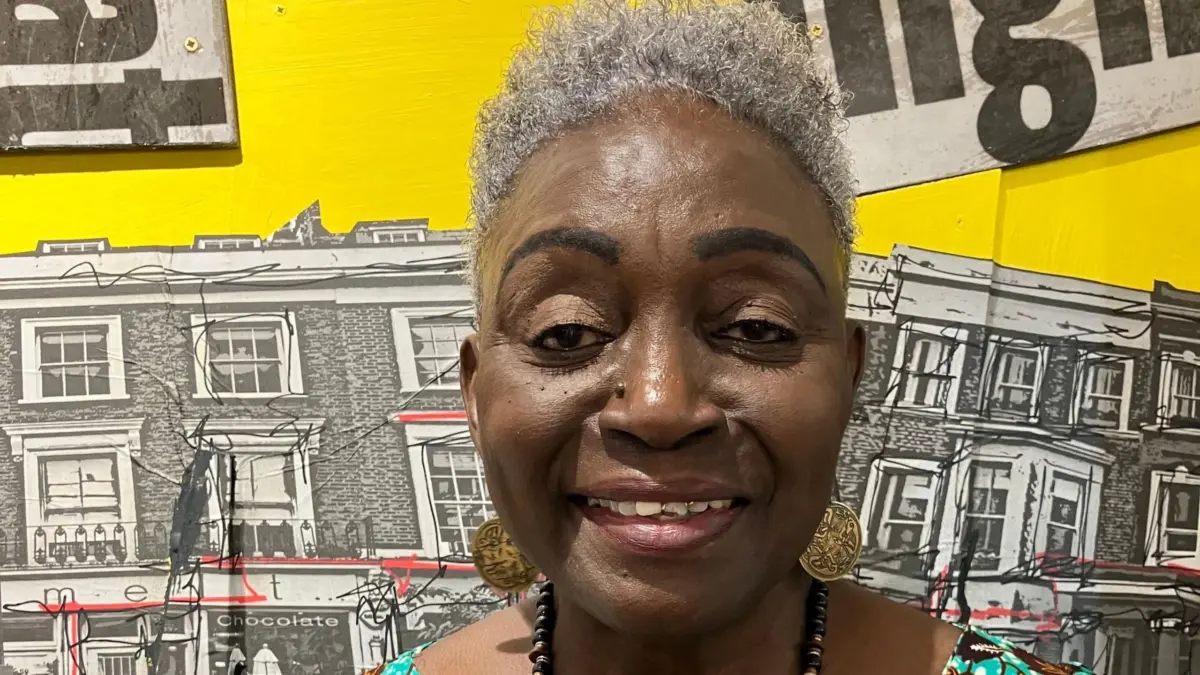
The installation is a dynamic, ever-evolving collage that layers classic architectural renderings of Notting Hill streetscapes with real-time portraits of local luminaries. Among those immortalized in the piece are a fourth-generation Portobello Road market trader whose family roots stretch back a century, a foundational stalwart of the world-famous Notting Hill Carnival whose Trinidadian heritage helped forge the event, and a charismatic neighborhood style icon widely celebrated as "Notting Hill’s best dressed man."
By capturing portraits during a live opening event on Friday and integrating them directly into the physical composition on the gallery walls, Endless has intentionally courted creative risk. The resulting exhibition is not merely a static display of fine art, but a living archive of community resilience, generational change, and cultural identity. As London grapples with rapid gentrification, the commercialization of its historic neighborhoods, and the erosion of communal spaces, Endless Frieze arrives as a timely, poignant interrogation of who truly owns the narrative of a place. This comprehensive report explores the genesis of the installation, the rich personal histories of the local legends featured within it, the broader socioeconomic shifts transforming Notting Hill, and the profound implications of bringing grassroots culture into the elite echelons of the international art circuit.
Detailed Chronology and Genesis of the Project
The conceptual foundation of Endless Frieze did not materialize overnight in the sterile vacuum of a studio; rather, it was forged through years of observation, neighborhood integration, and an ongoing dialogue with the urban landscape of west London. Endless, an artist celebrated for his incisive critiques of consumerism, fashion, and modern celebrity culture through striking street art and mixed-media canvases, long harbored a desire to turn his lens toward the intimate fabric of a specific community.
Planning for the project accelerated in the months leading up to the global art world’s annual convergence for Frieze London. Eschewing the traditional method of preparing a finalized, untouchable collection of works months in advance, Endless conceptualized an installation that would mirror the unpredictable, fluid nature of neighborhood life itself. The centerpiece of the project required a live, interactive element. On Friday, a pop-up photographic and compositional studio was established, functioning as both an open invitation and a creative crucible.
Invited guests, local icons, and passersby chosen specifically for their deep-rooted contributions to Notting Hill’s cultural identity were photographed on-site. In a break from traditional gallery pacing, these portraits were processed and physically applied to the gallery walls in real-time, integrating seamlessly into a sprawling backdrop of black-and-white and color-splashed architectural illustrations depicting iconic west London buildings, local horses, and familiar street scenes.
According to the artist, this methodology was fraught with high-stakes creative uncertainty. By choosing to build the collage live, Endless relinquished a degree of traditional artistic control. As the exhibition took shape before the eyes of early visitors and media, every paste, placement, and pairing became a permanent record of a split-second artistic decision—a testament to the vibrant, chaotic energy of Portobello Road and its surrounding avenues.
Supporting Context & Metrics: The Human Tapestry of Notting Hill
To fully appreciate the gravity of Endless Frieze, one must understand the unique historical and socioeconomic trajectory of Notting Hill. Once a patchwork of working-class Victorian terraces, post-war immigration hubs, and affordable enclaves, the neighborhood has undergone a radical transformation over the past several decades. It is within this crucible of change that the subjects of Endless’s artwork operate, serving as living repositories of the area’s multifaceted heritage.
The Greengrocer’s Century: Cheryl Devlin
Among the most poignant stories captured in the exhibition is that of Cheryl Devlin, a lifelong greengrocer whose family lineage on Portobello Market spans more than a hundred years. Devlin’s connection to the market began in early childhood; she has worked on her family’s fruit and vegetable stall since she was just five years old.
"I used to stand beside my mum and dad and sell lemons, five for a shilling," Devlin recalls, reflecting on the harsh economic realities of post-war Britain. "And if you didn’t, you didn’t get your dinner; it was really that tough in the ’50s."
Devlin’s lived experience offers a sobering metric of neighborhood displacement. She notes that in decades past, Portobello Market boasted approximately 350 independent fruit and vegetable traders, anchoring a thriving local food economy. Today, those traditional stalls have largely been squeezed out, displaced by vendors peddling high-end cooked foods, specialized artisanal goods, and tourist-oriented bric-a-brac.
Furthermore, Devlin points to the acute housing crisis that has reshaped west London. Long-term residents, unable to keep pace with soaring property values and skyrocketing rents, have been forced to downsize and relocate away from the community they helped build. What was once a reasonably priced, accessible working-class neighborhood has morphed into one of the most exclusive and expensive postcodes in the United Kingdom.
The Carnival Vanguard: Allyson Williams MBE
No discussion of Notting Hill’s identity is complete without acknowledging its crown jewel: the Notting Hill Carnival. For Allyson Williams MBE, the carnival is not merely an annual August bank holiday street party—it is her life’s work and a profound cultural anchor. Williams, a dedicated board member of Notting Hill Carnival Limited, has been actively involved in the operational and artistic organization of the event since 1975.
In 1980, alongside her husband, she launched Genesis Mask Band, a prominent costume design and production enterprise whose dazzling creations are an unmissable fixture of the carnival procession year after year.
"I have been a seamstress, I’ve been a designer. I’ve been bringing the costumes—the designs of my husband and my daughter—bringing the costumes to life," Williams explains.
Her narrative connects directly to the broader historical currents of British multiculturalism. As a native of Trinidad and Tobago, Williams emphasizes that the carnival is a direct lineage of the Windrush generation—Caribbean pioneers who migrated to post-war Britain and infused the cultural landscape of London with rich traditions of music, dance, visual arts, and community resilience. Through her inclusion in Endless Frieze, Williams ensures that the immigrant roots of Notting Hill remain visible within contemporary high-art spaces.
The Living Icons and Local Observers
The installation also celebrates figures who embody the irrepressible style and independent spirit of the streets. Jama Elmi, widely recognized by locals and affectionately dubbed a "walking art" icon, brings a sartorial vibrancy to the exhibition. Dressed in signature tailored suits and statement accessories, Elmi champions the neighborhood’s sensory richness.
"Notting Hill, it’s vibrant, the energy, the love, it’s absolutely, I wouldn’t live anywhere else but here," Elmi declares.
Similarly, Karl Amata—who works at the legendary Sound Records on All Saints Road—brings a musician’s perspective to the project. While embracing the artistic recognition provided by Endless, Amata strikes a cautionary note regarding the slow erosion of physical communal spaces in the area.
"I hope it continues. We need more things like this to bring the community together," Amata states, pointing to a worrying trend of closures affecting local independent shops and cultural centers where residents once naturally congregated.
Official Statements and Industry Perspectives
The convergence of street art, local portraiture, and high-end gallery exhibition has generated considerable discourse among artists, cultural critics, and fashion authorities alike.
Speaking on his primary motivation for the project, artist Endless emphasized the democratic imperative of his work:
"It’s about the community and bringing them into the art world and into my world… Whenever I make any artwork, I plan it and I have a vision, but then it can go either way. There are elements of risk even when you’re making a painting. So with this, the risk is life, anything could happen… In art we say it’s like a happy accident and that’s when something good happens as well."
Endless noted that by capturing architecture alongside living residents, the installation successfully distills a fleeting "moment in time," transforming transient street energy into a permanent historical record.
Adding her voice to the project’s cultural resonance, iconic British fashion designer Karen Millen—who was also selected for portraiture within the installation—expressed deep gratitude for her inclusion. Millen remarked that she felt "very honoured" to be recognized as part of the west London fabric, observing that Notting Hill remains the undisputed "epicentre of where people come for creation really, so I don’t think that will ever go away."
Gallery representatives at Cris Contini Contemporary have likewise praised the exhibition for pushing the boundaries of what commercial gallery spaces can achieve during major international art fair weeks, shifting the spotlight from speculative asset trading toward grounded, human-centric storytelling.
Future Outlook and Legacy
As Endless Frieze continues its run at the Cris Contini Contemporary Gallery through the final days of October, its broader legacy extends far beyond the physical confines of the exhibition room. The project poses vital questions for urban planners, cultural institutions, and city dwellers across London: How can rapidly gentrifying neighborhoods preserve their authentic cultural DNA? And how can elite art institutions effectively honor the grassroots communities that surround them without engaging in tokenism?
By permanently documenting figures like Cheryl Devlin, Allyson Williams, Jama Elmi, and Karl Amata alongside historic storefronts and bustling market scenes, Endless has engineered a powerful antidote to urban erasure. The installation demonstrates that a neighborhood’s true wealth is not measured solely by property values or luxury boutiques, but by the generational memories, artistic expressions, and unwavering resilience of its people.
Looking ahead, local advocates hope that the success of Endless Frieze will catalyze further initiatives aimed at protecting independent cultural spaces in west London. Ensuring that future generations of greengrocers, musicians, carnival designers, and street artists can afford to live, work, and create in Notting Hill remains the ultimate challenge. For now, however, Endless Frieze stands as a triumphant celebration of survival, style, and community solidarity—ensuring that the true heartbeat of west London echoes loudly within the halls of contemporary art.