Executive Overview
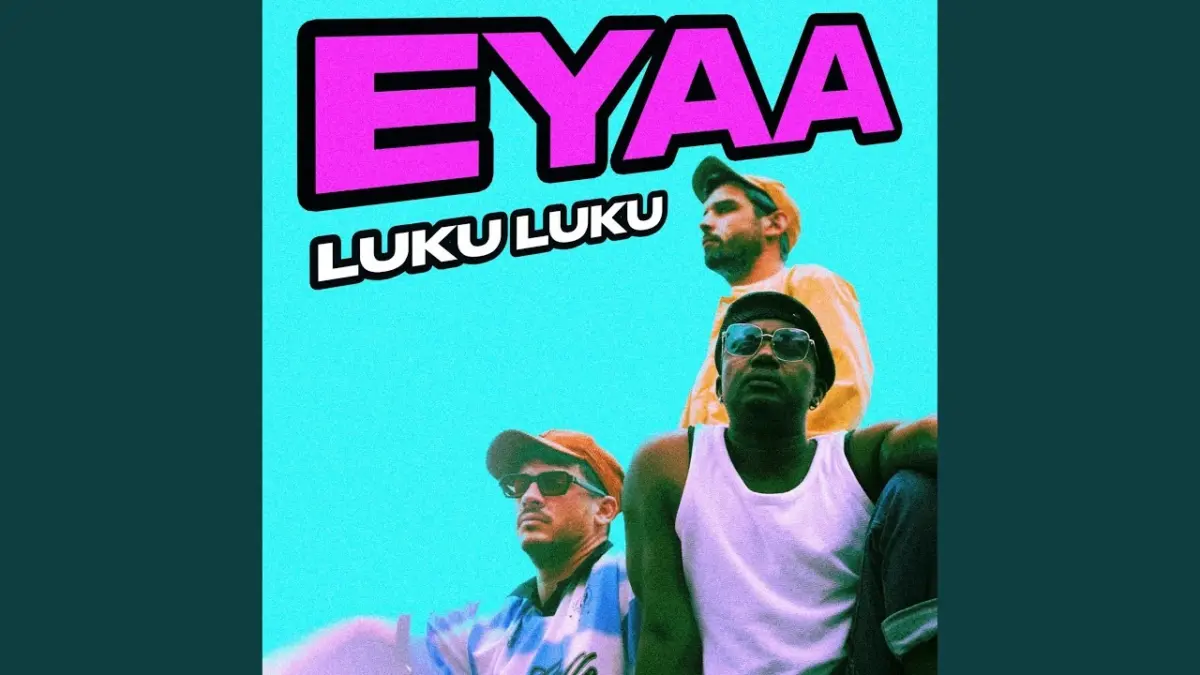
In an era where contemporary global music increasingly defies rigid geographic and stylistic borders, the emerging French-Ghanaian trio EYAA has firmly planted its flag on the international musical landscape. On October 2, the innovative ensemble released their debut single, "Luku Luku," via Sharma Records. The track serves as the explosive vanguard for a planned series of five singles, which will culminate in the band’s highly anticipated debut EP.
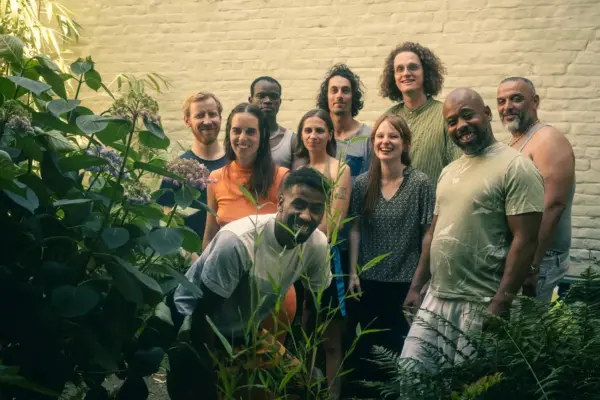
Taking their moniker from a traditional cry of encouragement deeply tied to hypnotic trance states, EYAA bridges the vibrant, sun-drenched rhythms of West Africa with the sleek, industrialized pulse of European electronic production. The trio—comprising acclaimed Accra-born singer and guitarist Kyekyeku, alongside French instrumentalists and producers Kevin Bucquet (bass, synths, and programming) and Fred Faure (drums)—crafts a sound that is both deeply rooted in heritage and aggressively modern.
"Luku Luku" is not merely a song; it is a transcontinental dialogue. By fusing the polyrhythmic intricacies of Ghanaian highlife, the driving urgency of afro-funk, and the hypnotic sway of afrobeat with cutting-edge analog and digital electronica, EYAA has engineered a potent brand of "afro-electro." Designed intentionally for the dancefloor, the track showcases the members’ extensive individual pedigrees while charting an entirely uncharted sonic trajectory. This investigative profile examines the genesis of EYAA, the collaborative alchemy behind "Luku Luku," the rich cultural lineage informing their sound, and the rigorous touring schedule that has rapidly established them as a formidable live act across Europe and West Africa.
Detailed Chronology
The Genesis of a Transatlantic Alliance
The story of EYAA begins long before the trio officially stepped into the studio under their current moniker. Its foundation rests on the individual journeys of its members, rooted in the fertile musical grounds of Accra, Ghana, and the Basque Country of southwestern France.
Kyekyeku, a revered figure in contemporary West African music, carved out a formidable reputation in Accra as a virtuoso singer and guitarist. His artistic education was forged through collaborations with some of highlife’s most towering historical figures, including legendary singer Pat Thomas and musical pioneer Ebo Taylor. These experiences imbued Kyekyeku with a deep respect for the structural and harmonic traditions of Ghanaian highlife—a genre characterized by syncopated guitar rhythms, swinging horn sections, and socially conscious lyricism.
In 2019, seeking to expand his sonic palette and foster cross-cultural artistic exchanges, Kyekyeku relocated to Bayonne in southwestern France. It was here that he founded Ah! Kwantou, a dynamic seven-piece ensemble that merged highlife sensibilities with European jazz and funk arrangements. Within this expansive collective, Kyekyeku crossed paths with bassist Kevin Bucquet and percussionist Fred Faure.
As Ah! Kwantou toured and developed its repertoire, a distinct chemistry began to form between Kyekyeku, Bucquet, and Faure. Recognizing a shared compulsion to experiment with electronic textures and heavy low-end bass frequencies, the trio recognized the potential for a more streamlined, electro-acoustic project. Thus, EYAA was born—conceived as a lean, agile unit capable of moving fluidly between acoustic organic instrumentation and futuristic machine-driven soundscapes.
The Crafting of "Luku Luku"
The recording and compositional process for "Luku Luku" reflects the collaborative, egalitarian ethos of the trio. While the thematic content and vocal delivery were helmed by Kyekyeku, the instrumental bed was constructed through an intensive, iterative writing process shared equally among the three members.
Bucquet, shifting away from a traditional bass role, took command of the synthesizer arrays and electronic machines while maintaining his foundational bass duties. Faure anchored the rhythmic propulsion with a dynamic acoustic drum kit that bridges the gap between organic West African percussion and mechanically precise house and techno grooves.
Kyekyeku contributed the vocal topline and lyrics, singing fluidly in Twi (one of the principal Akan languages of Ghana), Nigerian/West African Pidgin, and English. This multilingual approach is a deliberate artistic choice, designed to transcend linguistic barriers while honoring the specific cultural nuances of the stories being told.
When Sharma Records formally released "Luku Luku" on October 2, it instantly signaled a departure from standard world-music tropes. Rather than presenting African traditional music through a purely nostalgic or purist lens, EYAA weaponized the past to fuel the future, embedding the ancestral swing of highlife into a rigid, mesmerizing electronic framework.
Supporting Context & Metrics
The Musical Anatomy of Afro-Electro
To fully appreciate the significance of "Luku Luku," one must examine the stylistic pillars that support EYAA’s sonic architecture. The track exists at the volatile and exhilarating intersection of three major African musical movements:
- Highlife: Originating in late 19th-century Ghana (then the Gold Coast), highlife blends traditional Akan melodies and rhythms with Western instruments and jazz harmonies. Its sophisticated guitar phrasing and buoyant rhythms serve as the melodic backbone of Kyekyeku’s compositions.
- Afro-Funk & Afrobeat: Pioneered in Nigeria by Fela Kuti and Tony Allen in the 1970s, afrobeat combines Yoruba music, jazz, highlife, and funk, driven by complex horn arrangements, interlocking percussion, and hypnotic basslines. Bucquet and Faure channel this percussive intensity, translating the sprawling energy of a 10-piece afrobeat orchestra into the concentrated power of a three-piece band.
- Electronic Dance Music (EDM) & Electronica: Through the incorporation of analog synthesizers, drum machines, and live electronic processing, EYAA places these traditional African idioms squarely into the context of contemporary club culture.
This synthesis places EYAA alongside a vibrant global movement of artists—ranging from South Africa’s gqom and amapiano producers to Nigeria’s alté scene and Europe’s afro-house purveyors—who refuse to let traditional genres remain static museum pieces.
Live Performance and International Footprint
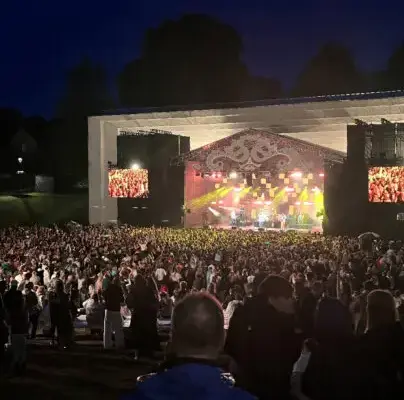
While studio production allows EYAA to meticulously sculpt their electronic textures, it is on the live stage that the trio’s name truly comes to life. The word "EYAA"—derived from a cry of encouragement linked to trance rituals—manifests physically during their concerts.
Throughout the year, the trio has maintained a punishing international touring schedule, bridging the European and African continents with ease:
- France: Playing to enthusiastic crowds in metropolitan hubs and regional festivals, introducing French audiences to their unique blend of West African storytelling and heavy electronic grooves.
- Ghana: A triumphant homecoming performance at the prestigious Les Francophonies Festival in Accra, where the band tested their transcontinental experiment in front of audiences intimately familiar with the roots of highlife and afrobeat.
- Portugal: An acclaimed international performance at the Tom de Festa Festival in Tondela, further expanding their European footprint and cementing their reputation as a vital live world-fusion act.
Official Statements and Artistic Philosophy
While specific press releases from Sharma Records emphasize the groundbreaking nature of the collaboration, the underlying philosophy of EYAA speaks volumes about the current state of transnational music production.
Kyekyeku has frequently articulated the importance of maintaining cultural authenticity while embracing technological evolution. Moving from the vibrant streets of Accra to the rolling landscapes of southwestern France did not dilute his artistic identity; rather, it provided a lens through which to view his heritage in dialogue with global electronic traditions.
In interviews surrounding the formation of the project, the trio has emphasized that EYAA is designed to challenge preconceptions. European listeners accustomed to compartmentalizing African music as purely acoustic or folkloric are confronted with a heavily synthesized, club-ready reality. Conversely, West African listeners encounter familiar linguistic rhythms and highlife guitar idioms filtered through the cold, mesmerizing geometry of European techno and bass culture.
Kevin Bucquet and Fred Faure have similarly noted that the collaboration relies on deep mutual listening. Rather than operating as "backing musicians" for a visiting African artist—a dynamic that has historically plagued many European-African collaborations—Bucquet, Faure, and Kyekyeku operate as a unified hive mind. Every compositional decision, from the frequency cutoff on the synthesizers to the syncopation of the bass drum, is arrived at collectively.
Future Outlook
With "Luku Luku" now streaming globally across platforms and its accompanying visual media drawing critical acclaim, EYAA is positioned for a breakout period over the coming months.
The immediate roadmap for the trio involves the methodical rollout of the remaining four singles leading up to their debut EP on Sharma Records. Each subsequent release is expected to further refine the afro-electro blueprint established by "Luku Luku," offering listeners new permutations of acoustic instrumentation and machine-engineered rhythms.
Furthermore, booking agents and festival programmers have taken note of the band’s cross-cultural appeal. Plans are currently underway to expand EYAA’s touring circuit into the broader European festival market for the upcoming summer season, with tentative discussions regarding extended dates in West Africa.
As the boundaries between musical genres continue to dissolve, EYAA stands out not as a novelty act, but as a genuine synthesis of global cultures. By anchoring highlife, afro-funk, and afrobeat to the pulsing machinery of European electronica, they have created a language that requires no translation—only movement. "Luku Luku" is merely the first chapter in what promises to be a transformative journey for contemporary global music.