Executive Overview
Marking the historical milestones of cultural seismic shifts often invites romanticized recollections of absolute reinvention. As the mid-1980s heralded the tenth anniversary of punk rock’s explosive emergence, cultural critics and music historians routinely looked back at 1976 and 1977 as a "Year Zero"—a moment when the musical slate was wiped entirely clean. In this sweeping narrative, rock’s glorious past was discarded, and anyone associated with it was deemed obsolete.
However, cultural revolutions rarely operate in absolute vacuums. Beneath the fiery rhetoric of total annihilation and the fierce rejection of establishment rock lay a complex network of exceptions, exemptions, and secret admissions. While the mainstream music press and radical factions of the nascent punk movement attempted to construct an impenetrable wall between the old guard and the new wave, certain artists managed to bypass the barricades entirely.
This cohort—affectionately and ironically dubbed "The Acceptables"—consisted of contemporary allies, proto-punk pioneers, and sovereign musical royalty who defied categorization. Through an exploration of this phenomenon, we uncover a fascinating paradox of the punk ethos: the strict adherence to a revolutionary orthodoxy that was simultaneously bent by deep-seated musical loyalties, shrewd cross-generational appeal, and the towering, unassailable shadow of David Bowie.
Detailed Chronology: From the Bloated Stagnation of ’76 to the Splintering of ’77
1976: The Stagnant Waters Before the Tsunami
To understand the radical nature of punk’s exclusionary politics, one must first examine the conditions of the mid-1970s rock ecosystem that preceded it. The standard historical narrative frequently paints 1976 as an artistic wasteland for rock music—a perspective backed by considerable audio evidence from the era.
Listening back to archival broadcasts of tastemaker radio shows, such as those hosted by legendary BBC broadcaster John Peel, reveals a landscape strangely fixated on looking backward. Rather than serving exclusively as hotbeds for the avant-garde, these programs routinely dedicated substantial airtime to analyzing and re-analyzing massive legacy acts like The Doors and The Beatles. This veneration occurred barely half a decade after those bands had ceased operations, highlighting a music industry caught in a holding pattern of retrospective comfort.
Concurrently, the live pub rock circuit was certainly lively, but its recorded output left much to be desired. Aside from foundational acts like Dr. Feelgood, whose punchy, stripped-down R&B prefigured punk’s economy, much of the dominant blues-based rock of the 1970s had metastasized into an elongated, self-indulgent, and ultimately dull exercise in stadium-sized blues jams.
1977: Year Zero and the Erection of the Wall
When punk finally erupted onto the national consciousness, it sought to shatter this perceived complacency. Prior to punk, rock music had prided itself on an acute, respectful awareness of its own lineage. Generations of musicians studied their musical ancestors, wore their influences proudly on their sleeves, and integrated blues and early rock’n’roll idioms into their work.
Punk changed the operational rules overnight. The Clash’s incendiary anthem "1977" dramatically raised the cultural stakes, effectively declaring war not just on progressive rock "dinosaurs" and stadium acts like The Beatles and The Stones, but even targeting sacred foundational figures like Elvis Presley. The message was unmistakable: if you were part of the past, you were the enemy of the future.
Suddenly, a hard cultural line was drawn across the musical landscape, forcing artists, critics, and fans alike to choose a side, whether they wished to or not. The progressive rock and stadium dinosaur bands either carried on regardless, insulated by massive international fanbases, or hastily adapted by adopting slicker haircuts, skinny ties, tailored jackets, and compressed song lengths. Yet, for a thrilling, disruptive moment, the world felt genuinely cleaved in two.
Supporting Context & Metrics: The Mechanics of the Exception
Despite the rigid boundaries established by Year Zero ideologues, ideological purity was routinely compromised by practical realities, aesthetic affinities, and generational nostalgia. A nuanced middle ground quickly emerged, populated by artists who secured an unofficial "exemption pass" from the punk gatekeepers.
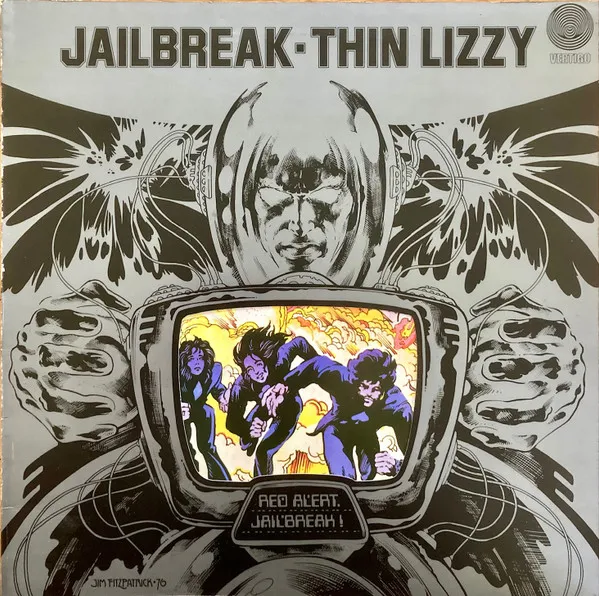
The Contemporary Allies: Motörhead and Thin Lizzy
A select group of contemporary hard rock acts managed to cross enemy lines and gain acceptance among the punk demographic. Bands like Motörhead and Thin Lizzy were widely regarded not as bloated relics of the past, but as vital allies in the collective war against mainstream boredom.
Several factors contributed to this immunity:
- Sonic Economy: Unlike the meandering 20-minute drum solos of prog-rock behemoths, these bands favored punchy, high-energy, and relatively short compositions.
- Attitude and Alignment: Rather than displaying resentment toward the aggressive new kids on the block, figures like Lemmy Kilmister and Phil Lynott shared an antagonistic, anti-establishment grit that resonated with punk audiences.
- Aesthetic Uniformity: The unpretentious leather jackets, sweat, and street-level swagger visually aligned these artists with the punk wardrobe, effectively granting them honorary citizenship.
Marc Bolan and T.Rex
Perhaps no mainstream pop figure bridged the generational gap quite as successfully as Marc Bolan. Despite representing the height of early-1970s glam rock—a genre that could easily have been dismissed as overly theatrical fluff—Bolan retained profound credibility among punks for two distinct reasons:
- Media Platforming: Bolan’s television show actively provided a national platform for underground and nascent punk bands at a time when the broader media establishment remained aggressively hostile to the movement.
- Generational Rooting: A substantial portion of the 1976 teenage audience had literally grown up listening to T.Rex. This deep-seated affection manifested in profound tributes, such as Siouxsie & The Banshees recording a fierce, distorted cover of "20th Century Boy."
The Revered Ancestors: Proto-Punk Pioneers
A critical logistical challenge faced by early punk broadcasters like John Peel was a severe shortage of recorded material. Simply put, there were not enough actual punk records pressed to fill an entire radio show.
To bridge this gap, curators turned to the "Revered Ancestors"—acts that had, through historical serendipity, essentially invented punk rock years before the term was codified. This canon included:
- The Velvet Underground
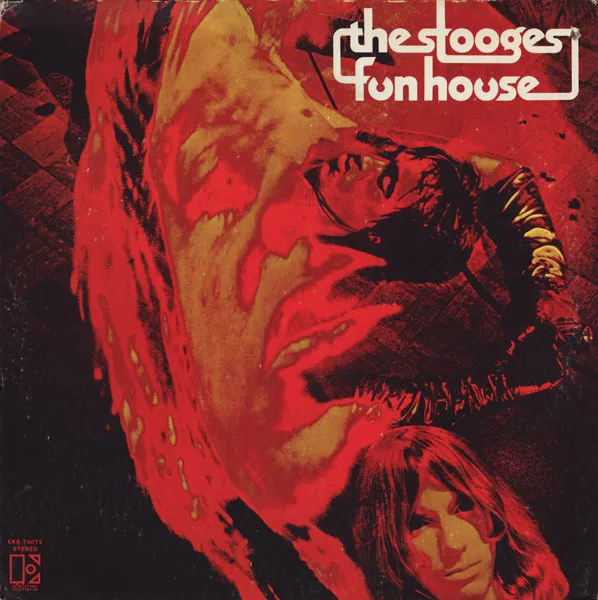
- The Stooges
- The New York Dolls
- First-wave 1960s garage punk outfits like The Seeds and The Shadows Of Knight.
Any band that managed to encapsulate the raw, unpolished, nihilistic spirit of these ancestors was automatically welcomed into the fold. Consequently, during the formative years of the movement, it was virtually impossible to attend a live punk gig without hearing a ragged cover of Lou Reed’s "Waiting for the Man" or discovering a Stooges B-side buried in a setlist.
David Bowie: King of the Acceptables
At the absolute apex of this exempted hierarchy stood David Bowie. Both Iggy Pop and Lou Reed owed their acceptance within the punk lexicon partly to their direct, symbiotic relationships with Bowie, who acted as the ultimate cultural diplomat of the era.
Like Bolan, Bowie commanded the adoration of younger music fans—a bond cemented when he penned "All The Young Dudes" for Mott the Hoople, intentionally aligning himself with the emerging youth demographic. However, unlike most of his glam-era contemporaries who stagnated later in the decade, Bowie spent the 1970s in a state of perpetual reinvention, refusing to grow stale.
While other stars looked bloated and distant, Bowie maintained an aura of exciting, avant-garde cult fame. This halo effect extended to anyone within his creative orbit. When Bowie produced Iggy Pop, produced Lou Reed, produced Mott the Hoople, or collaborated with cerebral innovators like Brian Eno and Robert Fripp, those artists instantly inherited a shield of cool.
Bowie occupied a masterfully paradoxical position: while his output during the Berlin era (Low, “Heroes”) was entirely distinct from punk, he sat squarely at the beating heart of its aesthetic evolution. Record label RCA captured this singular status in an iconic advertising campaign for “Heroes” that succinctly declared: "THERE’S OLD WAVE, THERE’S NEW WAVE AND THERE’S DAVID BOWIE."
Official Statements and Critical Perspectives
Reflecting on the legacy of this era, musicologists and cultural commentators continue to debate the rigidity of punk’s exclusionary politics versus the porous nature of its actual subcultural boundaries.
"Before punk, the idea of building a kind of wall between the new music and the old music would have been most bizarre—especially as rock music had always been very aware of its heritage and indeed respectful of it." — Archival Cultural Commentary
Industry insiders note that the rigid categorization of 1977 was ultimately an essential marketing and psychological tool for a generation seeking to wrest cultural control from corporate rock monoliths. Yet, as veteran observers point out, the survival and subsequent integration of these "Acceptables" proved that genuine artistic innovation and raw energy could transcend dogmatic purism.
Cultural critics emphasize that the strict "list" of acceptable artists served as a vital map for navigating an otherwise hostile musical terrain: Once there was a list, and if you weren’t on it, you weren’t getting in.
Future Outlook: The Dissolution of Boundaries
As punk inevitably fractured in the late 1970s and early 1980s—morphing into the tailored pop-sensibility of New Wave (produced by musicians in jackets and ties) and the jagged, abrasive minimalism of Post-Punk (similarly performed by musicians in jackets and ties)—its foundational shockwaves proved permanent.
Ironically, the very "dinosaur" bands that punk sought to eradicate experienced a massive commercial resurgence throughout the 1980s. Genesis, Yes, and Pink Floyd all found ways to adapt, conquering stadiums with state-of-the-art arena tours and synth-driven pop-rock crossover hits.
Looking backward across the decades, the fierce battle lines drawn in 1977 can appear quaint or overly dogmatic. Today, the historical friction between old and new matters less and less, as streaming algorithms and modern eclectic listening habits flatten decades of recorded music into a single, accessible continuum.
Yet, the mythos of the Acceptables remains a testament to a fascinating moment in time—a brief historical window when music fans were handed a strict ledger of approved sound, and the entire cultural universe was judged by whether it made the cut.