Executive Overview
In the annals of American performing arts, few works have managed to capture the raw, volatile intersections of race, media manipulation, and the criminal justice system with the piercing resonance of Anthony Davis’s The Central Park Five. Winner of the 2020 Pulitzer Prize for Music, this landmark opera explores one of the most egregious miscarriages of justice in modern New York City history.
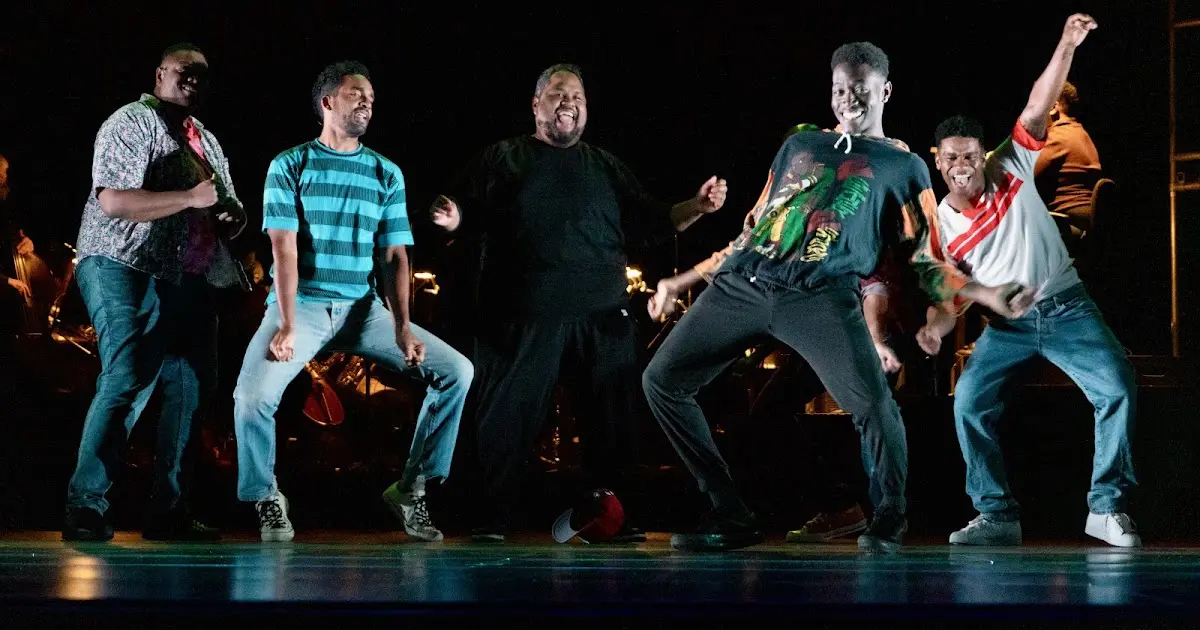
Originally premiering at the Long Beach Opera (LBO) in 2019, the production has evolved from a bold theatrical gamble into a cultural touchstone. Now, following a comprehensive studio recording released on the Platoon platform by LBO—Southern California’s oldest and most adventurous opera company—this urgent work is accessible to a global audience.
Composed by Anthony Davis with a libretto by Richard Wesley, The Central Park Five traces the nightmarish trajectory of five Black and Hispanic teenagers—Kevin Richardson, Raymond Santana, Korey Wise, Yusef Salaam, and Antron McCray—who were coerced into false confessions and wrongfully convicted of the brutal 1989 assault and rape of a Central Park jogger.
More than a mere historical recounting, the opera functions as a searing indictment of systemic racism, sensationalist media, and the weaponization of public sentiment for political gain. By melding jazz, contemporary classical idioms, rhythm and blues, and hip-hop, Davis has forged a distinctively American musical vernacular—one that matches the complexity of the trauma it depicts and solidifies his place as one of the most vital politically engaged composers of our era.
Detailed Chronology: From the Ramapo Woods to the Pulitzer Stage
1. The Crucible of 1989: The Crime, the Panic, and the Arrests
In the spring of 1989, New York City was a pressure cooker of racial tension, economic anxiety, and soaring crime rates. On the night of April 19, a young white female investment banker was brutally beaten, raped, and left for dead while jogging in Central Park. In the hysteria that followed, the media and the NYPD zeroed in on a group of predominantly Black and Hispanic youths who had been detained for various acts of minor rowdiness and vandalism in the park that same evening.
Despite a complete absence of physical, biological, or forensic evidence linking any of the teenagers to the crime scene, police subjected the minors to hours of relentless, coercive interrogations without legal counsel or parents present. Exhausted, terrified, and psychologically manipulated, five of the youths ultimately signed videotaped confessions that contradicted both one another and the physical realities of the attack.
Fueling this rush to judgment was a racially charged public outcry. Amplified by sensationalist tabloids, the case became a flashpoint for a city gripped by moral panic. Notably, a politically ambitious real estate mogul purchased full-page advertisements in four major New York newspapers blaring the headline: "BRING BACK THE DEATH PENALTY. BRING BACK OUR POLICE!" This populist demagoguery cemented the teenagers’ public damnation long before they ever stepped inside a courtroom.
2. The Injustice and the Revelation (1990–2002)
At trial, the prosecution relied almost entirely on the coerced confessions, which were patched together despite glaring inconsistencies. In 1990, the teenagers—who would later come to be known as the Exonerated Five—were convicted and sentenced to prison terms ranging from five to thirteen years. They spent their formative years behind bars for a crime they did not commit.
Justice was slow, agonizing, and deferred for over a decade. It was not until 2002 that Matias Reyes, a serial rapist and murderer already serving a life sentence, confessed independently to the Central Park assault. DNA profiling matched Reyes conclusively to the crime scene, and he admitted he acted entirely alone. The convictions of the five men were subsequently vacated, and the city later settled a civil rights lawsuit with them for $41 million in 2014. Yet, the emotional, psychological, and developmental scars inflicted by the state remained indelible.
3. The Artistic Genesis (2016–2020)
For composer Anthony Davis, the case was emblematic of a deeper American pathology—a recurring cycle where marginalized communities are sacrificed on the altar of political expedience. Davis’s initial exploration of the subject materialized in Five, a chamber opera with a libretto by Richard Wesley, which premiered in 2016 via Trilogy: An Opera Company in New Jersey.
Recognizing the broader canvas required for such an epic tragedy, Davis and Wesley expanded the work. In June 2019, the Long Beach Opera—under the visionary leadership of artistic director James Darrah Black and music director Christopher Rountree—mounted the world premiere of The Central Park Five.
The production was a critical triumph, praised for its unflinching gaze and innovative staging. In May 2020, the Pulitzer Prize board awarded Davis the Prize for Music, validating the opera’s profound cultural and artistic significance during a year of intense national reckoning over racial justice.
4. Expansion, Recording, and the Present Day (2022–2025)
The momentum surrounding the opera continued to build through regional presentations. In March 2022, the Portland Opera staged the work, followed by a triumphant return to the Long Beach Opera in June 2022 with an updated staging.
Capitalizing on these mounting interpretations, LBO brought the principal cast and conductor Anthony Parnther into the studio to record the definitive audio version of the opera. Released internationally via the Platoon label, this recording ensures that the sonic architecture of Davis’s masterwork is preserved for posterity.

The evolution of the score did not stop there. In March 2025, Detroit Opera unveiled a newly expanded orchestration of The Central Park Five, further cementing its status as a living, breathing pillar of contemporary American opera.
Supporting Context & Metrics: The Anatomy of an Operatic Vision
Anthony Davis: A Career Intersecting Politics and Music
To understand The Central Park Five, one must examine Anthony Davis’s broader body of work. Born in New Jersey and educated at Yale, Davis established himself early on as a boundary-pushing jazz pianist, composer, and bandleader whose artistry seamlessly bridges disparate musical traditions. His compositions incorporate elements of rhythm and blues, gospel, African traditions, Indonesian gamelan, and European classical counterpoint. Currently a professor of music at the University of California, San Diego, Davis has consistently turned his lens toward historical flashpoints that define the American conscience:
- X: The Life and Times of Malcolm X (1986): Premiered by the New York City Opera, this pioneering work chronicled the ideological evolution of the slain civil rights leader. The opera experienced a major resurgence with a critically acclaimed new production directed by Robert O’Hara, starring baritone Davóne Tines, which played at Detroit Opera (2022), the Metropolitan Opera (2023), and Seattle Opera (2024).
- Amistad (1997): Commissioned and premiered by the Lyric Opera of Chicago, this opera dramatized the 1839 mutiny aboard a Spanish slave ship and the subsequent landmark U.S. Supreme Court ruling that favored the captive Africans. Davis later revised the score into a leaner, more visceral version for the Spoleto Festival USA in 2008.
- Wakonda’s Dream (2007): Premiered by Opera Omaha, this contemporary work explored the generational trauma of a Native American family caught in the wake of the historic 1879 Standing Bear v. Crook trial, which legally recognized Native Americans as human beings under the law for the first time.
Musical Architecture and Genre-Blending
In The Central Park Five, Davis deploys his eclectic musical toolkit to mirror the emotional fragmentation and societal dissonance of 1989 New York. Rather than adhering strictly to traditional operatic paradigms, the score acts as a sonic collage:
- Jazz Harmonies: Provide the psychological undercurrents and shifting anxieties of the interrogation scenes.
- Contemporary Classical Structures: Lend gravity and architectural weight to the courtroom sequences, evoking the cold, impersonal machinery of the state.
- R&B and Hip-Hop Influences: Ground the youthful vitality and urban reality of the five protagonists, giving voice to a distinct cultural generation whose rhythm was abruptly choked by institutional oppression.
This multi-genre approach prevents the opera from becoming a dry historical lecture. Instead, it transforms into an immersive, visceral experience that challenges the audience to feel the claustrophobia of coercion and the agony of stolen youth.
Official Statements and Artistic Insights
Reflecting on the motivations behind the opera, composer Anthony Davis has been remarkably transparent about the sociopolitical roots of the piece. In liner notes and interviews surrounding the LBO production, Davis contextualized the 1989 incident not as an isolated tragedy, but as the opening salvo of a modern political movement:
"1989. A group of predominantly Black and Hispanic teenagers enter Central Park in New York City. They turnover garbage cans, throw rocks, harass people on bicycles. A young woman is sexually assaulted in the Park and six teenagers are detained and questioned about the assault. Five of the teenagers, Kevin Richardson, Raymond Santana, Korey Wise, Yusef Salaam and Antron McCray become the center of a criminal case that would polarize New York City. The Exonerated Five were falsely accused and convicted of the crime with no physical evidence. Condemned publicly by the press, the Exonerated Five were victims in a culture war waged against Black and Hispanic communities."
Davis explicitly links the persecution of the teenagers to broader shifts in American political culture:
"A politically ambitious real estate mogul condemns the teenagers with a full-page ad, proclaiming ‘Bring Back the Death Penalty. Bring Back Our Police!’ The persecution of the Central Park Five marks the beginning of Donald Trump’s political career, built on racial animus and the exploitation of the deep-rooted racial divide in America."
This perspective is echoed in the structural design of the Long Beach Opera recording. Under the baton of conductor Anthony Parnther, the ensemble breathes life into a demanding libretto that balances institutional menace with deeply human moments of sorrow and resilience.
Cast and Creative Roster (LBO Recording)
The definitive audio recording features an extraordinary ensemble of vocalists who bring harrowing emotional depth to their roles:
- Cedric Berry as Yusef Salaam
- William Powell III as Antron McCray
- Bernard Holcomb as Kevin Richardson
- Orson Van Gay II as Raymond Santana
- Ashley Faatoalia as Korey Wise
- Justin Ryan as The Masque
- Lacey Jo Benter as the District Attorney
- Todd Strange as Donald Trump
- Joelle Lamarre in multiple ensemble roles, including "Antron’s Mother" and "Kevin’s Mother"
- Lindsay Patterson Abdou as Sharonne Salaam and other ensemble tracks
- Corey Estelle (Ensemble)
- José Luis Maldonado as Raymond’s Father and Matias Reyes
Future Outlook: The Enduring Legacy of an American Masterpiece
As The Central Park Five transitions from its initial theatrical runs to permanent digital preservation via Platoon and expanding orchestrations on major stages like Detroit Opera, its place in the American cultural canon is secure.
The opera serves as a vital reminder that the classical music and opera worlds are not insulated from the social and political conflicts of their time. By tackling the systemic failures of the justice system through the prism of high art, Anthony Davis and Richard Wesley have created a work that transcends its historical moment.
In an era where questions of criminal justice reform, media integrity, and racial equity remain at the forefront of public discourse, The Central Park Five stands as an artistic monument. It honors the resilience of the Exonerated Five while challenging audiences to interrogate the narratives society tells about itself—reminding us that true justice requires vigilance, empathy, and an uncompromising pursuit of the truth.