Executive Overview
History is written by the victors, but for centuries, it was edited by omissions. When examining the monumental events of 1066 and the subsequent subjugation of England, the narrative has long been dominated by the rugged, sword-wielding figure of William the Conqueror. Yet, staring us in the face from the historical record—and quite literally embedded in the iconic visual narrative of the Bayeux Tapestry—is a glaring oversight: the absence of Matilda of Flanders. As William’s wife of 30 years, co-ruler of England and Normandy, and a strategic political mastermind in her own right, Matilda was not merely a royal consort; she was the structural backbone of the Norman Conquest.
Despite historical myths once attributing the creation of the Bayeux Tapestry itself to Queen Matilda, modern scholarship reveals an even more profound truth. While her presence as an individual portrait within the tapestry’s main body is strikingly absent—limited to just three other women—her influence permeates every thread of the campaign. From bridging a vast dynastic chasm through her imperial bloodline to gifting her husband the legendary flagship, the Mora, Matilda’s wealth, strategic foresight, and political acumen made the conquest possible.
This deep-dive investigation reevaluates the life and legacy of Matilda of Flanders, exploring her royal lineage, her pivotal role in securing papal sanction, her execution of statecraft as co-ruler, and the ways modern historians are finally dragging her vital contributions out from the shadows of medieval historiography.
Detailed Chronology: From Imperial Bloodline to Regent of Realms
To understand Matilda’s indispensable contribution to 1066, one must trace the timeline of her remarkable life, which intersected ambition, diplomacy, and ecclesiastical maneuvering.
1. The Noble Union (c. 1030–1059)
Born around 1030, Matilda entered the world with a pedigree that vastly overshadowed that of her future husband. Her father, Baldwin V, Count of Flanders, and her mother, Adela—a royal princess of France descended from the prestigious Ottonian emperors—held immense wealth and political standing. Conversely, William was the illegitimate son of the Duke of Normandy, a status that invited domestic rebellion and widespread diplomatic vulnerability.
Recognizing the mutual benefits of an alliance, William sought Matilda’s hand. However, their union immediately triggered geopolitical and religious firestorms. In 1049, Pope Leo IX explicitly forbade their marriage due to consanguinity. Undeterred by the papal ban, the couple married in the early 1050s. The schism was finally healed a decade later when a newly ascended Pope Nicholas II lifted the ban in 1059, conditional upon both partners funding holy monasteries.
2. Piety, Politics, and the Eve of Conquest (1060–1066)
As Duchess of Normandy, Matilda leveraged her immense personal wealth to fulfill papal requirements while simultaneously buying divine favor for the impending invasion of England. She spearheaded the construction of Sainte-Trinité Abbey (Holy Trinity, or the Abbaye aux Dames) in Caen, a magnificent Benedictine nunnery.
Matilda drove construction with relentless urgency, ensuring the nunnery was ready for dedication before the cross-Channel campaign launched in June 1066. In a supreme act of political and spiritual theater, she dedicated her young daughter, Cecilia, as a child oblate to the nunnery on the very day of its consecration. Concurrently, Matilda engineered her ultimate contribution to the invasion fleet: commissioning, funding, and gifting the Mora, the largest, fastest, and most symbolically charged ship in William’s armada.
3. Coronation, Co-Rule, and Regents (1068–1083)
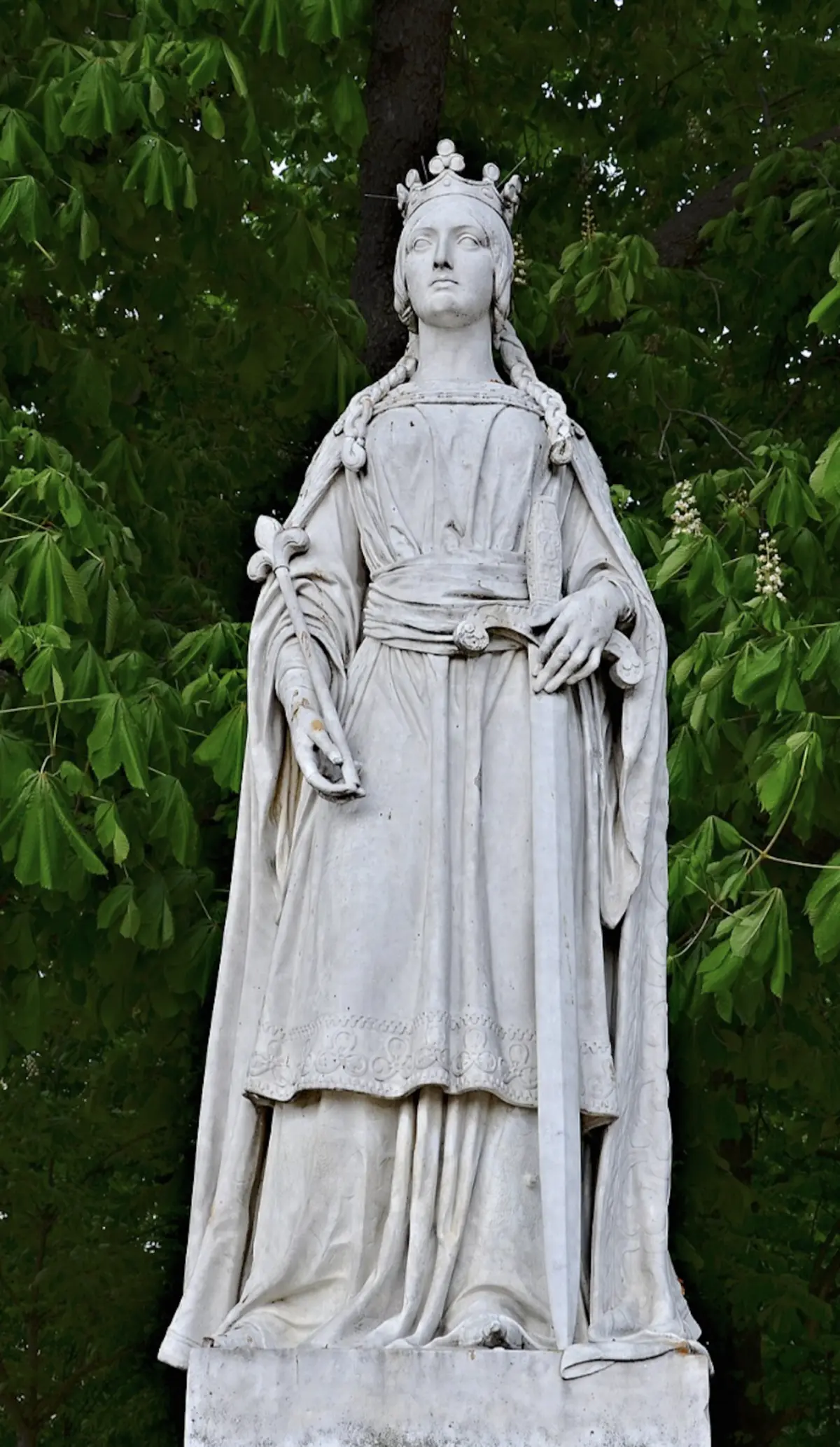
Following the bloody victory at Hastings and William’s rapid, pragmatic coronation in late 1066, the newly minted English king realized his hold on the island was precarious. To legitimize his dynasty in the eyes of his new Anglo-Saxon subjects, William required the full weight of Matilda’s imperial and royal bloodline. In 1068, while once again visibly pregnant, Matilda was crowned Queen of England in a solo coronation ceremony that projected immense authority.
During William’s frequent absences to suppress bloody rebellions in England, Matilda acted as his trusted lieutenant and regent in Normandy. Her administrative footprint is stamped across history: she is connected to 137 historical charters. Later, between 1081 and 1082, she served as William’s regent in England itself, breaking new ground by presiding as a judge—a radical extension of queenly power.
4. Legacy and Passing (1083)
Matilda died in 1083, plunging William into a period of profound political and personal instability. Chronicler Orderic Vitalis noted that after her death, William struggled against "constant storms" until his own passing in 1087. Matilda was laid to rest at Sainte-Trinité Abbey in a magnificent funeral attended by bishops, abbots, and the destitute, cementing a legacy defined by both elite power and pious charity.
Supporting Context & Metrics: Decoding the Mora and Material Culture
The historical invisibility of medieval women often stems from a reliance on traditional texts written by male clerics. However, material culture—specifically the physical artifacts of the era—tells an entirely different story.
The Mora: A Floating Monument to Dynastic Ambition
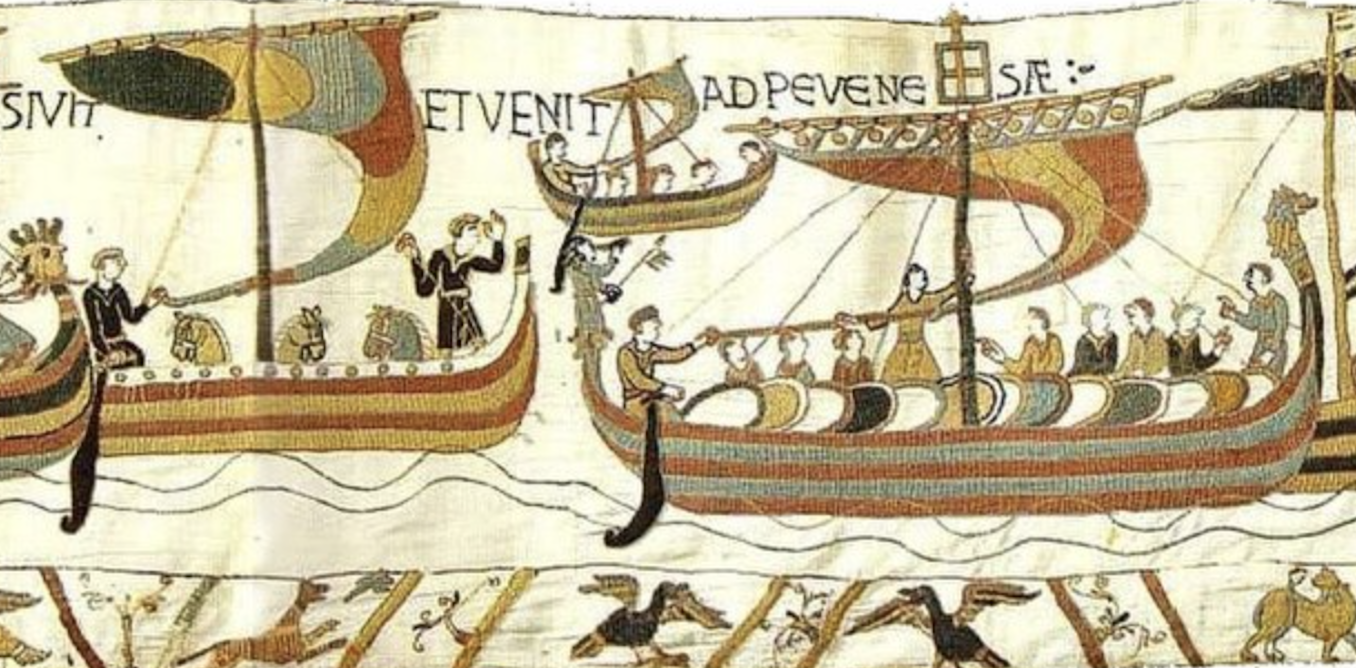
Center stage in the Bayeux Tapestry is the Mora, easily identifiable by its gold cross, a banner depicting divine favor, and a distinctive figurehead: a golden child blowing an ivory horn and pointing toward England.
A 12th-century shipping inventory, likely compiled at the monastery of Fécamp, recorded the vessel’s origin:
"In honour of the Duke, Mathilda, later queen, had a ship built called the Mora with which the Duke crossed the sea… She had fitted a golden child who pointed with his right hand to England and who with his left hand pressed an ivory horn against his lips."
Historians have long debated the meaning of this unusual figurehead, which broke naval traditions of carving beasts or monsters. Prominent historian Elisabeth van Houts argues that the golden child symbolized the future of the Norman dynasty—specifically pointing toward the couple’s unborn children, such as Adela of Blois. Meanwhile, in her landmark biography The Queenship of Mathilda of Flanders: Embodying Conquest, scholar Laura L. Gathagan posits that the ship served as a physical, floating manifestation of Matilda’s material contribution to the invasion.
Quantifying Matilda’s Influence
To grasp the true scale of Matilda’s power, consider the following metrics of her administrative and economic reach:
- 30 Years: The duration of her political and marital partnership with William the Conqueror.
- 137 Charters: The number of surviving legal and political documents bearing Matilda’s direct connection and authorization.
- Two Major Religious Foundations: Her direct sponsorship of the Abbaye aux Dames in Caen and her acquisition of extensive English landholdings (such as Hambledon and Little Marlowe in Buckinghamshire) recorded in the Domesday Book.
- 0 Direct Portraits (with Exceptions): While thousands of men populate the Bayeux Tapestry, Matilda’s physical likeness was omitted from the main body, despite historical rumors—recorded by 18th-century scholar Father Bernard of Montfaucon—that she personally embroidered the masterwork.
Official Statements & Scholarly Perspectives
Modern medieval historians are actively rewriting the narrative of the Norman Conquest to integrate the hidden labor and governance of women.
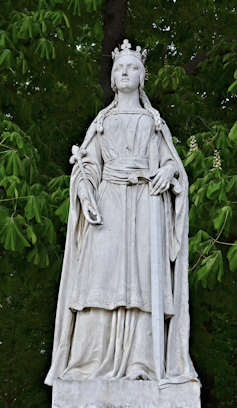
Dr. Laura L. Gathagan, a leading authority on medieval queenship, emphasizes that Matilda’s exercise of judicial power in England was not merely a substitute function during her husband’s absence, but a structural evolution of governance:
"Matilda’s regency and her presiding as a judge in English courts represent a fundamental, deliberate expansion of queenly power. She was not keeping the seat warm; she was actively legislating and reinforcing the apparatus of the new Anglo-Norman state."
Reflecting on the material clues left behind in artifacts like the Bayeux Tapestry and shipping manifests, Elisabeth van Houts notes that modern audiences must look beyond standard battlefield histories:
"When we evaluate the Conquest, we focus heavily on swords, shields, and arrows. Yet without the diplomatic maneuvering of Matilda’s Flemish lineage, the financial backing of continental estates, and the ideological symbolism of vessels like the Mora, the invasion fleet would have never left the Norman shore."
Future Outlook: Rebuilding the Medieval Narrative
The omission of Matilda of Flanders from popular retellings of 1066 is a symptom of a broader historiographical challenge: decoding history written by victors who systematically marginalized female agency. However, a profound shift is currently underway in how history is researched, taught, and displayed to the public.
Educational initiatives, such as the Teaching Medieval Women project and updated museum exhibits at institutions like the Reading Museum (home to the Victorian replica of the Bayeux Tapestry), are fundamentally changing pedagogical approaches. By analyzing material culture—such as ship figureheads, monastic charters, and illuminated manuscripts—historians are providing educators with the tools to tell a more complete story.
Moving forward, the challenge for historians and curators alike is to ensure that figures "hidden in plain sight" are brought to the forefront. Matilda of Flanders demonstrates that the Norman Conquest was not a unilateral military triumph achieved by one man, but a dual-hemisphere enterprise forged in the halls of diplomacy, financed by female wealth, and executed through shared royal authority. As historical research continues to unpack these suppressed narratives, the legend of 1066 will rightfully expand to honor the queen who helped build an empire.