As the European classical arts community continually seeks innovative ways to bridge historical performance practice with contemporary theatrical storytelling, Vache Baroque’s upcoming 2026 summer festival has emerged as one of the most anticipated cultural events of the season. At the heart of this year’s programming is a daring, hybrid staging of William Shakespeare’s The Tempest, conceived as a 17th-century "dramatick opera"—more commonly known today as a semi-opera. Scheduled to run from August 29 through September 6, 2026, against the idyllic backdrop of The Vache estate in Chalfont St Giles, this production breathes new life into a theatrical tradition that has long fascinated musicologists and theater historians alike.
Rather than relying on a conventional operatic score or a straightforward theatrical reading, Vache Baroque’s mounting draws directly from the landmark 1674 adaptation originally produced by Thomas Betterton at the Dorset Garden Theatre. This rich historical tapestry features foundational music composed by Henry Purcell, Matthew Locke, and Pelham Humfrey, supplemented by period-appropriate European works, sea shanties, improvisations, and a fully realized masque by Purcell.
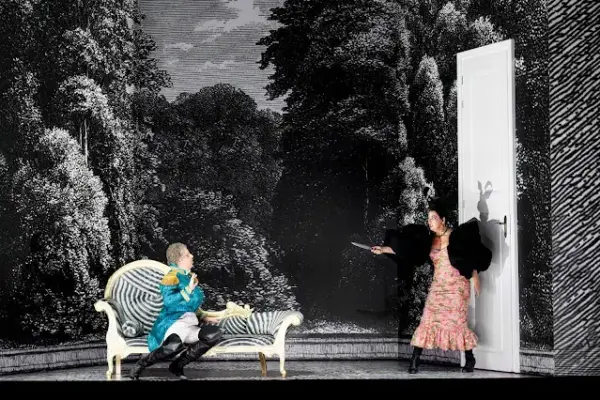
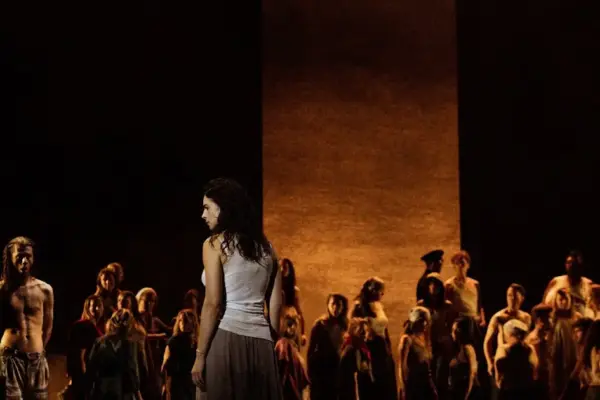
To bring this multifaceted sonic and dramatic landscape to life, the production relies on a unique cross-disciplinary collaboration. A stellar cast of vocalists—including Stephanie Hershaw, Isabelle Peters, Camilla Seale, Conor Prendiville, and Ross Cumming—joins forces with the dynamic actors of the theater company Out of Chaos. Under the dual directorial vision of stage director Paul O’Mahony and Vache Baroque Band leader Jonathan Darbourne, the production breaks down traditional boundaries between acting and singing.
In this exclusive feature, we explore the intricacies of this ambitious staging through a deep-dive interview with acclaimed mezzo-soprano Camilla Seale, who stars as Stephano. We examine the collaborative friction and creative synergies of combining actors and singers, the unique flexibility of the Baroque repertoire, and the enchanting open-air environment that promises to make this summer’s festival an unforgettable meditation on mortality, magic, and theatrical legacy.
Detailed Chronology and Historical Roots: The Evolution of the 1674 Tempest
To understand the magnitude of Vache Baroque’s 2026 production, one must journey back to the Restoration era of English theater. Following the reopening of the theaters in 1660 under King Charles II, the cultural landscape underwent a radical transformation. English stages eagerly embraced spectacle, machinery, music, and dance—elements that had been largely suppressed during the Puritan Interregnum.
In 1667, the prominent playwrights John Dryden and Sir William Davenant collaborated on an adaptation of Shakespeare’s The Tempest, or The Enchanted Island. While maintaining the core plot of Shakespeare’s final solo-authored masterpiece, Dryden and Davenant introduced a series of structural alterations designed to appeal to contemporary Restoration tastes. Most notably, they introduced narrative foils—such as a sister for Miranda who has never seen a man, and a counterpart for Caliban who has never seen a woman—thereby amplifying the comedic and romantic subplots.
Following Davenant’s death, theatrical manager and actor Thomas Betterton pushed the spectacle even further. In 1674, the Dorset Garden Theatre hosted a heavily expanded musical version of the Dryden-Davenant adaptation. This production integrated extensive vocal and instrumental numbers composed by the leading musical minds of the day, including Matthew Locke and Pelham Humfrey, alongside subsequent contributions by a young Henry Purcell.

This hybrid genre—fusing spoken dialogue, elaborate masques, orchestral interludes, song, and dance—was categorized by contemporaries as a "dramatick opera" or semi-opera. It was a form tailored to the unique capabilities of the Restoration stage, which boasted sophisticated stage machinery capable of simulating violent tempests, flying deities, and rapidly shifting mythical landscapes.
Vache Baroque’s 2026 staging pays homage to this vibrant lineage while filtering it through a contemporary artistic lens. By reassembling the scattered musical pieces of Purcell, Locke, and Humfrey, and injecting period shanties and improvisations, the creative team is not attempting a dusty museum reconstruction. Instead, they are resurrecting a living, breathing theatrical machine that treats music not as decorative background noise, but as an active, magical force operating within the very fabric of Prospero’s island.
Supporting Context & Metrics: The Anatomy of a Modern Semi-Opera
Mounting a 17th-century semi-opera in the 21st century presents distinct logistical, artistic, and musicological challenges. Unlike standard operas, where the narrative is driven primarily through sung recitative and arias, or traditional plays, where text reigns supreme, the semi-opera demands a delicate equilibrium between spoken drama and musical spectacle.
The Creative Ensemble
The production structure relies on a carefully balanced roster of talent, merging the distinct training backgrounds of classical vocalists and physical theater actors:
- Vocalists: Stephanie Hershaw, Isabelle Peters, Camilla Seale (as Stephano), Conor Prendiville, and Ross Cumming.
- Theatrical Ensemble: Actors from the acclaimed physical theater company Out of Chaos.
- Musical Direction: Jonathan Darbourne leading the period-instrument Vache Baroque Band.
- Stage Direction: Paul O’Mahony, specializing in dynamic, text-driven physical staging.
The Setting and Venue
The choice of venue is vital to the production’s conceptual framework. Staged outdoors by the lake at The Vache estate in Chalfont St Giles, the environment serves as an active participant in the storytelling. The natural topography—featuring open water, mature trees, and shifting twilight—mirrors the liminal, magical geography of Shakespeare’s island.
As the production transitions from daylight into evening, the staging utilizes a specially constructed tent that frames the natural landscape through the back of the stage. This allows audiences to watch characters stumble through the surrounding estate grounds while bathed in atmospheric lighting, effectively dissolving the barrier between the fictional isle and the English countryside.
Official Statements & Insights: In Conversation with Camilla Seale
To gain a deeper appreciation of the rehearsal process and the artistic philosophy driving this production, we sat down with mezzo-soprano Camilla Seale. In our extensive conversation, Seale shed light on the cross-disciplinary dynamics, the seamless blending of text and music, and her broader reflections on the Baroque canon.

Bridging Disciplines: Actors vs. Singers
You are currently rehearsing for Vache Baroque’s new production of Shakespeare’s The Tempest as a semi-opera which opens at the Vache on Saturday 29 August and runs to 6 September. This hybrid version of Shakespeare’s play has seen you collaborate with Paul O’Mahony’s theatre company. How have you found working with Paul and the actors from Out of Chaos? What are the synergies and tensions in the difference of approach between the actors and the singers, and what effect do you feel this has had on the rehearsal process?
"It’s such a pleasure to be in a room with open, curious performers from different creative backgrounds—from the actors, to the band, to the singers. I can’t really say that any one person is only really of one discipline, and that’s how it should be. The actors bring so much intelligence and authenticity, and I think the music brings them a different kind of emotional input that has definitely provided some surprises in rehearsal."
Text and Melody in Perfect Equilibrium
In your role as Stephano in this semi-opera, do music and words have equal prominence? How are they melded together so that music and words intermingle seamlessly?
"Yes, the role definitely feels like it’s 50:50. Even within the (musical) masque, Purcell as a composer has a very text-led musical imagination, so even for the instrumentalists, they are speaking and dancing rather than just playing beautiful musical lines. I don’t think though, even when singing pure opera, that I have ever let go of words and thoughts. Specifically in The Tempest, music has a clear role as magic on the island, so it fits like a glove here."
Environmental Dramaturgy and Shakespearean Legacy
What do you want audiences to take away from this production and the experience of watching The Tempest by the lake on a summer night?
"Shakespeare loves a metatheatrical reference; Prospero tells Ferdinand, ‘Be cheerful, sir. Our revels now are ended. These our actors, As I foretold you, were all spirits and Are melted into air […] And—like the baseless fabric of this vision […] shall dissolve.’ Everything that we conjure together, players and audience, on Prospero’s island is created inside a bed of nature in the Vache grounds. The way the stage is constructed allows the audience to see across the lake and the surrounding trees through the back of the stage, as characters stumble through the island trying to find their way, with the second half gorgeously lit in the tent as the sun sets. It’s Shakespeare’s last play—he was thinking a lot about legacy and what we leave behind. And I think he was concerned with what it means to be mortal, and where joy can be found, and I hope that the audience catch something of that when they come to see the play."
The Grooviness of Baroque: Folk Roots and Community
Last year you performed with Barokksolistene singing the role of Dido in Purcell’s Dido and Aeneas at Longborough Opera Festival. This was a production complete with audience participation in true Barokksolistene form. How does baroque repertoire allow more flexibility to experiment and create more innovative productions?

"Something that Barokksolistene do so well is traverse between baroque and folk music, and both forms by their nature are meant to be shared within communities—whether through communal singing or dancing. Baroque music at its core comes from dance, which is a shared activity, expressively and socially. Personally when I go to see baroque concerts, I enjoy the grooviness in a way I don’t quite experience with later periods of classical music. And maybe other people are experiencing the same thing."
Fearless Exploration and Creative Roots
As part of the New Renaissance Collective, you co-created and performed in productions including an adaptation of Shakespeare’s Venus & Adonis. How did that prepare you for this production at The Vache?
"I think the time I spent with friends in research and development with New Renaissance Collective and putting on the shows allowed all of us to fearlessly and idiotically explore and create theatre in a way that I’ve surely held on to in every creative environment I’ve been in since. I can remember laughing so hard in some workshops that it hurt. I’ll be forever grateful for those experiences and friendships and perhaps both the empowerment and fearlessness it—and those people—inspired in me."
Future Outlook: Setting a New Standard for Summer Opera Festivals
As outdoor summer opera festivals across Europe face mounting pressure to offer audiences experiences that transcend standard repertoire stagings, Vache Baroque’s The Tempest establishes a compelling benchmark. By resurrecting the forgotten architecture of the 17th-century semi-opera, the festival demonstrates that historical performance practice need not be an exercise in academic preservation. Instead, when paired with physical theater, site-specific environmental design, and fearless cross-disciplinary collaboration, early music reveals a startling contemporary vitality.
The success of this production points toward several broader trends in the evolution of classical performance:
- De-siloing Performing Arts Disciplines: The friction and cross-pollination between classical singers and physical theater actors (Out of Chaos) demonstrates that hybrid training models yield more psychologically grounded and physically dynamic operatic characters.
- Site-Specific Immersion: Utilizing natural landscapes—such as the lake and woodland at The Vache—not merely as a picturesque backdrop, but as an active component of the narrative dramaturgy, deepens audience immersion.
- Rediscovery of Restoration Repertoire: As ensembles continue to mine the vast riches of the late 17th-century English stage, works by Purcell, Locke, and their contemporaries are increasingly recognized as uniquely adaptable vehicles for modern theatrical experimentation.
Event Details & Ticketing
Vache Baroque’s production of The Tempest opens at The Vache, Chalfont St Giles, on August 29, 2026, with subsequent performances scheduled for August 30, September 5, and September 6, 2026. Complete ticketing, travel, and venue information is available via the official Vache Baroque Website. As anticipation builds for what promises to be one of the theatrical highlights of the year, audiences are encouraged to secure their tickets early to experience Shakespeare’s magical isle brought to vivid, musical life by the lake.