History is written by the victors, and in the pantheon of classical music, a select few titans—most notably Wolfgang Amadeus Mozart, Ludwig van Beethoven, and Joseph Haydn—tend to cast an impenetrable shadow over their contemporaries. Yet, the musical landscape of the late 18th and early 19th centuries was a vibrant, fiercely competitive ecosystem populated by virtuosos whose fame during their lifetimes rivaled, and occasionally eclipsed, that of today’s household names.
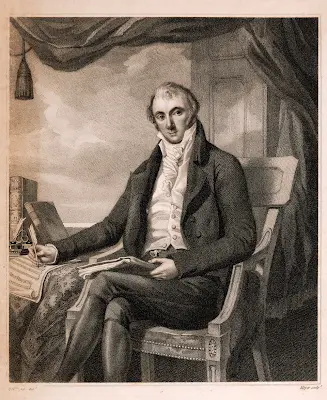
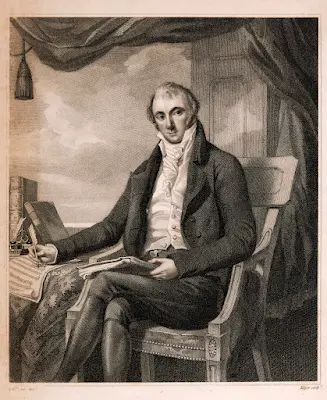
Among these unjustly sidelined figures stands Joseph Wölfl (1773–1812), a Salzburg-born composer, pianist, and marvel of physical anatomy whose life intersected with the greatest musical dynasties of his age. Taught by Mozart’s father and Michael Haydn, patronized by the cream of European aristocracy, and celebrated from Vienna to Paris and London, Wölfl was a true musical colossus. Standing six feet tall with an astonishing, spider-like finger span capable of effortlessly striking a thirteenth on the keyboard, he dazzled audiences with unprecedented clarity, technical wizardry, and improvisational brilliance.
Though his name rarely springs to modern lips, a significant revival is underway. Building on previous scholarly and recording efforts, the independent label Toccata Classics—bolstered by insightful liner notes from musicologists Margit Haider-Dechant and Hermann Dechant—is set to release a landmark album dedicated to Wölfl’s complete duos for harp and piano. Performed by the renowned Duo Praxedis (comprising harpist Praxedis Hug-Rütti and pianist Praxedis Geneviève Hug), this upcoming release sheds light on an innovative, forgotten repertoire that bridged the gap between the Viennese Classical style and the burgeoning domestic music-making of the middle class. This article explores Wölfl’s extraordinary trajectory, examining his formative years in Salzburg and Vienna, his meteoric rise across European cultural capitals, his pioneering contributions to the piano-harp repertoire, and his enduring legacy in the annals of classical music.
Detailed Chronology: From Salzburg Prodigy to London Maestro
The Formative Years (1773–1795)
Born in Salzburg in 1773, young Joseph Wölfl was immersed in a world steeped in musical genius. His exceptional talents brought him into direct contact with the inner circle of the late Wolfgang Amadeus Mozart. Wölfl received foundational musical instruction from Leopold Mozart (Mozart’s father) and composition lessons from Michael Haydn (Joseph Haydn’s younger brother), alongside piano lessons from Mozart’s sister, Maria Anna (Nannerl).
In 1790, at the threshold of adulthood, Wölfl performed before Wolfgang Amadeus Mozart himself in Vienna. Received warmly as a refined and exceptionally gifted pianist, Wölfl may have continued his studies under Mozart’s direct guidance during this period. Following these formative encounters, Wölfl established himself as a freelance musician. He enjoyed marked professional and social success in Poland, cementing his reputation as a formidable talent—until the geopolitical upheaval of the Third Partition of Poland in 1795 abruptly forced his relocation.
The Viennese Triumph and Operatic Ventures (1795–1801)
Returning to the imperial hub of Vienna, Wölfl quickly integrated himself into the city’s hyper-competitive musical scene. His ambitions extended beyond the keyboard into the dramatic arts; his opera Der Höllenberg premiered at the prestigious Theater auf der Wieden, featuring a libretto by Emanuel Schikaneder—the theatrical impresario best known for writing the libretto to Mozart’s The Magic Flute.
Wölfl rapidly cultivated a dual reputation as a brilliant virtuoso pianist and a versatile composer of opera, piano, and chamber music. Eager to expand his reach, he undertook extensive concert tours across Germany’s major musical centers. His burgeoning career caught the attention of Constanze Mozart, Wolfgang’s widow, whose influential recommendation led Breitkopf & Härtel to become the primary publisher of Wölfl’s burgeoning catalogue of works. Throughout the late 1790s and early 1800s, Wölfl continued to compose operas, steadily building an international profile.
The Parisian Interlude and the Move to London (1801–1812)
By 1801, Wölfl had taken up residence in Paris. In the French capital, he stood out triumphantly as both a pianist and a composer of ambitious orchestral, operatic, and chamber works. Always seeking new horizons, he crossed the English Channel in 1805, arriving in London—a city with an insatiable appetite for continental virtuosos.
In London, Wölfl entered into a lucrative, lifetime contract with Johann Peter Salomon (1745–1815), the legendary impresario best remembered for bringing Joseph Haydn to London in the early 1790s. Under Salomon’s guidance, Wölfl received prestigious compositional commissions and rapidly ascended to the upper echelons of London’s musical society. It was during this fruitful English period that he created the most important, mature portion of his catalog, spanning virtually every musical genre.
Among his pupils during the Marylebone years was the young English composer Cipriani Potter (1792–1871), who would later serve as the principal of the Royal Academy of Music for an extraordinary 27 years, passing down Wölfl’s pedagogical lineage to future generations. Wölfl passed away in London in 1812 in what was then the well-to-do northern suburb of Marylebone. Despite his untimely death at the age of 38, his publishers recognized his enduring market value, issuing fresh editions of his works well into the late nineteenth century.
Supporting Context & Metrics: Anatomy of a Virtuoso and the Evolution of Chamber Music
The Physical Marvel: Wölfl at the Keyboard
To understand the sheer astonishment Wölfl generated among his contemporaries, one must look closely at contemporary accounts of his physical attributes and performance style. Václav Jan Tomášek, a prominent Bohemian composer and pianist, vividly recalled a performance by Wölfl from 1799, capturing the striking paradox of the man’s physical appearance and his musical execution:
“Wölfl played a concerto of his own composition with unprecedented clarity and precision, such as, with the tremendous span of his hands, no one else could possibly have done it. […] A pianist who measures six feet in length, whose fingers are incredibly long and can reach the span of a 13th without effort, who is also so thin that everything about him rattles like a scarecrow, who, with the most incredible ease, with a touch that is weak, albeit pleasant, performs all difficulties, impossible for other pianists, without losing his calm posture, who often knows how to bind entire passages in moderately fast tempo with one and the same finger… such a pianist is surely unique.”
Tomášek’s critique, however, was not entirely uncritical, offering a fascinating glimpse into the aesthetic debates of the era:
“Wölfl’s remarkable virtuosity aside, his playing had neither light nor shade; he completely lacked masculine strength, which may have been why his playing didn’t penetrate the innermost being, but rather captivated admiration by its gymnastic qualities. Moreover, despite his good-naturedness, he lacked refined culture; his childishly humorous nature earned him the nickname ‘the foolish Wölfl’.”
Repertoire Metrics: Concertos and the Piano-Harp Synthesis
Wölfl’s output includes six piano concertos composed between 1802 and 1809. Stylistically, these works directly mirror the structural innovations of Mozart’s late concertos, yet they are distinguished by their exploitation of an expanded piano keyboard range—an instrumental upgrade that occurred shortly after Mozart’s death.
Perhaps Wölfl’s most innovative contribution, however, lay in his embrace of the harp. Operating in both Paris and London, he encountered the era’s leading harp virtuosi. This sparked a unique creative phase: Wölfl composed a body of works for harp and piano that remains unmatched by any other major master of the Viennese Classical period.
This flourishing of harp-piano chamber music was catalyzed by a major technological breakthrough: the invention and commercialization of the pedal harp around 1800. The revolutionary double-action pedal system, patented in London by Sébastien Erard in 1801 and 1802, finally enabled harpists to perform fluidly across all musical keys. As the piano and the pedal harp became increasingly ubiquitous status symbols in middle-class European homes, Wölfl seized the moment, crafting sophisticated duets tailor-made for this newly enabled acoustic pairing.
Official Statements and Scholarly Insights
The preservation, re-evaluation, and modern performance of Joseph Wölfl’s oeuvre are indebted to rigorous musicological research and dedicated artistic interpretation. Much of the foundational historical framework underpinning the modern revival of Wölfl’s harp-piano duos stems from the comprehensive programme notes authored by musicologists Margit Haider-Dechant and Hermann Dechant, published via Toccata Classics.
Highlighting the historical significance of these compositions, the scholars emphasize that Wölfl was not merely writing fashionable salon music, but was actively pushing the boundaries of instrumental collaboration. His dedication to elevating the harp from a decorative accompaniment instrument to an equal partner alongside the piano demonstrated profound structural and harmonic foresight.
Complementing this scholarship is the artistic vision of Duo Praxedis—consisting of harpist Praxedis Hug-Rütti and pianist Praxedis Geneviève Hug. Active since 2010, the mother-daughter ensemble has made it their mission to unearth, edit, and perform the forgotten repertoire of the classical harp-piano tradition. In interviews regarding their ongoing collaboration with Toccata Classics, the duo has repeatedly underscored the symbiotic relationship between Wölfl’s compositional textures and the technical capabilities of Erard’s newly patented double-action harps.
Future Outlook: The Ongoing Revival of Wölfl’s Corpus
As the classical music world increasingly looks beyond the well-trodden canon to explore the rich peripheries of the 18th and 19th centuries, the rehabilitation of Joseph Wölfl’s legacy stands out as a major success story.
Following Toccata Classics’ release of two critically acclaimed discs dedicated to Wölfl’s solo piano music—expertly performed by Italian pianist Adalberto Maria Riva—the upcoming release of the composer’s complete duos for harp and piano by Duo Praxedis marks the next logical step in this archival renaissance. Scheduled for release at the end of November, the new album features seminal works such as:
Grand Duo pour Harpe et Piano in F major, Op. 29 (composed in Paris in 1804, dedicated to a former musician of Queen Marie Antoinette’s private concerts).
Grand Duett for the Harp and Piano Forte in B flat major, Op. 37 (composed in London in 1806, dedicated to leading harp virtuoso François-Joseph Dizi, and premiered to great acclaim at the King’s Concert Rooms in Hanover Square).
Second Duett in E flat major, Op. 44 (dating from 1807, premiered at a benefit concert featuring Wölfl on piano and the Misses Gautherot on harp).
Selections from his 1807 pedagogical collection, Bouquet de Flore, which Wölfl painstakingly engraved himself on copper plates and published at his own expense.
Furthermore, physical testaments to his legacy continue to be celebrated internationally, with dedicated cultural hubs like the Wölfl-Haus in Bonn serving as focal points for academic symposia and live performances—such as Duo Praxedis’s recent, celebrated recitals of Wölfl’s chamber works.
Ultimately, the rediscovery of Joseph Wölfl challenges our modern perception of the Classical era as a monolith dominated exclusively by the Viennese Trinity. Through the combined efforts of contemporary record labels, dedicated musicologists, and world-class interpreters, "the foolish Wölfl"—that spider-fingered, towering giant of Salzburg—is finally stepping out of the shadows of history to claim his rightful place in the classical consciousness.

.png)