Executive Overview
Every autumn, the British Film Institute (BFI) transforms London and venues across the United Kingdom into a global epicenter of cinematic excellence. The ten-day festival serves as both a cultural barometer and a launchpad for the international awards circuit. This year’s edition presented a slate of formally daring, politically charged, and emotionally resonant features—some of which have already emerged as formidable frontrunners for the upcoming Academy Awards.
From stirring historical biopics examining the fragility of artistic creation to frantic Hollywood satires, dystopian experiments, and quiet character studies, the 2026 festival captured a medium grappling with the anxieties of the contemporary moment. While certain high-profile missteps highlighted the ongoing challenges filmmakers face when trying to narrate complex historical shifts, the standout entries achieved a rare alchemy: balancing rigorous dramatic depth with sweeping political and social commentary.
This report provides a comprehensive examination of the festival’s most significant premieres, dissecting the critical successes, the misjudged adaptations, and the cultural reverberations of a vintage year in British and international cinema.
Detailed Chronology: The Festival’s Defining Premieres
Opening Gala: Elsinore and the Triumph of Andrew Scott
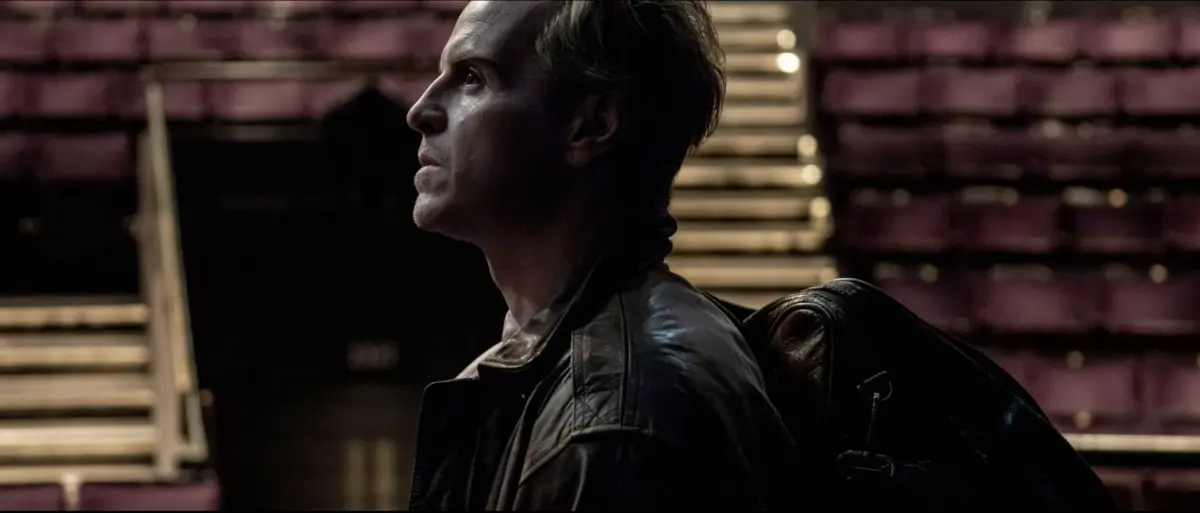
The undisputed crown jewel of the festival’s opening gala was Simon Stone’s Elsinore, a work widely projected to become the United Kingdom’s premier contender for the upcoming Oscars. Anchored by a transcendentally emotional lead performance from Andrew Scott, the film captures a pivotal chapter in British theatre history.
Scott steps into the shoes of Scottish actor Ian Charleson as he prepares for the National Theatre’s landmark 1989 production of Hamlet. At the time of the performance, Charleson—best remembered internationally for his iconic turn as Olympic athlete Eric Liddell in the 1981 Oscar-winning classic Chariots of Fire—was quietly battling a terminal diagnosis of AIDS. He passed away in January 1990, shortly after completing the play’s run.
Hamlet remains the ultimate theatrical exploration of self-doubt. Elsinore bypasses the conventional biographical traps that neatly compartmentalize public triumph and private tragedy, illustrating instead how dramatic art can simultaneously articulate and elevate lived reality. Through Scott’s tour-de-force portrayal, the audience witnesses an artist operating at the absolute peak of his powers, delivering a masterclass in grief, resilience, and mortality.
Closing Gala: The Debut and the Power of Consoling Fantasy
Providing a thematic counterweight to the devastating emotional depths of Elsinore, Jesse Eisenberg’s closing gala selection, The Debut, offered audiences the distinct pleasures of theatrical fantasy.
The film centers on a timid housewife who unexpectedly finds her voice while auditioning for a local community theatre musical. Julianne Moore leads the project, conveying the subtle, heartbreaking gradations of a woman moving from paralyzing fragility to hard-won strength. As her character undergoes an onstage transformation, The Debut captures the quiet reclamation of autonomy, closing the festival on a note of gentle, affirming catharsis.
Political Memory and Historical Echoes: La Bola Negra
Among the festival’s most intellectually ambitious triumphs was La Bola Negra, a historical drama directed by Javier Calvo and Javier Ambrossi. The film weaves across three distinct timelines, anchored by a frustrated playwright who inherits a mysterious document following the death of his estranged grandfather.
The narrative pivots seamlessly between the grandson’s modern-day artistic struggles, his grandfather’s reluctant service as a fascist conscript during the Spanish Civil War, and vivid visualisations of a lost theatrical work by the legendary gay socialist poet and playwright Federico García Lorca. Recognized as modern Spain’s most influential literary figure, Lorca was executed by fascist forces at the age of 38 at the outbreak of the conflict.
By interweaving these historical periods, La Bola Negra successfully juxtaposes political commitment, queer desire, and poetic imagination. It serves as an urgent reminder of past possibilities, the fragility of democracy, and the constant threat that humanity might forfeit what it holds most dear.
Hollywood Glamour and Satire: Behemoth! and Artificial
Among the major Hollywood premieres was Behemoth!, directed with a slick, classical-music backdrop reminiscent of 2022’s Tár. Starring Pedro Pascal as a professional cellist and passive Lothario navigating a midlife crisis, the film opts for a lighter, more rhythmic approach than its thematic predecessor. While Pascal anchors the picture, the film is repeatedly hijacked by an uproariously unhinged supporting performance from Olivia Wilde, elevated by an eclectic, propulsive musical collage.
Meanwhile, Luca Guadagnino’s Artificial tackled the bleeding edge of Silicon Valley anxiety. Andrew Garfield stars as OpenAI co-founder Sam Altman, portrayed not as a visionary technocrat, but as a chillingly seductive schemer who has essentially brokered a deal with the modern devil to monetize artificial intelligence. The film walked a razor-thin tightrope between corporate thriller and existential warning, cementing Garfield as one of the most daring actors of his generation.
International and Historical Counterpoints
Martin McDonagh returned with Wild Horse Nine, a fictional black comedy set against the tense backdrop of 1973 pre-coup Chile. Sam Rockwell and John Malkovich star as a dysfunctional pair of CIA operatives engaged in covert operations to destabilize Salvador Allende’s democratically elected government. The plot takes a surreal, melancholic turn as the bickering agents embark on an excursion to Easter Island, driven by the older operative’s dying wish to gaze upon the iconic stone monoliths.
Conversely, Cristian Mungiu’s Cannes-winning drama Fjord approached the immigrant experience with a heavier, more didactic hand. Following a Romanian family that emigrates to Norway, the narrative explores the friction that occurs when traditional religious beliefs clash head-on with the uncompromising ethos of a self-styled liberal state. While formally striking, the film struggled to escape its own self-importance.
Supporting Context & Metrics: Critical Consensus and Cultural Anxieties
While the festival celebrated major triumphs, several high-profile projects exposed a recurring difficulty in contemporary cinema: the struggle to effectively dramatize recent cultural and political origins.
- Critical Darlings: Carol Morley’s semi-autobiographical 7 Miles Out won unanimous critical praise for its vibrant, textured study of post-punk life in 1970s and 1980s Stockport, painting a vivid portrait of working-class British youth.
- The Misfires: Conversely, Kazuo Ishiguro’s speculative novel Klara and the Sun received universal disdain in its cinematic adaptation directed by Taika Waititi. Critics lamented the decision to transform Ishiguro’s compassionate understatement into a whimsical farce, stripping the narrative of its emotional sensitivity without generating meaningful humor.
- The Origin Story Trap: Danny Boyle’s Ink—an adaptation tracking Rupert Murdoch’s acquisition of The Sun newspaper—suffered from hyperactive visual styling that masked a scattershot narrative. Similarly, Primetime dramatized NBC’s exploitative reality series To Catch a Predator, yet bogged down its critique in aesthetic confusion.
Official Statements and Industry Insights
Speaking on the curation of this year’s festival slate, BFI festival programmers highlighted an industry-wide shift toward hybrid storytelling, where historical inquiry directly interrogates contemporary anxieties.
"Cinema today cannot afford to look backward simply for the sake of nostalgia," noted one senior festival programmer during the opening weekend symposium. "The works that resonate most profoundly this year—whether they examine the AIDS crisis in 1989, the rise of modern tabloid journalism, or the dawn of artificial intelligence—are those that use the past and the speculative future as a mirror for our current, fractured reality."
Industry analysts tracking the festival noted a distinct appetite among buyers for mid-budget dramas featuring high-concept premises and powerhouse lead performances, signaling a potential market correction away from over-bloated intellectual property franchises.
Future Outlook: The Road to the Oscars and Beyond
As the curtains close on another landmark year for the British Film Institute, the industry’s gaze shifts decisively toward the international awards season.
- Oscars Momentum: Simon Stone’s Elsinore and Andrew Scott are widely anticipated to dominate award nominations, with industry insiders predicting strong showings in Best Actor, Adapted Screenplay, and Best Picture categories.
- Global Impact: Films like La Bola Negra and Artificial have proven that political and technological thrillers can achieve both artistic integrity and commercial viability, paving the way for wider international distribution deals secured during the festival’s market events.
- The Value of Smallness: In a fitting final takeaway, Korean director Lee Chang-dong’s Possible Love reminded audiences that monumental emotional depth does not require grand subjects. By focusing intimately on the lingering domestic resentment of a laid-off worker and his uneasy friendship with a documentary filmmaker, the film demonstrated the enduring power of restraint.
Ultimately, the 2026 BFI Festival demonstrated that despite rapid technological changes and cultural polarization, cinema remains an indispensable medium for empathy, historical reckoning, and shared emotional truth.