Executive Overview
In the sprawling landscape of 1960s avant-garde and modal jazz, few territories remain as deeply misunderstood or overlooked as the Iberian Peninsula. While the cultural capitals of London, New York, and Paris dominated global discourse with seismic socio-political shifts and avant-garde manifestos, a quiet, sophisticated revolution was taking place in Madrid.
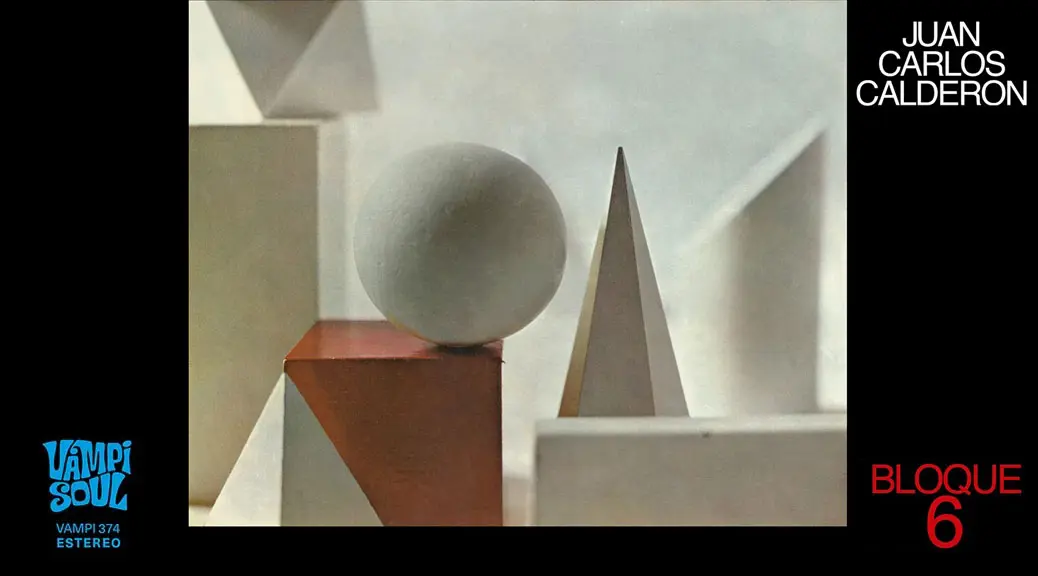
At the center of this movement was Bloque 6, a brilliant, elusive orchestral jazz album originally released in 1968 by the venerable Spanish imprint Hispavox. Credited on the front cover simply to Juan Carlos Calderón, and on its back cover and record labels to Juan Carlos Calderón y Su Orquesta De Jazz, the album has long been a holy grail for elite record collectors, crate-diggers, and mid-century jazz aficionados.
Now, over half a century after its initial pressing, the independent reissue specialists at Vampisoul have dragged this forgotten milestone back into the light. Meticulously remastering the original analog tapes, Vampisoul’s new vinyl edition marks the first time Bloque 6 has appeared on vinyl since 1975—when Hispavox’s budget subsidiary Clave issued a secondary run—and the first physical release of any kind since a scarce CD pressing in 1996.
For most contemporary music lovers, the name Juan Carlos Calderón conjures memories of pristine Spanish pop ballads, delicate bossa-inflected arrangements, and chart-topping Latin pop productions. Yet, long before he penned global Eurovision anthems or shaped the sounds of legends like Joan Manuel Serrat and Luis Miguel, Calderón was a fiercely dedicated, conservatory-trained jazz pianist navigating the vibrant, restricted cultural ecosystem of late-Francoist Spain.
Bloque 6 is the definitive testament to that era. Born out of a rare state-sponsored commission, executed by a fourteen-piece all-star lineup of Spanish jazz royalty, and heavily inspired by the modal innovations of Miles Davis, Gil Evans, and Oliver Nelson, the album is a masterclass in orchestral dynamics, harmonic sophistication, and subtle subversion. This feature explores the genesis, creation, musical architecture, and long-overdue revival of one of European jazz’s best-kept secrets.
Detailed Chronology
The Conservatory and the Club (Pre-1963)
Before he became an architectural pillar of modern Spanish popular music, Juan Carlos Calderón was forged in the coastal city of Santander. A classically trained pianist steeped in rigorous conservatory studies, Calderón possessed an insatiable appetite for the burgeoning sounds of American jazz crossing the Atlantic.
On New Year’s Day in 1960, his brother Ramón opened a jazz club in Santander, establishing a physical sanctuary where young musicians could dissect imported records and jam late into the night. Calderón served as the house pianist, honing his chops against the backdrop of a changing Spanish society.
His intellect matched his dexterity. In 1961, Calderón traveled to Paris and filed a sharply observed critical review of a live performance by the legendary John Coltrane Quartet at the Olympia theater for the publication Aria Jazz. When later asked to cite his primary musical touchstones, Calderón routinely pointed to a trinity of American visionaries: Miles Davis, Oliver Nelson, and Gil Evans. The fingerprints of these three titans would ultimately dictate the structural DNA of Bloque 6.
The Migration to Madrid (1963–1967)
In 1963, Calderón made the inevitable pilgrimage to Madrid, the cultural and political beating heart of Spain. He immediately secured the house piano chair at Bourbon Street, one of the capital’s premier jazz clubs. There, he honed his craft by backing visiting American jazz artists who toured the continent, mastering the telepathic communication required of a world-class jazz rhythm section.
During these years, Calderón immersed himself deeper into composition and arranging, quietly developing a reputation as an indispensable musical polymath within Madrid’s underground jazz circles. However, the opportunities to record large-scale jazz works in Spain during the 1960s were virtually non-existent without state or corporate patronage. Jazz was viewed with suspicion by conservative authorities, treated either as exotic foreign noise or tolerated merely as high-brow entertainment.
The State-Sanctioned Big Band (January 1968)
The existence of Bloque 6 reads like a bureaucratic anomaly. The album was born not from an independent commercial venture, but from a formal commission by the Spanish Ministry of Information and Tourism. In an effort to project a veneer of modern cultural progressivism, the Ministry tasked Calderón with assembling a full-scale jazz orchestra and composing two hours of original and arranged material.
The orchestra made its triumphant, high-profile debut at the Ministry’s own auditorium on January 4, 1968. The performance was a critical success, proving that Spanish musicians could execute complex, modern modal and orchestral jazz on par with their American and European contemporaries.
The momentum carried the ensemble through the festival circuit. By November 1968, Calderón’s bespoke big band shared festival billing at the third annual Barcelona Jazz Festival with undisputed global royalty, including Count Basie, Horace Silver, Earl Hines, and Muddy Waters. Sensing a commercial opportunity, Hispavox rushed the ensemble into the studio, capturing the energy of the project on tape and releasing the album Bloque 6 within weeks of the festival appearance.

Erasure and Reissues (1975–Present)
Despite its artistic triumphs, Bloque 6 quickly vanished into the mists of music history. Spain’s domestic distribution network was insular, and the album received little to no international export.
Hispavox rolled the dice on a secondary pressing in 1975 through its budget-oriented Clave subsidiary, after which the master tapes were shelved indefinitely. Decades later, in 1996, a modest CD release briefly brought the music back to physical form, utilizing a borrowed graphic design aesthetic that mirrored contemporary jazz packaging.
Now, through Vampisoul’s pristine vinyl reissue, the album finally receives the authoritative, artifact-level treatment it has demanded for over fifty years, honoring the original Hispavox sleeve design down to the last typographic split.
Supporting Context & Metrics
The Ensemble: Fourteen Pillars of Spanish Jazz
The sheer sonic weight of Bloque 6 rests on the shoulders of fourteen elite musicians. While credited on the front cover solely to Juan Carlos Calderón, the back cover and labels rightly expanded the billing to Juan Carlos Calderón y Su Orquesta De Jazz. Yet, this stellar cast of players was assembled for this single recording and never convened under this moniker again, making the album a rare lightning-in-a-bottle moment.
The instrumentation was formidable:
- Rhythm Section: Anchored by Juan Carlos Calderón on piano, alongside Carlos Casasnovas on bass and Pepe Nieto behind the drum kit.
- Brass Section: A powerhouse lineup featuring four trumpets and three trombones, delivering razor-sharp counterpoint and lush, Gil Evans-esque harmonic beds.
- Reed Section: A four-piece multi-instrumental powerhouse comprising Pedro Iturralde (tenor and soprano saxophones), Wladimiro Bas (alto saxophone, clarinet, and bass clarinet), Lincoln Barceló, and Lin Barto. Notably, three of the four reed players doubled on flute, creating the shimmering, multi-layered woodwind textures that define the album’s most striking moments.
Track-by-Track Musical Breakdown
Side A
- "Milestones": Opening the record with explosive intent, the horn section immediately declares the album’s modern jazz ambitions. In a brilliant subversion of Miles Davis’s structural choices on the landmark 1958 album of the same name—where Miles kept his trumpet front and center—Calderón hands the primary solo spotlight to tenor saxophonist Pedro Iturralde. Supported by muted trumpets and trombones, Iturralde delivers a performance of blistering intensity.
- "Bad Feeling": This track finally brings the trumpet forward, soaring over horn arrangements so impeccably smooth and voiced that they easily rival a traditional string section. The cinematic, noir-infused atmosphere evokes the height of 1960s international cinema, proving that Spanish jazz could match the moody sophistication of any studio in New York or Paris.
- "Sambando": Serving as the definitive "collector’s cut" of the album, this breezy, rhythmically complex piece introduces the flute one-third of the way in, seamlessly blending it with tenor saxophone and a muscular full-band accompaniment. Although Calderón’s smaller piano trio had recorded earlier renditions of both "Bad Feeling" and "Sambando" for a different label months prior, these large-scale orchestral arrangements are the definitive versions.
Side B
- "Stolen Moments": Opening the flip side, Calderón pays homage to Oliver Nelson with a breathtaking interpretation where three flutes state the primary theme together—a textural choice with virtually no precedent in orchestral jazz. Calderón dials back the tempo, allowing the horn section to build to a triumphant emotional peak. It is far from a standard cover; the band plays with an intensity that demands total respect.
- "Straight No Chaser": A high-energy workout that swings hard enough to feel right at home on an American Blue Note release. Fascinatingly, Calderón transposes Thelonious Monk’s famous composition into the key of F—the exact key Miles Davis utilized for Milestones—proving that even traditional swing filtered through Calderón’s pen arrived via the modal vocabulary of Miles. The piano playing throughout is crystalline and inventive.
- "Bloque 6": The title track and final masterpiece of the album. Calderón constructs the piece through brilliant sonic accumulation: piano and bass lock into a tight, repeated figure; the bass clarinet mimics the shape; and muted trumpet and flute enter in intricate counterpoint while trombones punctuate the space. A deep-toned reed section presides over the entire arrangement. With one trumpet sitting out to leave a tight trio, the orchestra sounds loose, joyful, and utterly locked in.
Official Statements
While historical promotional materials from Hispavox in 1968 remain scarce, retrospective assessments from modern archival labels and jazz historians have helped contextualize the record’s profound historical importance.
In liner notes and promotional literature accompanying the Vampisoul reissue, contemporary critics have emphasized the album’s unique place in European music history:
"1968 was a loud year in London and New York, and a Spanish big band album with domestic distribution and no export was never going to carry above the noise. That part Vampisoul can fix. The transfer carries the brightness of its period, and there there are passages where the top end declares its age… It has been a pleasure to play, and it lifted my spirits."
— Steve Williams, UK Vibe
Jazz historians note that Bloque 6 represents an essential bridge between Franco-era cultural isolationism and the internationalization of Spanish jazz. Although Calderón himself rarely spoke of the album in later decades—preferring to focus on his immensely successful pop and Latin production career with artists like Mocedades and Luis Miguel—the archival record stands as an unassailable monument to his early genius.
Future Outlook
The resurgence of Bloque 6 is part of a broader, vital cultural reckoning. For decades, music history has been written through a strict Anglo-American lens, relegating the contributions of Southern and Eastern European artists to regional footnotes. Today, boutique archival labels like Vampisoul are systematically rewriting that narrative, proving that artistic innovation knew no borders during the mid-20th century.
The commercial and critical reception of Vampisoul’s vinyl reissue opens exciting doors for future preservation efforts. Industry analysts and jazz archivists are already casting a wider net across the Iberian Peninsula, searching for other lost tapes from Madrid and Barcelona’s underground jazz clubs of the late 1960s and 1970s.
For modern listeners, Bloque 6 offers a thrilling counter-narrative. It reminds us that behind the curtain of mainstream Spanish pop history lay a generation of world-class conservatory musicians capable of absorbing the most complex currents of American modal jazz and refracting them through a uniquely Mediterranean lens. As this brilliant reissue finds its way onto turntables worldwide, Juan Carlos Calderón’s long-overlooked big band masterpiece is finally receiving the global applause it has deserved for over half a century.