Executive Overview
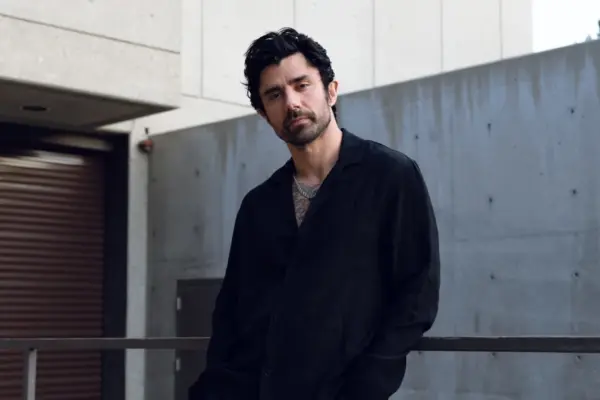
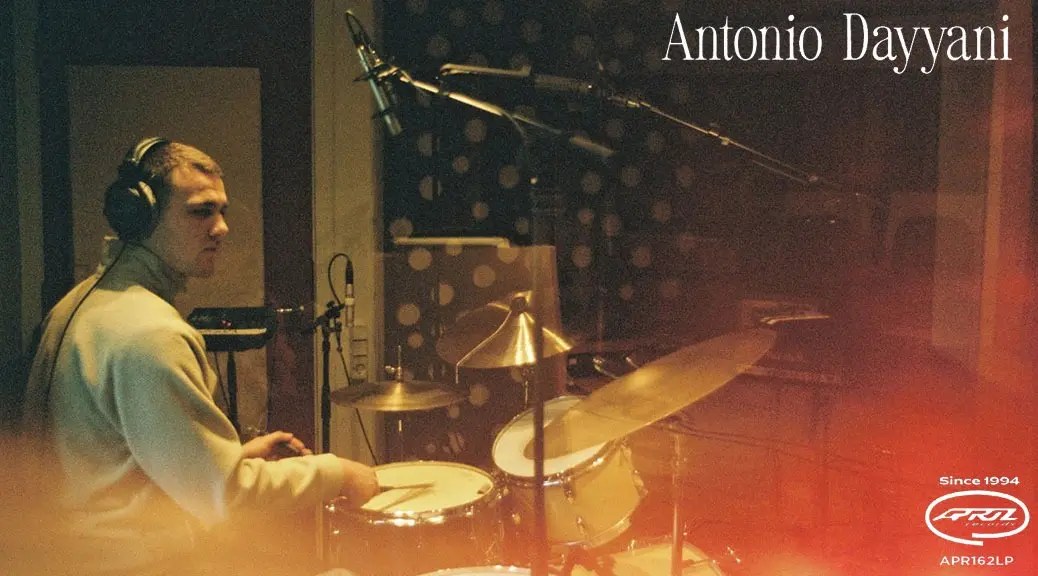
In the contemporary landscape of European instrumental music, few releases manage to straddle the delicate line between structural complexity and emotional intimacy quite as successfully as Organisme. Released as the third studio full-length by Danish drummer, composer, and bandleader Antonio Dayyani, the record represents a profound maturation in a young artist’s discography. Recorded alongside his fiercely tight, long-standing core sextet—featuring bassist Harald Hagelskjær, pianist Andrea Maagaard, guitarist Cahlo Heyman Krill, pedal steel player Magnus Munk Tækker, and trumpeter/flugelhornist Jon Askjær—Organisme finds the ensemble operating less like a traditional jazz combo and more like a breathing, interconnected ecosystem.
True to its conceptual title, the album explores the biological and philosophical metaphors of an organism, mapping out the relational dynamics that shape human individuals, local communities, and the broader, increasingly fractured global environment. Moving far beyond the conventional parameters of post-bop or standard contemporary jazz, Dayyani’s latest body of work leans heavily into pastoral textures, progressive folk tendencies, and expansive, cinematic arrangements. Augmented by guest string players Samira Dayyani (cello) and Tue Lautrup (violin), alongside the vocal precision of Kristoffer Essen, Organisme is a deliberate, humane, and quietly radical statement. It prioritizes the weight of stillness, acoustic resonance, and textural nuance over the empty pyrotechnics and rapid-fire chops that often plague modern instrumental releases. For Dayyani and his collaborators, this album marks a definitive artistic breakthrough—one that transforms a promising touring unit into a singular, fully realized creative voice.
Detailed Chronology: From Concept to Completion
The genesis of Organisme cannot be understood without examining the trajectory that preceded it. Dayyani’s earlier output, notably his sophomore release Trop Op, showcased a composer brimming with ambitious conceptual frameworks and intriguing sonic ideas, yet occasionally struggled to break past a certain formal reserve, leaving some critics to perceive it as slightly staid and anonymous. Rather than doubling down on complex arrangements for their own sake, Dayyani took a step back, spending countless hours on the road with his sextet. This extensive touring regimen forged an instinctive, telepathic chemistry among the musicians—a tight-knit communal trust that would ultimately serve as the primary laboratory for the new material.
The conceptual framework for Organisme took root during a period of intense global and personal introspection. Dayyani envisioned the music not merely as a sequence of discrete tracks, but as a living entity where each composition functions as a vital organ, contributing to the health and vitality of a larger whole while maintaining its own distinct DNA.
The recording sessions, approached with an ethos of openness and generosity, allowed ample room for improvisation and spontaneous spatial interplay. The opening track, "En lykkelig organisme" ("A Happy Organism"), immediately establishes this philosophy. It opens with an unvarnished, loose drumming foundation accompanied solely by Dayyani’s own charmingly unpolished vocals. As the track unfolds, the rest of the sextet trickles in with deceptive casualness, building toward a deeply satisfying yet remarkably spacious conclusion that sets the tone for the entire journey.
Subsequent tracks like "Roots removed, replaced" continue this exploration of sweetness interlaced with subtle melancholia, while the piano vignette "(feelings)" highlights Andrea Maagaard’s delicate touch, supported by an inventive rhythm section that frames rather than overwhelms the melody. The recording process culminated in a delicate balance between tightly scored chamber arrangements and wide-open improvisational spaces, capturing the organic evolution of a band that has spent years listening to one another in real-time.
Supporting Context & Metrics: Sound, Structure, and Instrumentation
To fully appreciate the acoustic architecture of Organisme, one must examine the unique instrumental palette Dayyani employs. While a standard jazz sextet might rely on a front-line horn and a traditional rhythm section, Dayyani expands the sonic spectrum by incorporating the pedal steel guitar—courtesy of Magnus Munk Tækker—and the acoustic folk sensibilities of guitarist Cahlo Heyman Krill. This combination introduces an atmospheric, Americana-tinged sheen to the proceedings that subtly destabilizes conventional jazz categorization, pulling the music firmly into the realm of modern Nordic chamber folk-jazz.
The Instrumental Landscape and Key Tracks
- "Alt og intet" (Everything and Nothing): This central piece serves as a masterclass in lush orchestration. Augmented by the rich, grounding resonance of Samira Dayyani’s cello and the yearning cadence of Tue Lautrup’s violin, the track is further elevated by Kristoffer Essen’s precise, emotionally resonant vocals. Jon Askjær contributes a restrained, deeply touching trumpet solo that cuts through the thick, cinematic strings without disrupting the track’s fragile equilibrium.
- "Organisme?": Serving as the emotional anchor of the album, this moving ballad strips away extraneous elements to showcase a sympathetic, low-end bass solo by Harald Hagelskjær. Hagelskjær’s woody tone anchors the melancholic harmonic shifts, demonstrating the profound empathy shared between the rhythm section and the compositional core.
- "o k a y": Here, Cahlo Heyman Krill takes a more prominent role, utilizing acoustic guitar licks that lean heavily toward progressive folk traditions, bridging the gap between contemporary acoustic singer-songwriter aesthetics and modern chamber composition.
- "Are you confused, Monsieur Gustave? (Live 2025)": Placed as the album’s closer, this more uptempo, live-recorded track offers a sharp stylistic pivot. Driven by a prodding bass line and fuzz-laced guitars, it deliberately breaks the hypnotic, ambient spell cast by the earlier tracks, injecting a jolt of raw, unpolished energy that hints at the band’s formidable live power.
Comparative Analysis: Trop Op vs. Organisme
| Feature | Trop Op (Previous Release) | Organisme (Current Release) |
|---|---|---|
| Sonic Palette | Conventional modern jazz sextet; cerebral arrangements. | Expanded instrumentation (pedal steel, strings, folk guitar); organic and textural. |
| Ensemble Dynamics | Technically proficient, occasionally emotionally reserved. | Highly intuitive, deeply empathetic, and telepathic after years of touring. |
| Core Aesthetic | Intellectual concepts and intricate compositional architecture. | Stillness, acoustic space, emotional resonance, and biological metaphor. |
| Critical Reception | Praised for ideas, but critiqued for occasional anonymity. | Celebrated as a major artistic breakthrough and a humane listening experience. |
Official Statements and Artistic Vision
Antonio Dayyani has been remarkably articulate regarding the philosophical underpinnings of his third release, viewing his musical output as an extension of ecological and sociological systems. In promotional materials accompanying the release, Dayyani expanded on the central metaphor of the record:

"The album takes its title from the idea of an organism, exploring the interconnected relationships that shape people, communities and the wider world. I wanted to create music that functions as a living entity, where each composition contributes to a larger whole while retaining its own distinct character."
This vision of music-making rejects the atomized, soloist-centric model often prioritized in commercial jazz circles. Instead, Dayyani champions a collectivist approach where the health of the collective sound supersedes individual ego. Critics and industry insiders have been quick to note the success of this philosophy. In a glowing review for UK Vibe, critic Kevin Ward observed the transformative nature of the ensemble’s journey, writing:
"Three albums in and after years of touring together, this sextet is pretty tight; the performance conveying a sense of openness and generosity within the unit… Dayyani and the crew have developed a distinct voice that prizes stillness and texture over pyrotechnic technique and ear-catching chops."
Ward further encapsulated the overarching emotional resonance of the project, describing Organisme not merely as an album to be intellectually dissected, but as a sanctuary:
"I suspect you’ll be en lykkelig organisme listening to this enchanting album. It’s a nurturing experience; a shelter from the storm."
Future Outlook: The Next Phase for Antonio Dayyani and the Sextet
The critical and artistic triumph of Organisme positions Antonio Dayyani as one of the most compelling young bandleaders and composers operating within the contemporary European jazz and improvised music circuit. Having successfully bridged the gap between cerebral composition and deep emotional accessibility, the question for Dayyani moving forward is how to sustain and expand this delicate sonic ecosystem.
Upcoming Milestones and Strategic Trajectories
- Extended International Touring: Building on the tight-knit rapport forged during years of regional and national touring, the sextet is slated to take the Organisme repertoire across major European festival stages throughout the coming concert seasons. Adapting the album’s intimate studio arrangements—complete with guest string instrumentation—to live acoustic environments will be a crucial test of the ensemble’s versatility.
- Cross-Genre Collaborations: Given the seamless blending of chamber jazz, progressive folk, and ambient textures on the new record, Dayyani is uniquely positioned to collaborate with contemporary classical ensembles and folk artists. Future projects may see the core sextet expanding its dialogue with traditional European folk musicians and avant-garde string quartets.
- Compositional Evolution: Having established a distinct voice that values negative space and textural depth over technical flashiness, Dayyani’s next compositional chapter will likely explore larger-scale multimedia works or extended suite-form compositions that further interrogate sociological and ecological themes.
As the modern music industry continues to accelerate toward fleeting trends and hyper-compressed singles, Antonio Dayyani’s Organisme stands as a defiant, nurturing counterweight. It is a work that demands patience, rewards deep listening, and offers a profound reminder of the beauty inherent in collective human collaboration. For listeners seeking refuge from the relentless noise of the modern world, Dayyani’s latest creation proves to be a vital, breathing sanctuary.