Executive Overview
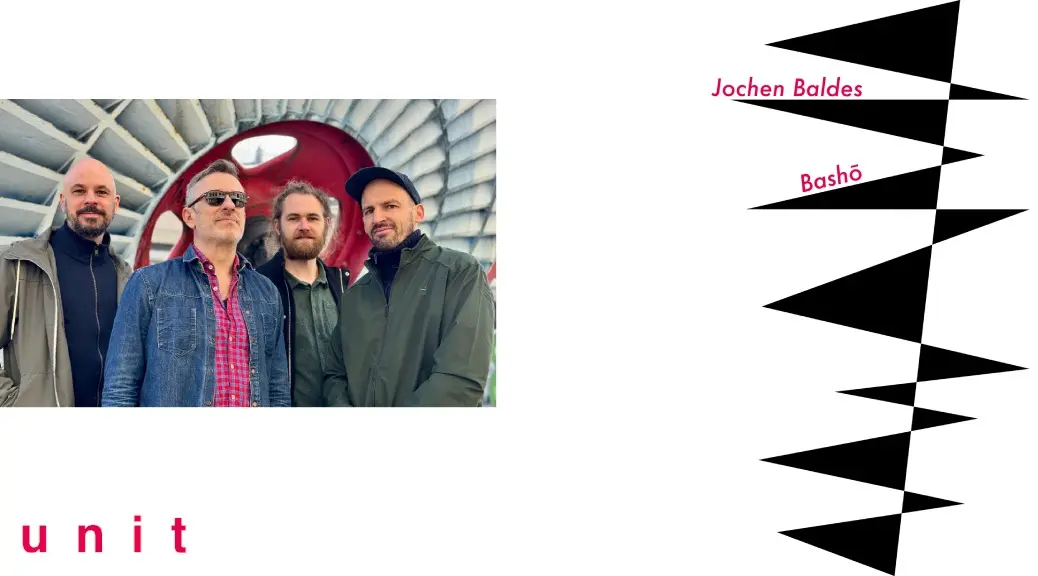
In the upper echelons of contemporary European improvised music, few releases capture the delicate intersection of literature, acoustic architecture, and cross-generational camaraderie quite like Bashō. Released via the venerable Swiss vanguard label Unit Records, this remarkable project is spearheaded by Zurich-born saxophonist, composer, painter, and sculptor Jochen Baldes. Recorded across two intense days in June 2025 at the historic Jazzhaus Zürich, Bashō finds Baldes alongside a tightly knit, fiercely expressive quartet featuring saxophonist and clarinetist Christoph Irniger, double bassist Raphael Walser, and drummer Lukas Mantel.
At its core, Bashō is an ambitious, chordless meditation on the timeless haiku of the legendary 17th-century Japanese poet Matsuo Bashō. Eschewing the harmonic comfort of a piano or guitar, Baldes deploys a dual-reed frontline—with both saxophonists regularly doubling on bass clarinet—supported by a muscular, nimble rhythm section. The resulting sound is at once fragile and formidable. Each composition is prefaced by the spoken-word recitations of Sonoe Kato, bridging the gap between ancient Japanese literary traditions and the kinetic, unpredictable vocabulary of modern European jazz.
This review-essay explores the genesis of Bashō, mapping Baldes’s unorthodox journey from the fine arts to the vanguard of jazz, examining the deep collaborative roots of the ensemble, and analyzing the structural and emotional contours of an album destined to leave an indelible mark on the international improvised music landscape.
Detailed Chronology: From the Canvas to the Avant-Garde
The Unorthodox Genesis of Jochen Baldes
To understand the conceptual weight of Bashō, one must first understand the artistic trajectory of its creator. Born in Zurich in 1964, Jochen Baldes did not follow the traditional, conservatory-bound pipeline into jazz. Instead, his early twenties were spent immersed in the visual arts, working as a freelance painter and sculptor. This background in physical spatial design, texture, and structural balance would ultimately inform his compositional voice.
In 1986, Baldes picked up the saxophone, initiating a rigorous apprenticeship under regional luminaries Nat Su and Omri Ziegele. This foundational period culminated in his graduation from the prestigious Swiss Jazz School in Bern in 1995, where he studied under luminaries such as Andy Scherrer, Joe Haider, Bert Joris, and Frank Sikora.
Baldes’s artistic output since those formative years has been defined by an unyielding restlessness. His touring footprint spans major European stages—from the Montreux and Willisau jazz festivals—to international excursions such as the Grahamstown festival (now Makhanda) and Splashy Fen in South Africa. Yet, it is his studio and collaborative work that truly cements his status as a pillar of the Swiss creative music ecosystem.
A Tapestry of Collaborations: Subnoder to Tonhalle
Baldes’s longest-standing creative vehicle, Subnoder, was established in 1997 and has weathered multiple line-up iterations across four acclaimed albums: Niniland (1999), Osmotic Jazz (2003), The Moholo Songs (2007), and Here (2013).
Literary translation into music has long been a hallmark of Baldes’s career. He previously transformed the poetry cycle Ach Anna by Hamburg writer Nicolai Kobus into an evening-length suite under the moniker Kobal. Furthermore, his collaborations with singer and electronics artist Johanna Jellici—manifesting as Jellici/Baldes Soundfields and Jellici Baldes Spacetracker—yielded the celebrated records Invisible Door (2016) and The Journey (2019). His work within these diverse idioms continued to expand in 2024 with the release of Slider by his ensemble Bloom Effect on the legendary Leo Records imprint.
That same year marked a crowning achievement in Baldes’s career as an interpreter: in October 2024, he appeared as a featured improvising soloist with the world-renowned Tonhalle-Orchester Zürich, performing Howard Shore’s complex score for David Cronenberg’s film Naked Lunch. In stepping into the virtuosic part originally recorded by Ornette Coleman with the London Philharmonic Orchestra, Baldes proved his complete mastery of free-flowing, visceral improvisation.
Supporting Context & Metrics: The Zurich Circle and the Art of the Haiku
Anatomy of the Quartet
The quartet assembled for Bashō is deeply rooted in the interconnected Zurich jazz ecosystem, with its members having crossed musical and educational paths long before this project crystallized.

- Christoph Irniger: Fifteen years Baldes’s junior, Irniger has cultivated a formidable international reputation through his acclaimed Intakt Records releases with his band Pilgrim and his piano-less trio. Like Baldes, Irniger studied under Nat Su before spending over seven years in the Lucerne Jazz Orchestra—an institutional crucible that both Baldes and drummer Lukas Mantel have also passed through.
- Lukas Mantel: A versatile and driving force on the kit, Mantel’s resume includes past collaborations with both Irniger and bassist Raphael Walser. He also shares a historical parallel with Baldes through the esteemed Jazz thing Next Generation series on Double Moon Records, having appeared with tré on Fundamental Music in 2006 (just one year before Baldes represented the series with The Moholo Songs).
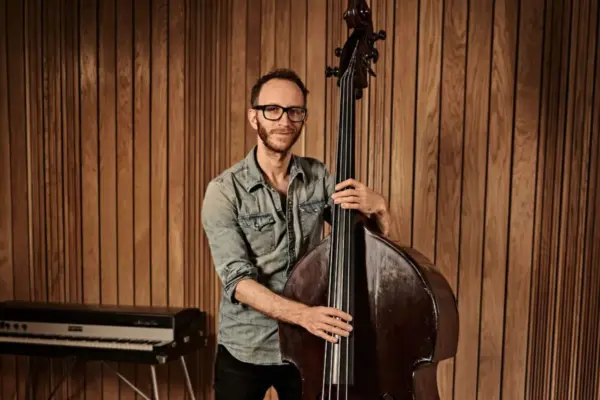
- Raphael Walser: The youngest member of the quartet, Walser honed his craft at the Zurich University of the Arts under the tutelage of Christoph Grab (who was, notably, another of Irniger’s primary mentors). Walser also flew the flag for the Jazz thing Next Generation series, leading his ensemble GangArt on the album Wolfgang.
This web of shared institutional lineage and informal gigging forged an telepathic level of interplay. Irniger’s founding of the Jazz im Seefeld concert series provided a natural incubator for the band, allowing them to road-test the Bashō material live from the spring of 2024 onward. The recording sessions finally took place at the Jazzhaus Zürich on June 17–18, 2025, expertly engineered, mixed, and mastered by Andy Neresheimer.
[Jochen Baldes] ------ (Mentored by / Collaborated with) -----> [Nat Su, Omri Ziegele]
      |                                                                 |
      +--- (Lucerne Jazz Orchestra) --- [Christoph Irniger, Lukas Mantel]
      |
      +--- (Unit Records Catalog) ----- [The Journey, Bashō]
      |
      +--- (The Quartet) ------------+-- Jochen Baldes (Tenor Sax / Bass Clarinet)
                                     +-- Christoph Irniger (Tenor Sax / Bass Clarinet)
                                     +-- Raphael Walser (Double Bass)
                                     +-- Lukas Mantel (Drums)
The Poetic Blueprint: Matsuo Bashō and the Chordless Space
The conceptual architecture of the album was forged during the quiet, introspective months of the COVID-19 pandemic. Seeking solace and inspiration, Baldes immersed himself in Japanese literature, film, and visual art, ultimately finding his muse in the life and work of Matsuo Bashō (1644–1694), the master of the haiku who derived his pen name from a bashō (banana plant) gifted to him by his students.
Baldes penned all the compositions, utilizing Bashō’s evocative haiku as both titles and emotional blueprints. Crucially, the ensemble is entirely chordless. Without the harmonically anchoring presence of a piano, guitar, or vibraphone, the burden of spatial definition and tonal shading falls squarely upon the two tenor saxophones and their alternate iterations on bass clarinet, anchored by Walser’s double bass and Mantel’s drums.
This chordless configuration is an inspired match for a poetic form built upon juxtaposition—the placement of two disparate images side by side to create an emotional spark.
Official Statements & Structural Analysis of the Music
Navigating the Calendar: Format Nuances and Track Sequencing
A fascinating element of Bashō is the distinct physical presentation between its Compact Disc and vinyl editions. Each piece is introduced by Sonoe Kato reciting the respective haiku in its native Japanese. However, the formatting handles these recitations differently:
- The CD Edition: Indexes the spoken-word introductions as separate, standalone tracks. While convenient, this structural choice risks inviting listeners to skip past the spoken poetry—a pitfall that threatens to divorce the music from its literary genesis. The CD also includes an exclusive closing track, "Meigetsu."
- The LP Edition: Seamlessly weaves each recitation directly into the opening moments of the respective track, positioning the spoken word as an intrinsic part of the musical body. The physical gatefold sleeve prints each text in original Japanese script, romanized form, and English translation—an essential educational and aesthetic aid.
The running order of the pieces moves deliberately through the calendar, utilizing the traditional kigo (season word) embedded within each haiku:
Side A: Autumn to Winter
- "Aki no kure": Named after the poignant closing words of Bashō’s famous crow poem—a lone bird settling on a leafless branch at autumn nightfall. The composition exudes a quiet melancholy, driven by a forward-leaning tenor saxophone lead over nimble rhythmic undercurrents.
- "Sakura kana": Drawing from a verse where blooming cherry blossoms trigger a flood of nostalgic memory, this piece stands tall and resolute. The tenor saxophones trade soaring melodic lines, underpinned by Walser’s resonant bass and Mantel’s crisp percussion.
- "Kimi hi o take": Arguably the compositional crown jewel of the record. Set on a freezing snowy night, Bashō instructs his disciple Sora to stoke the hearth fire while he reveals a remarkable sight: a giant snowball. The music opens with immense depth, carrying an organic warmth that defies the wintry setting.
Side B: Summer to Early Spring
- "Natsugoromo": Opening Side B, this piece references "summer robes" still harboring lingering insects—a self-deprecating joke by the poet at the end of a grueling journey. Here, Mantel delivers his most frantic and kinetic drumming on the record. The piece frequently shifts direction mid-flow, intentionally destabilizing the listener in a manner that rewards active engagement.
- "Shizukasa": Translating to "stillness," this track evokes Bashō’s famous 1689 verse written at the mountain temple of Yamadera, where the shrill cry of a cicada seems to sink deep into the ancient rock. Here, the frontline shifts dynamically: the bass clarinet steps forward, supported by the cavernous resonance of Walser’s double bass.
- "Sazaregani": A delicate, scurrying piece capturing the image of a tiny crab creeping up the poet’s leg in clear, shallow water. Tenor saxophones return to the fore, dancing around intricate rhythmic cells.
- "Mume ga ka ni": Closing the vinyl edition, this piece commemorates a poem from 1694—the final spring of Bashō’s life—describing the sun suddenly bursting over a mountain path carried on the scent of plum blossoms. The two reed players open up a breathtaking, three-dimensional soundstage, far surpassing the emotional scope of the album’s earlier tenor features.
- "Meigetsu" (CD-Only Bonus): Returning to the harvest moon and a meditative night walk around a pond until dawn, this piece utilizes the bass clarinet in a lead role, offering a fitting, twilight conclusion before fading out with the gentle tap of a triangle.
Future Outlook: Legacy, Label Continuity, and Live Dates
Bashō represents more than just a stellar addition to Jochen Baldes’s discography; it marks his triumphant return to Unit Records. Founded in 1983 by a vanguard of Swiss musicians—Jürg Solothurnmann, Hans Kennel, Paul Haag, and Urs Blöchlinger—the label was conceived as an uncompromised platform for adventurous players from the Swiss-German scene and beyond.
Over the decades, Unit Records has remained largely in the hands of working artists. Following the stewardship of Pius Knüsel (later director of Pro Helvetia), drummer Lucas Niggli (1996–2005), and guitarist Harald Haerter, the label’s reins were passed in 2023 to bassists Andreas Waelti and Luca Sisera. Operating out of Willisau, the label maintains an unbroken, remarkably high-quality lineage of contemporary European jazz and improvised music. Bashō stands as a testament to this ongoing legacy—challenging, unyielding, yet deeply lyrical.
For audiences eager to experience the kinetic interplay and poetic resonance of this chordless quartet in the flesh, the ensemble has announced an extensive run of live dates extending through late 2027:
- November 12, 2026: Esse, Winterthur, Switzerland
- November 25, 2026: unerhört! Festival (Jazz im Seefeld), Zurich, Switzerland
- January 24, 2027: Jazzclub Moods, Zurich, Switzerland
- November 18, 2027: Jazzclub Aarau, Aarau, Switzerland
As modern improvised music continues to grapple with questions of identity, structure, and interdisciplinary collaboration, Jochen Baldes and his quartet have provided a masterclass in how to honor the past while fearlessly charting unknown sonic territories. Bashō is not merely an album to be heard; it is an environment to be inhabited—a rare confluence of poetry, wood, brass, and silence.