Executive Overview
In an era defined by intense geopolitical polarization and an increasingly fractious cultural landscape, the live music industry finds itself on the frontline of modern ideological battlegrounds. Major music festivals—once viewed purely as safe havens for escapism, community, and communal artistic celebration—have steadily evolved into high-profile arenas for socio-political discourse, activism, and controversy.
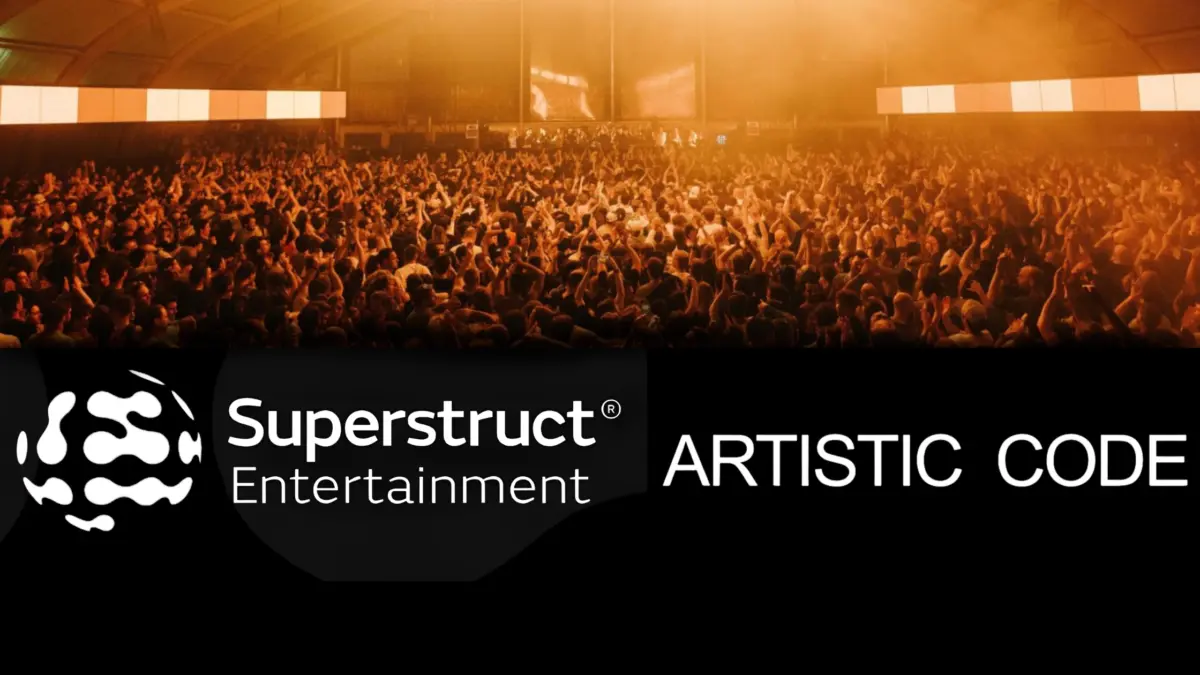
Addressing this complex reality head-on, global live entertainment powerhouse Superstruct Entertainment has officially launched its comprehensive Artistic Code. Designed to serve as a definitive operational and philosophical framework, the code applies across the more than 80 major music festivals operating within the Superstruct portfolio. This massive roster includes world-renowned events such as Awakenings, Boardmasters, Field Day, Flow Festival, Kendal Calling, Mighty Hoopla, Sónar, Sziget, Truck Festival, Victorious, and Y Not Festival.
According to corporate leadership, the document is a robust, transparent demonstration of the company’s "longstanding support for artistic freedom and the creative independence of its festivals." At its core, the policy codifies a foundational belief: music festivals must remain spaces where artists are permitted to challenge cultural orthodoxies, provoke thought, and express diverse perspectives without the deadening hand of corporate censorship.
Yet, translating lofty ideals of free speech into practical event management is fraught with peril. The launch of the Artistic Code arrives at a critical juncture for the festival sector, which has recently been buffeted by two distinct fronts of controversy: public demands to cancel or blacklist artists over contentious political views expressed on and off stage, and aggressive grassroots campaigns calling on performers to boycott entire events due to corporate ownership structures. By introducing this new framework, Superstruct hopes to provide its decentralized festival teams with a unified shield against external pressures, while establishing clear boundaries where absolute creative freedom must yield to safety and the rule of law.
Detailed Chronology: The Escalation of Festival Politics
The contemporary convergence of live music and volatile politics did not happen overnight; it is the culmination of years of shifting societal expectations placed upon public figures, cultural institutions, and corporations. To understand the necessity behind Superstruct’s Artistic Code, one must trace the recent history of friction within the festival ecosystem.
Phase One: The Corporate Ownership Backlash (2024–Present)
The pressure points facing Superstruct intensified significantly following its acquisition by private equity titan KKR in 2024. Almost immediately, the company became a prime target for activist-driven "festival boycotts." These campaigns were largely spearheaded by individuals and advocacy groups protesting KKR’s financial investments, particularly those tied to companies operating within the context of the ongoing Israel-Palestine conflict.
Unlike monolithic corporate structures, Superstruct operates on a decentralized model where each festival maintains its own distinct brand identity, loyal community, and independent management team. Consequently, when boycott campaigns gained traction online, the burden of response fell squarely on individual festival teams. In various instances, these festival organizations chose to publicly distance themselves from their ultimate corporate owner. Some went so far as to openly criticize KKR’s investment portfolio while expressing solidarity with the Palestinian cause.
Remarkably, both KKR and Superstruct’s central management demonstrated a pragmatic tolerance for this decentralized dissent, allowing individual events to navigate local community relations independently. However, the psychological and professional toll on performing artists caught in the crossfire has been severe. Artists have frequently faced intense online harassment from activist groups asserting that performing at a targeted event constitutes an implicit endorsement of the sponsor’s business practices. Behind closed doors, industry insiders note that some artists have been subjected to severe pressure, emotional manipulation, and bullying by peers to force compliance with unofficial boycotts—creating an agonizing dilemma between personal political convictions and professional touring obligations.
Phase Two: The Contentious On-Stage Speech Battles
Parallel to ownership-based boycotts, the festival circuit has experienced a surge of public campaigns demanding the immediate removal of artists who express polarizing or controversial political viewpoints. These flashpoints typically revolve around two categories of public figures: those accused of antisemitism or hate speech, and those using their massive cultural platforms to deliver scathing critiques of foreign governments.
High-profile controversies have included punk duo Bob Vylan, whose confrontational stage presence and vocal opposition to Israel have drawn intense public scrutiny. Similarly, Irish rap sensations Kneecap have found themselves at the center of media storms regarding alleged statements and symbols displayed during their live sets. On a different front, hip-hop icon Kanye West has repeatedly sparked industry-wide debates regarding his history of antisemitic rhetoric, forcing event organizers and audiences alike to grapple with the ethics of platforming troubled artists, regardless of subsequent apologies or disclaimers.
These incidents have transformed festival soundstages into legal and cultural tripwires, forcing organizers to repeatedly draft reactive statements, manage reputational damage, and balance the demands of offended patrons against the artistic rights of performers.
Supporting Context & Metrics: The Anatomy of the Code
Superstruct’s newly minted Artistic Code is structured to address the thorniest dilemmas of modern live entertainment. At its foundational level, the document explicitly delineates the division of responsibility between the corporate entity and the performing talent.
The text of the code asserts:
"Artists perform at our events and may express views, take political positions or make statements that are nothing to do with us, that we may not agree with, or that prompt public debate or scrutiny… and that is their right."
Furthermore, the document establishes a strict anti-censorship standard, noting that festival organizers:
"…do not censor or editorially control performances to ensure alignment with our group values or commercial interests," and that "…this includes cases where artists express social or political commentary as part of their performance or as part of their wider public persona."
The "Two Absolute Red Lines"
While the code champions unbridled creative expression, it explicitly acknowledges that free speech within a densely packed, public festival environment cannot be absolute. To prevent legal liability and guarantee public safety, Superstruct has drawn two absolute red lines where artistic freedom must be curtailed:
- Public Safety and Incitement to Violence: Any speech, performance element, or action that places the physical safety of festival visitors, staff, or artists at risk. This includes inciting dangerous crowd surges, mass panics, or targeting specific individuals and groups in a manner that fosters discrimination or could reasonably lead to physical violence.
- Legal Compliance: Any content or speech that directly violates the criminal laws of the specific country in which the festival operates—such as expressing explicit support for legally designated terrorist organizations or proscribed entities.
The Gray Areas: Interpreting the Red Lines
The existence of these red lines, however, does not eliminate controversy; rather, it shifts the battleground of interpretation. Critics of specific artists routinely argue that harsh political rhetoric crosses the threshold from protected speech into illegal incitement or hate speech.
For instance, when Bob Vylan led festival audiences in chants of "death, death to the IDF" (referring to the Israel Defense Forces), detractors fiercely condemned the act as antisemitic hate speech and a direct incitement to violence. Similarly, calls to cancel Kneecap at various international bookings were fueled by allegations that the group had expressed support for proscribed organizations such as Hamas and Hezbollah. Furthermore, critics argue that aggressive political polarization on stage can alienate segments of the audience, making diverse festival crowds feel unsafe or unwelcome.
Conversely, the accused artists and their legal representatives have robustly defended their actions. Both Bob Vylan and Kneecap have consistently rejected allegations of antisemitism, hate speech, or unlawful conduct. Notably, police investigations into Bob Vylan’s stage comments have never resulted in criminal charges. In the case of Kneecap, member Mo Chara faced criminal charges over allegations of displaying a Hezbollah flag on stage; however, the case ultimately collapsed due to administrative errors by prosecutors, while the band’s legal team maintained absolute confidence that the charges lacked legal merit from inception.
The Flag and Symbol Controversy
Adding a granular layer to the policy, the Artistic Code directly tackles the perennial festival headache: the waving of flags and political symbols in dense crowds. Acknowledging that passive-aggressive flag waving often obstructs sightlines and provokes localized friction among attendees, the code maintains a pragmatic stance.
Superstruct festivals will permit flag waving unless a specific item is deemed illegal within the host nation’s jurisdiction, or if a concrete safety risk has been formally identified and agreed upon with local municipal authorities and licensing bodies. Similarly, artists utilizing flags, banners, or political imagery as part of their performance will be subjected to the same standardized test: restrictions will only be enforced in the face of genuine safety hazards or legal violations, explicitly prohibiting censorship simply because an image or symbol is deemed "controversial."
Official Statements and Industry Reception
The rollout of the Artistic Code has elicited substantial commentary from executive leadership, framing the initiative not merely as a defensive legal shield, but as an affirmative philosophical declaration.
Launching the initiative, Superstruct Chief Operating Officer Rebecca Kane Burton emphasized the core ethos driving the project:
"Artistic freedom sits at the heart of our festivals. They are places for artists to express themselves, challenge ideas and bring different points of view to audiences."
Kane Burton expanded on the practical utility of the framework for the company’s vast network of event producers:
"We believe strongly in backing that freedom. The Artistic Code makes our position clear and gives artists and our festival teams shared principles to work from, with creative independence at the heart of them."
By establishing this universal baseline, Superstruct empowers local festival bookers and PR teams. In moments of future public outcry over contentious lineup additions, management will no longer be forced into panicked, ad-hoc public relations scrambling. Instead, they can direct stakeholders to a unified, publicly accessible document that clearly outlines corporate policy: the festival provides the stage, the artist exercises their voice, and neither party’s opinions are conflated with the corporate identity of the organizing group.
At the same time, the code retains a vital safety valve for corporate integrity. Superstruct and its individual festival brands explicitly reserve the right to publicly distance themselves from statements made on their stages. The policy notes:
"We celebrate diverse creative expression. However, if an artist’s public statements or behaviour diverges from our core values, we reserve the right to clarify our organisation’s independent position."
Future Outlook: Implications for the Global Live Music Market
As the live entertainment sector looks toward the future, Superstruct Entertainment’s Artistic Code is likely to serve as a bellwether for how major promoters manage the collision between commercial imperatives and sociopolitical activism.
The initiative highlights a growing maturity within corporate festival management. Rather than attempting to sanitize festival line-ups into inoffensive, homogenized entertainment—a strategy that invariably alienates core music fans and stifles counter-cultural innovation—Superstruct has chosen a path of principled transparency. By explicitly acknowledging that music festivals are inherently disruptive, provocative, and political spaces, the company is attempting to insulate its creative teams from the whiplash of cyclical outrage culture.
However, the true test of the Artistic Code will lie in its execution during moments of acute crisis. As geopolitical tensions persist around the globe, and as activists continue to scrutinize both the stage banter of musicians and the boardroom portfolios of private equity backers, real-world gray areas will inevitably test the elasticity of Superstruct’s "two absolute red lines."
Whether the code can successfully defuse tensions, protect artists’ mental health and professional livelihood, and maintain public trust remains to be seen. What is certain, however, is that Superstruct has permanently altered the conversation. By drawing a bright line in the sand between corporate curation and artistic free expression, the company has set a new benchmark for corporate accountability and cultural stewardship in the 21st-century live music industry.