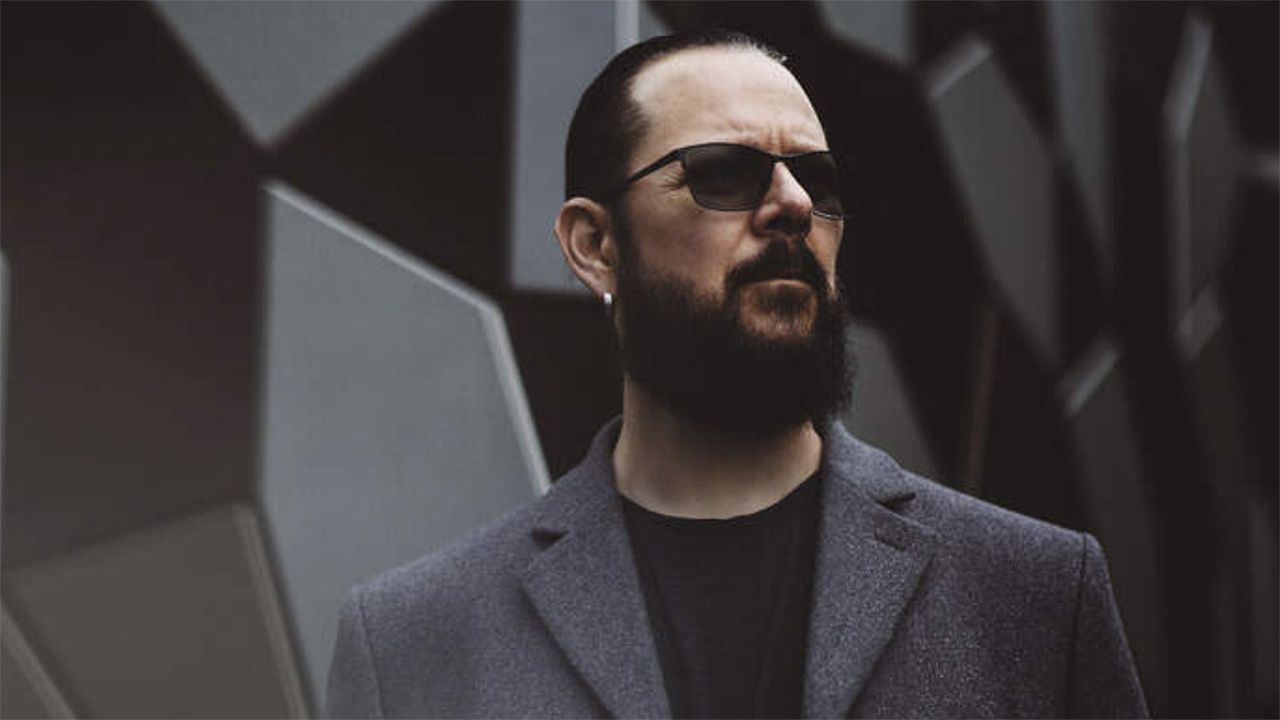
Vegard Sverre Tveitan—known globally by his stage name Ihsahn—stands as one of heavy music’s most resolute visionaries. Rising to international prominence during the early 1990s as the frontman and primary composer for the legendary Norwegian black metal band Emperor, Ihsahn helped establish a subgenre defined by extreme tempos, shrieking vocals, and bleak, atmospheric soundscapes. Yet, while many of his early contemporaries remained anchored to the rigid aesthetic boundaries established during their youth, Ihsahn transformed his career into a Masterclass in artistic evolution.
With the release of his eighth solo effort, the 2024 self-titled double album Ihsahn, the 48-year-old multi-instrumentalist has delivered what represents the definitive synthesis of his dual creative identities. Spanning 100 minutes across two distinct discs, the ambitious project pairs a heavy, progressive metal record with an entirely classical, fully orchestrated counterpart. The album utilizes sophisticated, non-diatonic harmonic structures borrowed from legendary cinematic composers like Jerry Goldsmith and John Williams, overlaid onto a narrative framework inspired by Joseph Campbell’s monomyth.
This longform journalistic analysis explores Ihsahn’s journey: from an isolated child on a remote Norwegian farm to a pioneering figure in progressive music who systematically dismantled metal conventions to build a singular, cinematic aesthetic universe.
Detailed Chronology
+-----------------------------------------------------------------------------------+
| CHRONOLOGY OF IHSAHN'S MUSICAL EVOLUTION                                         |
+-----------------------------------------------------------------------------------+
| 1975–1988 | Childhood in Notodden; isolated self-taught multi-instrumentalist.   |
| 1989–1991 | Meets Tomas "Samoth" Haugen; co-founds Emperor at age 15.            |
| 1994      | Emperor releases 'In the Nightside Eclipse', redefining black metal.  |
| 1997–2001 | Releases 'Anthems' & 'Prometheus'; assumes full songwriting duties.   |
| 2001      | Disbands Emperor due to artistic differences; pursues solo path.      |
| 2006      | Launches solo career with 'The Adversary'; Emperor reforms for live shows.|
| 2010–2018 | Releases avant-garde classics ('After', 'Das Seelenbrechen', 'Arktis').|
| 2020      | Releases twin EPs 'Telemark' and 'Pharos' exploring dark vs. light.    |
| 2024      | Releases self-titled magnum opus 'Ihsahn' (Dual Metal/Orchestral LP). |
+-----------------------------------------------------------------------------------+
1975–1990: Isolated Origins in Rural Notodden
Born in 1975, Vegard Sverre Tveitan spent his formative years on a rural farm in Notodden, Norway. Framed by frozen rivers, dense pine forests, and snow-capped peaks, the remote Scandinavian landscape provided a stark backdrop for an isolated childhood. Lacking neighborhood playmates, Tveitan immersed himself in music. Self-taught, he mastered the piano, electric organ, guitar, and bass—often executing multi-instrumental jam sessions alone in his room. His early listening habits fused the dramatic heavy metal of Iron Maiden and Twisted Sister with the grandeur of Hollywood film scores, laying the groundwork for his future blend of symphonic intensity and heavy riffs.
1991–2001: The Rise, Reign, and Dissolution of Emperor
At age 13, Tveitan met guitarist Tomas "Samoth" Haugen at a local blues festival. Bound by a shared passion for early extreme metal act Bathory, the pair formed a creative partnership that culminated in the creation of Emperor in 1991.
By 1994, Emperor released their landmark debut album, In the Nightside Eclipse. The record expanded the technical boundaries of second-wave black metal by weaving atmospheric keyboards into relentless blastbeats and icy guitar lines. As the scene became plagued by extra-musical headlines—church arson, violence, and criminal convictions that temporarily incarcerated bandmates—Ihsahn detached himself from the chaos, directing his energy entirely toward composition.
Subsequent releases, including 1997’s Anthems to the Welkin at Dusk and 1999’s IX Equilibrium, pushed Emperor toward greater complexity. By 2001’s Prometheus: The Discipline of Fire & Demise, Ihsahn had written the entire album single-handedly. Its intricate counterpoint, orchestral arrangements, and avant-garde structures signaled an absolute departure from traditional black metal, sparking creative friction within the group. Recognizing their diverging artistic trajectories, Emperor formally disbanded following the album’s release when Ihsahn was just 25 years old.
2006–2023: Solo Avant-Garde Exploration
Refusing to be trapped by nostalgia, Ihsahn launched his solo career with 2006’s The Adversary. The record blended clean vocals, classic Judas Priest-inspired riffing, and progressive song structures. Over the following decade and a half, his solo catalog served as a testing ground for genre experimentation:
2010 (After): Introduced eight-string guitars and prominent saxophone performances by Shining’s Jørgen Munkeby.
2013 (Das Seelenbrechen): A descent into free-form improvisation, dark ambient textures, and noise art.
2016–2018 (Arktis. / Amr): Blended accessible pop hooks, retro synth-wave electronics, and modern progressive metal.
2020 (Telemark & Pharos EPs): A deliberate split study examining his roots—Telemark focused on harsh, dark Norwegian extreme metal, while Pharos leaned into clean, melancholic art-pop.
2024: The Self-Titled Cinematic Magnum Opus
In February 2024, Ihsahn released his self-titled double album, representing the logical culmination of his decades-long career. Designed as a unified narrative experience, the project consists of two distinct mix versions of the same compositions: Disc One presents full progressive extreme metal arrangements accompanied by an orchestra, while Disc Two strips away the rock instruments entirely to feature the full standalone orchestral score.
Supporting Context & Metrics
Structural Composition & Harmonic Mechanics
The 2024 Ihsahn release marks a departure from standard rock and metal composition methods. Traditional heavy metal relies heavily on diatonic chord progressions and blues-based pentatonic scales. For this double album, Ihsahn adopted non-diatonic harmonic structures and advanced scale shifts typical of modern orchestral film scores.
          TRADITIONAL METAL COMPOSITION             IHSAHN (2024) COMPOSITIONAL FRAMEWORK
      +-----------------------------------+     +-----------------------------------------+
      | - Diatonic / Pentatonic Scales    |     | - Chromatic / Non-Diatonic Harmony      |
      | - Standard Verse/Chorus Structure | VS  | - Orchestral Counterpoint & Leitmotifs  |
      | - Guitar-Led Melodic Focus        |     | - Dual Parallel Mixes (Metal & Symphony)|
      | - Standard Root-Note Basslines    |     | - Film Score Scale Theory (Goldsmith)   |
      +-----------------------------------+     +-----------------------------------------+
To execute this, Ihsahn undertook extensive study of film scoring techniques, analyzing how classical composers build tension without relying on standard chord resolutions. The result is a music system where the electric guitars and orchestral string sections function as co-equal leads, moving in intricate counterpoint rather than simply using strings as background padding.
Thematic Framework: The Hero’s Journey
Conceptually, Ihsahn relies on Joseph Campbell’s monomyth, detailed in The Hero with a Thousand Faces (1949). The narrative follows an archetypal hero who leaves the familiar world behind, confronts cultural norms and internal anxieties, undergoes a process of metaphorical death and rebirth, and returns with personal autonomy.
       [1. DEPARTURE]  ──────>  [2. INITIATION]  ──────>  [3. RETURN]
   Rejection of Cultural        Trial, Internal Abyss      Mastery of Identity
       Conformity                 & Rebirth                 & Independence
For Ihsahn, this mythological structure serves as an allegory for the creative process itself—specifically his refusal to yield to audience expectations or subcultural dogmas.
In an extensive dialogue with Prog Magazine, Ihsahn reflected on his isolated upbringing, the trajectory of his career, and the philosophical drive behind his evolving musical choices.
On the Harsh Norwegian Environment
Speaking from his home in Notodden during a winter freeze, Ihsahn dismissed mild complaints about cold weather with typical Scandinavian grit:
"It’s around 0 °C? That’s springtime! There weren’t really neighbouring kids, so music became a big part of my free time. I got my first guitar, electric organ, played the bass with my feet and would do jam sessions with myself."
On His Role in the 1990s Norwegian Black Metal Scene
Addressing the sensationalism surrounding the early Norwegian scene, Ihsahn clarifies his position as an artist who prioritized composition over controversy:
"My role as a part of the black metal scene is probably exaggerated, because I was the visible frontman in one of those bands. In many ways, I was just the nerd making music."
                 "In many ways, I was just the nerd making music."
                                              — IHSAHN
On the Breakup of Emperor and Reclaiming Artistic Freedom
Reflecting on the ending of Emperor following Prometheus in 2001, Ihsahn emphasized his refusal to let fans or scene purists dictate his creative choices:
"I was 15, 16 when the band started, and we ended Emperor when I was 25, so I was still pretty young. There were quite big leaps between the albums and where it was heading. You change so much: I had a need to go in a more experimental way. Listening to Prometheus…, because it’s not that accessible, it almost seemed like a ‘fuck you’ of an album. I didn’t want anyone else to dictate what Emperor should be like from the outside."
On Creative Inertia Among Peers and the Radiohead Ethos
Ihsahn voiced frustration with artists who retreat into nostalgia, contrasting static bands with transformational acts like Radiohead:
"I ended up doing the most extreme music I possibly could at 16. We all had that, pushing music forward. Why would you stop pushing forward when you get an opportunity to continue? I get this a lot: ‘Why do you do more experimental stuff?’ I’m thinking, ‘Why didn’t more people continue that journey? Why did they stop at fucking 18?’"
"There’s nothing wrong with it. You can’t take away from Motörhead or AC/DC for being what they are. But I always found it much more interesting with Radiohead. Their response to OK Computer—one of the most successful and best rock albums ever—was Kid A and Amnesiac. I wanted that developing, chameleon style."
On the Conceptual Synthesis of his 2024 Self-Titled Album
Explaining his approach to his self-titled double album, Ihsahn summarized how it brings together every phase of his artistic life:
"It’s the stuff that I feel I am best at. If you were to draw a straight line from the beginning of my career up until now, the common denominator would probably be black metal singing with dual guitars and orchestral elements. In that perspective, I thought I’d focus on those core elements."
"I tried to focus more on the scales and harmony structures typical of film music. That was the atmosphere I was going for. I had to take a theoretical approach to study that, because unless you’ve analysed it, it seems very random—especially for someone who’s self-taught and comes from a very Iron Maiden, very diatonic background."
Future Outlook
As Ihsahn approaches his fifties, his career sits at a unique intersection of legacy and continuous innovation. While Emperor continues to headline major international festivals like Wacken Open Air, Hellfest, and Bloodstock, the band operates purely as a live celebration of their foundational catalog. Ihsahn has repeatedly reaffirmed that Emperor will never record new music, preserving the band’s historical legacy while keeping his creative energy focused entirely on his solo work.
                            IHSAHN'S CAREER MODEL
                                     │
           ┌─────────────────────────┴─────────────────────────┐
           ▼                                                   ▼
   EMPEROR (Live Only)                                SOLO CAREER (Creative)
   - Festival Headliner                               - Orchestral / Extreme Fusion
   - Preservation of 90s Legacy                       - Uncompromised Innovation
   - Nostalgic Audience Connection                    - Future Compositional Horizon
His 2024 self-titled double album marks a new benchmark for what heavy music can accomplish when paired with classical music theory. Rather than viewing this ambitious project as a career peak, Ihsahn treats it as a foundation for future experiments.
"With every album I have tried to take another step; with Ihsahn, I took about 10 steps. The biggest gratification is, closing in on 50 and having done this for a very long time, to find myself in a situation where I’m so fired-up and excited. There’s a realisation that I could set the bar much higher than I did previously and work my way through it. It’s just made me even more excited to do the next one."
By continually pushing beyond the boundaries of extreme metal, Ihsahn remains a vital force in modern progressive music—proving that artistic evolution is not just an option, but an obligation.