Executive Overview
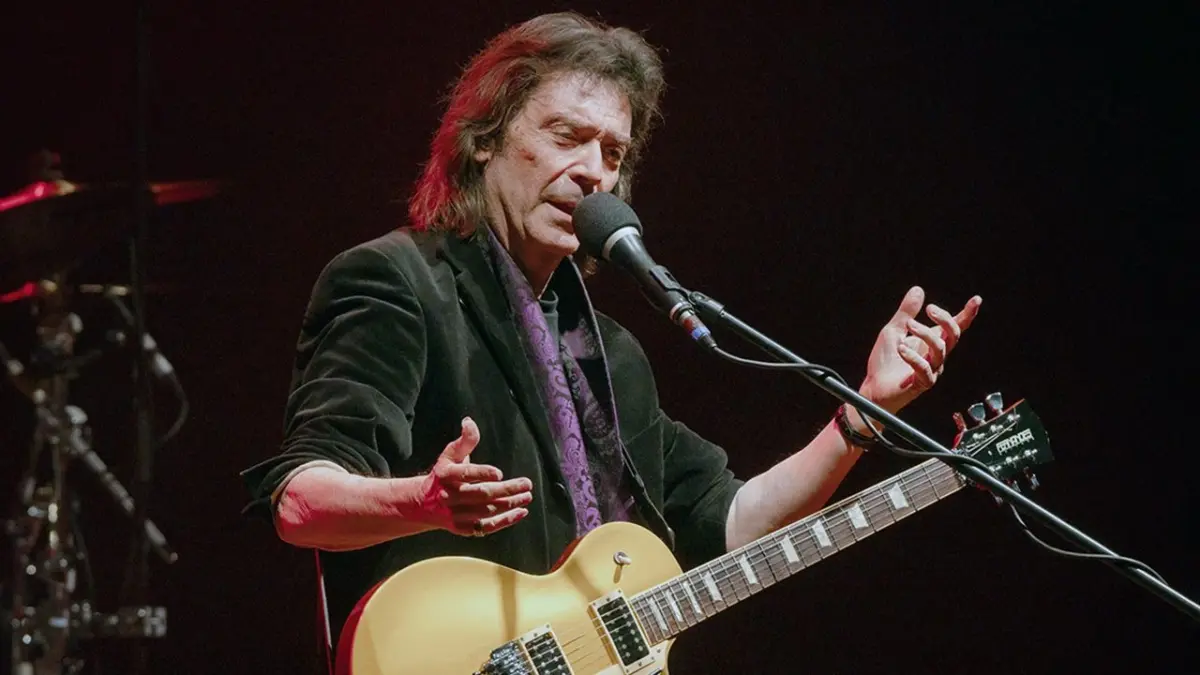
In an era dominated by algorithmic predictability and legacy acts reliant on nostalgia tours, former Genesis guitarist Steve Hackett stands out for his uncompromising creative drive. Following a hyper-prolific period marked by an autobiography, a live record, and an acoustic project, Hackett released his heavy studio album, Surrender Of Silence. The record pushed the boundaries of progressive rock, sparking both acclaim and debate among his fan base.
Central to this polarization is the track "Wingbeats," an audacious composition that blends Hackett’s signature guitar work with East African sonic textures inspired by a trip to Ethiopia. The single ignited a fierce debate online, forcing a broader re-examination of artist longevity, fan expectations, and the nature of creative risk in contemporary rock.
This analytical report explores Hackett’s ongoing artistic evolution, tracing the path that led to Surrender Of Silence, evaluating the mechanics of modern fan discourse, and examining how a pioneer of 1970s progressive rock continues to challenge genre boundaries five decades into his career.
Detailed Chronology
========================================================================================
TIMELINE: STEVE HACKETT'S CREATIVE EVOLUTION AND THE "SURRENDER OF SILENCE" DEBATE
========================================================================================

 1971–1977: THE GENESIS ERA
 ├── Joins Genesis; introduces two-handed tapping and sweeping volume swells.
 ├── Co-creates seminal albums: "Foxtrot", "Selling England by the Pound", "The Lamb Lies Down on Broadway".
 └── Departs Genesis following the "Seconds Out" live album to pursue unrestricted solo autonomy.

 1978–2019: SOLO EXPANSION & WORLD INFLUENCES
 ├── Launches solo career with "Voyage of the Acolyte" and "Spectral Mornings".
 ├── Forms supergroup GTR with Steve Howe (1986); releases classical acoustic works.
 └── Initiates "Genesis Revisited" project, bridging historical repertoire with contemporary arrangements.

 2020–2021: THE COVID-19 CREATIVE SURGE
 ├── Authoring & Release: Publishes autobiography "A Genesis in My Bed" (2020).
 ├── Acoustic Release: Drops "Under a Mediterranean Sky" (Jan 2021), showcasing orchestral world-acoustic arrangements.
 └── Heavy Studio LP: Writing and recording of "Surrender Of Silence" alongside long-term collaborator Roger King.

 LATE 2021–2022: "WINGBEATS" & PUBLIC RECEPTION
 ├── Album Launch: "Surrender Of Silence" released to critical curiosity; noted for its unusually heavy tone.
 ├── Single Drop: "Wingbeats" music video debuts, featuring prominent Ethiopian-inspired rhythms and vocal arrangements.
 └── Fan Backlash & Online Discourse: Social media divides over world-music fusion; Hackett responds publicly.
========================================================================================
The Genesis Era and the Pursuit of Autonomy (1971–1977)
Steve Hackett’s entry into Genesis in 1971 redefined the sound of early progressive rock. His technical innovations—most notably two-handed tapping, finger-picking, and sweeping volume swells—became foundational elements of classic albums such as Foxtrot (1972) and Selling England by the Pound (1973). However, the democratic constraints of a multi-member band and the shifting dynamics following frontman Peter Gabriel’s 1975 departure created creative friction. Seeking complete compositional freedom, Hackett departed Genesis in 1977 following the release of the live record Seconds Out.
The Solo Years and Broadening Horizons (1978–2019)
Over four decades, Hackett established a solo career defined by its stylistic breadth. From early progressive rock benchmarks like Spectral Mornings (1979) to classical guitar albums and rock supergroups like GTR, Hackett maintained a relentless release schedule. Simultaneously, his Genesis Revisited tours kept the original band’s 1970s catalog alive in performance halls worldwide, grounding his reputation as both a musical innovator and a custodian of progressive rock history.
The Pandemic Creative Explosion (2020–2021)
The global pandemic and live performance hiatus of 2020–2021 triggered an unprecedented wave of output from Hackett. Rather than pausing operations, he published his autobiography, A Genesis in My Bed, released a live concert recording, and dropped an acoustic, classical-inspired album, Under a Mediterranean Sky.
Before the industry could fully process this body of work, Hackett announced Surrender Of Silence, billed as a heavier, darker, and more instrumentally aggressive counterpart to his acoustic material.
The "Wingbeats" Flashpoint (2021–2022)
Upon the release of Surrender Of Silence, the track "Wingbeats" emerged as the album’s most controversial piece. Written after a transformative trip to Ethiopia, the song incorporated traditional East African rhythm structures, choir-style vocal textures, and world-music arrangements underneath Hackett’s soaring electric lead guitar.
While critics lauded the track’s bold ambition, a vocal segment of Hackett’s core progressive rock audience reacted with skepticism. The accompanying music video became a battlefield in YouTube comment sections and dedicated music forums, sparking a debate over whether Hackett was pushing boundaries or straying too far from his signature sound.
Supporting Context & Metrics
The Musician’s Paradox: Innovation vs. Audience Expectation
Artist trajectories in progressive rock are defined by a fundamental contradiction. The genre was built on breaking rules, rejecting traditional pop structures, and incorporating diverse musical traditions. Yet as progressive rock matured, its fan bases often developed rigid expectations around instrumentation, scale, and stylistic boundaries.
+-----------------------------------------------------------------------------------+
|                        THE PROGRESSIVE ROCK ARTIST DILEMMA                        |
+-----------------------------------------------------------------------------------+
|                                                                                   |
|     OPTION A: REPEAT THE FORMULA                   OPTION B: INNOVATE & EVOLVE    |
|   +-----------------------------+                +-----------------------------+  |
|   | Stick to traditional 1970s  |                | Incorporate global sounds,  |  |
|   | prog-rock arrangements and  |                | heavy textures, and modern  |  |
|   | symphonic structures.       |                | production styles.          |  |
|   +--------------+--------------+                +--------------+--------------+  |
|                  |                                              |                 |
|                  v                                              v                 |
|   CRITICISM: "Predictable,      |                CRITICISM: "Betraying core    |  |
|   stagnant, nostalgic."         |                audience, abandoning genre."  |  |
|                                 |                                                 |
+---------------------------------+-------------------------------------------------+
Hackett’s embrace of African polyrhythms on "Wingbeats" mirrors similar artistic pivots in rock history—most notably Peter Gabriel’s self-titled albums and Paul Simon’s Graceland. However, in the modern digital ecosystem, creative shifts are met with immediate, unfiltered feedback on social media platforms.
Metrics of Output and Reception Dynamics
Hackett’s high release velocity between 2020 and 2022 sparked debate among rock critics regarding output volume versus audience absorption capacity.
+-----------------------------------------------------------------------------------+
|               STEVE HACKETT'S RELEASE PROFILE (2020–2022 OVERVIEW)                |
+-----------------------------------------------------------------------------------+
| PROJECT TITLE                    | PRIMARY GENRE / STYLE   | FAN BASE RECEPTION   |
+----------------------------------+-------------------------+----------------------+
| A Genesis in My Bed (Memoir)     | Literary / Historical   | Overwhelmingly Positive|
| Under a Mediterranean Sky        | Classical / Acoustic    | Positive             |
| Seconds Out & More (Live)        | Legacy Progressive Rock | High Acclaim         |
| Surrender Of Silence (Studio LP) | Heavy Prog / World Fusion| Polarized            |
|  └── Focus Single: "Wingbeats"   | East African Fusion     | Divided / Debated    |
+-----------------------------------------------------------------------------------+
The Changing Mechanics of Music Consumption
In the 1970s, progressive rock tracks were given months to resonate with listeners, who spun vinyl records repeatedly to decipher complex, multi-layered arrangements. Today, digital distribution delivers music instantly to audiences equipped with public commenting platforms, dramatically shortening the feedback loop.
1970s ABSORPTION MODEL:
[Album Release] ---> [Repeated Vinyl Plays] ---> [Long-term Critical Digest] ---> [Consensus Classic]

MODERN DIGITAL MODEL:
[Single Release] ---> [Streaming / YouTube] ---> [Immediate Commenting] ---> [Polarized Discourse]
This structural shift means that stylistic experiments like "Wingbeats" are subjected to immediate public reactions before audiences have time to evaluate the work in the broader context of an artist’s full catalog.
Official Statements
Addressing the divided reception to "Wingbeats" and the rapid pace of his recent output, Steve Hackett offered a candid perspective on artistic freedom, audience expectations, and the role of social media in modern music.
On the Ethiopian Origins of "Wingbeats" and Dividing the Audience
Hackett acknowledged that introducing world music influences into heavy progressive rock inevitably risks unsettling long-time fans:
"There’s always going to be that. You can gain some and you can lose some. That particular song was written after a visit to Ethiopia and I’d been struck by the beauty of the place. The response to it has been extraordinary."
On Challenging Fans vs. Serving Nostalgia
Refusing to limit his music to traditional progressive rock tropes, Hackett emphasized that true artistic growth requires challenging the listener:
"I think brave music is bound to divide people – if you do a brave song, you can’t expect everyone is going to get it. Music is always having to justify itself and it isn’t going to sit still. The hunger for it is never going to go away. I don’t aim to please my core audience – I love them, but at the same time I want to go: ‘Have you thought of this? You might like it!’"
Historical Parallel: Early Genesis and Initial Rejection
Hackett contextualized the modern critique of "Wingbeats" by comparing it to the early days of Genesis, reminding listeners that many now-classic compositions faced initial hostility:
"During the early days of Genesis, audiences would boo and walk out during songs which, in time, became regarded as classics. Many things can be met with a stony silence; you have to allow a certain amount of time for people to absorb it. Music becomes more powerful and sweeter as you re-encounter it, like an old friend."
On Navigating Digital Criticism and YouTube Dynamics
When asked about the sharp commentary surrounding the visual and musical presentation of the "Wingbeats" video, Hackett reflected on the nature of online public commentary:
"Most of our own social media was full of praise for it. I think that with YouTube, you open yourself up. For all artists life is a coconut shy with yourself as the coconut. A certain number of balls are going to hit you. But if you’ve got your helmet on, as a long-term performer, you’re going to go, ‘Well, so what?’"
Future Outlook
Steve Hackett’s stance on creative risk offers key insights into the future of progressive rock and legacy artists navigating the modern era.
========================================================================================
FUTURE OUTLOOK: IMPLICATIONS FOR PROGRESSIVE ROCK AND VETERAN ARTISTS
========================================================================================

1. SUSTAINING CREATIVE RELEVANCE
   └── Rejection of pure nostalgia tours in favor of releasing new studio material ensures
       artistic vitality, attracting younger listeners interested in world fusion and heavy rock.

2. THE EVOLUTION OF LIVE PERFORMANCE FORMATS
   └── Dual-concept touring models—combining full album performances of Genesis classics
       with solo material—provide a sustainable blueprint for legacy artists balancing
       fan expectations with personal expression.

3. RESILIENCE AGAINST DIGITAL VOLATILITY
   └── Long-term career artists who insulate their creative process from social media
       feedback loops maintain artistic integrity, allowing challenging material time to
       mature into standard catalog classics.
========================================================================================
Uncompromising Innovation in a Nostalgic Era
Hackett’s refusal to retreat into pure nostalgia sets a high standard for his peers. While many legacy musicians rely on retrospective performances, Hackett maintains a dual identity: a guardian of classic progressive rock history and an active innovator expanding his sonic footprint.
Re-Evaluating Polarizing Works Over Time
As Hackett noted with the early Genesis material, challenging music often requires time to settle into the culture. Tracks like "Wingbeats" may initially disrupt expectations, but as Surrender Of Silence takes its place within Hackett’s discography, its global influences may be viewed not as a detour, but as a vital evolution in the progressive rock tradition.
The Long Game of Progressive Rock
Ultimately, Steve Hackett’s recent work demonstrates that progressive rock remains an ongoing philosophy rather than a static historical genre. By taking risks, incorporating global musical traditions, and standing firm against online commentary, Hackett ensures that his art remains vital, demanding, and resolutely forward-looking.