Executive Overview
In late 2025, Pantone made a cultural declaration that would crystallize a quietly expanding global anxiety. Eschewing the vibrant hues of previous years, the global color authority selected "Cloud Dancer" as its Color of the Year for 2026—a shade formally described as a "lofty white." While marketed as a symbol of tranquility and minimalist purity in an increasingly chaotic digital age, this choice serves as a stark symptom of a deeper, systemic malaise: our visual and physical worlds are rapidly draining of color, character, and diversity.
From the hyper-gentrified streets of major world capitals to the hyper-personalized recommendation feeds of our devices, a relentless push toward uniformity is underway. Urban centers are increasingly dominated by cookie-cutter developments that prioritize financialization over community heritage. Simultaneously, the algorithms that curate our media diets—from curated pop songs to interior design trends—create powerful feedback loops that flatten individual taste into a predictable, homogenized monoculture.
This article investigates the convergence of urban design rationalization, algorithmic curation, and the erosion of "aesthetic welfare." By examining historical frameworks like the "McDonaldization" of society and the "generic city," we explore how efficiency and commodification are starving our visual environments—and why returning color and creative chaos to our surroundings is essential for human wellbeing.
Detailed Chronology: From the "Generic City" to Cloud Dancer White
To understand how our physical and digital environments became so profoundly muted, it is necessary to trace the decades-long trajectory toward rationalization, efficiency, and design standardization.
- 1983 – The Rise of "McDonaldization": American sociologist George Ritzer introduced the concept of the "McDonaldization" of society. Ritzer used the fast-food chain as a metaphorical lens to explain how business practices—focusing on efficiency, calculability, predictability, and control—were permeating every sector of modern life, from education to healthcare. While this model promised cost-savings and consumer certainty, it systematically eliminated space for spontaneity, human quirkiness, and local personality.
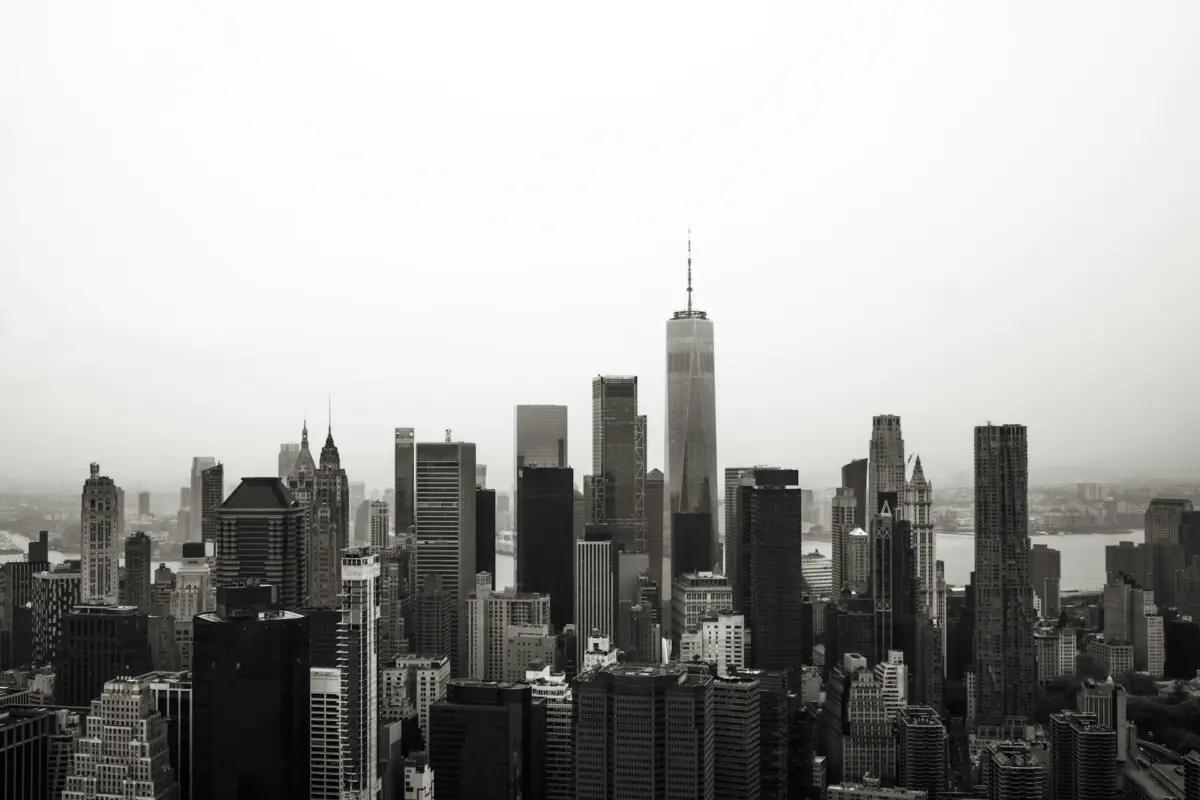
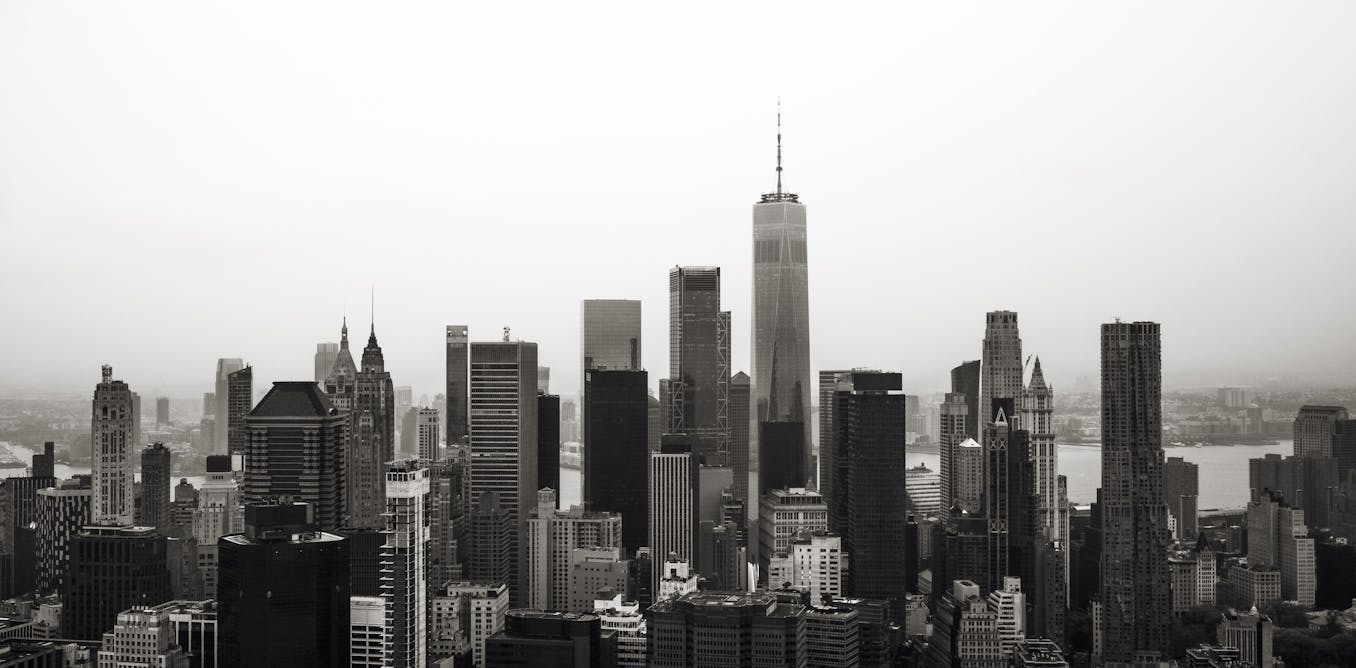
- 1993 – The Birth of the "Generic City": Architect and urban theorist Rem Koolhaas embarked on an extensive global survey, traveling over 360,000 kilometers to document the changing face of the modern metropolis. He coined the term the "generic city" to describe urban spaces stripped of identity, history, and cultural resonance. Koolhaas observed a global architectural homogenization: cities optimized for trade and transit rather than human habitation, functioning smoothly yet bearing no emotional or cultural distinctiveness.
- The 2010s – The Algorithmic Turn: As smartphones and social media platforms embedded themselves into daily routines, curation shifted from human editors, local architects, and community planners to invisible algorithms. Platforms began predicting user behavior to maximize engagement, inadvertently trapping users within hyper-specific echo chambers of taste.
- Recent Years – Urban Gentrification and Real Estate Financialization: In metropolitan hubs worldwide, neighborhood identity was increasingly bulldozed in favor of high-yield financial assets. A prime example is the London borough of Elephant and Castle. Once a thriving Latin American enclave celebrated for its architectural variety and vibrant street life, billions of pounds in recent development have transformed it into what social geographer Oli Mould termed an "identikit homogeneous gentrified place."
- 2026 – The Reign of Cloud Dancer: Pantone cements the cultural zeitgeist by anointing "Cloud Dancer"—a stark, lofty white—as its Color of the Year for 2026. Rather than an isolated aesthetic choice, cultural analysts view it as the ultimate expression of a world retreating from color, complexity, and visual friction.
Supporting Context & Metrics: The Architecture of Sameness
The march toward a beige and white monoculture is not an accident of history; it is the direct result of economic incentives and technological architectures that reward safety over expression.
The Financialization of the Built Environment
Modern real estate development increasingly views urban land not as a canvas for community life, but as a liquid financial asset. According to recent insights from architectural and economic watchdogs, key decision-makers frequently evaluate buildings and public spaces through spreadsheets, yields, and risk metrics rather than lived human experience.
When buildings are designed primarily to be easily transacted, leased, and resold on global markets, architectural risk-taking becomes a liability. Intricate facades, vibrant murals, asymmetrical communal spaces, and locally sourced materials are expensive and hard to standardize. Consequently, developers lean toward neutral palettes, sleek glass panels, and minimalist white finishes that appeal to the broadest, least offensive common denominator.
This structural sanitization destroys "sense of place"—the unique psychological and cultural anchor that makes a neighborhood feel alive. As Professor Oli Mould warns, this relentless wave of homogenizing gentrification risks "destroying the very thing that makes a community thriving and beautiful in the first place."
The McDonaldization of Daily Life
Ritzer’s critique of McDonaldization remains profoundly relevant today. Whether walking into a fast-food franchise in suburban France or downtown Bangkok, the consumer expects—and receives—the exact same visual environment, menu, and sensory experience.
[Traditional Local Space]
       │
       ▼ (Drawn by Economic Efficiency & Global Capital)
[The Financialized Real Estate Asset]
       │
       ▼ (Mediated by Algorithmic Curation)
[The Generic City / Monoculture]
This standardized blueprint has migrated out of restaurants and into hospitals, universities, corporate offices, and residential apartment blocks. The pursuit of efficiency strips away local variance. While consumers appreciate the comfort of predictability, the ultimate cost is a profound spiritual and visual impoverishment.
Algorithms of Taste and the Death of Serendipity
Beyond our physical surroundings, our digital environments are subject to an even more aggressive form of flattening. Algorithms process our choices—what we watch, what songs we stream, what home decor we pin—and feed them back to us in distorted, amplified loops.
Consider the modern music landscape. As highlighted by recent cultural data studies, popular songs are increasingly optimized to clear specific algorithmic hurdles (such as optimal length for streaming metrics, immediate hooks, and production styles designed to avoid immediate skipping). This feedback loop creates bizarrely hyper-specific micro-genres—such as Spotify’s viral categories—while simultaneously eroding musical diversity.
When algorithms curate our aesthetic choices, they produce a "strong pull toward sameness." Art, fashion, domestic interiors, and even pets are increasingly chosen to match the generic, sanitized palette demanded by online algorithms. The result is an all-encompassing monoculture that flattens human creativity into a series of predictable digital trends.
Official Statements and Academic Insights
Experts across law, sociology, architecture, and aesthetics argue that the loss of color and diversity in our environment carries severe implications for human health.
Dr. Elaine Fischer, a researcher specializing in law and aesthetics, emphasizes that the degradation of our visual landscape is fundamentally an issue of welfare. Drawing on the work of American philosopher Monroe Beardsley—who formulated the concept of "aesthetic welfare" over fifty years ago—Fischer argues that the quality and availability of aesthetic experiences directly impact human resilience, cognitive health, and social cohesion.
"Attention to color in our surroundings is inextricably linked to environmental enrichment and cultural participation," Fischer notes. "When our cities turn into seas of glass, steel, and Cloud Dancer white, and our screens feed us endless variations of algorithmic beige, we are starved of vital sensory stimuli."
Recent psychological and neuroscientific studies underscore this point. Controlled experimental research demonstrates that exposure to rich color variations and genuine artistic expression plays a pivotal role in visual communication and emotional literacy. When individuals are deprived of opportunities to engage with contrast, complexity, and rich color palettes in their daily environments, their capacity to appreciate, understand, and express emotion is diminished.
Furthermore, sociologists point out the irony of our hyper-connected age. While we have access to more visual media than any generation in history through our screens, our immediate physical reality has become remarkably sterile. To be "off-colour" is a traditional idiom for malaise; today, the idiom might well be inverted: our malaise stems directly from a world that has systematically stripped color from our lives in the name of efficiency.
Future Outlook: Reclaiming the Visual Spectrum
Reversing the march toward a bleached, algorithmic monoculture requires a conscious, collective reevaluation of how we build, design, and consume.
- Challenging the Financialization of Space: Urban planners and municipal governments must implement stricter zoning and design codes that prioritize cultural preservation, architectural diversity, and community-led placemaking over purely speculative real estate development. Developers must be held accountable for the social and aesthetic impact of their projects on local populations.
- Decoupling Taste from Algorithms: Consumers must consciously break free from the passive consumption loops dictated by recommendation engines. Deliberately seeking out independent art, supporting local creators, exploring uncurated physical neighborhoods, and embracing deliberate friction in our media consumption can help dismantle the feedback loops of sameness.
- Prioritizing Aesthetic Welfare: Urban designers, architects, and policymakers must integrate the concept of "aesthetic welfare" into public health strategies. Recognizing that color, texture, and visual diversity are fundamental human needs—not mere luxuries—can transform hospitals, schools, and public housing into vibrant spaces that foster emotional resilience.
The embrace of Pantone’s "Cloud Dancer" white may reflect the quiet exhaustion of a society overwhelmed by digital noise, but retreating into a sanitized, colorless void is a false refuge. To foster genuine wellbeing, creativity, and community resilience, we must reject the rationalized blueprint of the generic city and consciously choose to live in full, vibrant color.