As part of its ambitious autumn touring itinerary, the English Touring Opera (ETO) has brought a compelling, conceptually unified double bill to the iconic stage of the Hackney Empire. Reviewed on October 17, 2026, the programme pairs Elena Langer’s contemporary 2002 mono-drama Ariadne with Henry Purcell’s Baroque masterpiece Dido & Aeneas. Under the overarching vision of exploring two tragic classical heroines within abstract, mythic settings, the productions showcase exceptional vocal and dramatic performances—most notably from Jessica Cale and Samantha Price.
While maintaining distinct creative teams—Anna Morrissey directing Ariadne and Rebecca Meltzer directing Dido & Aeneas—the double bill functioned as a cohesive ensemble achievement. Supported by Alex Berry’s minimalist, versatile white-box designs and Joseph Hornsby’s expressive lighting, the evening successfully bridged centuries of operatic composition. It offered London audiences a masterclass in psychological depth, movement-driven staging, and innovative vocal ensemble integration.
Detailed Chronology and Production Analysis
Part I: Elena Langer’s Ariadne
The evening commenced with Elena Langer’s Ariadne, originally composed in 2002 during the composer’s residency at the Almeida Theatre to a libretto by poet Glyn Maxwell. Acting as a modern counterpart to Haydn’s Arianna a Naxos, the piece is structured as a concentrated mono-drama. It takes place almost entirely within the psychological landscape of Ariadne’s mind after she discovers the sudden, unexplained absence of Theseus.
Staging and Directorial Choices
Director Anna Morrissey and designer Alex Berry translated this internal turmoil into a striking spatial metaphor. The production was framed within a stark white box, featuring a raised platform at the rear for a live instrumental quartet: Hannah Conliffe (oboe), Gary Ngan (violin), Hannah Gardiner (viola), and James Heathcote (cello).

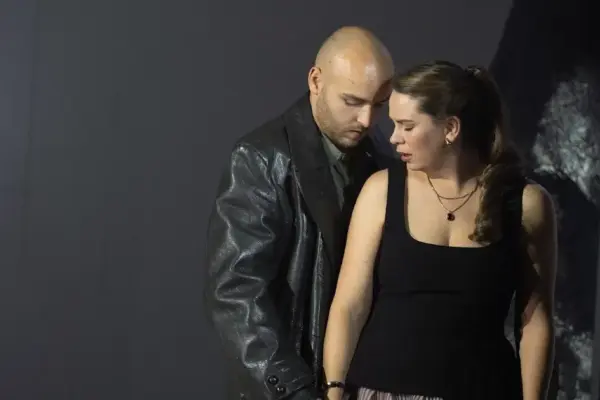
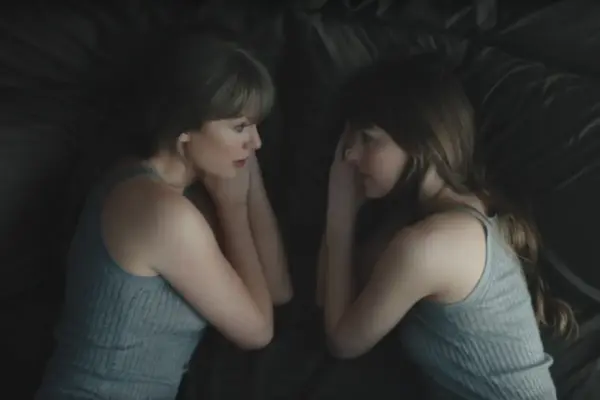
The opera opened with Ariadne (Jessica Cale) and Theseus (Kieron-Connor Valentine) sharing a bed on a separate platform. Without warning or narrative fanfare, Theseus slipped silently away into the shadows. Rather than exiting the stage entirely, Valentine’s Theseus lingered as a silent, physical presence throughout the first half of the work. He prowled the space and periodically shifted the platform carrying Ariadne’s bed. This staging choice brilliantly visualized the psychological reality that Theseus continued to occupy, weigh upon, and disrupt Ariadne’s mental architecture. Valentine’s only direct vocal contribution occurred at the climax, when Ariadne hallucinates the sound of his voice.
Musical and Vocal Execution
Jessica Cale delivered a masterclass in vocal and dramatic restraint. Sustaining the audience’s undivided attention through a relentless 15-to-20-minute monologue requires immense technical control and emotional intelligence. Cale avoided melodrama, instead charting an intense, highly personal character arc that made Ariadne’s distress palpable and deeply moving.
Langer’s vibrant, inventive score functioned almost as an additional character in the drama. Led by the expressive capabilities of the oboe, the live quartet wove an intricate sonic tapestry that commented on, challenged, and amplified Cale’s emotional state. Although the piece was brief, it packed an immense emotional punch, leaving only minor room to wish for a short instrumental overture by Langer to preface the work.
Part II: Henry Purcell’s Dido & Aeneas
Following the interval, the audience was transported from the mythic isle of Naxos to the legendary courts of Carthage. While maintaining the abstract visual vocabulary established in the first half—utilizing the same white-box set augmented with translucent screens—Dido & Aeneas adopted a different theatrical grammar under director Rebecca Meltzer and conductor Alex Robinson.

Conceptual Framework and Spatial Dynamics
Meltzer’s approach leaned into a timeless, abstract mythic present. Drawing inspiration from the opera’s earliest known performance at Josiah Priest’s school for girls, Alex Berry’s costume designs infused a playful, stylish theatricality into the ensemble work.
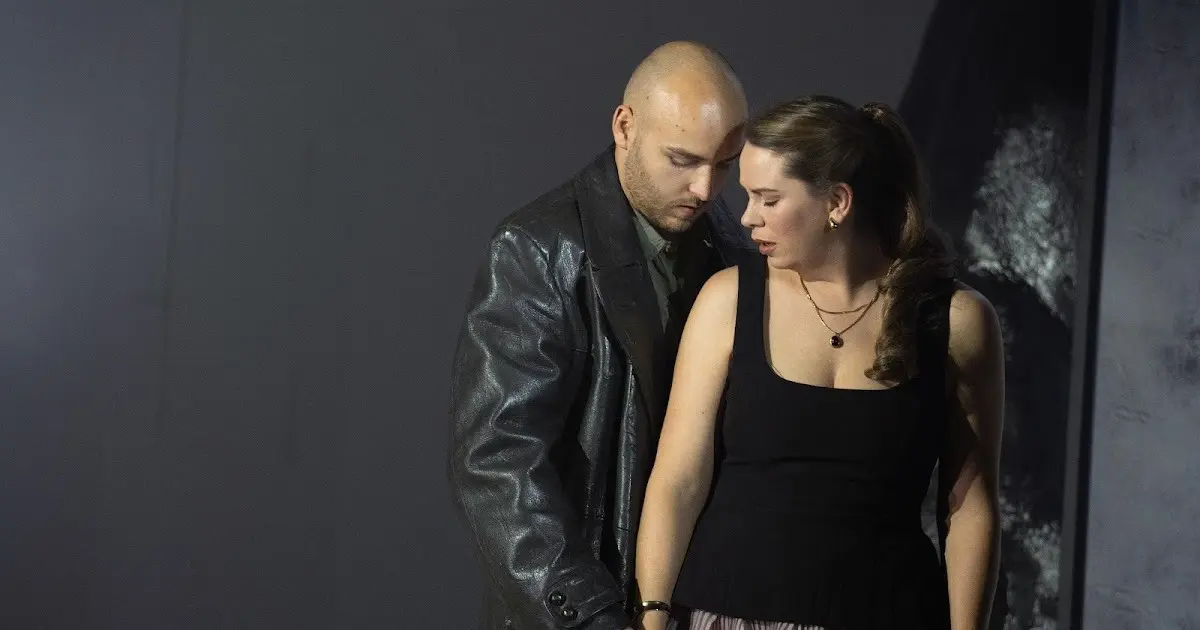
A defining hallmark of Meltzer’s direction was the constant visibility of the tragic protagonists. Dido and Aeneas were rarely allowed to slip off stage; instead, they remained locked in view on the central platform, surrounded by the ensemble or silhouetted behind translucent screens. This staging heightened the claustrophobia of Carthage and emphasized the inescapable weight of public expectation upon private lives.
Vocal Performances and Character Development
Samantha Price, stepping into her first run as Dido, delivered a powerfully sung performance laced with a palpable vein of anxiety. This underlying vulnerability clarified the character’s narrative arc, allowing the audience to trace Dido’s hesitant, courageous entry into her relationship with Michael Lafferty’s Aeneas. Because much of Dido’s role relies on recitative and reaction, Price mined every measure for psychological detail. Her final scene was a masterclass in the "less is more" philosophy, benefiting immensely from a still, focused stage.
Michael Lafferty brought a compelling inner strength and grounded nobility to the relatively compact role of Aeneas. By integrating instrumental movements from Purcell’s Diocletian after the couple’s first major scene, the production carved out vital space to establish their bond. Lafferty successfully portrayed a partner whose steadiness offered a temporary anchor to Dido’s anxieties.

Supporting Roles and Ensemble Dynamics
The supporting cast and ensemble were fully integrated into the fabric of the drama. Isabelle Atkinson (Belinda) and Alexandra Meier (Second Woman) delivered performances that were slyly demanding of Dido, refusing to position her on an isolated pedestal. Instead, the Carthaginian court was depicted as an intense collective, moving with vivid, sometimes disturbing choreography that hinted at the deeper socio-political crises facing the realm.
The transition from courtly attendants to malevolent witches was executed with brilliant simplicity: the cast donned dark glasses. Lydia Shariff commanded the stage as a rich-voiced, deeply threatening Sorceress who avoided cliché cartoonishness, supported expertly by Atkinson and Meier as the First and Second Witches. Kieron-Connor Valentine rounded out the supernatural elements as a put-upon Spirit.
In a clever nod to theatrical exuberance, Guy Elliott’s charming Sailor led a sequence where the male ensemble cast off their outer garments down to vests and boxer shorts, running amok and joyfully showering on stage in celebration of their departure from Carthage. While bypassing the traditional, formal sailors’ dance, Meltzer’s movement-centric direction ensured the scene remained deeply tied to the rhythmic pulse of Purcell’s score.
Supporting Context & Metrics
Production Data & Creative Personnel
- Performance Date: October 17, 2026
- Venue: Hackney Empire, London
- Producing Body: English Touring Opera (ETO)
- Design Team: Alex Berry (Set & Costume Design), Joseph Hornsby (Lighting Design)
Ariadne (Elena Langer / Glyn Maxwell)
- Director: Anna Morrissey
- Conductor/Musicians: Live Instrumental Quartet (Hannah Conliffe [Oboe], Gary Ngan [Violin], Hannah Gardiner [Viola], James Heathcote [Cello])
- Principal Cast: Jessica Cale (Ariadne), Kieron-Connor Valentine (Theseus)
Dido & Aeneas (Henry Purcell / Nahum Tate)
- Director & Movement Direction: Rebecca Meltzer
- Conductor: Alex Robinson
- Principal Cast: Samantha Price (Dido), Michael Lafferty (Aeneas), Isabelle Atkinson (Belinda / First Witch), Alexandra Meier (Second Woman / Second Witch), Lydia Shariff (Sorceress), Kieron-Connor Valentine (Spirit), Guy Elliott (Sailor)
- Ensemble: Binny-Supin Yang, Daniel Gray, Jonathan Eyers, Peter Lidbetter
Musical Direction and Pit Dynamics
In the orchestral pit, Alex Robinson elicited a fine, responsive performance from the instrumentalists, allowing the dance rhythms embedded within Purcell’s score to breathe life into the physical staging. However, operating within a theatre the scale of the Hackney Empire presented familiar acoustical hurdles: the continuo section (comprising harpsichord and theorbo) occasionally felt sonically underpowered. Furthermore, certain tempos selected by Robinson leaned toward the deliberate; yet, Samantha Price turned these unhurried speeds to her dramatic advantage, imbuing the recitative with extraordinary nuance and emotional weight.

Official Statements and Artistic Vision
The conceptual underpinnings of the ETO autumn tour have been a subject of significant discussion within the classical music community, particularly regarding the modernization and de-mythologizing of early operatic masterworks.
Reflecting on her approach to the role of Carthage’s queen, Samantha Price shared insights into the creative ethos driving the production prior to opening night:
"The production is not specific to Roman mythology and they are aiming for a timeless feel. They want to present the plot as clearly as possible, particularly as there is not a lot of story."
This commitment to clarity over historical pastiche allowed both Anna Morrissey and Rebecca Meltzer to strip away extraneous theatrical clutter. By focusing on the internal psychological landscapes of Ariadne and Dido, the creative team elevated two seventeenth- and twentieth-century scores into vital, modern dialogues on grief, agency, and human connection.

Future Outlook
The success of the ETO autumn double bill signals a robust trajectory for early and contemporary opera staging in regional and touring UK venues. By pairing a rarely performed 21st-century mono-drama (Ariadne) with a cornerstone of the English Baroque repertoire (Dido & Aeneas), the English Touring Opera has demonstrated that historical distance is no barrier to emotional immediacy.
As the ETO autumn tour continues its run, the production sets a high benchmark for ensemble integration, physical theatre training among opera singers, and conceptual coherence. Future seasons by the company will undoubtedly be scrutinized for how they build upon this synthesis of movement, minimalist design, and rigorous vocal performance. For audiences fortunate enough to witness this pairing at the Hackney Empire, the evening served as an unforgettable reminder of opera’s enduring capacity to mirror the timeless complexities of the human heart.