Executive Overview
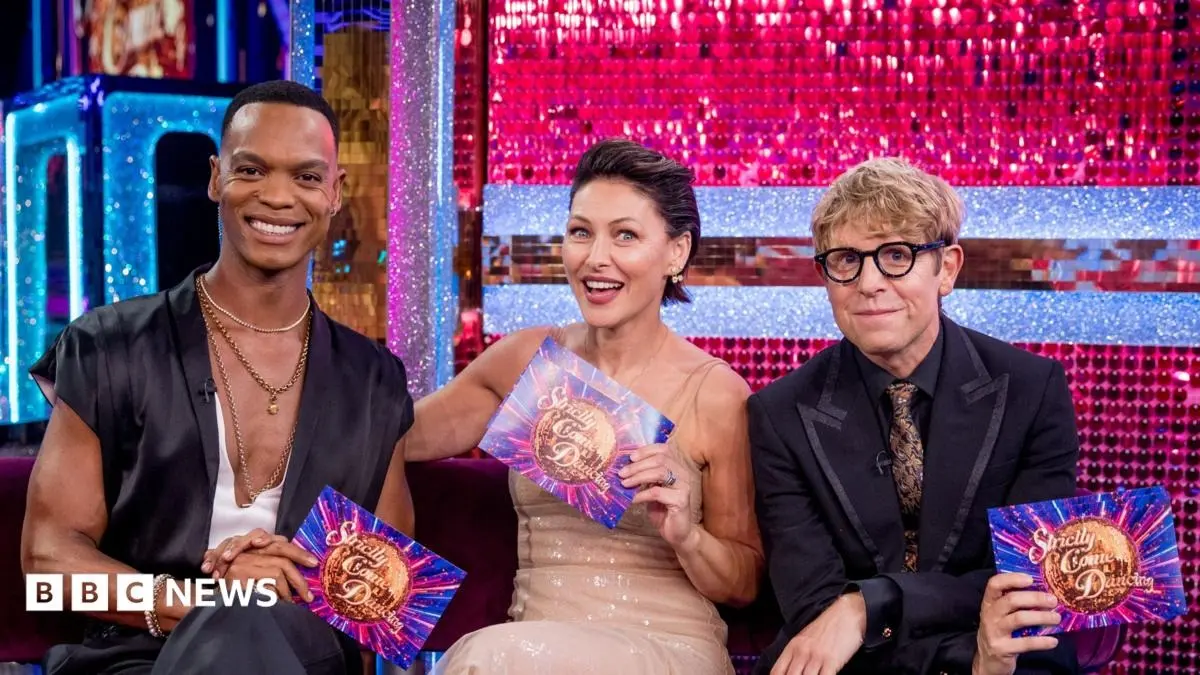
The ballroom doors have swung open once more, marking the triumphant return of Strictly Come Dancing for its landmark 24th series. In what can only be described as a seismic shift for the BBC flagship entertainment powerhouse, the show has officially entered a new era. Following the departures of long-standing fixtures Tess Daly and Claudia Winkleman at the conclusion of the previous run, producers opted for a bold reinvention, introducing a brand-new, three-person presenting line-up comprising broadcaster Emma Willis, comedian Josh Widdicombe, and former professional dancer Johannes Radebe.
Despite inevitable anxieties among purists regarding the dismantling of a beloved television institution, the launch show proved to be a ratings juggernaut. An average of 5.3 million viewers tuned in on Saturday night, commanding a formidable 49.2% share of overnight ratings. This performance represents a significant 7% year-on-year increase in audience share, while peak figures surged by 200,000 compared to the corresponding launch episode last year. Furthermore, the program dominated digital metrics, maintaining a leading position on BBC iPlayer’s most-watched chart throughout the weekend.
Beyond the ratings triumph, the launch episode introduced a star-studded roster of celebrity contestants—ranging from returning fan-favourites to high-profile athletes and actors—and paired them with the show’s elite professional dancers through an innovative, high-stakes musical chairs routine. However, the introduction of a trio of hosts has sparked intense debate across the British press. While television critics have praised Emma Willis’s effortless professional execution and Johannes Radebe’s seamless transition from the dance floor to the stage, questions linger over whether three hosts constitute a crowd, and whether the traditional dynamics of Saturday night television require further refinement before the first live competitive show next weekend.
Detailed Chronology of the Launch Night
The 24th series launch began with characteristic theatricality, setting a high bar for the months of competition ahead. Following a massive, high-energy opening dance routine featuring the entire ensemble of professional dancers, the new presenting trio took to the stage. Emma Willis immediately addressed the audience, describing the opportunity to front Strictly as a "genuine honour." Johannes Radebe, shifting from his former role as a professional dancer to co-host, playfully ribbed his colleague, declaring, "Josh, you’ve got moves." Widdicombe, bringing his trademark self-deprecation to the ballroom, admitted that the experience was a "little bit overwhelming" but expressed genuine delight at being part of the production.
In a departure from traditional pairing formats, the producers devised a first-of-its-kind mechanism for unveiling the celebrity-pro partnerships. Utilizing three intricate dance routines that functioned as a musical chairs hybrid, the celebrity contestants continuously switched partners as the music played. When the music abruptly paused, the couples were locked in and officially announced, injecting an immediate sense of kinetic energy and theatrical suspense into the studio proceedings.
Among the standout pairings was reality television star Dani Dyer, returning to the competition for a second attempt after her heartbreaking withdrawal from last year’s series due to a fractured ankle. Paired with Nikita Kuzmin, an emotional Dyer stated, "I’m just over the Moon. I’m so, so happy," while Kuzmin confessed to having "tears of joy" in his eyes.
In another historic moment for the program, actress Bethany Antonia was paired with professional dancer Nancy Xu, establishing the third two-woman couple in Strictly history. In a deeply poignant interview segment, Antonia revealed that watching boxer Nicola Adams and Katya Jones perform together during the 2020 series had served as a pivotal moment in her own "coming out journey."
Other notable pairings included EastEnders actress Lacey Turner with Vito Coppola, former Paralympian Dame Sarah Storey with Julian Caillon, and former England footballer Shaun Wright-Phillips with Alexis Warr. The evening also featured a poignant farewell for the reigning champion, former Lioness Karen Carney. Clad in her original diamante-encrusted football shirt, Carney recreated the iconic Jive that first marked her out as a title contender, performing alongside dance partner Carlos Gu. Paying tribute to her partner, Carney told Willis, "I absolutely feel like I’m at home," before facing the reality that she must surrender the coveted glitterball trophy in 13 weeks’ time.
The judging panel—consisting of Craig Revel Horwood, Motsi Mabuse, Shirley Ballas, and Anton Du Beke—took on a more pared-back role during the launch, featuring less prominently than in previous years. Nevertheless, resident judge and critic Craig Revel Horwood ensured his trademark wit remained intact, targeting broadcaster Will Best’s hip action with a characteristic barb: "Call in the paramedics darling, dislocation—my goodness."
As the evening drew to a close, familiar traditions prevailed. Once the routines concluded, pairings were finalized, and the final conversations wrapped up, the three new hosts delivered the show’s mandatory sign-off, commanding the contestants and the nation to "staaart dancing!"
Supporting Context and Metrics
The commercial and viewership performance of Strictly Come Dancing remains a vital barometer for the health of British weekend television. The BBC confirmed that Saturday night’s overnight audience figures captured an average of 5.3 million viewers, securing a dominant 49.2% share of the available audience. This represents a robust 7% increase compared to the launch metrics of the previous series. Crucially, linear television metrics continue to understate the full reach of the franchise, as millions of younger and catch-up viewers subsequently accessed the program via BBC iPlayer, keeping it firmly entrenched at the top of the streaming platform’s popularity charts throughout Sunday.
The production changes implemented for Series 24 represent the most radical structural overhaul in the show’s history. The departure of Tess Daly and Claudia Winkleman—who had anchored the program together since 2014—left an enormous void. By splitting presenting duties across three distinct personalities, BBC executives sought to diversify the on-screen dynamic, combining Willis’s seasoned live-broadcast authority with Widdicombe’s populist comedy and Radebe’s intimate, insider knowledge of the professional dancing cohort.
The demographic makeup of this year’s celebrity lineup continues Strictly’s modern tradition of casting diverse cultural figures, spanning elite sport, acting, broadcasting, and reality television. The inclusion of multi-generational talents such as Melanie Walters and Shaun Wright-Phillips ensures broad demographic appeal across traditional BBC One audiences, while younger pairings like Bethany Antonia and Nancy Xu solidify the show’s progressive social footprint.
Official Statements and Industry Reactions
The debut of the new presenting trio has triggered a wave of commentary across national media, with television critics sharply divided over whether the new format represents a successful evolution or an unnecessary complication.
Writing in The Independent, reviewers Rachel McGrath and Lauren Morris pondered whether three hosts were truly a crowd, ultimately concluding that the trio was "certainly off to a good start." They observed:
"Emma Willis is undoubtedly doing the heavy lifting, but that makes sense as she is the presenter with the most experience. At times, when the three of them were all together, it did feel a little crowded—but there is more than enough presenting to go around…"
Michael Hogan of The Guardian offered a similarly measured assessment in his live blog:
"Did it take three to tango? It will take some getting used to, of course, but I thought it worked pretty well. Emma Willis seemed completely at home and smoothly steered the ship. Johannes Radebe was a legend and his understanding of the contest from a pro’s perspective will prove invaluable. Josh Widdicombe was enthusiastic and entertaining… An even sterner test will come next weekend, of course, as we go live for the first time. No pressure, you three. But a promising start."
In a separate review for The Guardian, Emine Saner noted that while "the presenters look terrified and some of the celebs are hard to identify, Strictly remains a rare refuge of joy." She praised the hosts for adopting a tone of "can’t-quite-believe-we-got-the-gig humility combined with superfan credentials," though she cautioned that the professional dancers are increasingly overshadowing their celebrity partners in terms of public recognition.
Critical reception, however, was not uniformly glowing. Anita Singh of The Telegraph drew a sharp distinction between the capabilities of the hosts, praising Willis as a seasoned professional "who could do this job in her sleep" and celebrating Radebe’s surprisingly natural transition to broadcasting. Conversely, Singh leveled heavy criticism at Josh Widdicombe, asking:
"Why has the BBC hired jokeless Josh? Can someone come and collect little Josh from the Strictly studio, please? The poor thing got left behind after the Year 7 school trip and accidentally found himself on Saturday night TV."
The harshest verdict came from Sasha Morris writing in The Express, who declared the new presenting team a "total car crash." Morris wrote:
"Just seconds after seeing the three new hosts… bumble onto the set together, my hope died, and quickly. Poor Josh… looked like a deer in headlights and was completely out of his depth from start to finish… Having three presenters seemed unnecessary, too, as if the bosses didn’t feel they could trust Josh or Johannes to hold a role on their own."
Future Outlook
As the dust settles on a highly eventful launch weekend, the true test for Strictly Come Dancing’s new era looms large on the immediate horizon. While the launch show successfully generated substantial media buzz, robust overnight ratings, and strong streaming engagement, the formatting will face its ultimate crucible next weekend.
The transition from a pre-recorded, highly choreographed launch show to the high-pressure environment of the first live competitive broadcast will test the improvisational skills, timing, and chemistry of Emma Willis, Josh Widdicombe, and Johannes Radebe under genuine broadcasting pressure. For the celebrity contestants, the fantasy of the ballroom launch has already evaporated, replaced by rigorous weekly training schedules and the looming threat of the dreaded first dance-off.
Whether the three-host experiment continues to win over skeptics or prompts a re-evaluation of production strategies will become rapidly apparent over the coming weeks. For now, the British public has spoken through the ratings: despite structural changes and critical debates, the national appetite for the glitter, drama, and escapism of the Strictly ballroom remains entirely undiminished.