Executive Overview
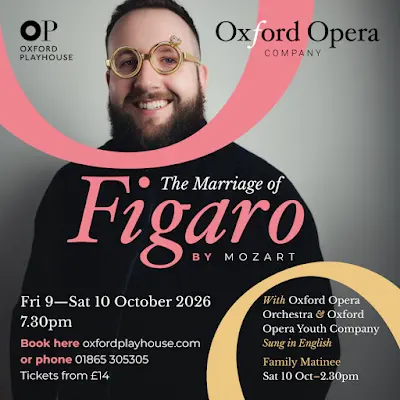
Oxford, England — Building upon the resounding critical and public success of their 2025 staging of Puccini’s Tosca, the Oxford Opera Company has officially announced its next major undertaking: a fresh, dynamic production of Wolfgang Amadeus Mozart’s comic masterpiece, The Marriage of Figaro (Le nozze di Figaro). Scheduled for a two-night run on October 9 and 10, 2026, at the historic Oxford Playhouse, the upcoming production promises to blend world-class vocal artistry with innovative community engagement.
The creative engine behind last year’s triumph—director Katie Blackwell and conductor John Warner—will once again take the helm, signaling a continuation of the artistic vision that has rapidly propelled the company to the forefront of regional British opera. Founded in 2017 by baritone Stuart Pendred, the organization holds the distinction of being Oxford’s first-ever fully professional opera company. Since making its ambitious debut in 2018 with Tosca—starring acclaimed artists such as Marlena Devoe, Sam Furness, and Philip Rhodes—the company has maintained a nearly annual performance schedule, fundamentally transforming the cultural landscape of Oxfordshire.
However, the Oxford Opera Company’s significance extends far beyond the main stage. True to its founding ethos, the organization operates with a dual mandate: showcasing the finest UK-based professional talent while cultivating the next generation of artists and audiences through robust educational and outreach initiatives. The 2026 production of The Marriage of Figaro will vividly manifest this mission, integrating the newly established Oxford Opera Youth Company directly into the professional workflow. Sung entirely in English via a newly commissioned translation by George Robarts, the production aims to strip away traditional linguistic barriers, offering an accessible yet artistically rigorous experience for seasoned opera aficionados and first-time theatergoers alike.
Detailed Chronology: From Foundation to the 2026 Season
To understand the weight and momentum of the upcoming 2026 production, it is essential to examine the trajectory of the Oxford Opera Company since its inception.
The Genesis (2017–2018)
Prior to 2017, the historic university city of Oxford—despite its rich literary, theatrical, and musical heritage—lacked a dedicated, fully professional permanent opera company. Recognizing this void, founder Stuart Pendred assembled a coalition of musicians, administrators, and patrons to establish an institution capable of mounting large-scale lyric theater to professional standards.
The company’s inaugural production in 2018, once again tackling Puccini’s soaring melodramatic tragedy Tosca, proved that a sustainable appetite for professional opera existed outside of London. Garnering praise for its dramatic intensity and casting caliber, the debut established a high benchmark for subsequent seasons.
Navigating Expansion and Consolidation (2019–2024)
In the years following its debut, the company steadily built its repertoire and organizational capacity. Despite the unprecedented disruptions faced by the live performance sector globally during the early 2020s, the company adapted by strengthening its community ties and digital footprint. When live performances resumed at full scale, the company reinforced its reputation for ambitious casting, inviting leading contemporary singers to perform in intimate, emotionally charged theatrical environments.
The Turning Point: Tosca (2025) and the Road to 2026
The 2025 revival of Tosca served as a watershed moment for the company, solidifying the creative partnership between director Katie Blackwell and conductor John Warner. The production showcased vocal heavyweights Marlena Devoe, Sam Furness, and Philip Rhodes, earning critical acclaim across the regional press and drawing capacity audiences to the Oxford Playhouse.
Capitalizing on this artistic momentum, the company announced The Marriage of Figaro for October 2026. Rather than resting on its laurels, the creative team opted for a fresh artistic approach: commissioning a brand-new English translation by George Robarts to modernize the comedic timing, social commentary, and linguistic clarity of Da Ponte and Mozart’s original work. The rehearsal and production timeline for the 2026 season officially commences months in advance, incorporating rigorous workshop phases for both the professional cast and the newly minted Youth Company.
Supporting Context & Metrics: Artistic Lineup and Educational Impact
The Cast and Creative Leadership
The 2026 staging of The Marriage of Figaro features an enviable ensemble of rising stars from the British and international opera circuits.

- Figaro and Susanna: The iconic servant couple will be brought to life by baritone Hugo Herman-Wilson and soprano Rachel Speirs. Herman-Wilson arrives in Oxford hot off his critically acclaimed Glyndebourne debut in Monteverdi’s L’Orfeo, bringing immense theatrical presence and vocal dexterity to the role of Figaro. Opposite him, Rachel Speirs will undertake a major milestone in her career, making her official role debut as Susanna.
- The Count and Countess: Portraying the aristocratic, morally conflicted Almavivas are baritone Jack Holton and soprano Nikolett Mraz. Like Speirs, Holton will be making a significant role debut, offering audiences a fresh interpretation of the mercurial Count, while Mraz brings her refined phrasing and expressive vocal timbre to the poignant role of the Countess.
- Behind the Scenes: Director Katie Blackwell returns with a reputation for breathing fresh psychological realism into classic librettos. Conductor John Warner will once again lead the Oxford Opera Orchestra, ensuring that Mozart’s glittering, complex orchestral score receives a vibrant, historically informed yet contemporary reading.
Educational and Community Metrics
While main-stage productions capture public headlines, the true beating heart of the Oxford Opera Company lies in its sustained commitment to education and social outreach across Oxfordshire. The company’s programming is designed to eliminate socioeconomic barriers to high art.
- The Youth Company: Operating every Saturday during term time, the newly launched Oxford Opera Youth Company provides structured, professional-level training for young people across two distinct age brackets: 8 to 12, and 13 to 16. These sessions focus on vocal production, theatrical staging, and musical literacy.
- Seasonal Intensives: Supplementing the weekly term-time sessions, the company ran a highly successful five-day summer camp in 2025 titled Mozart’s Magical Music, tailored specifically for children aged 8 to 14.
- Inclusive Outreach Workshops: The company’s educational initiatives are not restricted to auditioned youth groups; they are structured to be accessible to any and all schools and community groups throughout the county, aiming to demystify opera for younger generations.
- The Family Matinee: As part of the Marriage of Figaro run in October 2026, the company will present a dedicated Family Matinee. This specially curated, reduced-duration version of the opera is engineered specifically as a welcoming, low-pressure introduction to the performing arts for young children and their families.
Official Statements and Industry Perspectives
While formal press statements from the artistic leadership emphasize the collaborative and community-driven nature of the upcoming production, industry analysts have been quick to note the broader cultural significance of the Oxford Opera Company’s trajectory.
In previous institutional communications, founder Stuart Pendred underscored the founding philosophy of the enterprise:
"Oxford has always been a city overflowing with intellectual and academic rigor, but for too long it lacked a permanent, professional platform dedicated to the lyric arts. Our goal from day one was not merely to stage operas, but to weave the art form into the fabric of the community—pairing the finest professional talent in the UK with the boundless enthusiasm of local youth."
Director Katie Blackwell, reflecting on her ongoing collaboration with conductor John Warner, has frequently highlighted the unique theatrical energy that the Oxford Playhouse affords. The intimacy of the venue allows for a level of dramatic nuance and character interplay that can often be lost in massive, thousand-seat opera houses. By opting to perform The Marriage of Figaro in English, Blackwell and translator George Robarts aim to restore the razor-sharp satirical bite of Beaumarchais’ original play—upon which the opera is based—ensuring that contemporary audiences catch every nuance of Mozart’s social critique regarding class, power, and human folly.
Local cultural commentators have praised the company for its resilience and steady institutional growth. In a landscape where regional classical music organizations frequently face funding pressures and precarious operational models, the Oxford Opera Company’s hybrid model—balancing high-end professional casting with deep-rooted educational infrastructure—serves as a blueprint for sustainable regional arts management in the United Kingdom.
Future Outlook: The Horizon for Oxford Opera
Looking beyond the curtain call of The Marriage of Figaro in October 2026, the long-term outlook for the Oxford Opera Company is exceptionally bright. The successful integration of the Youth Company into professional productions marks a permanent shift in how regional arts organizations can cultivate audiences and talent simultaneously.
By systematically lowering the barriers to entry—through English-language translations, family-friendly matinees, and county-wide educational workshops—the company is actively future-proofing the art form within Oxfordshire. Plans are already underway to expand the scope of the Youth Company’s residencies and to commission further contemporary translations of standard classical repertoire for future seasons.
As the dates for The Marriage of Figaro approach, anticipation among local patrons, classical music critics, and theatrical professionals continues to mount. With a stellar creative team, an exciting young cast making pivotal career debuts, and an unwavering commitment to community enrichment, the Oxford Opera Company’s October 2026 run at the Oxford Playhouse is poised to be a landmark cultural event of the theatrical calendar.
Further details, ticketing information, and updates regarding educational outreach programs are available directly via the official Oxford Opera Website.