Executive Overview
Electronic music history is littered with the ghosts of once-groundbreaking acts attempting to reconcile their iconic past with the hyper-accelerated demands of the modern club economy. Among British dance music royalty, few names resonate quite as profoundly as Groove Armada. Comprising the duo of Andy Cato and Tom Findlay, the project defined the sound of late-1990s and 2000s crossover electronica, blending house, dub, funk, and down-tempo grooves into global anthems like "Superstylin’" and "I See You Baby."
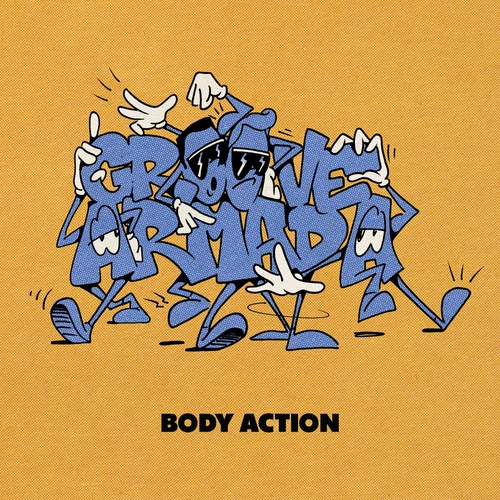
However, the release of their Body Action EP has ignited a critical conversation regarding the nature of legacy output in contemporary club culture. Rather than signaling an artistic resurgence or a bold evolution of their signature sound, the three-track offering presents a masterclass in functional, utilitarian dance music. It is a release engineered with clinical precision for the summer festival circuit—designed neither to clear a dancefloor nor to inspire transformative raves, but rather to safely occupy space in a DJ set.
This review-led investigative feature examines the Body Action EP through a critical lens, deconstructing its individual tracks ("U Found Love feat. Give Love," the title track "Body Action," and "Gangster Girl"), contextualizing the release within Groove Armada’s storied career, and exploring the broader industry pressures that push heritage acts toward safe, predictable studio production.
Detailed Chronology & Track-by-Track Deconstruction
To understand the artistic weight of the Body Action EP, one must examine the specific mechanics of its composition. The release serves as a snapshot of a particular mindset in heritage dance music production: one that prioritizes reliability over risk-taking.
1. "U Found Love" (feat. Give Love): The Ghost of the M1 Revival
The opening cut immediately establishes the EP’s retrospective gaze. Built around what can charitably be described as a functional Korg synthesizer workout, the track arrives a full decade after the wave of M1-driven piano house revivals began to stale in global underground consciousness.
- The Production: The instrumentation leans heavily on well-trodden sonic tropes. The patch choices feel safe, almost aggressively familiar, recalling an era of mid-2000s commercial house that prioritized immediate recognition over sonic depth.
- The Impact: While serviceably constructed, the track struggles to justify its existence in a crowded market saturated by younger producers pushing synthesis into uncharted territory. It functions as a nostalgic nod, but one devoid of the visceral urgency that once characterized Cato and Findlay’s best work.
2. "Body Action": The Stripped-Down Acid Experiment
The title track attempts to pivot toward a more raw, stripped-down aesthetic, leaning into the timeless allure of acid house.
- The Production: Featuring a minimalist Roland TB-303 (or equivalent emulated) squelch, the track strips away the lush orchestration and genre-blending textures that historically made Groove Armada stand out.
- The Impact: Unfortunately, the exercise feels fundamentally unchallenging. Acid house thrives on tension, grit, and psychedelic unpredictability. Here, the elements are so cleanly processed and neatly arranged that the danger is entirely sucked out of the mix. It is acid music tailored for daytime terrace sessions where nobody wants their cocktail glass rattled too violently.
3. "Gangster Girl": The Ragga-Garage Paradox
Rounding out the trio is "Gangster Girl," an attempted fusion of ragga vocals and UK garage rhythms.
- The Production: The rhythm section attempts to capture a street-level bounce, yet the low-end lacks the tectonic weight and punch required to anchor garage and bass-heavy mutations.
- The Impact: The comparison is inevitable and cruel: stacked against monumental bass-driven masterclasses from their own catalog—most notably "Superstylin’"—"Gangster Girl" sounds hollow. Where the former felt dangerous, organic, and relentlessly driving, this modern knock-off feels tentative, leaving listeners searching in vain for a substantial bassline to anchor the groove.
Supporting Context & Metrics: The Weight of Heritage in Electronic Music
To fairly evaluate the Body Action EP, one must weigh it against the towering legacy Groove Armada built across a quarter of a century.
The Commercial and Critical Peak
Emerging from the late-90s UK club scene, Groove Armada bridged the gap between underground electronic integrity and mainstream pop crossover appeal. Albums like Vertigo (1999) and Goodbye Country (Hello Nightclub) (2001) established them as heavyweights capable of crafting timeless home-listening records alongside festival-dominating club weapons.
- Streaming & Legacy Metrics: Tracks like "I See You Baby" (famously remixed by Fatboy Slim) and "Superstylin’" continue to pull millions of streams annually, cementing the duo’s status as vital architects of modern British electronica.
- The Live Circuit: Andy Cato and Findlay transitioned masterfully into a premier live and DJ act, commanding peak-time slots at major global festivals from Glastonbury to Sonar.
The "Utilitarian" Trap
It is precisely this legacy that makes releases like Body Action a fascinating case study in artistic inertia. In the contemporary electronic music economy, legacy acts face a unique dilemma:
- The Festival Imperative: DJs playing peak-time summer festival stages require tools that function instantly across massive sound systems to diverse crowds. Nuance and challenging sonic exploration often get swallowed by open-air acoustics and casual festival-goers.
- The "Groove Dredger" Phenomenon: As critic consensus suggests, records like Body Action do not represent a vibrant artistic leap forward; rather, they function as "Groove Dredging"—well-engineered, technically proficient artifacts designed to fulfill a contractual and operational quota. They do a solid job, but they fail to ignite passion.
Industry Perspectives & Critical Reception
The arrival of the Body Action EP sparked a broader dialogue among electronic music journalists, producers, and veteran clubbers regarding the responsibilities of heritage acts.
- The Pragmatic Viewpoint: Defenders of the release argue that expecting boundary-pushing reinvention from artists with decades of service is unrealistic. Electronic music has always relied on functional, floor-ready tools. In a crowded DJ set, tracks that "won’t ruin your night or cause a stampede to the bar" hold undeniable currency for working DJs.
- The Critical Backlash: Conversely, underground purists and critics have expressed disappointment over what they perceive as creative complacency. When legendary acts release material that relies on outdated synth patches and diluted genre pastiches, it raises questions about whether the commercial safety net of a major touring schedule dampens the appetite for genuine sonic risk.
Industry analysts note that streaming revenue models and the relentless touring treadmill often leave little room for the kind of deep, reflective studio experimentation that birthed seminal electronic records in the past. Producers are frequently incentivized to push out modular, easily digestible EPs that align with algorithmic playlist curation rather than cohesive artistic statements.
Future Outlook: Where Do Legacy Acts Go From Here?
As Groove Armada looks toward the future, the reception of the Body Action EP serves as both a cautionary tale and a strategic pivot point.
The Challenge of Relevance
For veteran artists, maintaining cultural relevance requires striking a delicate balance:
- Avoiding Self-Parody: Re-treading familiar Korg M1 motifs or watering down classic bass-heavy formulas risks alienating fans who fell in love with their fearless genre-blending.
- Embracing Evolution: Conversely, collaborating with contemporary underground producers, investing in modular synthesis, or leaning into the deep, hypnotic realms of modern techno and tech-house could inject fresh blood into the Groove Armada catalog.
What Lies Ahead for Cato and Findlay
While Andy Cato has spent recent years heavily focused on regenerative agriculture and farming (a fascinating parallel career that speaks to a desire for tangible, grounded impact away from the superficiality of modern club culture), Tom Findlay remains deeply embedded in the touring circuit.
If future studio output continues down the path of the Body Action EP—competent, impeccably engineered, yet ultimately utilitarian—Groove Armada risks cementing their status as a legacy touring act trading strictly on past glories rather than ongoing creative vitality. However, given their rich history of subverting expectations, the door remains wide open for a true artistic renaissance. Until then, Body Action will remain what it was always destined to be: a functional summer footnote, efficient on the dancefloor, but quickly forgotten once the lights come up.