Executive Overview
In the fragile space where profound personal tragedy intersects with centuries-old cultural heritage, music occasionally emerges not merely as entertainment, but as an act of communal healing and spiritual survival. Such is the genesis of “Lodèr la Vi” (The Scent of Life), the transcendent title track and emotional anchor of the sophomore album by Saodaj, the trailblazing musical collective hailing from the volcanic French island department of Réunion.
Released via Buda Musique in November 2025, the album and its accompanying cinematic music video—directed by Erika Souriguere—stand as a monumental tribute to Adrien Laxénaire, one of the founding musicians and instrumentalists of Saodaj, who passed away in February 2024. Laxénaire’s untimely death plunged the band into an abyss of collective grief. Rather than silencing them, however, this devastating loss catalyzed a profound creative reckoning.
The resulting track, sung entirely in Réunion Creole, captures the raw, unvarnished psychological landscape of mortality’s final threshold. It features a dying man thanking the mortal vessel that carried him as far as it could, acknowledging the sudden cessation of his tomorrow, and issuing a defiant plea to his own spirit: “Dans aou mon kor / Sant aou mon lam” (Dance within me, my body / Feel within me, my soul). Yet, beneath this transcendent acceptance lies a piercing human regret—the heartbreaking admission that he had hoped to live long enough to see his hair turn grey.
Musically, Saodaj continues to redefine the boundaries of maloya—the traditional, percussion-driven music born from the resilience of enslaved Malagasy and African populations on Réunion’s historical sugar plantations. By fusing traditional instrumentation, such as the seed-filled kayamb rattle and the thunderous roulèr barrel drum, with the jagged distortion of alternative rock cello and electric guitars, Saodaj has crafted a sonic signature that is as fiercely rooted in local history as it is globally expansive. This comprehensive report explores the genesis of “Lodèr la Vi,” examines the cultural and historical weight of maloya, details the collaborative artistry behind the album, and evaluates the enduring legacy of a collective turning sorrow into immortality.
Detailed Chronology: From Reunion Roots to Global Resonance
The Genesis of Saodaj (2011)
The story of Saodaj is inextricably linked to the cultural awakening of Réunion Island during the early 2010s. Formed in late 2011 by vocalist and visionary Marie Lanfroy, the band emerged with a singular mission: to honor the ancestral rhythms of maloya while injecting them with contemporary poetic urgency, multi-lingual lyricism, and cross-genre instrumentation. Lanfroy, native to Réunion, envisioned a collective that could bridge the generational divide, translating the island’s painful colonial history and vibrant multicultural identity into a modern artistic vernacular.
From its earliest iterations, the band attracted some of the island’s most inventive instrumentalists, among them Adrien Laxénaire. Laxénaire’s distinctive musical sensibilities helped establish Saodaj’s early soundscapes, blending acoustic storytelling with atmospheric textures. Over the next decade, the band evolved from a local cultural phenomenon into an international touring entity, captivating audiences across Europe and the Indian Ocean basin with their high-energy performances and deep emotional resonance.
The Catalyst of Tragedy: February 2024
The trajectory of Saodaj shifted irrevocably in February 2024 with the passing of Adrien Laxénaire. The loss of a founding member, close collaborator, and dear friend sent shockwaves through the collective. In the immediate aftermath, the band members faced the daunting challenge familiar to all artists who process trauma through their craft: how to honor a life lived in rhythm without succumbing entirely to despair.
Rather than stepping away from the public eye, Marie Lanfroy and co-writer Jonathan Itéma channeled their grief into the composition process. Working closely over the subsequent months, they crafted “Lodèr la Vi.” The song became a sonic sanctuary—a collaborative grief-work where the band could converse directly with their departed brother.
The Album Cycle and Visuals (2025)
The culmination of this intense creative period materialized in November 2025 with the official release of Lodèr la Vi (the album) via the esteemed independent label Buda Musique. Serving as Saodaj’s second major full-length studio release, the album expands upon the themes established in their debut while offering a deeply cohesive meditation on life, loss, and ancestral memory.
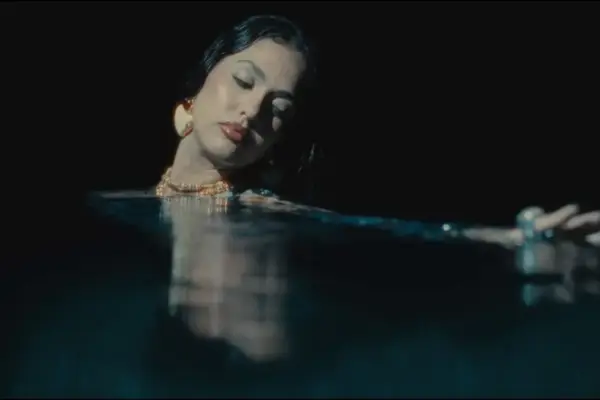
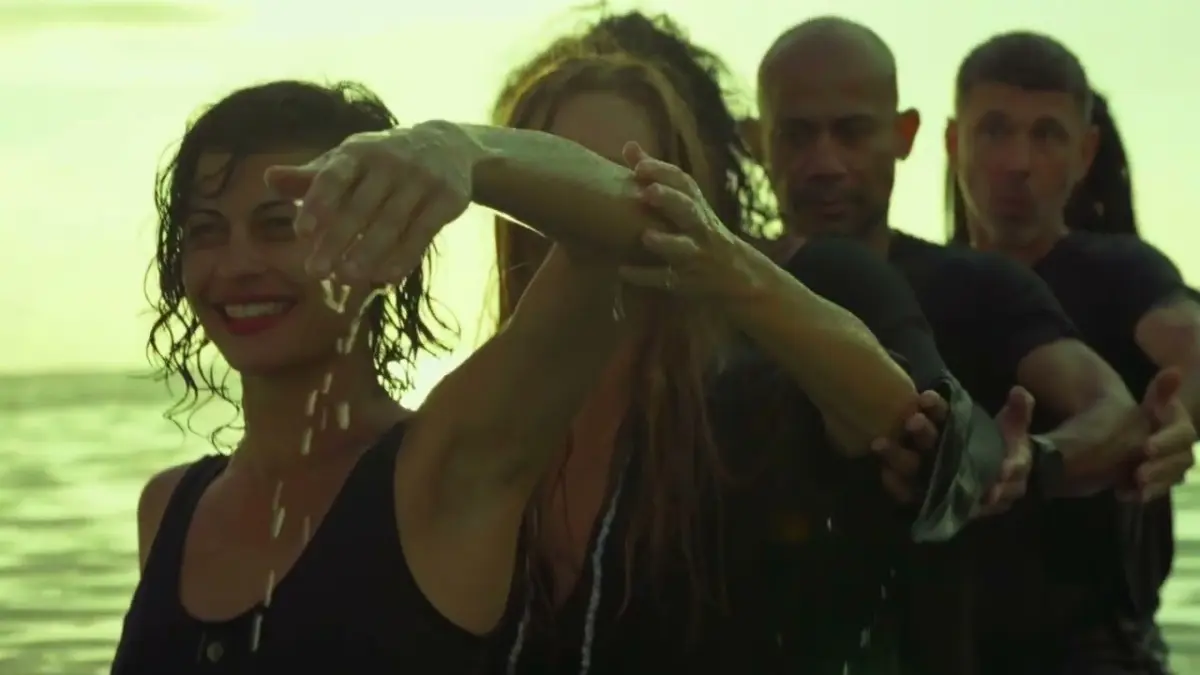
To accompany the title track, director Erika Souriguere was enlisted to helm the official music video. Souriguere’s cinematic vision builds upon her previous work with the band—including striking visual companions for tracks such as “Domin” and the widely acclaimed “Adyé Véli.” The video for “Lodèr la Vi” avoids straightforward narrative clichés, opting instead for a visceral, dreamlike exploration of transition, memory, and spatial liminality. It serves as a visual mirror to the song’s closing poetic gesture: bidding farewell to "Adri" as he balances suspended on a high slackline against an endless Réunion sky.
Supporting Context & Metrics: The Anatomy of Lodèr la Vi
Lyrical Deconstruction and Poetic Architecture
The linguistic core of “Lodèr la Vi” lies in its usage of Réunion Creole, a language born from the synthesis of French, Malagasy, and various African and Asian tongues. The lyrics, co-written by Marie Lanfroy and Jonathan Itéma, operate on multiple metaphorical levels.
The narrative voice is situated precisely at the end of a human life span. In the opening movements, the protagonist addresses his mortal shell with radical gratitude, thanking the physical body that sustained him through every hardship, joy, and exhaustion. This acceptance of mortality is not passive; it is dynamic. The protagonist commands his body to dance even as it fails:
"Dans aou mon kor / Sant aou mon lam"
(Dance within me, my body / Feel within me, my soul)
Yet, the poetry achieves its most devastating emotional peak when the existential armor cracks. The dying man admits to a profound, unfulfilled human desire: he had hoped to live long enough to watch his hair turn grey. This fleeting confession humanizes the metaphysical transition, grounding the song in the universal tragedy of unfulfilled time.
The chorus acts as a rhythmic resuscitation. Written by Lanfroy and Itéma as a dual mantra, the refrain implores the departing soul to keep breathing:
"Souf, souf, souf"
(Breathe, breathe, breathe)
This breath is directly tied to the lodèr la vi—the scent of life—an olfactory memory of earth, rain, sugarcane fields, and existence that anchors the soul to the physical world just as it prepares to depart. In the final line of the song, the collective drops all poetic distance and addresses their friend directly. They call him "Adri" and leave him suspended on a slackline high in the air—a striking metaphor for fragility, balance, and eternal motion between earth and sky.
Musical Instrumentation and Maloya Modernism
Musically, Lodèr la Vi is a masterclass in genre-blending that respects traditional idioms while embracing contemporary sonic architecture. Maloya, traditionally banned by French authorities until the early 1980s due to its association with anti-colonial resistance and slave uprisings, is the beating heart of Saodaj’s sound.
Jonathan Itéma, who formally studied Réunionese music at the prestigious Saint-Pierre conservatoire, meticulously structured every percussion part on the album. The rhythmic foundation relies on the classic, unrelenting three-beat maloya groove, executed across a trio of traditional instruments:
- The Kayamb: A flat, rattling instrument constructed from cane stems packed with hard, dried seeds, providing a shimmering, high-frequency textural wash.
- The Roulèr: A large, deep-toned barrel drum played with hands, laying down the heavy bass pulses that dictate the heartbeat of the maloya rhythm.
- The Sati-Pikèr: A metallic percussion instrument that locks the interlocking rhythmic patterns into a hypnotic, driving cadence.
Upon this traditional percussive bedrock, Saodaj layers modern textures. Mélanie Badal introduces the haunting, resonant undertones of the cello, while Blaise Cadenet contributes electric guitar lines treated with alternative rock distortion. The interplay between the organic rattle of the kayamb and the overdriven warmth of the electric guitar creates an intentional tension—a sonic representation of the friction between past and present, grief and resilience.
Official Statements & Creative Perspectives
The creation of Lodèr la Vi required an immense emotional investment from every member of the collective. In reflections shared surrounding the album’s rollout, the band emphasized that the project was not designed as a commercial product, but as an act of communal preservation.
"When we lost Adrien in February 2024, the ground simply dropped away from beneath us," the band noted in collective production notes. "Maloya has always been our people’s way of speaking to the ancestors, of crying out when words are no longer enough. ‘Lodèr la Vi’ became our way of holding him close, of thanking him for the miles we walked together, and of letting him step out onto that high wire where his music can never be silenced."
Producerally and rhythmically, Jonathan Itéma underscored the importance of maintaining absolute fidelity to the roots of the music even while pushing its structural boundaries outward:
"Studying maloya at the conservatoire taught me its geometry, but playing it with Saodaj taught me its soul. Every strike on the roulèr for this album carried the weight of our shared history and our immediate, aching loss. We did not want to modernize maloya by diluting it; we wanted to expand its chest cavity so it could hold our grief."
Label representatives at Buda Musique highlighted the cultural significance of the release, positioning Saodaj as vital torchbearers for Indian Ocean musical heritage on the global stage. By distributing Lodèr la Vi internationally, Buda Musique ensures that the specific vernacular poetry of Réunion Creole resonates far beyond the island’s shores, inviting listeners worldwide into a universal dialogue about mortality, memory, and artistic legacy.
Future Outlook: The Ongoing Journey of Saodaj
As Saodaj steps into the post-release phase of Lodèr la Vi, the collective faces a future defined by both profound absence and renewed purpose. The album’s reception—spanning critical acclaim in European world music circles and deep emotional resonance among Réunionese diaspora communities—cements the band’s status as one of the most innovative acts emerging from the French overseas departments.
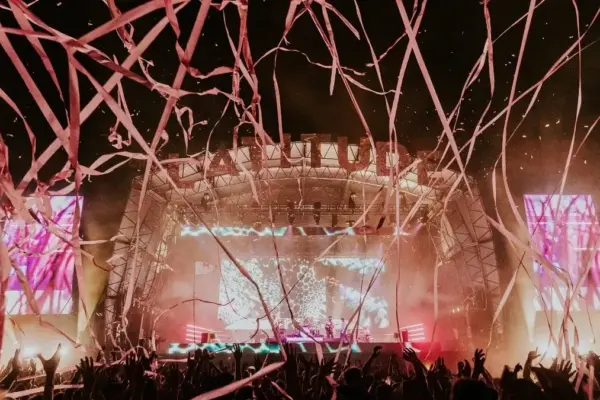
Live performances supporting the album are conceptualized not merely as concert tours, but as communal rituals of remembrance and celebration. Integrating the raw, driving acoustic power of the kayamb and roulèr with the soaring vocals of Marie Lanfroy and the melancholic cello lines of Mélanie Badal, Saodaj’s stage presence transforms personal mourning into a shared, cathartic experience.
Looking ahead, the band plans to take Lodèr la Vi across international festival stages, introducing audiences in Europe, North America, and the broader Indian Ocean region to the complex, intoxicating world of modern maloya. In doing so, they ensure that Adrien Laxénaire’s artistic spirit remains a permanent fixture of their sound—a guiding light suspended on a high slackline, forever breathing in the scent of life.