Executive Overview
In what is being hailed as one of the most significant cultural exchanges of the 21st century, the legendary Bayeux Tapestry has crossed the English Channel for the first time in nearly a millennium. This fragile masterpiece of medieval art, measuring nearly 70 meters long and meticulously embroidered over nine centuries ago, is now on display at the British Museum.
The monumental loan brings together heads of state, royalty, and cultural preservationists in a rare display of Anglo-French diplomacy. King Charles III and Queen Camilla, accompanied by French President Emmanuel Macron and Brigitte Macron, alongside Greater Manchester Mayor Andy Burnham and his wife Marie-France van Heel, gathered for an exclusive royal preview of the exhibition. The event also welcomed school children from both the United Kingdom and France, bridging generations to witness a pivotal artifact of their shared history.
The historic exhibition underscores a renewed diplomatic warmth between London and Paris. First announced by President Macron during a high-profile French state visit to the UK in July 2025, the loan serves as a powerful emblem of the enduring cross-channel partnership. However, the relocation of such a priceless and delicate artifact was not without controversy. Preservationists initially voiced deep concerns regarding the structural integrity of the ancient linen and wool. Ultimately, French government sources and conservation experts cleared the move, citing the British Museum’s state-of-the-art environmental controls and an innovative horizontal display method that relieves tension on the ancient fibers.
Beyond its immediate diplomatic triumph, the exhibition has ignited a cultural frenzy. Public demand has shattered ticketing expectations, with the exhibition completely sold out through the end of 2026. As the museum prepares to release the next block of tickets for early 2027, the cultural, historical, and geopolitical ramifications of this unprecedented loan continue to resonate globally.
Detailed Chronology: From Norman Conquests to Modern Diplomacy
To fully appreciate the gravity of the Bayeux Tapestry’s arrival in London, one must trace its extraordinary journey through the centuries—a path marked by political intrigue, miraculous survivals, and evolving conservation techniques.
Creation and the Norman Era (1070s)
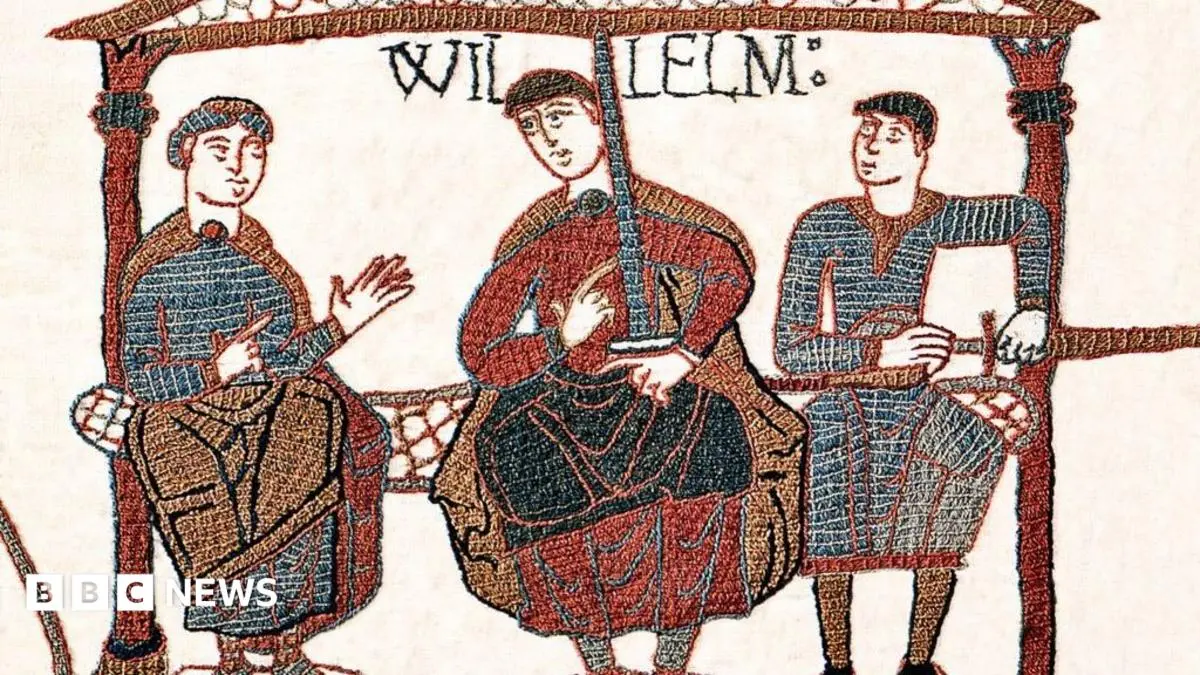
Commissioned likely in the 1070s—shortly after the seismic events of 1066—the tapestry was crafted during an era that fundamentally reshaped the British Isles and continental Europe. Historians and art experts widely believe the embroidery was executed by skilled English needleworkers operating under the patronage of the new Norman rulers. Using dyed wool stitched onto durable linen strips, the artisans recorded 58 distinct scenes detailing the complex dynastic struggles for the English crown.
The narrative culminates in the tumultuous events surrounding King Harold’s downfall at the Battle of Hastings, paving the way for William the Conqueror to ascend the throne. For over 900 years, this pictorial chronicle has served as the ultimate visual primary source for the Norman Conquest, offering unrivaled insight into medieval warfare, maritime technology, social hierarchy, and material culture.
Surviving the Flames of History
The survival of the Bayeux Tapestry is nothing short of miraculous. Unlike stone monuments or metal artifacts, textiles are notoriously vulnerable to fire, moisture, light, and insect degradation. Throughout its long existence, the tapestry has faced existential threats on multiple occasions.
Most famously, during the tumultuous years of the French Revolution in the late 18th century, the tapestry narrowly escaped destruction. Amid the chaos of anti-monarchical fervor, revolutionary forces planned to cut up the priceless textile to use as improvised protective covers for military supply carts. Quick-thinking local officials intervened just in time, rescuing the artifact from certain ruin.
Despite such narrow escapes, the tapestry’s trials left physical scars. Historical records indicate that the final sections of the embroidery have been permanently lost or destroyed. Whether these missing segments depicted the immediate aftermath of the Battle of Hastings or the subsequent coronation of William remains one of medieval history’s most enduring mysteries.
The 2025–2026 Cross-Channel Accord
The modern chapter of the tapestry’s journey began to take shape during President Macron’s state visit to the United Kingdom in July 2025. Standing alongside King Charles III at a lavish state banquet in Windsor Castle, Macron invoked the missing conclusion of the tapestry to frame a contemporary political vision. He remarked that the unfinished ending serves as a potent metaphor for modern geopolitics: "In the great mural of Franco-British history, the end is yet to be written—it is up to us to do it."
The announcement immediately set off a complex logistical and diplomatic race. Transporting a 900-year-old textile across an international border required unprecedented cooperation between British and French curators, engineers, and government ministries. Concerns regarding transit vibrations, atmospheric humidity shifts, and light exposure dominated early discussions. However, rigorous testing and meticulous transport protocols ultimately satisfied both British and French heritage authorities.
Supporting Context & Metrics: Anatomy of a Masterpiece and Diplomatic Exchange
The exhibition at the British Museum is not merely a passive display of ancient fabric; it is a masterclass in museology, cross-cultural diplomacy, and quantitative heritage management.
The Tapestry’s Physical and Artistic Metrics
A quantitative breakdown of the Bayeux Tapestry reveals the sheer scale of medieval craftsmanship involved in its production:
- Total Length: Approximately 70 meters (230 feet), making it one of the longest surviving narrative textiles from the medieval period.
- Scene Count: Divided into 58 distinct visual episodes that guide the viewer chronologically through the lead-up to the invasion and the battle itself.
- Figurative Elements: The embroidery populates its canvas with 627 distinct human figures, capturing warriors, nobility, clergy, and peasants.
- Fauna and Flora: Includes 737 animals (horses, hounds, birds, and mythical beasts), 37 ships detailing 11th-century naval architecture, and 23 stylized trees.
- Textual Accompanying Narrative: Latin inscriptions (tituli) are stitched above the images to provide context, narrative continuity, and direct commentary on the unfolding drama.
The Conservation Triumph: Horizontal Display
One of the primary technical hurdles overcome by British Museum conservators and their French counterparts involved the physical orientation of the textile. Historically, textiles of this length are often displayed vertically, hanging on walls. However, hanging a 900-year-old linen backing under its own weight for an extended period creates severe tensile stress on the ancient threads and wool embroidery.
French government sources and museum conservators heavily praised the British Museum’s exhibition design, which features a custom-engineered horizontal display case. By allowing visitors to view the tapestry while it rests flat, physical strain on the fibers is virtually eliminated. This innovative engineering feat ensured that French authorities felt fully confident in the artifact’s safety, noting ahead of the royal preview that "the display conditions at the British Museum are ideal."
Mutual Cultural Exchange: The Sutton Hoo Counter-Loan
International loans of this magnitude rarely occur in a vacuum. To balance the cultural ledger and demonstrate mutual respect, the United Kingdom structured this exhibition as a reciprocal exchange. In return for the Bayeux Tapestry, the UK has loaned France some of the British Museum’s most priceless and fiercely guarded treasures: the Anglo-Saxon artifacts from the Sutton Hoo ship burial.
Dating from the early 7th century, the Sutton Hoo finds—including the iconic helmet, gold shoulder clasps, and intricate ceremonial regalia—represent the pinnacle of early English craftsmanship. By pairing the Bayeux Tapestry with the legacy of Sutton Hoo, the museums have created a dual-nation narrative that explores the deep, interwoven roots of Germanic, Anglo-Saxon, and Norman identities in the shaping of the British Isles.
Official Statements: Perspectives on a Historic Milestone
The convergence of royalty, heads of state, and cultural ministers has generated a wealth of official commentary highlighting the profound historical and political significance of the exhibition.
The Royal and Presidential Alignment
During the exclusive preview, King Charles III and President Emmanuel Macron emphasized the symbolic power of cultural diplomacy. The event, attended also by Prime Minister-aligned regional leaders such as Greater Manchester Mayor Andy Burnham and his wife Marie-France van Heel, reflected a broad coalition of political support for closer Anglo-French ties.
Addressing the gathered dignitaries and school children, President Macron reiterated the sentiment he first expressed at Windsor Castle. He framed the exhibition as tangible proof that historical rivalries can evolve into enduring alliances. King Charles, a lifelong advocate for architectural and cultural heritage preservation, commended the joint efforts of British and French technicians who made the delicate transport possible without compromising the artifact’s structural integrity.
Ministerial and Cultural Reactions
Cabinet ministers on both sides of the Channel have been quick to champion the educational and diplomatic triumphs of the exhibition. UK Culture Secretary Lisa Nandy offered a passionate assessment of the cultural milestone:
"Britain and France have a unique shared history, and nothing symbolises it more than the Bayeux Tapestry."
Nandy further emphasized the generational impact of the exhibition, noting with pride that "a generation of British children will remember it for the rest of their lives." Educational outreach programs coordinated between the British Museum and French cultural ministries have ensured that thousands of students from diverse socioeconomic backgrounds will experience the exhibition, fostering cross-cultural dialogue from a young age.
Future Outlook: Public Access, Exhibition Longevity, and Legacy
As the dust settles on the high-profile royal preview, the immediate operational focus shifts to managing unprecedented public demand and securing the long-term legacy of the exhibition.
Ticketing Frenzy and Extended Access
The cultural appetite to witness the Bayeux Tapestry on British soil has broken standard museum visitation metrics. Initial ticket releases sparked immediate digital queues, resulting in the exhibition selling out completely through the end of 2026.
Recognizing the immense public disappointment surrounding limited availability, the British Museum has announced a phased ticket release strategy. The next major batch of tickets, covering visitor slots between January and March 2027, will officially become available to the public on October 21. Museum administrators strongly advise prospective visitors to book well in advance, as demand is expected to outstrip supply within hours of the release window opening.
Beyond 2027: The Enduring Legacy of Franco-British Cooperation
When the exhibition eventually concludes and the Bayeux Tapestry makes its solemn return journey to its permanent home in Normandy, its impact will linger for decades.
Curators and historians argue that the unprecedented collaboration has set a new global benchmark for international artifact loans. By successfully managing the complex logistics of moving a fragile 11th-century textile across national borders, the British Museum and French cultural authorities have proven that rigorous scientific conservation and bold diplomatic ambition can coexist.
Ultimately, the exhibition serves as a living testament to President Macron’s visionary declaration at Windsor Castle. By bringing the story of 1066 to London, Britain and France have added a triumphant new chapter to their shared historical tapestry—proving that while the medieval conflicts of William and Harold are long concluded, the collaborative future of European cultural heritage remains vibrant, unfinished, and yours to write.