Executive Overview
The traditional album cycle—once the undisputed heartbeat of the global recorded music industry—has undergone a profound structural mutation. No longer acting as the sole defining product of a musician’s career, the long-playing record has relinquished its monopoly on cultural impact. In its place, the contemporary music landscape is driven by the “era”: a holistic, multi-dimensional ecosystem of sound, visual language, live performance rituals, sartorial shifts, and digital fan communities.
While the shift might initially sound like corporate marketing nomenclature, it is fundamentally an organic response to how audiences consume and live with art in the streaming age. Fans instinctively recognize when an artist steps into a new chapter. The color palette shifts, the aesthetic architecture of the stage mutates, and interviews carry a distinct emotional weight. The music remains the undeniable center of gravity, but the surrounding atmospheric pressure—the wardrobe, the fan theories, the visual identity—transforms a passive listening experience into an immersive, participatory culture.
Far from signaling the death of the album, this evolution has expanded the cultural lifespan of recorded music. Where a great record once dominated the news cycle for a solitary week, a well-executed era sustains cultural conversations for months, turning individual projects into definitive historical chapters.
Detailed Chronology: The Anatomy of Modern Music Epochs
To understand how the modern era functions, one must examine the fundamental mechanics of its construction. Today’s most compelling artists approach a release not merely as a compilation of songs, but as the inauguration of a distinct cultural season.
[Discovery: Streaming / TikTok]
       │
       ▼
[The Anchor: The Album] ──► [The Atmosphere: Visuals & Wardrobe]
       │
       ▼
[The Ritual: Live Shows & Fan Theories] ──► [The Cultural Chapter: The Era]
1. Streaming, Short-Form Video, and the Clip Economy
Streaming platforms fundamentally fragmented the listener’s journey. A consumer might first encounter an emerging artist via a moody Spotify playlist, catch a fragmented live clip on TikTok, or save a single chorus from an automated fan edit long before realizing the track belongs to a cohesive body of work.
This environment has forced artists to think in clips without reducing their art to disposable viral soundbites. Short-form video platforms function as modern entry points; a striking bridge, an unusual beat switch, or a spoken-word intro can travel across digital feeds at unprecedented speeds. However, virality alone does not guarantee longevity. The industry’s most sophisticated acts use viral moments as invitations, channeling momentary algorithmic interest back into a deeper visual world, a narrative live show, and a broader emotional theme.
2. The Visual Identity and the Politics of Image
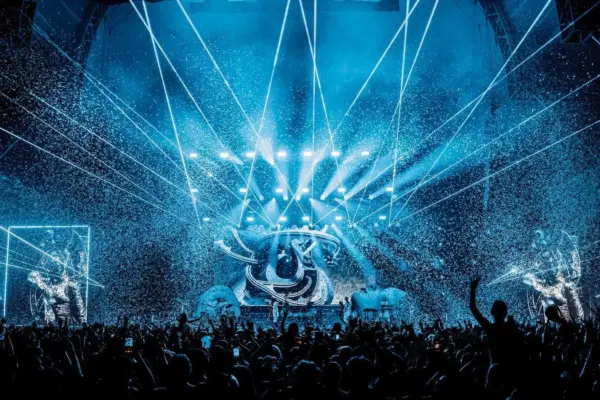
Decades ago, visual elements were frequently treated as supplementary ornamentation—album art and promotional photographs designed to prop up the audio. Today, an artist’s look travels with the speed of data. Hairstyles, sartorial silhouettes, nail colors, stage backdrops, and camera angles are encoded as vital components of an ongoing campaign.
This visual fluency does not demand a multi-million-dollar fashion budget. Some of the most potent aesthetic architectures rely on radical simplicity: a stark black-and-white tour poster, a consistent typographic font, a thrifted jacket that becomes a recurring fan reference, or a drastic haircut that signals the definitive close of a previous chapter.
Crucially, appearance is continuously scrutinized alongside lyrical themes, vocal production, and economic accessibility. This broader cultural conversation often bleeds into adjacent lifestyle spaces, ranging from stage styling and fitness routines to public discussions around celebrity hair transformations. In the economy of modern pop, rap, and alternative music, image is no longer a peripheral footnote; it is a primary text through which audiences read an artist’s personal and creative evolution.
3. World-Building Over Genre Boundaries
Traditional genre walls, while not entirely demolished, have become porous. Pop music freely cross-pollinates with Afrobeats, country, rap, dance, Latin music, and indie rock; rock acts deploy electronic textures; and K-pop groups move fluently between languages, intricate choreography, and global fandom networks.
Because strict genre categorizations struggle to contain this fluidity, world-building has eclipsed genre identity as the primary marker of an artist’s relevance. Listeners may debate the precise genre classification of a song, but they can instantly perceive when an artist has constructed a recognizable, immersive world. A debut era can be successfully forged around a single, uncompromising mood—whether that is gothic club energy, lonely dance music, sunlit guitar pop, or messy coming-of-age storytelling.
Supporting Context & Metrics: The Dual Economy of Format and Feeling
Industry data corroborates the structural expansion of music across varied formats rather than a narrow consolidation into pure streaming.
The IFPI Global Music Report underscores the dual-track reality of modern consumption. Streaming continues to dominate global recorded music revenues, accounting for 69.6 percent of total income. Yet, simultaneously, physical formats have mounted a sustained commercial comeback, anchored by an insatiable, generational demand for vinyl records, cassettes, and specialized physical editions.
| Consumption Metric | Dominant Format | Emotional Driver |
|---|---|---|
| Global Revenue Share | Streaming (69.6%) | Immediate accessibility, algorithmic discovery, daily utility. |
| Physical Formats | Vinyl & Specialized Editions | Tactile engagement, artistic ownership, ritualistic fandom. |
| Live Performance | Arena/Festival Tours | Social validation, communal validation, physical proof of concept. |
This dichotomy reveals how fans utilize digital access and tangible objects to fulfill distinct emotional needs. Streaming provides the music with infinite reach, while physical editions, tour merchandise, and deliberate visual identities grant it physical and psychological weight. When these elements align seamlessly, the album ceases to be a fleeting commercial release and transitions into a durable cultural milestone.
Furthermore, this multi-format ecosystem provides a vital blueprint for emerging artists. Independent acts, bedroom pop producers, and underground rap collectives do not require massive corporate rollouts to make an impact. Instead, they require a coherent point of view: a consistent visual language, uncompromisingly honest storytelling, and a curated cluster of tracks that feel tethered to a singular universe.
Official Statements and Industry Perspectives
Music executives, cultural critics, and artists themselves are increasingly acknowledging that the traditional metrics of chart success no longer tell the full story of cultural influence.
Industry analysts tracking the evolution of fan engagement note that the psychological architecture of fandom has shifted from passive consumption to active decoding. According to prominent cultural theorists:
"An artist era gives fans a map. It turns scattered content into a cohesive story. A new logo, a recurring lyric, a redesigned website, a stage prop, or a repeated color can become part of a shared code. Fans decode it together, making the era feel participatory rather than passive."
This sentiment is echoed by creative directors and tour designers who point out that the live show remains the ultimate stress test for any era’s conceptual integrity. A senior tour production designer recently emphasized:
"An era does not simply drop the new album onto a standard setlist. It redesigns older catalog tracks through the optical lens of the new chapter. It alters arrangements, transitions, and pacing so that a single evening feels like an unfolding narrative rather than a randomized shuffle of past hits."
Moreover, as artificial intelligence tools increasingly saturate digital platforms with low-effort, algorithmically generated soundalikes, industry leaders emphasize that human identity and personal vulnerability have never been more economically and culturally valuable. Listeners demand context, history, contradiction, and genuine risk—elements that can only be delivered through the lived narrative of a human artist navigating a distinct chapter of their life.
Future Outlook: Navigating Authenticity in an Algorithmic Era
As the music industry looks toward the horizon, the challenge for creators will not be finding new ways to generate content, but maintaining authenticity within an accelerated clip economy.
Several critical trajectories will define the future of artist eras:
- The Rise of Intelligent Restraint: In an era where every strategic move is instantly dissected across social media, the artists who command the most enduring fascination will be those who master the art of deliberate withholding. Mystery, when earned, preserves the lifespan of a campaign.
- Technological Synergy vs. Emptiness: While AI will continue to streamline demos, visual prototyping, and marketing analytics, audiences will enforce a strict boundary between tools that enhance human creativity and tools that replace emotional intent. The defining question for future releases will remain centered on meaning versus emptiness.
- The Live-to-Digital Loop: The symbiotic relationship between live performance and digital archiving will only tighten. Viral live arrangements, spontaneous stage props, and crowd-driven chants will increasingly dictate how studio recordings are perceived, permanently altering the shelf life of a recorded catalog.
Ultimately, the lesson of the modern music era is clear: while songs remain the fundamental currency of the industry, the era is the crucible where music transforms into culture. When an artist successfully orchestrates sound, style, stage design, and community into a single, cohesive movement, listeners do not merely remember streaming an album—they remember being alive for the era. And that is a much bigger thing to carry forward.