Executive Overview
In the modern landscape of music production, the boundary between classical orchestration and contemporary electronic or pop music has never been more porous. As contemporary artists, film scorers, and pop producers increasingly lean into complex, genre-blending orchestral arrangements—often inspired by live ensembles and crossover acts—the demand for authentic, expressive string, brass, and woodwind textures is at an all-time high.
For years, music creators have faced a frustrating compromise. They could rely on traditional sample libraries—gigantic collections of pre-recorded audio files that demand terabytes of hard drive space and often sound static or rigid despite elaborate key-switching and velocity layering—or they could shell out exorbitant budgets to hire live session orchestras.
Enter Dreamtonics, a Japan-based audio technology innovator, with its latest flagship offering: Instrument X.
Powered by what the company terms "Neural Acoustics Modelling," Instrument X is designed to fundamentally disrupt how virtual instruments behave. Rather than merely cross-fading between static audio files triggered by MIDI input, the software utilizes artificial intelligence to dynamically control the nuanced physical elements of human playing styles in real-time. Parameters such as breath pressure in wind instruments and bow friction in strings are computed algorithmically, yielding organic dynamic contrasts that go far beyond basic volume riding or standard EQ and reverb effects.
Alongside its AI-driven synthesis engine, Instrument X introduces "3D Sound-Field Control," a spatial processing feature that allows producers to position virtual instruments within highly customizable microphone setups—ranging from close spot mics to classic Decca Trees and ambient room pairs.
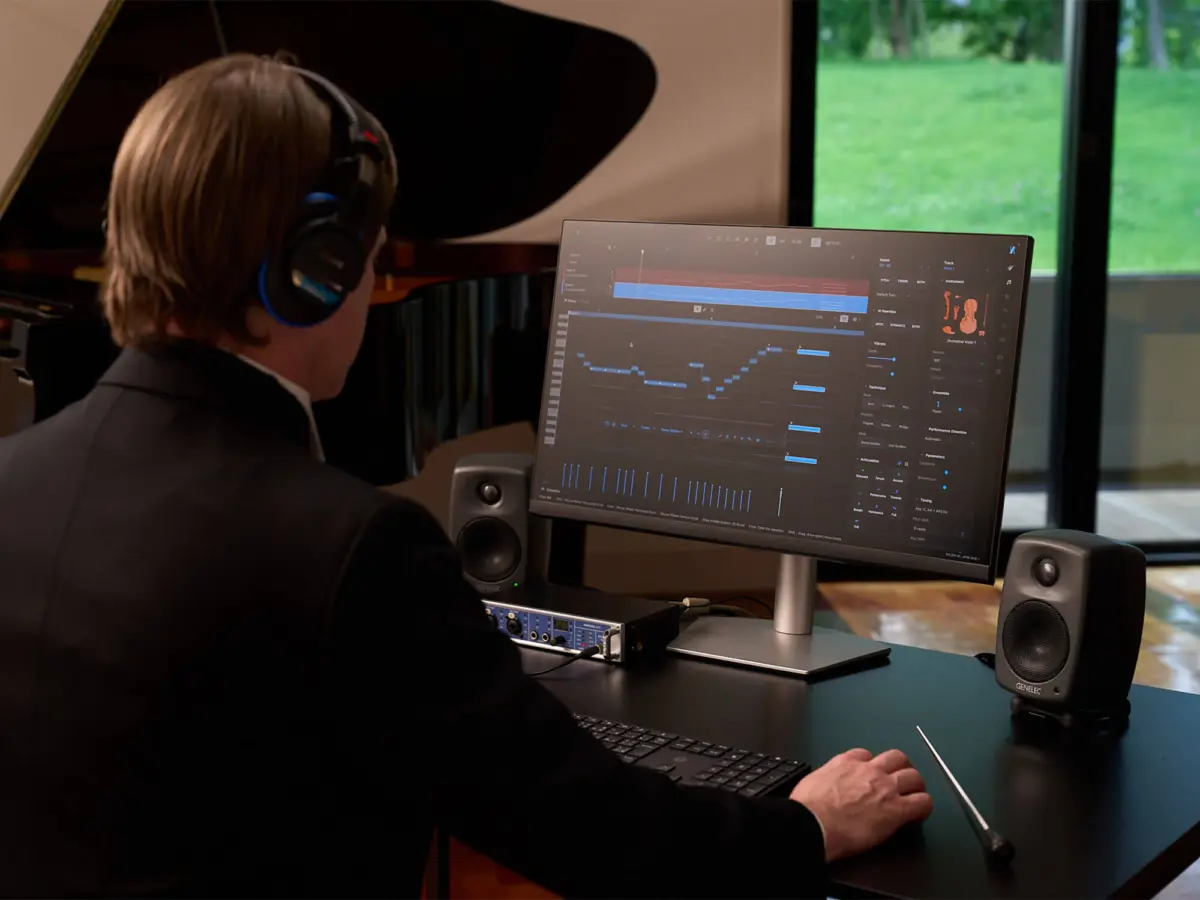
With a streamlined user interface modeled after standard digital audio workstations (DAWs), Dreamtonics has launched Instrument X alongside a tiered ecosystem of 11 different software and sound packs ranging from free baseline tiers to comprehensive bundles priced at $649. As the line between physical performance and algorithmic synthesis continues to blur, Instrument X arrives as a bold bid to solve the perennial holy grail of virtual orchestration: true, fluid realism without the hardware bloat.
Detailed Chronology: The Development and Evolution of Instrument X
To understand the technological leap represented by Instrument X, it is necessary to examine the trajectory of virtual instrument design over the past few decades, and how Dreamtonics systematically positioned itself to tackle the medium’s most stubborn limitations.
The Evolution of Orchestral Sample Libraries
For decades, sample libraries have been the bedrock of media composition. From early 16-bit ROMplers to modern gigabyte-heavy Kontakt instruments, the paradigm remained largely unchanged: record a human musician playing a note at various dynamic layers (from pianissimo to fortissimo), capture multiple round-robins to avoid machine-gun effects, and map those files across a keyboard.
While these libraries have grown astonishingly detailed—often boasting hundreds of articulations per instrument—they suffer from inherent architectural constraints. A sampled note is a snapshot in time. When a composer tries to shape a long, expressive melody using traditional sample playback, they are merely stringing together static audio recordings. Modulating the expressiveness usually requires manipulating volume faders, low-pass filters, or vibrato wheels, which often results in an unnatural, "swelling" artifact rather than a true physical transformation of tone.

Dreamtonics and the Shift Toward Neural Synthesis
Dreamtonics, founded by Kanru Hua, initially made waves in the music technology space through its advanced vocal synthesis and voice-conversion technologies (such as Synthesizer V). By leveraging neural networks to map human vocal cords, phonetics, and pitch fluctuations, the company gained deep expertise in modeling organic acoustic phenomena.
The conceptual development of Instrument X began when the engineering team turned its sights from the human voice to classical orchestral instrumentation. The core hypothesis was simple yet radical: what if, instead of recording thousands of discrete audio files for every possible articulation and dynamic nuance, an AI engine could synthesize the physical mechanics of sound production on the fly?
- Research and Physical Modeling Foundations: Initial R&D focused on understanding the physics of acoustic instruments—specifically how energy transfers from a bow to a string, or how air pressure column resonance shifts within a brass or woodwind instrument.
- Neural Acoustics Modelling Implementation: Rather than writing complex, rigid physical-modeling algorithms by hand (which historically resulted in synthetic, metallic-sounding emulation), Dreamtonics trained neural networks on vast datasets of real-world performances. This allowed the AI to learn the subtle, chaotic variations inherent to human playing.
- Spatial Audio Integration: Recognizing that a great performance is inextricably linked to its acoustic environment, developers integrated 3D Sound-Field Control, allowing users to move beyond fixed stereo panning into true multi-microphone acoustic modeling.
- Commercial Rollout: Following rigorous beta testing with select film and game composers, Dreamtonics officially unveiled Instrument X, adopting a flexible, modular product lineup designed to integrate smoothly into contemporary DAW workflows.
Supporting Context & Metrics: Under the Hood of Neural Acoustics Modelling
To fully appreciate the impact of Instrument X, one must examine the specific engineering paradigms that separate it from both traditional sample libraries and legacy physical modeling synthesizers.
The Mechanics of "Neural Acoustics Modelling"
Traditional physical modeling—popularized in the late 1990s and 2000s—used mathematical equations to simulate strings, tubes, and membranes. While efficient and lightweight, these older engines frequently struggled to capture the rich, chaotic harmonic complexity of real acoustic instruments, often sounding thin or electronic.
Dreamtonics bypasses this limitation by wedding physical modeling concepts with deep neural networks. Instrument X alters the fundamental sound waves in response to notation and real-time controller data, rather than triggering pre-recorded audio files.
- Bow Friction Simulation: For stringed instruments, the software dynamically computes the interaction between the bow hair and the string. Changes in velocity and expression alter friction coefficients, introducing realistic grit, transient scraping sounds, and harmonic overtones that respond organically to phrasing.
- Breath Pressure Dynamics: For brass and woodwinds, the engine models air column pressure and embouchure adjustments. This allows for fluid transitions between stable tones and expressive pitch-bends, overblowing artifacts, and micro-dynamics that do not rely on simple volume compression.
Hard Drive Efficiency vs. Storage Bloat
One of the most immediate practical benefits of this technological shift is the drastic reduction in storage requirements.
| Metric / Feature | Traditional Sample Libraries | Dreamtonics Instrument X |
|---|---|---|
| Storage Footprint | Massive (often 50GB to 500GB+ per orchestral suite) | Highly compressed, minimal footprint due to algorithmic synthesis |
| Dynamic Transitions | Cross-fading between static audio files (prone to phasing/swelling) | Continuous real-time wave modification via Neural Acoustics Modelling |
| Articulation Switching | Requires complex key-switches or multi-channel routing | Unified parameter controls natively mapped to DAW automation |
| Spatial Placement | Pre-baked mic mixes or basic panning | 3D Sound-Field Control (Spot, Decca Tree, Ambient pairs) |
By eliminating the need to store gigabytes of multi-sampled audio for every single note, dynamic layer, and microphone position, Instrument X frees up critical solid-state drive (SSD) space, drastically reducing project load times and memory overhead on modern computer systems.
3D Sound-Field Control
A common pitfall of synthesized or heavily processed virtual instruments is a lack of spatial cohesion. Instrument X addresses this via its built-in spatialization module, which simulates professional scoring stage environments. Producers can route instruments through various virtual microphone configurations:
- Spot Microphones: For intimate, upfront detail and clarity.
- Decca Tree Arrays: The industry-standard orchestral setup for capturing balanced width, depth, and natural room bloom.
- Ambient Pairs: For cinematic air and distance, allowing seamless blending with existing orchestral stems or live-recorded elements.
Official Statements and Industry Perspective
The launch of Instrument X has sparked robust discussion across the music technology sector, particularly concerning the viability of AI-driven synthesis in high-end professional scoring environments.

Addressing the core engineering challenges behind the software, Kanru Hua, Founder and CEO of Dreamtonics, offered candid insight into the development process:
"While it may sound incredibly difficult to transcend the static constraints of traditional sample playback to achieve a fluid, organic performance, the ‘AI-driven’ synthesis is actually the straightforward part. The true challenge lies in deep-customizing this technology to satisfy the exacting, high-end demands of real-world composition and production experts."
Hua’s remarks highlight a critical reality in modern music software development: generating interesting algorithmic sounds is no longer enough. For a tool like Instrument X to gain traction among film composers, game audio directors, and pop producers, it must seamlessly integrate into rigorous, high-pressure production pipelines where turnaround times are tight and sonic standards are uncompromising.
Industry analysts note that by designing the user interface to mirror standard DAW automation lanes and plugin controls, Dreamtonics has deliberately lowered the cognitive barrier to entry. Producers do not need to learn a proprietary, esoteric scoring environment; instead, they can treat orchestral expression parameters—such as bow friction and breath pressure—as familiar, assignable modulation sources alongside filters and envelopes.
Future Outlook: The Horizon of AI in Orchestral Production
As Instrument X rolls out to the global music production community, its reception may well serve a bellwether role for the future of virtual instruments.
What Comes Next?
- Expansion of Instrument Profiles: While the initial launch covers a robust array of core orchestral assets across 11 distinct packs, future updates are expected to expand into more esoteric ethnic instruments, specialized baroque ensembles, and extended techniques.
- Third-Party Ecosystem Growth: As producers familiarize themselves with Neural Acoustics Modelling, demand will likely grow for user-customizable parameter sets, third-party preset libraries, and deeper integration with hardware control surfaces.
- Live Performance Integration: While Instrument X is primarily optimized for studio production workflows, the low computational footprint and real-time synthesis capabilities open up exciting possibilities for live keyboardists and electronic music performers seeking to incorporate responsive orchestral textures into live shows without lugging complex sample-streaming rigs.
Balancing Authenticity and Innovation
The broader implications of tools like Instrument X touch upon a sensitive nerve in the creative community regarding the role of artificial intelligence in art. However, unlike generative AI tools that seek to replace human composition entirely, Instrument X positions itself as an augmentation tool. It does not write the melody; rather, it gives the human composer vastly superior control over the physical nuances of the performance, bridging the gap between the rigid grid of the MIDI piano roll and the living, breathing reality of a concert hall.
For producers navigating the ever-expanding intersection of electronic music, cinematic scoring, and pop orchestration, Dreamtonics has delivered a compelling glimpse into the post-sample era. By trading terabytes of hard drive bloat for intelligent, real-world acoustic modeling, Instrument X invites creators to stop managing audio files and start shaping sound.