Executive Overview
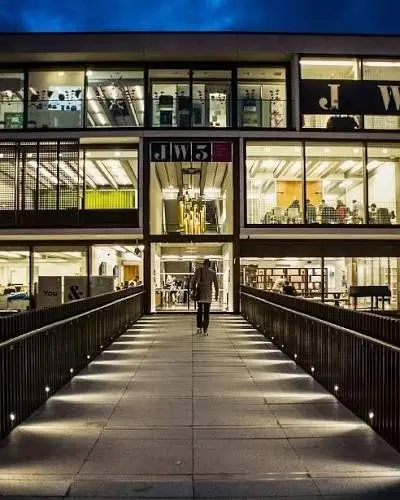
Nestled along the bustling Finchley Road in North London, JW3—officially known as the Jewish Community Centre London—has firmly established itself as a vibrant, multifaceted cornerstone of metropolitan cultural life. Since opening its doors on September 29, 2013, the venue has functioned as much more than a physical structure; it has served as a dynamic nexus for arts, education, entertainment, and social engagement. Cleverly named after its local postal district (NW3) and proudly describing itself as "a new postcode for Jewish life," JW3 bridges communities through shared creative experiences.
While the broader institution celebrates its 13th anniversary, its premier classical music initiative is making waves of its own. Entering its fourth consecutive season, the JW3 Classical Concert Series has cemented its reputation as a haven for world-class chamber music, intimate performances, and uncompromising artistic integrity. Curated by acclaimed cellist David Waterman—a founding member of the legendary Endellion Quartet—the series operates on a singular, uncompromising philosophy: excellence over identity.
Waterman’s curatorial brief is straightforward yet rigorous: to curate a classical music programme of the absolute highest caliber. Eschewing any mandatory quotas for Jewish artists or composers, the series relies entirely on the universal language of masterworks performed by exceptional interpreters.
The 2026–2027 season kicked off to a capacity crowd on September 30, 2026, featuring a breathtaking opening performance by the celebrated Russian-Israeli pianist Boris Giltburg. What follows is a thoughtfully curated, deeply engaging line-up spanning late autumn, winter, and the new year, offering London’s discerning music lovers an intimate acoustic experience rarely found in larger, more sterile metropolitan halls.
Detailed Chronology: The 2026–2027 Concert Season
The current season is structured to take audiences on an emotional journey, moving effortlessly from high-energy festivity to profound introspection.
The Grand Opening: Boris Giltburg (September 30, 2026)
The curtains rose on the fourth-season initiative with a stellar performance by pianist Boris Giltburg. Playing to a packed recital hall, Giltburg set a formidable precedent for the months ahead. Known for his technical brilliance and profound interpretive depth, Giltburg’s opening recital underscored the acoustic and emotional intimacy that has become the hallmark of JW3’s musical offerings.
Autumn Brilliance: The Trout Quintet and Beethoven (October 28, 2026)
Building on the momentum of the opening night, the series continued on October 28 with a programme designed to evoke pure joy and vitality. The evening centered around Franz Schubert’s beloved Trout Quintet (Piano Quintet in A major, D. 667).
The ensemble was led by the exceptionally talented Russian-Vietnamese violinist Aylen Pritchin, an artist whom Waterman holds in the highest regard. Having previously collaborated with Pritchin at prestigious institutions such as Wigmore Hall and Prussia Cove, Waterman describes him as a uniquely gifted performer.
While previous JW3 seasons frequently featured Schubert’s more tragic and introspective works, Waterman viewed the Trout Quintet as an antidote: utterly joyful, festive, and life-affirming. Complementing the Schubert masterpiece was Ludwig van Beethoven’s String Trio in G major, Op. 9, No. 1. Waterman champions this piece as being every bit as profound as Beethoven’s later string quartets, noting that it overflows with charm and joy, yet suffers from underperformance on the global stage.
The October programme was rounded out by Camille Saint-Saëns’s dazzling Introduction and Rondo Capriccioso for violin and piano. This virtuosic showpiece provided Aylen Pritchin with a brilliant platform to showcase his dazzling technical command, leaving the audience heading home with smiles on their faces.
Trios and Duos: Kadesha, Hunter, and Greenberg (November 17, 2026)
The sonic exploration continues on November 17 with an eclectic evening of chamber music exploring the rich interplay between duos and trios. The concert features the erudite and extraordinary Greek-Albanian violinist Jonian Ilias Kadesha, joined by his wife, the accomplished cellist Vashti Hunter, and the London-based Israeli pianist Noam Greenberg.
This powerhouse trio has crafted a sophisticated programme bridging the early classical era with twentieth-century modernism. The repertoire includes:
- Bohuslav Martinů: Duo No. 2 for Violin and Cello
- Claude Debussy: Sonata for Violin and Piano
- Ludwig van Beethoven: Variations for Cello and Piano on "Bei Männern, welche Liebe fühlen" from Mozart’s The Magic Flute
- Joseph Haydn: Piano Trio
- Robert Schumann: Phantasiestücke (Fantasy Pieces)
This performance promises an intricate dialogue between strings and keys, showcasing the versatility and deep collaborative synergy of the performers.
Winter and Beyond: The Aviv Quartet and 2027 Horizon
As the winter chill settles over North London, the concert series looks toward the new year. Following a festive break, the schedule resumes in January 2027 with a much-anticipated appearance by the Aviv Quartet. Their programme will feature masterworks by Haydn, Mendelssohn, and Beethoven, cementing the winter season’s dedication to the foundational pillars of the string quartet repertoire. Three additional major concerts are slated for the post-Christmas stretch, keeping the cultural momentum alive well into the spring.
Supporting Context & Metrics: The Anatomy of an Intimate Venue
Understanding the success of the JW3 Classical Concert Series requires looking closely at the unique physics and demographics of its performance space.

The Recital Hall Experience
Depending on the specific configuration and ensemble line-up, JW3’s recital hall accommodates up to 250 people. In the world of classical music—where audiences are frequently swallowed by vast, impersonal auditoriums holding thousands—JW3 offers a rare commodity: absolute proximity to the art form.
+-------------------------------------------------------------+
               JW3 RECITAL HALL METRICS & EXPERIENCE
+-------------------------------------------------------------+
| Capacity         | Up to 250 seats                          |
| Acoustic Profile | High intimacy, clear sightlines          |
| Audience Profile | Local, deeply attentive, highly engaged  |
| Artist Dynamic   | Immediate feedback loop, friendly vibe   |
+-------------------------------------------------------------+
Every seat in the house guarantees a clear view of the stage, ensuring that audience members feel physically and emotionally close to the action. This eliminates the barrier between performer and listener, transforming a standard concert into an intimate salon-style gathering.
Audience Engagement and Demographics
According to David Waterman, the audience is predominantly local to the North London area, remarkably discerning, and exceptionally well-behaved.
- Deep Listening: Waterman notes that the audience listens with an intensity and focus rarely matched in larger halls.
- Enthusiasm: Despite their quiet attentiveness during performances, crowd reaction is overwhelmingly warm and appreciative.
- Artist Feedback: Performers frequently express how much they enjoy playing at JW3. The supportive, unpretentious atmosphere allows musicians to take creative risks and connect directly with listeners during post-concert conversations.
Official Statements and Curatorial Vision
The architectural backbone of the concert series is David Waterman’s uncompromising artistic vision. As a founding member of the world-renowned Endellion Quartet, Waterman brings decades of chamber music pedigree to his role as curator.
When asked about the foundational ethos of the series, Waterman is remarkably direct:
"My brief was simply to create a high-quality classical music series. There is no particular emphasis on Jewish artists or Jewish composers; it is the high quality that counts."
Waterman splits his time evenly across the season, performing in roughly half of the scheduled concerts while introducing the rest. This hands-on approach allows him to maintain a personal connection with both the roster of talent and the patrons in attendance.
However, running a boutique classical concert series in the 2020s is not without its strategic hurdles. Reflecting on audience trends, Waterman acknowledges the unpredictable nature of cultural programming:
"Based on my experience with the Endellion Quartet, things go in fashions. Sometimes lieder or string quartets do well, and sometimes they don’t. As a promoter, you have to believe in what you are doing and persist, though sometimes you cannot fight the trend. It is a tricky balance."
This balance involves walking a tightrope between financial sustainability and artistic integrity. Waterman admits that a promoter could easily engineer a series designed to sell out instantly through predictable programming, but notes wryly:
"It would be easy enough to create a series that would sell out, but which I would be totally uninterested in attending myself! And that is not the way he wants to go."
Future Outlook: Sustainability, Vision, and the Road Ahead
As JW3 enters its thirteenth year as an institution and its fourth year of this classical music initiative, the future looks both promising and grounded. The venue has successfully carved out a niche that defies the conventional homogenization of London’s arts scene. By offering world-class chamber music in an accessible, neighborhood setting, JW3 proves that high culture does not need to be intimidating or elitist to succeed.
The primary challenge moving forward will be navigating shifting cultural appetites while maintaining the uncompromising standards championed by Waterman. Yet, given the loyal core audience, the calibre of incoming artists—such as Aylen Pritchin, Jonian Ilias Kadesha, and the Aviv Quartet—and the enduring appeal of intimate chamber music, the series is well-positioned to thrive.
For patrons, music lovers, and cultural explorers across London, JW3 remains an indispensable destination. Complete schedules, ticket bookings, and detailed artist biographies can be accessed directly via the official JW3 website.
In an era where live performance constantly seeks to reinvent itself through scale and spectacle, JW3’s classical series offers a refreshing reminder of the power of simplicity: exceptional musicians, a receptive audience, and timeless music shared in a room where every note matters.