Executive Overview
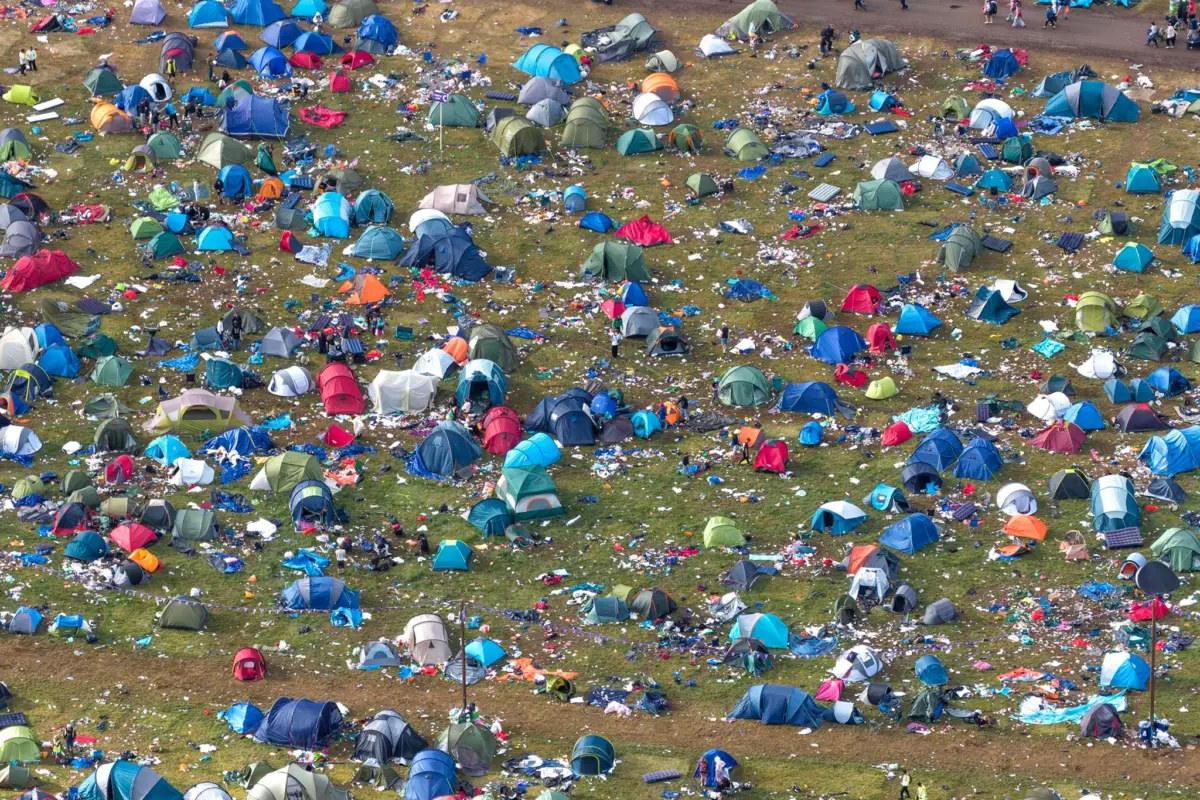
As the echoes of the final headliner’s set fade and the temporary infrastructure of the August bank holiday weekend is dismantled, a grim, familiar reality emerges across the Berkshire countryside. Drone photography captured hours after the conclusion of this year’s Reading Festival reveals a landscape scarred not by memories of music and revelry, but by an expansive, sprawling sea of waste. Thousands of abandoned tents, fractured camping gear, discarded sleeping bags, and deflated blow-up mattresses carpeted Little John’s Farm, presenting a stark visual indictment of modern festival culture.
More than 100,000 music fans descended upon the historic site for the multi-day event, contributing to a vibrant celebration of contemporary culture. Yet, the mass exodus left behind a logistical nightmare. While the event operates with the official sanction and ongoing oversight of Reading Borough Council—which mandates post-event scrutiny reports—the persistent accumulation of discarded equipment highlights a deep-seated behavioral and systemic crisis.
This is not an isolated incident or an unpredictable anomaly. Year after year, municipal oversight reports and environmental audits expose a massive generation of refuse. Despite minor downward fluctuations in total waste tonnage, the phenomenon of the "throwaway tent" remains stubbornly persistent. It exposes a troubling disconnect between consumer convenience and environmental stewardship, driven in part by dangerous misconceptions regarding what happens to gear left behind on the campsite fields.
This report investigates the escalating crisis of post-festival waste at Reading Festival. By examining historical data, municipal oversight requirements, environmental metrics, and the logistics of waste management, we explore the complex web of responsibility linking festival organizers, local charities, and the attendees themselves. As pressure mounts on the live entertainment industry to adopt sustainable models, the images from Little John’s Farm serve as a formidable challenge to a culture that too often treats the earth as a temporary campsite.
Detailed Chronology: From Mass Gathering to the Post-Bank Holiday Wasteland
The Buildup and the Gathering
The annual migration to Little John’s Farm for the Reading Festival is one of the definitive fixtures of the British summer calendar. As the August bank holiday approaches, the Berkshire town transforms, welcoming a demographic heavily weighted toward students, young adults, and dedicated live music enthusiasts. Logistics matching the scale of a small city spring into action months in advance: security perimeters, medical tents, multi-stage audio arrays, food stalls, and vast sprawling tented cities designed to accommodate upward of 100,000 visitors.
For the duration of the festival, the atmosphere is electric. Headline acts draw massive crowds, cultural and political discourses ripple through the campsites, and a transient community establishes itself across the pastoral landscape. Organised by Festival Republic, the event is heavily integrated into the local economy, bringing significant tourism revenue and cultural prominence to the region.
However, the rapid scaling of population density carries an immediate environmental footprint. The sheer volume of packaging, imported goods, camping equipment, and consumables brought onto the site creates an uphill battle for waste management teams before the music even begins.
The Mass Exodus and the Silence After
The turning point arrives on the Monday morning following the final performances. The rhythm of the site shifts instantly from vibrant chaos to an abrupt, breathless silence. The mass exodus of over 100,000 attendees occurs over a compressed window of several hours, driven by the desire to catch trains, board coaches, or navigate congested local roadways.
It is precisely within this frantic window of departure that the true environmental cost of the weekend materializes. As festival-goers pack their vehicles or trek toward transport hubs, a staggering volume of personal property is intentionally or thoughtlessly abandoned.
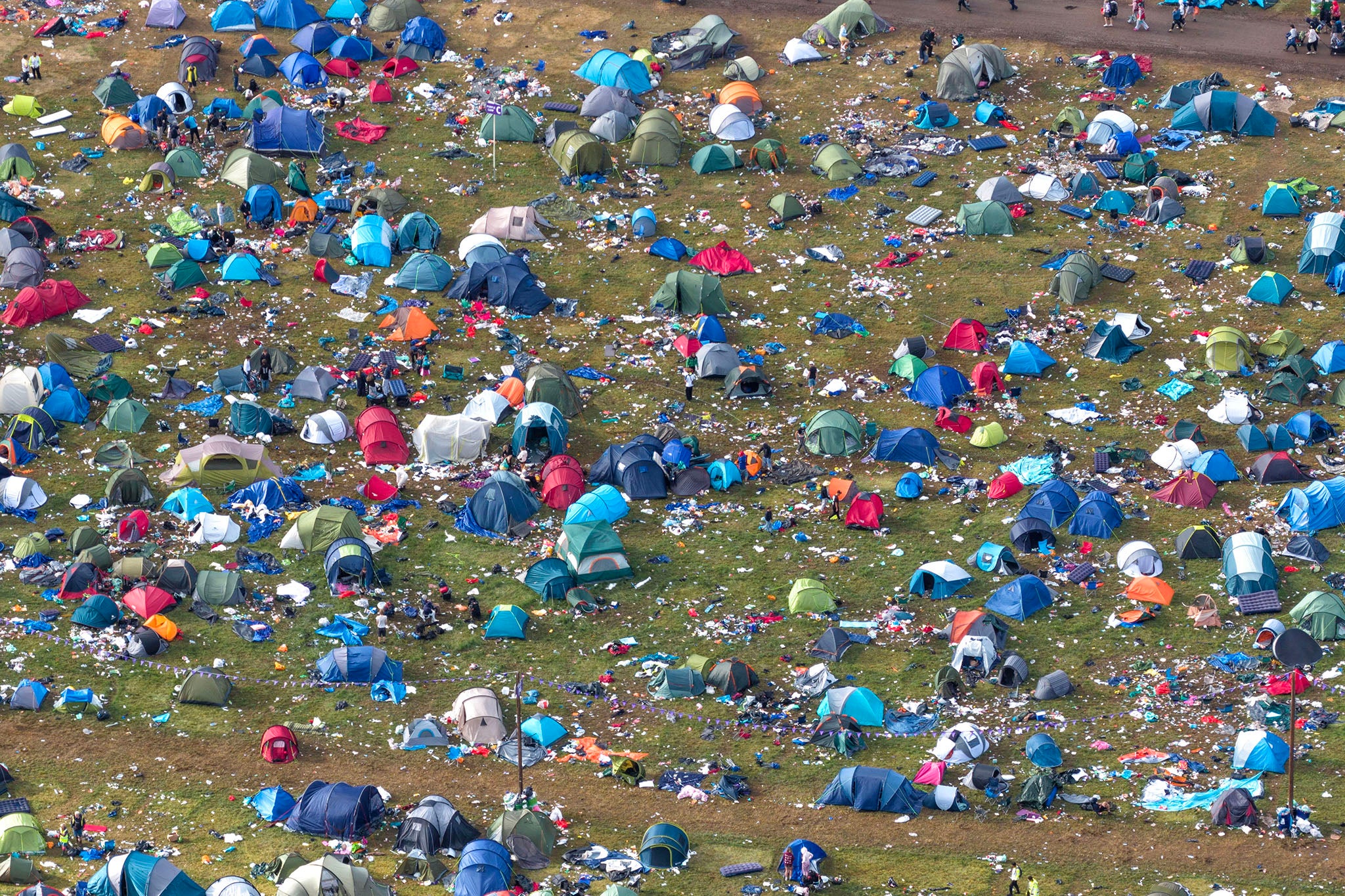
Drone footage captured shortly after the site was completely vacated reveals the scale of the abandonment. Acres of pristine countryside are obscured by a multicolored patchwork of synthetic fabrics. Vibrant dome tents stand abandoned—many entirely intact, others flattened or structurally compromised by wind or rough handling. Interspersed among the canvas dwellings are discarded sleeping bags, voluminous trash piles, heaps of single-use food packaging, camping chairs, and punctured air mattresses.
The visual contrast between the energetic human presence of the weekend and the static, desolate aftermath is jarring. It transforms a celebrated cultural institution into an industrial clean-up zone, signaling the beginning of a grueling, costly remediation process led by municipal workers, environmental contractors, and dedicated charity volunteers.
Supporting Context & Metrics: Unpacking the Scale of Festival Waste
Quantifying the Crisis: Tonnage and Trends
To understand the magnitude of the post-festival clean-up operation, one must look closely at the empirical data collected by local authorities and festival organizers. Festival Republic, which manages both the Reading and Leeds festivals, is subjected to rigorous post-event reporting requirements mandated by Reading Borough Council. These reports provide a rare, transparent window into the material reality of mass-attendance live events.
According to audited figures from recent years, the sheer volume of refuse generated is monumental:
- 2023 Season: The total waste produced across the festival footprint reached a staggering 780 tonnes. Within this total, leftover tents alone accounted for approximately 80 tonnes of material.
- 2024 Season: Organizers reported a slight downward trend, with total waste dropping to 702 tonnes. Of this reduced total, abandoned tents made up 71 tonnes, translating to roughly 10 percent of the aggregate waste weight.
While a reduction of 78 tonnes in overall waste and 9 tonnes in abandoned tents between 2023 and 2024 indicates incremental progress, the absolute figures remain alarming. Transporting, sorting, and processing hundreds of tonnes of mixed refuse requires substantial carbon expenditure, heavy machinery, and countless man-hours of labor.
The Anatomy of a Abandoned Tent
The environmental footprint of a discarded tent extends far beyond its raw weight. Modern mass-market festival tents are marvels of cheap, accessible manufacturing—typically constructed from synthetic polymers such as polyester or nylon, supported by fiberglass or lightweight aluminum poles, and treated with chemical water-resistant coatings.
These materials are remarkably durable, meaning they do not biodegrade easily. When left on fields that must be returned to agricultural use or natural grazing, broken tent fragments pose immediate hazards to local wildlife, livestock, and soil health. Furthermore, because these tents are typically manufactured as mixed-material composites—fusing metals, plastics, and treated fabrics—they are notoriously difficult and expensive to recycle. The vast majority of abandoned camping gear captured in the drone footage cannot simply be tossed into standard municipal recycling streams; instead, much of it is destined for incineration or landfill.
The Charity Myth: Debunking Misconceptions
A major driver of the abandoned tent phenomenon is a persistent urban legend among festival demographics. A widespread, erroneous belief holds that leaving tents, sleeping bags, and camping gear behind is actually an act of charity—that benevolent volunteers or event organizers will carefully pack up every discarded item, clean it, and distribute it to those in need.
This narrative acts as a psychological comfort blanket for exhausted attendees, absolving them of the guilt of abandoning their property. However, waste management professionals and charity coordinators emphasize that this perception is fundamentally flawed.
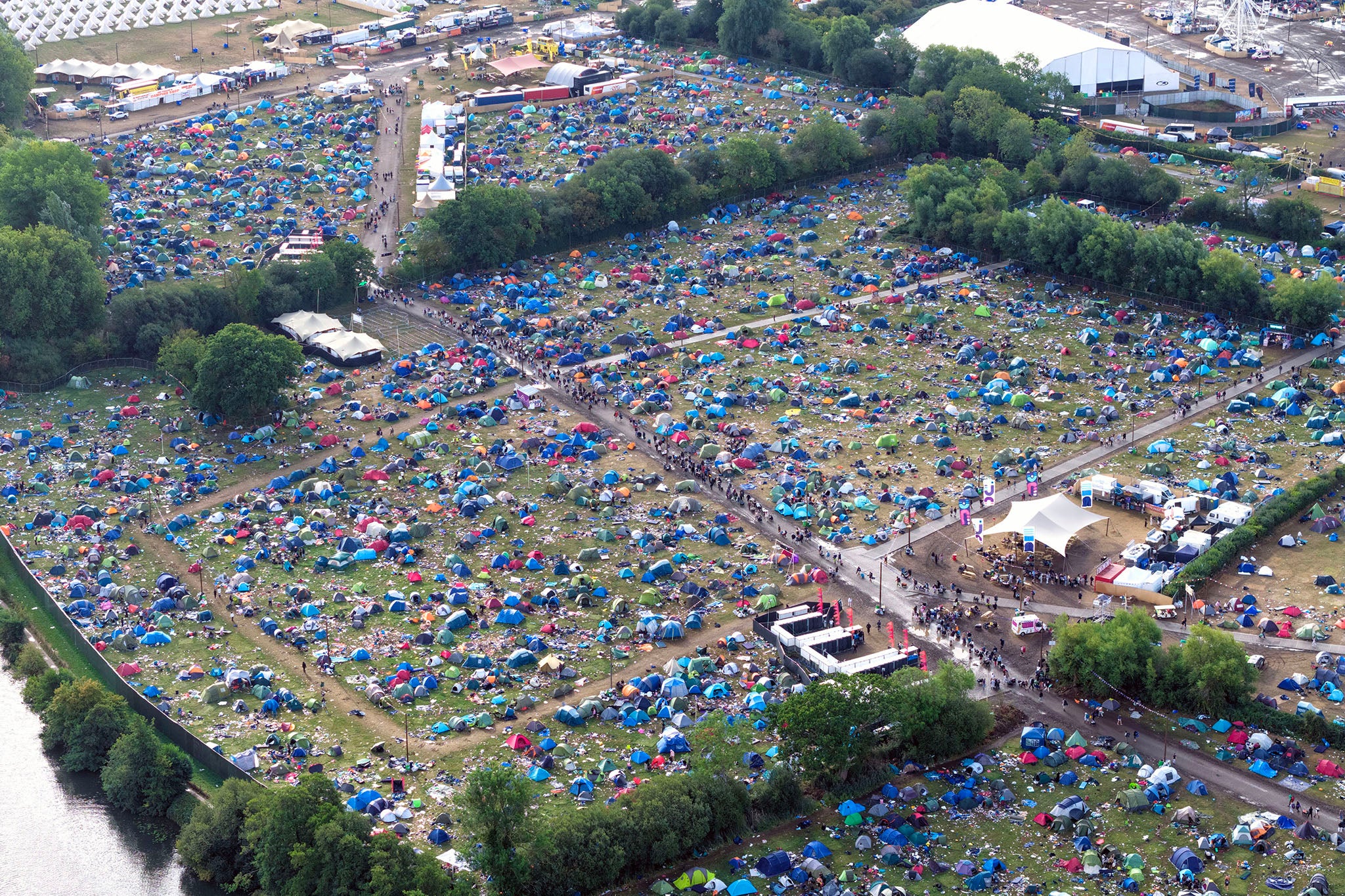
While legitimate charity initiatives do operate within the festival ecosystem, the reality of abandoned gear is vastly different from the idealized version shared on social media. Tents left scattered randomly across a muddy field are rarely in a condition suitable for direct donation. They are frequently waterlogged, caked in mud, structurally damaged, missing essential components like pegs or poles, or contaminated by general waste and discarded food packaging.
Rather than serving as a streamlined donation pipeline, random abandonment creates a contaminated mess. The sheer velocity at which clean-up crews must operate to clear the site for its secondary use precludes the delicate sorting required to salvage haphazardly dumped gear. Consequently, the vast majority of equipment left behind in the fields bypasses charitable channels entirely, ending up crushed beneath heavy machinery and hauled away as general waste.
Official Statements and Community Action
Municipal Oversight and Accountability
The relationship between Reading Festival and the local municipality is governed by strict regulatory frameworks. Reading Borough Council maintains oversight through annual debriefs and compulsory reporting mechanisms. Councillors utilize these reports to scrutinize the logistical performance of Festival Republic, evaluating everything from noise pollution and traffic management to public safety and environmental remediation.
Local authorities have consistently flagged the issue of abandoned waste as a primary area of concern. The persistent recurrence of tent graveyards damages the council’s broader environmental objectives and places an undue burden on local infrastructure during the post-event recovery phase. While the council acknowledges the economic benefits that the festival brings to the region, pressure is mounting on organizers to implement more aggressive, proactive deterrents against waste abandonment.
Industry and Retailer Responses: The Call to Action
Recognizing the limitations of reactive clean-up operations, various stakeholders within the festival supply chain and charitable sector have launched targeted educational and logistical campaigns to shift consumer behavior.
Prominent among these is FatFranks Festival-essentials, a major provider of on-site camping gear and supplies. Utilizing digital platforms, including direct appeals via social media, the organization has launched concerted efforts to educate festival-goers on responsible end-of-life management for camping equipment.
In a widely shared public statement, representatives from FatFranks issued a direct appeal to attendees:
"If you’ve decided you no longer want to keep your camping equipment, please consider donating any reusable items at one of the donation points at each stall. Your unwanted equipment can be put to good use and donated to local charities, animal sanctuaries, and schools, helping people and organisations in our communities who need it. Don’t leave it behind, donate it and give it a second life!"
This messaging targets the core of the problem: transforming passive abandonment into active donation. By establishing clear, accessible collection points directly within the retail stalls and campsites, organizers and vendors aim to make the act of giving away unwanted gear easier than the act of walking away and leaving it behind.

Grassroots Partnerships: Berkshire Youth and the Reading Repairium
Addressing the downstream impact of festival waste also requires robust partnerships with local charitable networks. Festival organizers have increasingly collaborated with regional initiatives designed to extract value from discarded items while supporting community development.
A key player in this ecosystem is the Reading Repairium, an organization that steps in to process and repurpose donations gathered from the festival grounds. Far from letting damaged gear go to waste, initiatives of this nature work to repair, clean, and redistribute items where possible, or channel salvageable materials into alternative community projects.
Crucially, the financial proceeds generated through these recovery and recycling efforts are funneled directly back into local support structures. A prime beneficiary of these sustainability-linked initiatives is Berkshire Youth, a dedicated charity providing vital services, safe spaces, and developmental opportunities for young people throughout the county. Through this mechanism, the environmental liabilities of the festival are partially offset by direct, tangible investments in the local youth community, turning a persistent ecological nuisance into a source of charitable funding.
Future Outlook: Redefining Sustainable Festival Culture
The Path Forward for Festival Organizers
As the live entertainment industry faces increasing scrutiny over its ecological footprint in an era of accelerating climate change, the status quo at events like the Reading Festival is rapidly becoming untenable. The cultural normalization of disposable camping gear—where cheap tents are purchased as single-use commodities intended to be discarded after a single weekend—must be aggressively challenged through structural innovation.
Industry analysts and environmental advocates are calling for a multi-layered approach to future festival planning:
- Strict Deposit Schemes: Implementing mandatory environmental deposits at the point of ticket or gear purchase, refundable only upon proof of proper campsite cleanup or return to a designated collection point.
- Bans on Single-Use Plastics and Low-Quality Tents: Encouraging or mandating retailers operating on-site to cease the sale of ultra-cheap, structurally deficient tents designed explicitly for ephemeral use.
- Enhanced Infrastructure: Expanding the footprint of designated donation stations, making them hyper-visible, easily accessible, and staffed by volunteers capable of processing gear efficiently during the exodus window.
- Behavioral Nudging and Pre-Event Education: Leveraging digital ticketing platforms to deliver mandatory educational modules on Leave No Trace principles before festival-goers ever set foot on Little John’s Farm.
Cultural Shifts Among Attendees
Ultimately, technological fixes and municipal regulations can only achieve so much without a fundamental evolution in consumer consciousness. The enduring images of synthetic tents rotting in Berkshire fields stand in stark opposition to the growing environmental awareness of the very demographic that populates the festival.
Today’s festival-goers are increasingly vocal about climate justice, corporate accountability, and sustainability. Yet, a cognitive dissonance persists between green ideals and weekend realities. Bridging this gap requires shifting the social norms of the campsite. Leaving a tent behind must transition from an accepted, low-effort convenience to a socially unacceptable breach of community trust—both toward the natural environment and toward the local community that hosts the event.
As Reading Festival looks toward future editions, the blueprint for success is clear. By transforming the post-festival landscape from a symbol of waste into a model of circular economy principles, organizers, municipal leaders, and music fans alike have an opportunity to redefine what it means to gather, celebrate, and depart in harmony with the environment.