Executive Overview
In contemporary music, few artists manage to occupy the elusive space between classical discipline and avant-garde exploration quite like Gaspar Claus. The Paris-based cellist, composer, and producer has spent the past decade quietly establishing himself as a ubiquitous figure across genres, appearing on critically acclaimed releases and avant-garde projects before casual listeners have even fully mapped the breadth of his catalog. Whether he is trading improvisational blows with Japanese noise legend Keiji Haino, collaborating with indie-rock royalty like Bryce Dessner of The National and Sufjan Stevens, or bridging electronic soundscapes with French producer Rone, Claus’s artistic signature is defined by an absolute refusal to be categorized.
Now, Claus is set to release his highly anticipated new solo album, Cells. Recorded and produced in a custom-built studio perched in the coastal commune of Banyuls-sur-Mer, the record represents a monumental leap in his sonic evolution. Eschewing traditional instrumentation beyond his primary tool, Claus has constructed an entire sonic ecosystem where every single sound originates from a single cello. Through meticulous digital processing, phase manipulation, and hardware stretching, the acoustic resonance of wood and steel is metamorphosed into driving percussion, synthetic textures, and otherworldly soundscapes.
Simultaneously, the release is accompanied by the drop of his new single, “Ecstasy”—the album’s boldest foray into electronic territory. Dense, visceral, and pulsing with a raw, physical energy, the track delivers on the sensory intensity promised by its title. As Cells hits shelves worldwide, it stands not merely as an album, but as an investigative study into the friction between human performance and digital processing. It asks a fundamental question for modern composition: How far can an acoustic instrument be pushed before it ceases to be itself—and what beauty is discovered in the transformation?
Detailed Chronology: From Flamenco Roots to Avant-Garde Omnipresence
To understand the intricate architecture of Cells, one must trace the artistic lineage and collaborative journey that shaped Gaspar Claus. Born into a world deeply immersed in traditional music, Claus is the son of the legendary flamenco guitarist Pedro Soler. Growing up surrounded by the passionate, rhythmically complex world of traditional Spanish folk music instilled in Claus an early appreciation for the physical intensity of live performance. Yet, rather than following a strict path of classical replication or traditional flamenco interpretation, Claus pivoted toward the cello as his primary vehicle for unscripted sonic exploration.
Early Career and Classical Deconstruction
Claus’s foundational years were defined by rigorous classical training tempered by an insatiable curiosity for the unorthodox. He quickly earned a reputation within the Parisian underground as a cellist who treated his instrument not as a polite orchestral voice, but as a dynamic, unruly organism. He began collaborating across disciplines—scoring contemporary dance pieces, improvising alongside free-jazz luminaries, and performing in subterranean art spaces. This period of deconstruction allowed him to master the extended techniques of the cello: bowing the tailpiece, striking the wooden body for percussion, and utilizing feedback loops to push the instrument’s acoustic limits long before he ever plugged it into a synthesizer.
The Collaborative Explosion
As his reputation for fearlessness spread, Claus became a sought-after collaborator for artists seeking to inject organic unpredictability into their work. His CV reads like a masterclass in modern cross-genre pollination:
- Bryce Dessner: Claus formed a profound creative partnership with the guitarist and composer from The National, contributing to cross-genre neoclassical compositions and live performances that blurred the lines between indie rock and modern concert halls.
- Sufjan Stevens: Claus lent his expressive, emotive cello work to arrangements that required both fragile intimacy and sweeping orchestral weight.
- Keiji Haino: Perhaps the ultimate test of his improvisational grit, playing alongside the legendary Japanese noise pioneer forced Claus to match harsh, abrasive sonic assaults with visceral, acoustic counter-attacks.
- Rone (Erwan Castex): Bridging the gap between acoustic melancholy and hypnotic electronica, Claus’s work with the acclaimed French electronic producer proved that his cello could converse fluidly with sequencers and drum machines.
The Solo Voyage and Cells
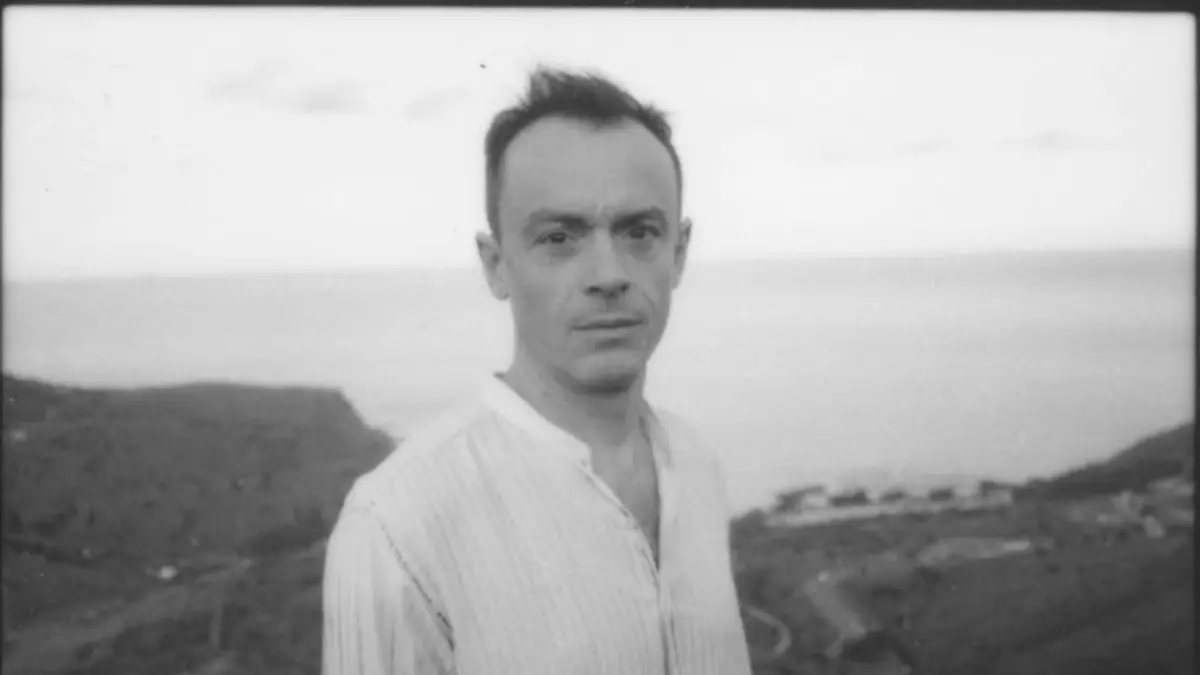
Following the release of his widely praised debut album—a record lauded by critics for its singular vision and emotional gravity—Claus retreated from the frenetic pace of Paris. Seeking absolute focus, he established a custom-built studio in Banyuls-sur-Mer, a picturesque wine-producing commune nestled in the Pyrénées-Orientales department of southern France, near the Spanish border. It was within this isolated sanctuary, surrounded by the meeting point of mountains and the Mediterranean Sea, that Cells was conceived, nurtured, and brought to life.
Supporting Context & Metrics: The Anatomy of a Monolith
The creation of Cells represents a monumental technical and conceptual achievement. In an era where electronic music is dominated by software synthesizers and virtual studio technology (VSTs) boasting endless libraries of pre-packaged sounds, Claus adopted a fiercely dogmatic constraint: autarky of source.
The Mono-Instrumental Constraint
Every pad, bassline, rhythmic click, soaring drone, and piercing high frequency on Cells began its life as a physical vibration produced by Gaspar Claus playing his cello.
- Acoustic Capture: Claus employed an array of specialized microphones—ranging from vintage ribbon mics to close-proximity contact pickups—to capture the minutiae of the instrument: the scrape of horsehair on gut strings, the deep resonant hum of the wooden soundboard, and the percussion of wood strikes.
- Digital Metamorphosis: Once captured, these raw acoustic audio files were subjected to extensive processing inside his Banyuls-sur-Mer studio. By utilizing granular synthesis, time-stretching algorithms, frequency shifting, and saturation pedals, Claus transformed lyrical cello phrases into subterranean sub-bass frequencies and industrial percussion loops.
- The Organic-Synthetic Balance: The result is a paradox: music that sounds intensely synthetic and futuristic while retaining the physical warmth, micro-imperfections, and emotional weight of a wooden acoustic instrument.
Single Spotlight: "Ecstasy"
Serving as the primary promotional vehicle for the album, the single "Ecstasy" encapsulates the apex of this methodology. Where previous works by Claus often maintained a meditative, chamber-music-like restraint, "Ecstasy" thrusts the listener into a dense, club-adjacent sonic architecture.
- Rhythmic Drive: The percussion driving the track is entirely derived from rhythmic bow-bouncing (col legno) and body-tapping on the cello, processed to hit with the weight of a Roland TR-909 drum machine.
- Harmonic Walls: Swells of multi-tracked, heavily distorted cello chords create soaring, synth-like pads that evoke a sense of overwhelming sensory saturation.
- Visual Companion: The accompanying official music video mirrors the track’s physical intensity, utilizing stark imagery and dynamic editing to visualize the friction between the organic wooden instrument and the digital processing that tears it apart and rebuilds it.
Official Statements & Critical Perspectives
The conceptual backbone of Cells is best articulated by its creator. In reflections on the compositional process, Claus has continually emphasized the tactile, almost adversarial relationship he maintains with his equipment throughout the album’s production.
"Listening to the album, I feel a kind of fertile struggle between the instrument and its digitalisation," reflects Gaspar Claus. "The electronics remain organic because their raw material always comes from the cello."
This quote gets to the heart of Claus’s artistic philosophy. Rather than viewing electronics as an artificial overlay meant to "improve" or "modernize" acoustic music, he treats the digital realm as a magnifying glass and a chisel. The computer does not replace the musician; instead, it reveals hidden dimensions within the wood and strings that the human ear cannot perceive in real time.
Music critics and avant-garde theorists have already begun evaluating Cells within the broader context of contemporary classical and electronic music convergence. Where artists like Max Richter, Hildur Guðnadóttir, and Jon Hopkins have successfully bridged the gap between acoustic scoring and electronic sound design, Claus carves out a distinct niche through his purist constraints. By refusing to introduce external synthesizers, guitars, or vocal samples, he turns self-imposed limitation into boundless creative freedom. The "fertile struggle" he speaks of is palpable in every track—a dynamic push-and-pull where the classical pedigree of European chamber music is continually dragged through the mud of electronic distortion, only to emerge transformed.
Future Outlook: The Evolution of Modern Chamber Music
As Cells officially releases into the world, the cultural footprint of Gaspar Claus is poised for a significant expansion. The album challenges both traditional classical audiences and underground electronic enthusiasts to rethink the rigid boundaries of genre. In an industry increasingly driven by algorithmic homogenization and easily digestible genre tags, Claus offers a masterclass in how an artist can remain deeply experimental while achieving profound emotional resonance.
Live Performance and Tour Adaptation
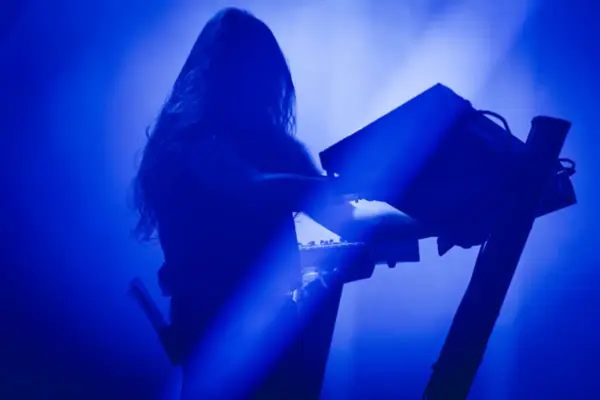
Translating Cells from the controlled, isolated environment of the Banyuls-sur-Mer studio to the live stage presents a fascinating challenge. Claus has designed a live setup that mirrors his studio ethos: performing with his acoustic cello while simultaneously routing the live signal through a complex web of real-time hardware processors, loop pedals, and effects racks. This ensures that every concert remains an unscripted, high-wire act of live improvisation and digital manipulation. Audiences across Europe and beyond can expect performances that are as visually captivating as they are sonically overwhelming—a testament to the fact that electronic music does not require laptops loaded with pre-recorded stems to feel massive and immersive.
Collaborative Horizon
Looking ahead, the success of Cells is expected to open new doors for Claus as both a solo artist and a cross-disciplinary collaborator. With film directors, choreographers, and fellow producers taking note of his singular ability to conjure vast sonic worlds from a single instrument, Claus is well-positioned to score major cinematic and theatrical works.
Ultimately, Cells is more than just a collection of songs; it is a manifesto for the future of acoustic instrumentation. By proving that the cello possesses an entire universe of hidden electronic textures within its frame, Gaspar Claus has not only redefined his own artistic trajectory—he has expanded the vocabulary of modern music itself.