Executive Overview
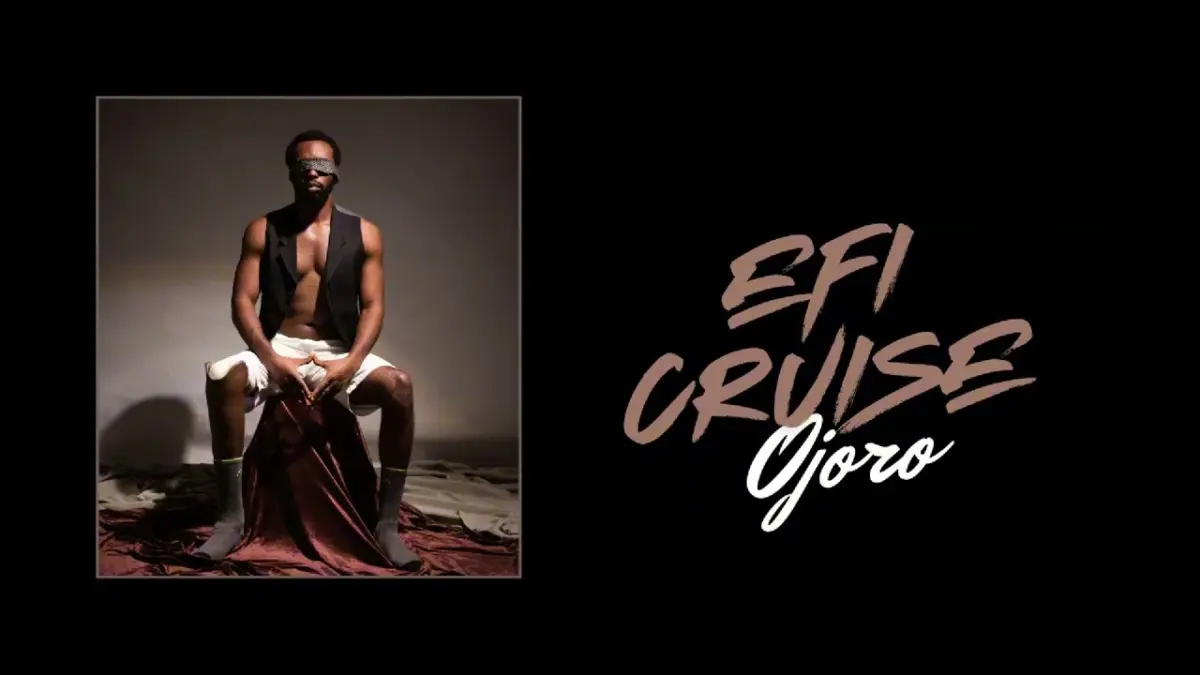
On October 1, 2024, as Nigeria marked its sixty-sixth anniversary of independence against a backdrop of economic anxiety and socio-political fatigue, artist and producer Efi Cruise delivered an unsparing cultural artifact. Released via Bayside Records, his latest single, "Ojoro," is much more than a holiday release; it is a clinical diagnosis of the modern Nigerian political condition. Blending the infectious, politically charged polyrhythms of classic Afrobeat with the improvisational sensibilities of Southern Afro-Jazz, Cruise targets the systemic corruption, bureaucratic ineptitude, and civic alienation plaguing the West African powerhouse.
At the core of Cruise’s musical critique is the coinage of a devastating new political lexicon: "oyocracy." Deriving the term from the ubiquitous Nigerian shorthand "OYO"—an acronym for "On Your Own"—Cruise defines this governance model as "government for yourself, government by yourself." It is a poignant, biting observation of a political elite that operates entirely insulated from the struggles of the citizenry, leaving the populace to fend for themselves in an unforgiving socio-economic landscape.
Through vivid metaphors, rich Nigerian Pidgin idioms, and sharp lyrical indictments, "Ojoro" bridges the gap between historical protest music and contemporary social commentary. This comprehensive report explores the genesis of the track, the background of its creator, the musical framework of Southern Afro-Jazz, and the broader socio-economic implications of a society forced to navigate an "oyocracy."
Detailed Chronology: From Lagos Roots to Plymouth Business Halls and Back
To understand the piercing clarity with which Efi Cruise dissects Nigerian politics, one must trace the winding, unorthodox trajectory of his life. Born Efiom Ita in the sprawling, relentless metropolis of Lagos, Cruise carries deep cultural roots tethered to the southern coastal city of Calabar. This dual heritage—the frenetic, survival-of-the-fittest energy of Lagos fused with the rich, melodic traditions of the Cross River region—formed the bedrock of his early sonic palette.
The Formative Years and the UK Interlude
Long before he was conceptualizing protest anthems, Cruise was immersed in music. He honed his vocal abilities in his school choir, developing an ear for harmony and vocal control that would later define his sophisticated approach to phrasing. However, the path of an African artist is rarely straightforward. Yielding to family expectations of professional stability, Ita traveled to the United Kingdom, where he pursued and completed business studies in Plymouth.
While the British academic environment equipped him with an understanding of global commerce, it could not extinguish his creative calling. The structured, predictable rhythms of corporate life in the UK stood in stark contrast to the chaotic, vibrant pulse of his homeland. It was during these years abroad that the internal pressure to create music mounted.
The 2018 Homecoming and Musical Genesis
In 2018, against the explicit wishes and profound concerns of family and friends who viewed the move as an abandonment of financial security, Efiom Ita packed his bags and returned to Nigeria. He stepped back onto Lagos soil not as a corporate consultant, but as an artist determined to forge a new path under the moniker Efi Cruise.
The homecoming was baptism by fire. Reintegrating into the Nigerian creative space required resilience. Rather than chasing fleeting commercial trends—such as the hyper-popular, club-centric Afropop dominating the airwaves—Cruise sought to carve out an entirely distinct artistic niche. This vision materialized through the pioneering of Southern Afro-Jazz, a hybrid genre that melds the improvisational freedom of bebop scat-singing with the deep grooves of highlife and funk.
Cruise’s discography grew steadily over the next few years. In 2023, he introduced his distinct sound to the world with the release of his debut album, Mirrors. Displaying an appetite for rapid artistic evolution, he followed up quickly with the critically praised sophomore project, If You Were Me You Would Be Dead, in late 2023. These projects established his reputation as an uncompromising lyricist and a master arranger.
The Birth of "Ojoro"
The culmination of this artistic journey arrived on Nigeria’s Independence Day in 2024. Collaborating with producers Onil, David Knauf, and the team at Bayside Records, Cruise locked into the political consciousness of the nation. "Ojoro" was conceived as a sonic Molotov cocktail hurled at the apparatus of state inefficiency. By channeling the spirit of 1970s Afrobeat legend Fela Kuti—who famously used music to lampoon and challenge military juntas—Cruise directed his satirical crosshairs at Nigeria’s civilian political successors, setting the stage for a national conversation.
Supporting Context & Metrics: Decoding the Language of "Ojoro"
To fully appreciate the cultural weight of Efi Cruise’s latest work, one must examine the linguistic, social, and political metrics embedded within the track’s verses. Cruise utilizes Nigerian Pidgin English not merely as a stylistic choice, but as a political weapon designed to democratize critique, ensuring that the message resonates from the streets of Lagos to the remote villages of the Niger Delta.
The Anatomy of "Oyocracy" and "OYO"
The centerpiece of the song’s ideological framework is the term "OYO." In Nigerian parlance, telling someone they are "on your own" is a cynical acknowledgment of state failure. It means that when healthcare collapses, roads disintegrate, and inflation spirals out of control, no cavalry is coming. You must generate your own electricity via noisy generators, drill your own boreholes for water, and hire private security.
By suffixing this acronym into "-cracy," Cruise brilliantly labels the current political regime an "oyocracy." This structural critique posits that democracy in Nigeria has been hollowed out of its representative mandate. Instead of government of, by, and for the people, it has devolved into government executed exclusively by self-serving elites for their personal enrichment.
Lyrical Imagery and Satirical Accusations
Cruise wastes no time targeting the physical and moral excess of the political class. In one of the song’s most memorable lines, he describes politicians as each possessing a "bigi belle like who want born twins"—a vivid caricature of public servants sporting bloated bellies large enough to be carrying twins, symbolizing unchecked greed, gluttony, and the reckless consumption of public funds while constituents starve.
He further exposes the systemic incompetence fostered by patronage politics. Cruise points out the absurdity of systemic appointments where technical competence is ignored in favor of political loyalty:
- A farmer is inexplicably assigned to inspect oil infrastructure.
- A lawyer with zero engineering background is tasked with supervising road construction.
When accountability is demanded for missing public funds, the perpetrators offer silence or empty rhetoric. Cruise captures this farcical reality by posing a rhetorical question in Pidgin: "Wetin we go call them oh?" (What shall we call these people?). He answers his own question with the track’s title, "Ojoro."
In Nigerian street culture—particularly on dusty neighborhood football pitches—"ojoro" is the indignant cry hurled when a referee’s decision is clearly fixed, or when an opponent cheats. By applying this playground term to national governance, Cruise equates the actions of federal lawmakers and executive officials to corrupt street-level cheats ruining the game for everyone else.
The Crisis of Civic Solidarity
Crucially, Cruise’s critique is not solely external; it is also profoundly introspective. He turns his lens inward, examining how the harsh realities of the "oyocracy" have eroded the foundational fabric of communal solidarity among ordinary Nigerians.
In a striking line, he laments: "Even in congregations people are lonely." This observation highlights a profound psychological toll: the erosion of community trust. When survival becomes an individual daily war, even sacred spaces of communal worship fail to provide comfort, leaving individuals isolated amid crowds. The song concludes with a direct appeal to the political elite—whom he addresses respectfully yet firmly as "oga" (boss)—urging them to abandon their selfishness and remember their humanity: "show love to your brother-man."
Musical Architecture: Southern Afro-Jazz Meets Afrobeat Heritage
From a musicological standpoint, "Ojoro" is a masterclass in genre fusion. Produced in close collaboration with Onil, David Knauf, and Bayside Records, the track weaves together historical lineages of African protest music with contemporary jazz and funk sensibilities.
The Afrobeat Lineage
The shadow of Fela Anikulapo-Kuti looms large over "Ojoro," yet Cruise does not merely imitate the pioneer; he updates the blueprint. In the 1970s, Fela utilized long-form, hypnotic afrobeat arrangements driven by complex horn sections, hypnotic percussion, and call-and-response choruses to challenge military dictatorships.
Cruise channels this same rebellious energy, utilizing driving basslines and infectious horn arrangements to create an irresistible groove. However, where Fela confronted khaki-clad dictators, Cruise confronts safari-suited politicians operating under the guise of democratic legitimacy. The juxtaposition of danceable, high-energy rhythms with devastating lyrical indictments is the core paradox that makes Afrobeat enduringly effective: it forces the listener to dance while confronting uncomfortable truths.
Southern Afro-Jazz and Bebop Scatting
What separates "Ojoro" from standard contemporary Afrobeat tracks is Cruise’s signature innovation: Southern Afro-Jazz. Having spent years developing this aesthetic across his previous bodies of work (Mirrors and If You Were Me You Would Be Dead), Cruise integrates elements of American bebop vocal improvisation into African rhythmic structures.
Throughout the track, Cruise employs scat-singing—improvising wordless vocal syllables with virtuosic timing and melodic fluidity. This technique, traditionally associated with jazz luminaries like Ella Fitzgerald or Dizzy Gillespie, is seamlessly married to traditional highlife guitar riffs and funk-infused bass pockets. The result is a sophisticated, layered sonic environment that rewards repeated listening. The listener is pulled in by the groove, only to be arrested by the harmonic complexity and the lyrical gravity of the message.
Official Statements and Industry Reception
The release of "Ojoro" on October 1, 2024, strategically aligned with Nigeria’s Independence Day celebrations, generated considerable discussion within the West African alternative music scene and international world music circles.
Bayside Records issued a joint statement alongside the single’s release, describing the track as "a defining moment for contemporary protest music in Africa." The label emphasized that as record labels increasingly chase algorithmic streaming numbers with homogenized pop tracks, artists like Efi Cruise prove that music can still serve as an essential mirror for society.
Co-producer Onil remarked on the collaborative creative process behind the track in a brief production note:
"Working with Efi Cruise requires you to step outside your comfort zone. He isn’t interested in safe, predictable song structures. With ‘Ojoro,’ the goal was to build a rhythm section that hits you in the chest immediately, while leaving enough sonic space for his vocal improvisation and heavy lyrical messaging to breathe. It’s afrobeat filtered through a modern, jazz-trained lens."
Music critics have praised the track for its refusal to offer easy, hollow optimism. Rather than leaning on the tired, cliché tropes of nationalist pride often peddled on Independence Day, Cruise chose to confront the uncomfortable reality of state failure head-on. The official audio release, distributed widely across streaming platforms and accompanied by visualizers via YouTube, has quickly become a rallying cry for youth demographics disillusioned with traditional political parties.
Future Outlook: What "Ojoro" Signals for the Future of African Protest Art
As "Ojoro" continues to climb charts and spark debates across social media, podcasts, and university campuses throughout Nigeria and the diaspora, it raises critical questions about the trajectory of African protest art.
The Resurgence of Politically Conscious Music
For years, mainstream Nigerian music—often broadly categorized under the umbrella of Afrobeats—faced criticism from cultural purists for shifting away from its socio-political roots in favor of escapist party anthems centered on wealth, romance, and luxury. While escapism has undeniable therapeutic value in a struggling economy, the enduring success of artists like Efi Cruise signals a palpable hunger for substantive, socially engaged art.
"Ojoro" demonstrates that audiences do not have to choose between intellectual depth and danceable rhythms. By packaging complex political critiques inside high-energy funk and afrobeat grooves, Cruise proves that resistance can be both intellectually rigorous and physically invigorating.
The Global Appeal of Southern Afro-Jazz
Furthermore, Cruise’s pioneering of Southern Afro-Jazz positions him as a unique export within the global music ecosystem. As international audiences increasingly seek out authentic, genre-bending sounds from the African continent, Cruise’s fusion of jazz improvisation, highlife melodies, and Pidgin lyricism offers a sophisticated alternative to mainstream pop.
Looking Ahead
With two critically acclaimed albums and now a defining protest anthem under his belt, Efi Cruise’s future appears both bright and fiercely independent. Whether "oyocracy" will eventually give way to genuine, accountable governance in Nigeria remains to be seen. However, one thing is certain: as long as politicians continue to enrich themselves while leaving citizens to navigate life "on your own," artists like Efi Cruise will be there with a microphone, a groove, and a sharp reminder of the truth.
Listeners can stream, purchase, and engage with "Ojoro" across all major digital streaming platforms, with further updates available via Efi Cruise’s official social media channels and Bayside Records’ network.