Executive Overview
In the contemporary landscape of experimental music, few ensembles operate with the fearless historical erudition and sonic iconoclasm of the London-based Shovel Dance Collective. On October 23, 2026, the collective released their third full-length studio album, Everything in Readiness, via Tak:Til Records. This release represents a watershed moment for the British folk revival, successfully dismantling the artificial barriers separating traditional folk modalities from radical free jazz, drone, musique concrète, and acoustic minimalism.
This review and critical appraisal unpacks a record that refuses to treat the past as a museum piece. Instead, Everything in Readiness approaches traditional song as a living, mutable organism capable of absorbing the harsh industrial realities of the present, the structural weight of avant-garde composition, and the ecstatic transport of ritualistic performance. Through an egalitarian approach to ensemble improvisation and a voracious appetite for cross-genre pollination—drawing lineages from free-jazz firebrand Evan Parker to uilleann pipe master Seamus Ennis—Shovel Dance Collective has engineered what is arguably the most potent, visionary folk record of the decade.
Below is an exhaustive critical examination of the album’s structural mechanics, socio-musical contexts, and its broader implications for the future trajectory of experimental traditional music.
Detailed Chronology and Track-by-Track Sonic Architecture
To understand the world of Everything in Readiness, one must trace the deliberate, disruptive sequencing of its tracklist. The album does not merely present songs; it constructs an architectural landscape where monolithic drones, field recordings, and breathless reels coexist in a state of high creative tension.
The Opening Salvo: Jer the Rigger and Foxhunter’s Reel
The album opens with Jer the Rigger, a masterclass in tension and release that acts as a structural keystone. Here, a shruti box, bowed strings, and cascading banjos hum with the kinetic frequency of a planetary tuning fork. This dense atmospheric pressure eventually ruptures, giving way to a galloping Scottish jig characterized by internally rhyming cadences and leaping rhythms. Driven by Joshua Barfoot’s hammered dulcimer, the ensemble arrangement achieves a rare state of collective ecstasy.
Scarcely has this monumental opener crested before it violently capsizes into the frenetic pulse of the Foxhunter’s Reel. On this track, violinist Oliver Hamilton channels American avant-gardist Henry Flynt at his most rapturous. Traditional melodic themes are not merely played; they are repeated, pulverized, and reassembled until entirely new semantic meanings bleed out of their margins.
Texture and Interruption: Ní ar Chnocnúar Ásleacht and Jowl
Providing a tart, disruptive amuse-bouche, Ní ar Chnocnúar Ásleacht (Mists Are the Best Times for Sowing) deconstructs a traditional aesthetic through modern methodology. Penny whistles are sonically vivisected by raw field recordings, static electrical interference, and other musique concrète ephemera. The ghosts of Ewan MacColl’s seminal Radio Ballads haunt these frequencies, bridging the gap between social realism and avant-garde sound art.
The tension deepens with Jowl, a bone-rattling mining song that sounds an explicit warning against the lethal, subterranean conditions of the pit. Nick Granata delivers the lead vocal with harrowing, earth-hewn authority. His voice is undergirded by the pneumatic, mechanical thud of percussion and Tom Hardwick-Allen’s swordfish-sharp trombone lines.
Without pause, Jowl segues seamlessly into Jacken Elswyth’s mesmeric banjo interlude. Elswyth weaves melody lines with the guile and dexterity of Arachne’s legendary tapestry, while distant, haunting church bells and natural bird song drift in and out of the listener’s consciousness, blurring the boundary between human artifice and ecological reality.
Poetry, Apocalypse, and the Centerpiece: Who Killed Cock Robin?
Spoken-word traditions find a home in A Summoning (Kind Morning in our Fists), where Mataio Austin Dean narrates a harrowing poem over a swarm of sustained strings. Apocalyptic imagery—evoking "skies of boundless skin" and "children of pain [wielding] columns of blood"—is cast against levitating drones and fractured banjos. Oblique aesthetic cousins emerge here, bearing distinct shades of Alastair Galbraith’s lo-fi masterpiece Cry, alongside peerless American free-folk outsider units like the No Neck Blues Band and the Vibracathedral Orchestra.
The record’s emotional and structural centrepiece arrives with a full-throated, deeply uncanny reading of the moribund nursery rhyme Who Killed Cock Robin?. Shovel Dance Collective amplifies the macabre, inherent strangeness of the text. The arrangement opens with delicate pizzicato strings and steadily escalates into a prolonged, cataclysmic crescendo. This sonic storm spills immediately into another Hamilton-led violin reel—a piece that manages to be simultaneously bellicose and as delicate as a Renaissance pavan by early music pioneer David Munrow.
Supporting Context and Musical Metrics
The Ethnomusicology of Hybridity
To contextualize the achievement of Everything in Readiness, one must examine the socio-musical landscape from which Shovel Dance Collective emerges. For decades, the mainstream folk revival in the United Kingdom has wrestled with a binary tension: preservationist purism versus progressive reinvention. Purists often champion a museum-curator approach, freezing traditional tunes in an idealized, pre-industrial past. Conversely, commercial folk-pop acts frequently strip traditional music of its raw, idiosyncratic edges to secure radio airplay.
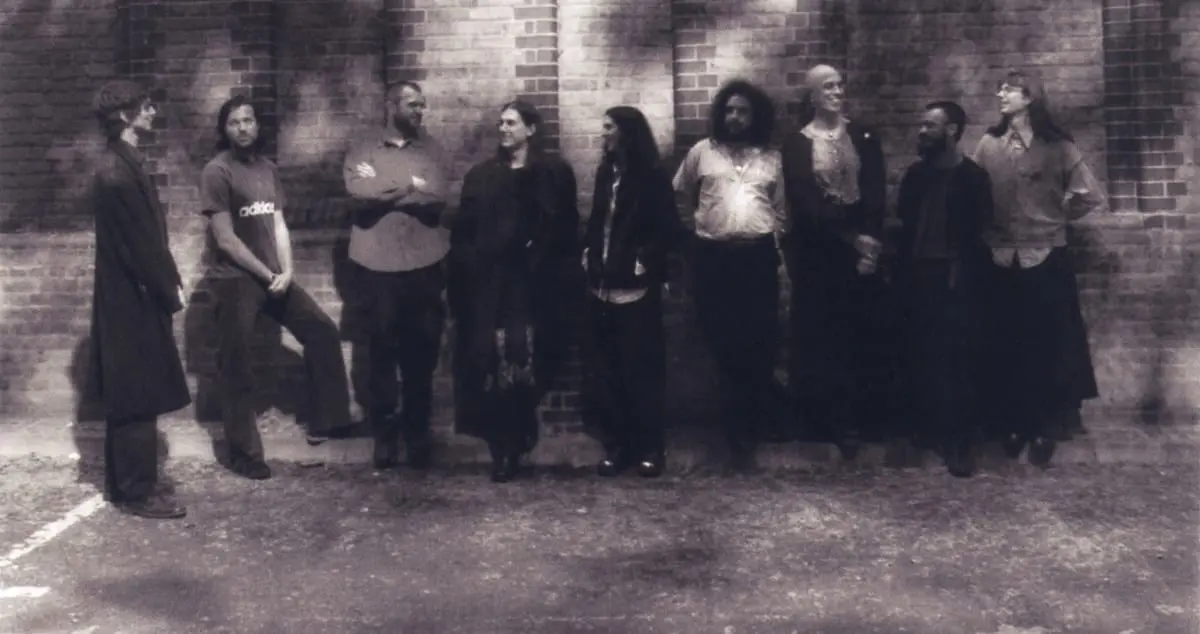
Shovel Dance Collective rejects this false dichotomy entirely. Operating as a large, fluid ensemble of instrumentalists, researchers, and improvisers, the collective views traditional songs not as static artifacts, but as communal blueprints. By allowing native British and Irish folk forms to be intentionally hybridised—and, in their own words, "mongrelised"—by disparate avant-garde traditions, the collective unlocks new functional capacities within the music.
| Musical Influence / Precedent | Aesthetic Contribution to Everything in Readiness |
|---|---|
| Henry Flynt | Hillbilly-blues deconstruction, trance-like repetition, micro-tonal edge work. |
| Pauline Oliveros | Deep listening practices, celestial monochord drones, spatial awareness. |
| Evan Parker | Free-jazz fire, extended instrumental techniques, breath control as texture. |
| Seamus Ennis | Uilleann piping dynamics, deep folkloric cadence, narrative pacing. |
| Ewan MacColl | Socio-political documentary sound design and industrial musique concrète. |
Ensemble Improvisation as an Egalitarian Ethos
A defining characteristic of Shovel Dance Collective’s methodology is its commitment to horizontal, non-hierarchical music-making. Traditional folk music often relies on a leader-follower dynamic (traditionally the singer or lead fiddler). In contrast, Everything in Readiness highlights a decentralized democratic framework.
During tracks like Foxhunter’s Reel or the climactic movements of Who Killed Cock Robin?, instruments frequently trade roles. The rhythm section steps forward to carry harmonic weight, while melodic instruments like the banjo and fiddle fracture into noise-based soundscapes. This egalitarian approach reflects a political as well as an artistic stance: collective liberation mirrored in collective improvisation.
Official Statements and Critical Reception
Early critical reception across underground music publications and critical outlets has pointed toward Everything in Readiness as a landmark release for 2026. Reviewers have lauded the album’s uncompromising vision, noting that its blend of scholastic rigour and intuitive gristle sets a new benchmark for contemporary acoustic music.
In a recent collective statement regarding the conceptual framework of their third album, members of Shovel Dance Collective reflected on the nature of traditional transmission:
"Traditional music has always belonged to the dispossessed, the transient, and the working classes. It has survived precisely because it is adaptable, malleable, and relentlessly porous. When we bring free jazz, drone, and field recordings into conversation with a mining song or a centuries-old reel, we aren’t corrupting the tradition; we are acknowledging the radical, disruptive energy that kept these songs alive in the first place. They were never polite; they were always meant to shake the foundations."
Musicologists have further praised the group’s rigorous liner notes and deep engagement with archival material, proving that avant-garde experimentation does not require a detachment from historical pedigree. Instead, Everything in Readiness proves that the deeper one digs into the historical root, the more violently and beautifully the branches can twist toward the unknown sky.
Future Outlook: The Paradigm Shift in Modern Folk
The release of Everything in Readiness on Tak:Til Records signals a broader, much-needed paradigm shift within the global underground music community. As listeners increasingly suffer from cultural fatigue brought on by hyper-curated, algorithmic streaming models, uncompromising artistic statements like this one offer a vital counter-narrative.
Key Takeaways for the Genre’s Trajectory:
- The Dissolution of Genre Boundaries: The success of Shovel Dance Collective demonstrates that contemporary audiences are increasingly willing to follow artists across the chasms separating folk music, noise, free jazz, and contemporary classical composition.
- Archival Activism: By unearthing neglected labor songs, dark nursery rhymes, and obscure regional reels, the collective highlights how historical folk material can directly address contemporary anxieties surrounding class, labor, and ecological collapse.
- The Rise of Collective Authorship: As economic and social pressures mount, traditional music is increasingly moving away from the cult of the individual singer-songwriter toward collaborative, community-driven ensembles.
Ultimately, Everything in Readiness proves that each genetic mutation inflicted upon native folk music makes the tradition not weaker, but fundamentally stronger and stranger. By embracing musical omnivorousness, Shovel Dance Collective has crafted a masterwork that transcends the boundaries of genre, establishing a portal where ancient folk archetypes and futuristic avant-garde dissonance can finally sit down together, drink deep, and reshape the sonic world.