Executive Overview
In an era dominated by algorithmic homogenization, passive listening, and frictionless sonic wallpaper, the very concept of genre-fluidity faces an unprecedented corporate headwind. Today’s musical landscape is mediated by platforms designed to soothe the consumer with ambient tones, AI-generated lifestyle tracks, and predictable aesthetics. Listeners are increasingly funneled into comforting echo chambers, where the familiar supersedes the challenging, and the "vibe" permanently eclipses the traditional tune.
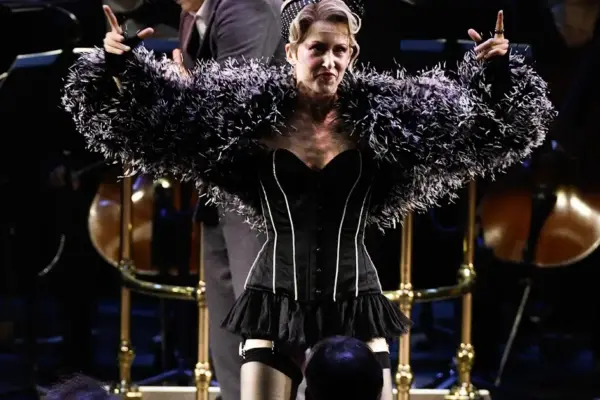
Against this backdrop of industrial complacency arrives Chinook, the fiercely eclectic and deeply personal debut solo album from Philadelphia-based singer-songwriter Mallory Hawk. Releasing on July 31, the 10-track record flies directly in the face of conventional industry wisdom. Rather than catering to a singular, easily marketable aesthetic designed for optimal algorithmic placement, Hawk has constructed an expansive sonic portfolio that jumps genres like an iPod on shuffle—moving effortlessly from noisy alt-rock and dance-punk to ’90s-leaning acoustic folk, new wave propulsion, and swaying country rock.
Yet, Chinook is far more than a stylistic exercise or a showcase of technical versatility. At its emotional core, the album serves as a poignant, unified exploration of self-sacrifice, relational exhaustion, and the quiet internal tumult of modern survival. By anchoring her restless sonic wanderlust to a singular, weary, yet fiercely resilient narrator, Hawk offers a vital counter-narrative to the modern mood machine. Chinook presents a handcrafted, meticulously arranged song for every complex emotional state of the human day, proving that true artistry still thrives when creators refuse to fit neatly inside a corporate box.
Detailed Chronology: Building the Modern Indie Polymath
To fully understand the compositional fearlessness of Chinook, one must examine the winding road that brought Mallory Hawk to her solo debut. Her artistic identity was forged not in a vacuum, but across the vibrant, deeply collaborative trenches of the American and international underground rock scenes.
[Customer] (Brooklyn Post-Punk)
       │
       ▼
[Trace Mountains] (Heartland Rock / LVL UP Offshoot)
       │
       ▼
[M(h)aol] (Dublin Tour Bassist) + [Double Double Whammy] (Indie-Pop Label Co-Runner)
       │
       ▼
[Chinook] (Self-Released Solo Debut - July 31)
Hawk’s foundational years in the industry established her as a remarkably versatile utility player and curator:
- The Brooklyn Underground: She co-fronted the ferocious Brooklyn post-punk outfit Customer, cutting her teeth on angular guitar interplay and driving rhythms.
- Heartland Explorations: She operated as a trusted side player in Trace Mountains, the celebrated heartland-rock project born from the indie mainstays LVL UP.
- International Collaboration: She expanded her touring credentials overseas, serving as a live bassist for Dublin’s fierce, politically charged rabble-rousers M(h)aol.
- Curatorial Curation: Beyond performance, Hawk spent a substantial tenure co-running Double Double Whammy, an essential, tastemaking indie-pop label responsible for championing vital underground acts.
This extensive résumé under the broad umbrella of underground rock positioned Hawk as a musician of rare multi-instrumental fluency. However, it also set the stage for the stylistic explosions heard on Chinook. While major and mid-tier label executives routinely reject projects that resist clean genre categorization—fearing the dreaded "unmarketable" label—Hawk’s pedigree allowed her to trust her own creative compass. Choosing to self-release Chinook liberated her from the suffocating demands of formatting, resulting in a fearless body of work that treats traditional genre boundaries as mere suggestions.
Supporting Context & Metrics: The Metaphor of the Double-Propeller
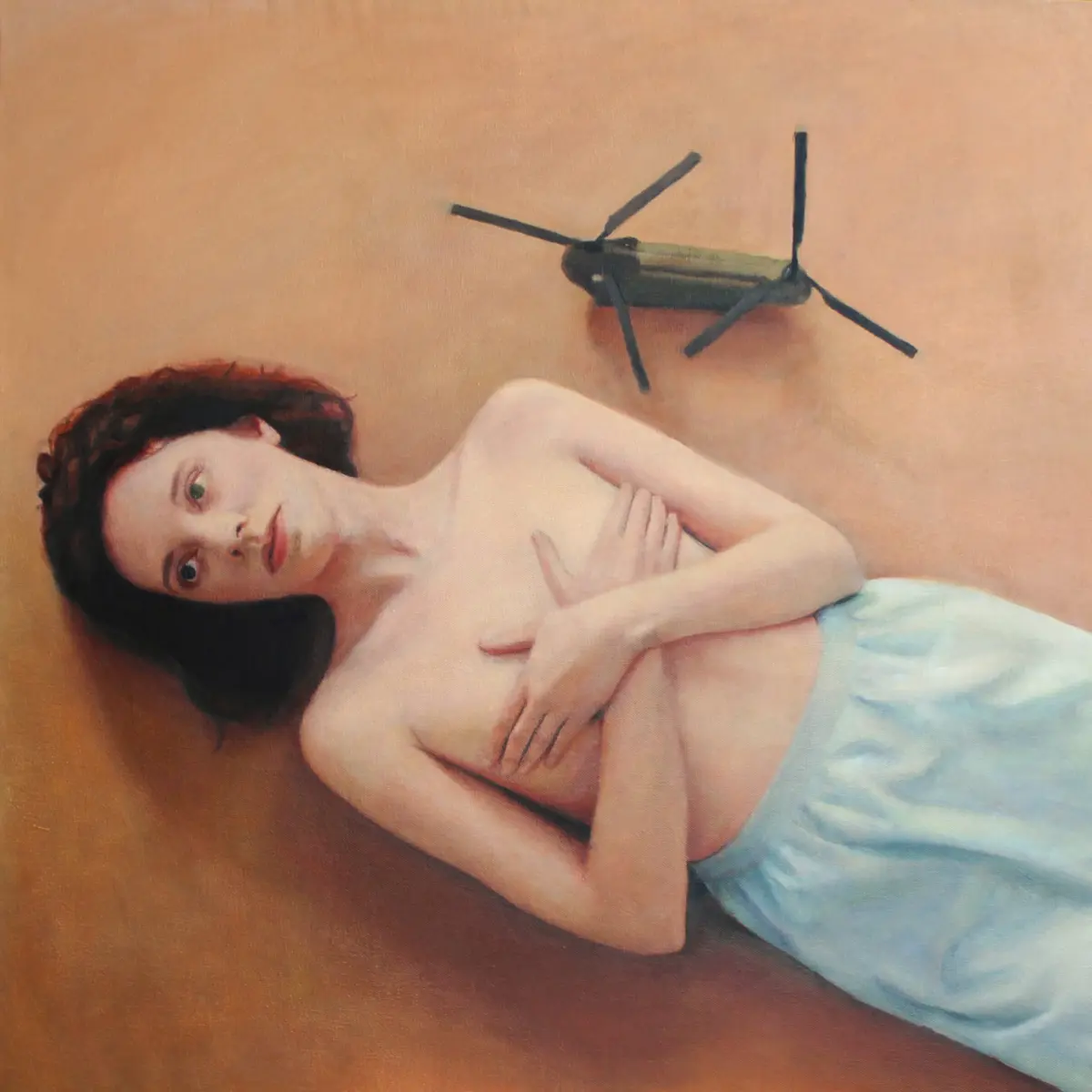
The linguistic and thematic architecture of Chinook is rooted in biography and aviation. The moniker itself is a direct nod to Hawk’s upbringing in Fayetteville, North Carolina—a prominent military hub where the sky was perpetually dotted by heavy machinery. Specifically, the album takes its name from the Boeing CH-47 Chinook, the iconic double-propellered military helicopter.
Hawk adopted her surname revision from "Hawkins" to evoke a bird of prey, but the helicopter metaphor cuts much deeper into the psychological marrow of the record. Her father famously described the CH-47 Chinook as "the only helicopter in the world that can collide with itself." For Hawk, this paradoxical engineering marvel became a visceral metaphor for her own lifelong behavioral pattern: the tendency to tirelessly, selflessly care for those around her, often to her own severe detriment.
Across the album’s 10 tracks, Hawk reckons with this personal dynamic of emotional martyrdom. The metrics of this stylistic flight path span an impressive breadth of modern alternative history:
| Track Position | Song Title | Primary Genre / Vibe | Sonic Touchstones & Instrumentation |
|---|---|---|---|
| Track 1 | "The Mirror" | Noisy Indie Rock | Slicing, jagged guitars echoing Sonic Youth and alt-rock forebears. |
| Track 2 | "D’Anger" | Dance-Punk | Driving, rhythmic propulsion and angular tension. |
| Track 3 | "Revolver" | ’90s Folk-Pop / Acoustic Rock | Lilith Fair-era warmth, soaring hooks, acoustic warmth. |
| Track 4 | "Four O’Clocks" | Brooding Indie-Folk | Soothing guitar textures augmented by Tree Palmedo’s regal French horn and flugelhorn. |
| Track 5 | "Caretaker" | Spunky Garage-Punk | Explosive, shout-along hooks and staccato vocal delivery. |
| Track 6 | "Superhighway" | New Wave / Propulsive Indie | Urgent synth lines (Logan Roth) and racing relational anxiety. |
| Track 7 | "Rotten Man" | Country Rock | Drunkenly swaying rhythms, rootsy instrumentation. |
| Track 8 | "Low Rise" | Minor-Key Alternative | Eerie vocal bends reflecting on religious guilt and modern paralysis. |
| Track 9 | "Felicity" | Atmospheric Indie-Rock | Crunching guitars, numbing modern mundanity, systemic loneliness. |
| Track 10 | "Rabbit Hole" | Hypnotic Outro-Rock | Mesmerizing meditations on unrequited obsession and self-created strangers. |
Official Statements & Critical Analysis: Anatomy of a Handcrafted Sound
The meticulous execution of Chinook relies heavily on a collaborative production environment led by Hawk alongside producer Samuel Acchione. Together, they have crafted modest yet devastatingly effective arrangements where every sonic choice directly serves the emotional weight of the lyric.
The Instrumentation Palette
- Guiding Guitars: Acchione and Hawk deploy guitars with surgical precision. They slice sharply on "The Mirror," offer warm acoustic support on "Four O’Clocks," and deliver an ominous, overdriven crunch on the standout single "Felicity."
- Dynamic Keys and Brass: Multi-instrumentalist Logan Roth infuses the record with zippy, atmospheric synth textures and desolately swinging piano chords. Meanwhile, Tree Palmedo’s brilliant additions of the French horn and flugelhorn on "Four O’Clocks" introduce a surprising, regal beauty to the folk-leaning arrangements.
- Vocal Mechanics: Hawk’s vocal performances are masterclasses in emotional range. On "Caretaker," she builds relentlessly toward a cathartic, shout-along chorus, spitting out the staccato declaration “I’m not your caretaker!” before stretching the final syllable of “I’m out / Of my mind” into a wobbling, unstable series of notes. Moments later, on "Low Rise," she shifts entirely, eerily bending her voice around minor-key guitar riffs to unpack the heavy psychological toll of religious guilt.
Lyrical Realism and Modern Survival
Lyrically, Chinook excels by grounding grand existential dread in the exhausting minutiae of contemporary life. On "Felicity," a track charting the agonizing persistence of unrequited longing, Hawk transforms a simple refrain from “What’s another day alone?” into “What’s another year alone?” By weaving in the numbing mundanities of late-stage capitalism—“The groceries, the service fees / I can’t count them all”—she captures the specific paralysis of modern survival.
Similarly, "Superhighway" captures the fractured communication of the digital age: “Call you back tonight / I mean it this time / It’s heavy on my mind / But I can’t think straight.”
The album’s emotional high-water mark arrives on "Revolver," a track that dips, dives, and soars in brilliant reclamation of Lilith Fair-era folk-pop. Co-written and performed almost entirely by Hawk and Acchione (with gorgeous backing vocals by Ava Mirzadegan), the song contains the album’s most devastating lyrical synthesis:
“You saw me at my worst / Does it get any better than this? / Had to change to learn to love / Had to learn to love change.”
As Hawk pushes her voice into its upper register on the bridge, pleading “Come right back,” the track achieves a rare alchemy: musical dynamism wedded to unvarnished, aching pathos.
Future Outlook: The Artisanal Alternative to the Mood Machine
As the music industry hurtles further into automated curation, frictionless playlists, and generative AI soundscapes, projects like Chinook serve a vital, restorative function. Mallory Hawk has crafted an album that refuses to flatten human emotion into a singular background "vibe."
Instead, Chinook maps the chaotic, everyday oscillation between agony and ecstasy. It recognizes that human drama does not stay in one lane; the same internal turmoil that gnaws at us while running mundane grocery errands will follow us to late-night parties, agonizing digital scrolls in bed, and quiet moments of self-reckoning. By allowing her internal storms to bleed into bangers, ballads, punk anthems, and folk meditations, Hawk has delivered a triumph of independent resolve.
Chinook arrives via self-release on July 31. For listeners fatigued by the endless algorithmic loop of familiar slop, Hawk’s debut offers a welcome, handcrafted alternative—proving that when you have brilliant songs, you don’t need a single, corporate style to validate your flight path.
Pre-orders for Chinook are available now on Bandcamp.