Executive Overview
In the upper echelons of contemporary commercial literature, few names command the immediate international recognition, cross-platform adaptability, and staggering output of Harlan Coben. With a career spanning decades, the 64-year-old American author has cemented his status as a titan of suspense, responsible for cultural touchstones like the Myron Bolitar series and multi-million-copy standalone thrillers such as The Stranger, Fool Me Once, and Safe. Yet, beneath the veneer of an astonishing literary empire—one that has recently expanded to lucrative, binge-watched television adaptations on Netflix—lies a psychological landscape defined by profound contradiction.
Appearing recently as a guest on BBC Radio 4’s venerable cultural institution, Desert Island Discs, hosted by Lauren Laverne, Coben made a series of candid admissions that shattered the stereotypical image of the self-assured bestselling author. Most notably, the writer confessed to battling persistent "imposter syndrome"—a psychological phenomenon where high achievers are incapable of internalizing their successes. However, rather than framing this self-doubt as a debilitating weakness, Coben offered a provocative and counterintuitive philosophical perspective: self-belief, he argued, is a quality found exclusively in bad writers.
This deep-dive feature explores Coben’s recent revelations, unpacking the fascinating tension between creative self-loathing and the audacious hubris required to demand a reader’s time, hard-earned money, and late-night hours. Furthermore, we examine his unique categorization of his bibliography—moving away from traditional genre boxes toward what he dubs "the novel of immersion"—while assessing his ongoing cultural footprint, upcoming Netflix adaptations, and the broader psychological mechanics of storytelling at the highest level.
Detailed Chronology: From Newark Beginnings to Global Streaming Dominance
To fully appreciate Coben’s commentary on the psychological burdens of authorship, one must contextualize the trajectory that brought him to this juncture. Born in Newark, New Jersey, in 1962, Coben’s journey to literary prominence was neither accidental nor instantaneous. After graduating from Amherst College—where he studied political science and was a fraternity brother of future author Dan Brown—Coben initially worked in the travel industry before dedicating himself full-time to the craft of writing.
The Breakthrough and the Blueprint
The 1990s marked the foundational era of Coben’s career. In 1995, he introduced readers to Myron Bolitar, a former professional basketball player turned sports agent and occasional private investigator. The character debuted in Deal Breaker, establishing a formula that blended rapid-fire banter, intricate plotting, emotional depth, and suburban dark secrets. The Bolitar series won both the Edgar and Shamus Awards, making Coben the first author to win all three major American mystery awards (Edgar, Shamus, and Anthony).
However, it was his 2001 standalone thriller, Tell No One, that truly catapulted him into the global stratosphere. The novel became an international bestseller, won critical acclaim across Europe and the Americas, and was famously adapted into a critically lauded French-language film (Ne le dis à personne) directed by Guillaume Canet in 2006.
The Netflix Era and Transatlantic Collaborations
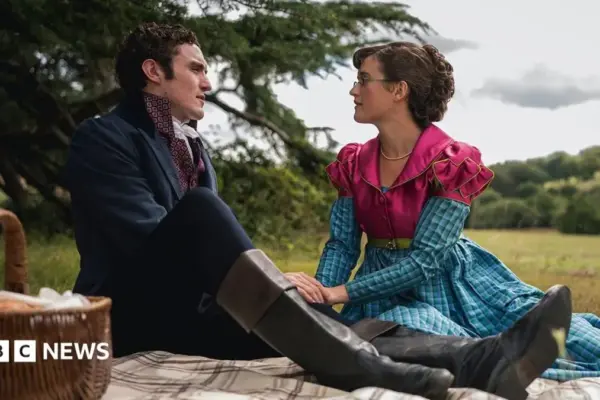
In recent years, Coben’s career entered a new phase of multimedia ubiquity thanks to a landmark multi-year overall deal with streaming giant Netflix. This partnership has transformed his backlist into a conveyor belt of prestige-adjacent, high-concept television limited series. From The Stranger and Safe to Stay Close and Fool Me Once—the latter of which became a global phenomenon upon its release—Coben’s stories have been successfully transplanted from their traditional American backdrops to leafy British suburbs and European locales.
The chronology of this success continues to accelerate. As confirmed during his BBC Radio 4 appearance, Coben’s bestselling novel The Woods is slated to receive the Netflix adaptation treatment next year, starring former Coronation Street actor Michelle Keegan. This relentless pipeline of production underscores an astonishing reality: even as his books and television shows consume the leisure hours of tens of millions of viewers worldwide, the man behind the machine remains intimately plagued by the classic writerly fear of inadequacy.
Supporting Context & Metrics: The Anatomy of a Literary Empire
To understand the weight of Coben’s words on Desert Island Discs, it is helpful to look at the sheer scale of the enterprise he manages. Commercial success of this magnitude is rarely accidental, yet it brings unique psychological pressures.
By the Numbers: Harlan Coben’s Global Footprint
- Total Books Published: Over 35 novels, spanning the Myron Bolitar series, Mickey Bolitar young adult spin-offs, and numerous standalone thrillers.
- Global Sales: Estimated at over 80 million books in print worldwide.
- Translation Reach: His works have been translated into 45 different languages, circulating in over 100 countries.
- Streaming Reach: Netflix adaptations of his work regularly chart in the global top 10, pulling in cumulative viewing hours in the hundreds of millions.
Despite these staggering metrics, Coben’s dialogue with Lauren Laverne revealed that quantitative success offers no immunity against the internal critic. The interview highlighted a paradox that psychoanalysts and creatives have studied for decades: the coexistence of deep-seated insecurity and megalomaniacal self-assurance.
The Psychology of the "Novel of Immersion"
During the broadcast, Coben pushed back against critics and booksellers who reflexively slap traditional labels like "crime fiction" or "thriller" onto his work. While those genres certainly apply, Coben prefers a more visceral framing: "the novel of immersion."
"I want my novel to be the one you take to bed tonight," Coben explained to Laverne, painting a vivid picture of the reading experience. "It’s 11 o’clock, ‘I’m just going to read for 10 minutes’, and the next thing you know, it’s four in the morning, and you’ve been reading. And I love that feeling as a reader, and I love to give that feeling as a writer."
This concept of "immersion" serves as the architectural core of his narrative strategy. Coben’s plots are meticulously engineered around the "hook"—an explosive, reality-shattering premise (a stranger whispers a secret about your spouse; security footage reveals a deceased relative alive in your home) designed to bypass the analytical mind and plunge the reader directly into a state of compulsive page-turning.
Official Statements & Insights: Inside the Mind of a Bestselling Author
The most compelling portions of Coben’s Desert Island Discs appearance centered on his philosophical breakdown of the creative temperament. His unfiltered remarks offer a rare masterclass in how top-tier creators negotiate their inner demons.

On Bad Writers and False Confidence
Addressing the myth of the unflappable artist, Coben was unequivocal in his dismissal of writers who claim never to experience doubt.
"I actually think only bad writers think they’re good."
This provocative statement cuts against the grain of modern self-help culture, which frequently preaches the gospel of unyielding positive reinforcement and manifestation. For Coben, absolute self-belief is not a sign of mastery; rather, it is a symptom of a lack of critical self-awareness. A truly skilled writer, he suggests, is constantly wrestling with the gap between the brilliant vision in their head and the imperfect words landing on the page.
The Paradox of Creative Hubris
Expanding on this theme, Coben articulated a mental state that sounds like a clinical contradiction yet rings entirely true for anyone who has ever stared down a blank manuscript:
"We all have a little bit of that imposter syndrome, and what’s interesting is it sounds like a paradox, but it’s not. Because on the one hand, I’m always like, ‘I suck, I’m terrible, I hate this’, but at the exact same time I have the hubris to think ‘you’re going to spend 20 pounds, and you’re going to spend five or six hours reading it, or listening to it on audio, and you should’.
And those seem to be a complete contradiction, but they’re not inside of a writer."
This dual consciousness—operating simultaneously as one’s harshest executioner and most arrogant advocate—is the engine of professional longevity. The self-loathing drives the relentless editing, rewriting, and tightening necessary to produce a polished manuscript. Meanwhile, the underlying hubris provides the sheer audacity required to put that vulnerability out into the world, demanding that a stranger invest their financial resources and precious nocturnal hours into a world fabricated entirely from the author’s imagination.
Musical Selections as Autobiographical Mirrors
In keeping with the traditions of Desert Island Discs, Coben curated a soundtrack of personal signposts that mirrored his cultural touchstones and energetic storytelling rhythm. His selections included:
- Bruce Springsteen’s "Thunder Road": A nod to his New Jersey roots and the classic American themes of escape, ambition, and open roads that frequently echo through his suburban thrillers.
- Rufus and Chaka Khan’s "Ain’t Nobody": Reflecting the rhythmic propulsion and infectious energy that drives his pacing.
- Teddy Swims’ "The Door": Demonstrating an ear for contemporary vocal-driven soul and emotional resonance.
Future Outlook: The Ongoing Evolution of Harlan Coben
As Coben navigates his mid-sixties with an iron grip on the global suspense market, his trajectory shows no signs of plateauing. The convergence of traditional publishing and high-end streaming television has created a self-sustaining ecosystem where his brand expands exponentially with every new release.
Literary Horizons and Non-Fiction Departures
Significantly, Coben’s creative restlessness is pushing him into uncharted waters. As noted in promotional materials accompanying his recent media appearances, the author has recently ventured into non-fiction for the first time, crafting a hybrid project that functions simultaneously as a personal memoir and a practical writing manual. For an author who has spent decades dissecting the mechanics of suspense for fictional characters, turning the analytical lens inward toward his own life and craft promises to offer fans an unprecedented glimpse behind the curtain.
Upcoming Adaptations and Cultural Relevance
On the audiovisual front, the impending release of The Woods adaptation on Netflix—featuring Michelle Keegan—guarantees that Coben will remain a dominant fixture in pop culture conversations well into the future. As television networks and streaming platforms increasingly chase pre-sold intellectual property with built-in global audiences, Coben’s catalog remains one of the crown jewels of modern entertainment.
Yet, despite the multi-million-dollar deals, the global book tours, and the legions of devoted fans keeping their bedside lamps burning until 4:00 AM, the man behind the stories remains anchored by the quiet, gnawing anxiety of the blank page. In Coben’s universe, the moment a writer stops worrying whether they are any good is the exact moment they cease to be great.
For those wishing to hear the conversation in its entirety, Harlan Coben’s appearance on Desert Island Discs remains available to stream in full on BBC iPlayer.