Few musical acts in the history of modern popular music have carved out a domain as enduring, uncompromising, and culturally resonant as Iron Maiden. Emerging from the East End of London in the late 1970s at the vanguard of the New Wave of British Heavy Metal (NWOBHM), the group transformed from gritty pub-circuit innovators into a global stadium phenomenon. With a discography spanning 17 studio albums and a touring record that encompasses sell-out performances across nearly 60 countries, Iron Maiden stands as a premier benchmark for longevity and independence in the music industry.
Central to the band’s global identity is their iconic mascot, Eddie the Head. More than a simple logo, Eddie has served as a dynamic visual centerpiece for five decades, evolving across album covers, stage backdrops, merchandising, and digital media. The band’s rich trajectory—marked by complex composition, relentless world tours, and an unwavering commitment to their fanbase—has yielded an extraordinary repository of lore and trivia. As music historians and journalists reflect on the band’s half-century mark, Iron Maiden’s operating model continues to provide a blueprint for artistic autonomy and international brand sustainability.
Detailed Chronology
  1975              1982                    1990                1999              2015 - Present
   |-----------------|-----------------------|-------------------|-----------------|------------------>
Band Formed    Dickinson Joins          Lineup Shifts      Six-Piece Return    Modern Dominance
(Steve Harris) ('Number of the Beast')  (Blaze Bayley Era) ('Brave New World')  ('Senjutsu' & Beyond)
1975–1981: Foundations and the NWOBHM Vanguard
Iron Maiden was formed on Christmas Day, 1975, by bassist and primary songwriter Steve Harris. After refining their sound through relentless gigging across London venues like the Cart and Horses Pub and the Ruskin Arms, the band recorded their seminal demo, The Soundhouse Tapes, in 1978.
Signing with EMI in late 1979, the original recording lineup—featuring vocalist Paul Di’Anno, guitarists Dave Murray and Dennis Stratton, and drummer Clive Burr—released their self-titled debut album, Iron Maiden, in April 1980. The record entered the UK Albums Chart at Number 4, establishing their signature blend of punk-infused aggression and progressive rock complexity. The follow-up album, Killers (1981), featuring new guitarist Adrian Smith, expanded their European footprint, though internal strain led to Di’Anno’s exit later that year.
1982–1988: The Golden Era and Global Hegemony
The arrival of former Samson vocalist Bruce Dickinson in late 1981 marked a seismic shift in the band’s trajectory. Their third album, The Number of the Beast (1982), secured the UK Number 1 spot and broke into the US Billboard 200 top 40, propelled by hits such as "Run to the Hills" and the title track.
With drummer Nicko McBrain replacing Burr, the classic lineup was locked into place. Iron Maiden embarked on an unprecedented run of multi-platinum albums:
Piece of Mind (1983)
Powerslave (1984)
Somewhere in Time (1986)
Seventh Son of a Seventh Son (1988)
The 1984–1985 World Slavery Tour, supporting Powerslave, spanned 331 days and 187 shows across 28 countries, solidifying Iron Maiden’s reputation as one of the most formidable live acts in the world.
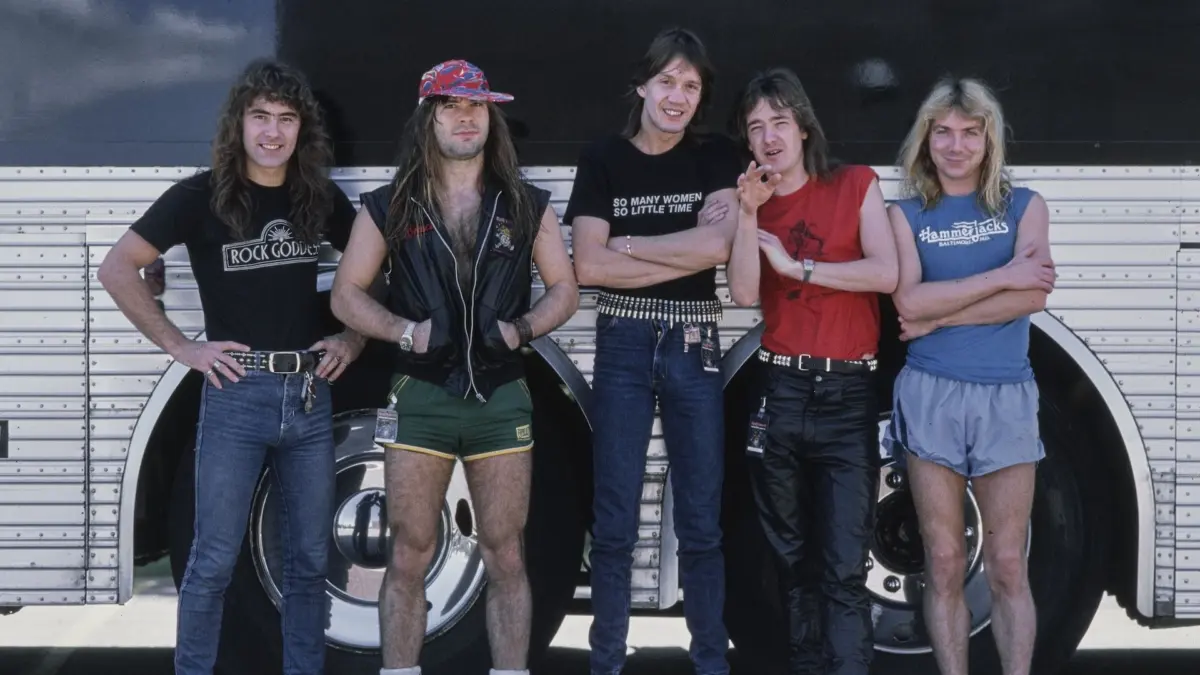
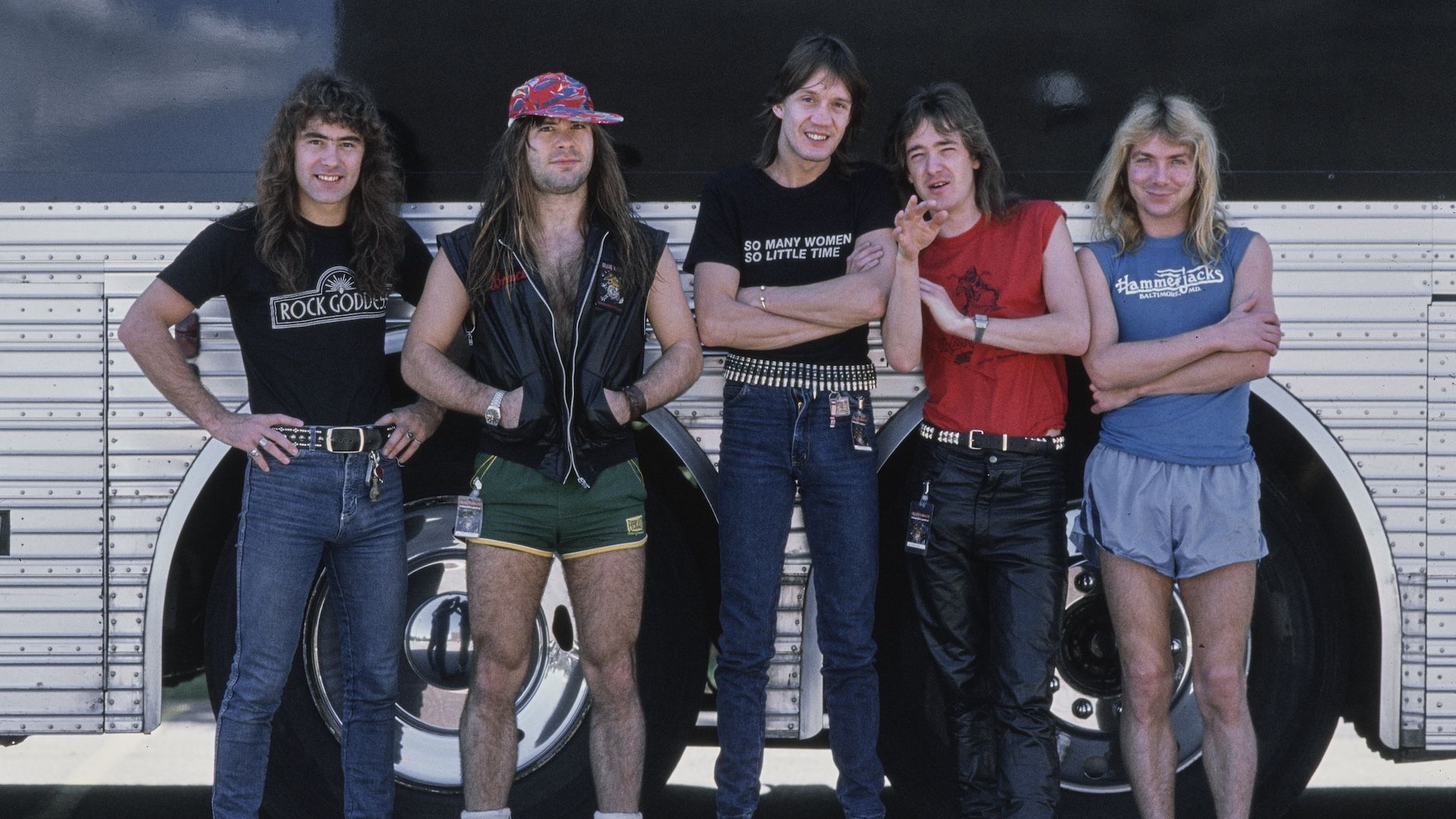
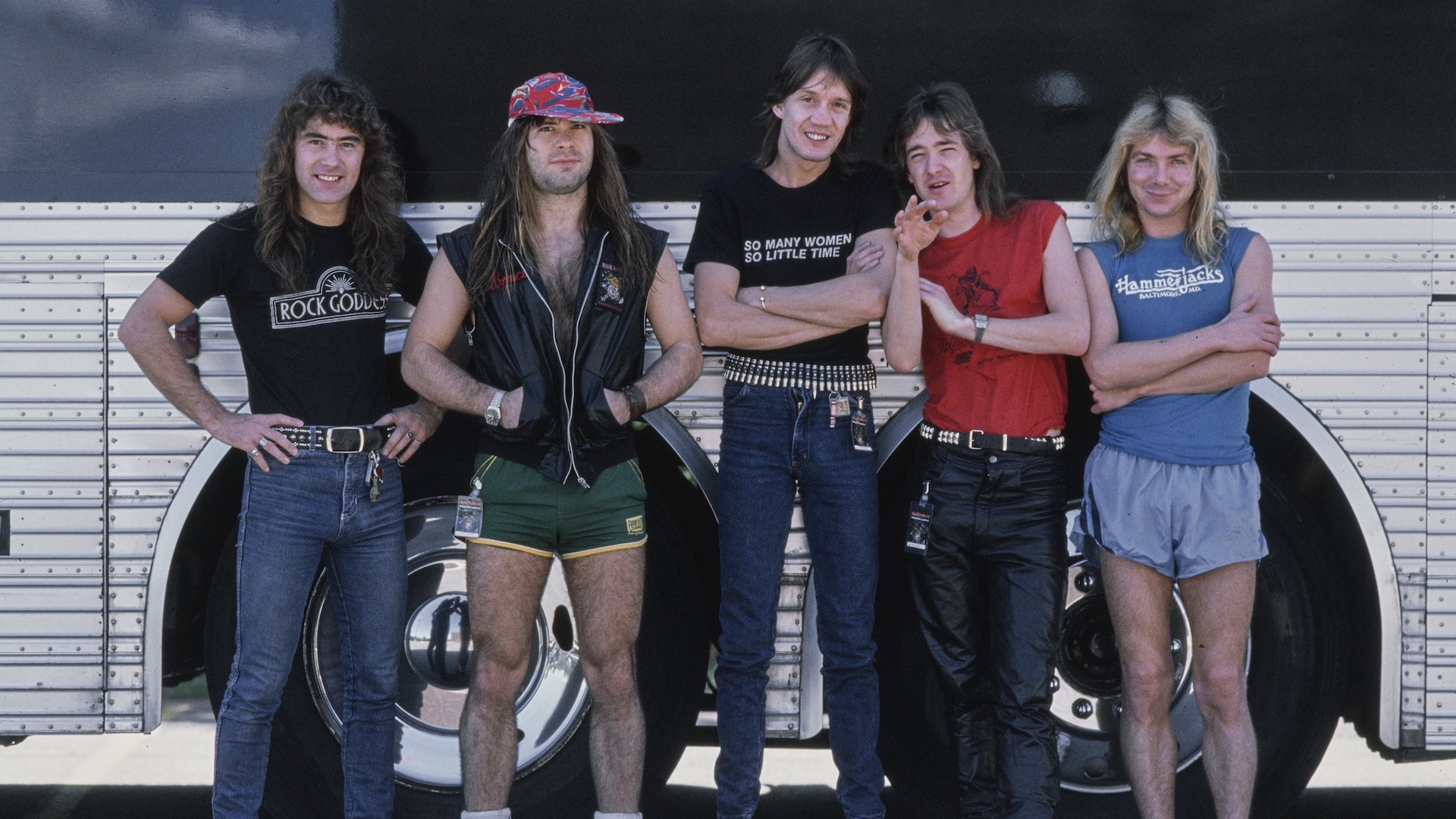
       [Classic 1980s Lineup]
       Steve Harris (Bass)
       Bruce Dickinson (Lead Vocals)
       Dave Murray (Guitar)
       Adrian Smith (Guitar)
       Nicko McBrain (Drums)
1990–1998: Lineup Shifts and Experimental Eras
The 1990s brought significant creative transitions. Guitarist Adrian Smith departed during the pre-production of 1990’s No Prayer for the Dying, replaced by Janick Gers. Following the release of Fear of the Dark (1992) and its massive supporting tour, Bruce Dickinson departed in 1993 to pursue solo endeavors.
The band recruited Wolfsbane frontman Blaze Bayley, releasing two studio albums: The X Factor (1995) and Virtual XI (1998). Characterized by darker themes and progressive structures, this era maintained strong international support across Latin America and Europe, despite shifting commercial tides in North America during the height of alternative rock.
1999–2014: The Six-Piece Renaissance
In 1999, Iron Maiden announced the return of both Bruce Dickinson and Adrian Smith, while retaining Janick Gers, establishing a three-guitar, six-piece lineup. Their reunion album, Brave New World (2000), was hailed as a return to peak form, launching an era of sustained creative output.
Subsequent records—Dance of Death (2003), A Matter of Life and Death (2006), and The Final Frontier (2010)—demonstrated an increasingly progressive compositional approach. The era was also defined by innovative touring logistics, notably the deployment of "Ed Force One," a customized Boeing 757 (and later Boeing 747) piloted by Dickinson to transport crew and gear worldwide.
2015–Present: Late-Career Peaks and Legacy Preservation
In 2015, the band released their first double album, The Book of Souls, which topped charts in over 24 countries. Despite delays caused by global events, their 17th studio album, Senjutsu (2021), achieved top-five chart positions worldwide, proving their commercial vitality into their fifth decade of operation.
Supporting Context & Metrics
Key Institutional Metrics
Metric Category
Data Value
Significance
Studio Albums
17
Five decades of continuous recording activity
Global Album Sales
100+ Million
Achieved with minimal mainstream radio support
Countries Performed In
~60 Countries
Broad, multi-continental audience footprint
Live Performances
2,500+ Shows
Exceptional tour-building and fan retention
UK Top 10 Albums
16
High baseline demand in home market
The Anomy of Eddie the Head
Created artistically by Derek Riggs in 1980, Eddie the Head transitioned from a simple theatrical papier-mâché mask used during early pub shows into heavy metal’s most recognizable visual mascot.
  [Eddie's Visual Evolution]
  Punk/Urban Ghoul  -->  Lobotomized Patient  -->  Cyborg / Alien  -->  Mayan Warrior  -->  Samurai
  (Iron Maiden - 1980)   (Piece of Mind - 1983)   (Somewhere in Time)  (Book of Souls)    (Senjutsu)
Eddie’s functional roles within the band’s business model include:
Album Artwork Anchor: Establishing visual continuity across changing musical eras.
Theatrical Prop: Appearing as an 11-foot-tall walking robot during live performances.
Cross-Media Integration: Serving as the central figure in video games (e.g., Iron Maiden: Legacy of the Beast) and brand merchandise line extensions.
Official Statements and Philosophy
Iron Maiden’s enduring strategy rests on artistic autonomy and a refusal to compromise their vision for short-term media trends. Speaking on the band’s independent trajectory, founder and primary songwriter Steve Harris has consistently emphasized self-determination:
"We’ve always done things on our own terms. When we started, everyone told us we had to change our sound, cut our hair, or play a different style to get played on the radio. We ignored all of it. We built our fanbase show by show, record by record, without relying on mainstream trends."
Manager Rod Smallwood, co-founder of Phantom Music Management, echoed this operational ethos regarding their approach to global touring and brand building:
"Iron Maiden isn’t just a band; it’s an institution built on integrity. We never chased radio play or single sales. We went to the fans directly—whether they were in London, Tokyo, São Paulo, or Mumbai. That physical connection and the trust built with our audience over forty-plus years is why the band can sell out stadiums worldwide without needing permission from mainstream media outlets."
On the discipline required to maintain their stage production and longevity, lead vocalist Bruce Dickinson noted:
"The level of intensity we demand of ourselves onstage doesn’t drop. Fans pay hard-earned money to see an Iron Maiden show, and our obligation is to deliver a dynamic, high-energy spectacle every single night. That mindset keeps us sharp, whether we’re in the studio or flying across the globe."
Future Outlook
As Iron Maiden approaches its 50th anniversary, the band’s model offers key insights into the future of legacy music brands:
Generational Audience Transfer: The demographic profile of Iron Maiden audiences has broadened significantly. Multi-generational attendance—parents who grew up during the 1980s bringing teenage children—ensures sustained demand for physical media and live ticket sales.
Catalog Monetization and Digital Engagement: Through digital remasters, specialized box sets, and mobile game integrations, the band’s back catalog continues to attract streaming revenue without diluting the brand’s core legacy.
Preserving the Live Experience: Despite the physical demands of stadium performances, the band continues to structure major global tours, such as The Future Past Tour.
Iron Maiden’s history demonstrates how clear branding, uncompromised artistic direction, and direct engagement with fans can build an international cultural institution capable of outlasting market shifts. As long as fans continue to engage with their music and challenge their own knowledge through the vast lore built over five decades, the band’s legacy remains secure.