Executive Overview
If rock and roll history were mapped out using Pete Frame’s legendary, spindly, hand-drawn Rock Family Trees, Derek “Blue” Weaver would occupy one of its most dense and high-traffic nodes. To trace Weaver’s career is to trace the connective tissue of modern popular music. He is the man who can seamlessly bridge Wales’s mod-soul pioneers Amen Corner, the quintessentially English folk-rock innovators Strawbs, the glam-era swagger of Mott the Hoople, and the global, chart-conquering phenomenon of Australia’s Bee Gees.
Stir in a masterclass studio discography that runs the gamut from Alice Cooper and Lou Reed to the Pet Shop Boys, and you still have barely scratched the surface of a career defined by impeccable timing, virtuosic adaptability, and an uncanny knack for being in the right room when history was being written.
Today, operating out of his professional studio in northern Germany at the sprightly age of 79, Weaver remains as active, reflective, and sharp as ever. His latest project—bringing a landmark 2019 live recording of Strawbs’ classic 1972 transition album Grave New World to vinyl—serves as a timely reminder of his enduring roots. Yet, whether he is unpacking the nuances of a classic Gibb brothers recording session, recalling a surreal midnight encounter with Lou Reed and Bob Ezrin, or stepping into his new role as an honorary Professor of Music at Bangor University, Weaver’s journey is a masterclass in the evolution of twentieth-century music production.
Detailed Chronology: From Welsh Mod Roots to Global Superstardom
The 1960s: Amen Corner and the Genesis of a Session Master
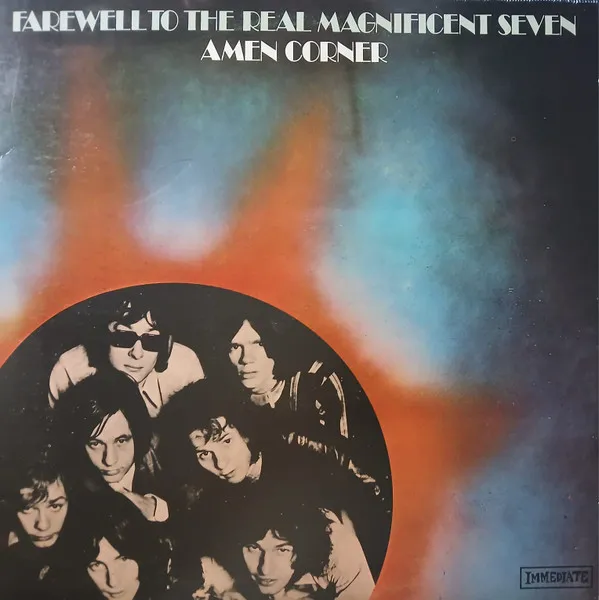
Weaver’s professional life began in the fertile ground of the 1960s beat and mod boom. Hailing from Wales, he cut his teeth with Amen Corner, a pop-soul outfit renowned for horn-heavy arrangements and high-energy stage presence. Alongside drummer Dennis Bryon—with whom Weaver’s fortunes would curiously intertwine for decades—Amen Corner scored major hits like “(If Paradise Is) Half as Nice.”
However, the rigidity of early pop stardom soon chafed against Weaver’s broader musical ambitions. The transition from regional mod hero to London session stalwart required a leap of faith, one that initially landed him down on his luck, driving minicabs through the foggy streets of the British capital just to make rent after parting ways with his early ventures.
The 1970s: The Strawbs, Rick Wakeman’s Shadow, and the Prog Revolution
Salvation came through the Strawbs. Initially a folk outfit helmed by the enigmatic Dave Cousins, the band was undergoing a tectonic shift toward progressive and arena-ready rock. Weaver joined the fold, participating in the definitive lineup that recorded Grave New World (1972), an ambitious song-cycle that effectively bridged traditional British folk with expansive, cinematic rock instrumentation.
When the inevitable carousel of progressive keyboardists spun, Weaver found himself frequently compared to—or asked to succeed—virtuosos like Rick Wakeman. When Yes approached Weaver in 1974 to follow Wakeman (just as he had previously followed him in the Strawbs), Weaver turned the offer down.
"Rick was always Rick and I was me," Weaver reflects with characteristic humility. "I couldn’t, I can’t, play like him."
Instead, Weaver recommended Patrick Moraz to Yes—a gesture of collegiate solidarity that preserved his unique artistic identity while keeping him anchored to his own path.
The Mid-1970s: Lou Reed, Alice Cooper, and New York State of Mind
During his tenure as an elite London session player in the early ’70s, Weaver’s path collided with American super-producer Bob Ezrin at Morgan Studios. Having already contributed evocative Mellotron textures to Alice Cooper’s blockbuster Billion Dollar Babies (1973), Weaver was perfectly positioned for an impromptu masterclass in rock history.
As Weaver tells it, he was casually chatting with Ezrin when Steve Winwood abruptly walked out of the studio to catch another gig.
"Oh, shit, we haven’t got a keyboard player," Ezrin muttered, eyeing the unassuming Welshman. Ezrin promptly threw open the studio door, pushed Weaver onto a still-warm piano stool, and introduced him to a backing band comprising Jack Bruce, Aynsley Dunbar, and guitarist Steve Hunter.
Following a single warm-up jam, Lou Reed walked into the room. The chords were written out on the spot, Weaver sat at the keys, and the undulating, hypnotic piano lines for "Men of Good Fortune" (from Reed’s landmark Berlin album) were born on the first take.
The Bee Gees Era: Conquering the Global Charts
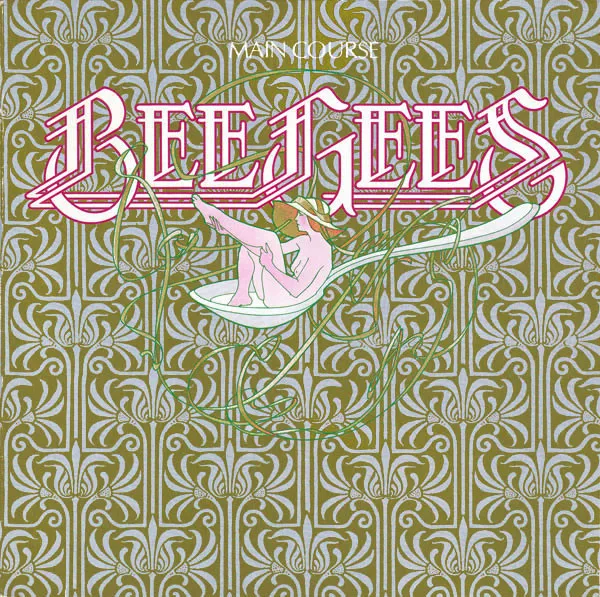
In 1975, Weaver embarked on the chapter that would permanently cement his status in chart history. Joining the Bee Gees, he became an integral component of the Gibb brothers’ imperial phase, contributing to the lush, falsetto-driven funk and pop masterpieces that defined the late ’70s.
Weaver holds a unique distinction proudly displayed on his website: the only keyboard player to have played on six consecutive US Number 1 hits.
The rhythm section behind these global smashes—Weaver on keyboards and Dennis Bryon on drums—reunited the rhythm section of 1960s pop idols Amen Corner on the most successful soundtrack in cinematic history: Saturday Night Fever (1977).
The 1980s: The Fairlight CMI and the Pet Shop Boys
As the music industry lurched into the digital synthesizer era of the 1980s, Weaver embraced cutting-edge technology, mastering the Fairlight CMI (Computer Musical Instrument). This technical fluency brought him into the orbit of Neil Tennant and Chris Lowe, the nascent synth-pop duo known as the Pet Shop Boys.
Prompted by manager Tom Watkins after the release of "West End Girls," Weaver was brought in to produce and re-record tracks for television and radio performances. This collaboration culminated in the Pet Shop Boys’ historic first live concert appearance in August 1985 at London’s Institute of Contemporary Arts (ICA), introduced ironically by the semi-animated television computer graphic persona Max Headroom.
"There was just Chris [Lowe], Neil [Tennant] and myself onstage and two Fairlights," Weaver recalls. "Chris played trombone—I’d got him to play it on the record I produced (I Want A Lover) as well. It’s never happened since. I’d love to see a video."
Supporting Context & Metrics
To truly comprehend Derek "Blue" Weaver’s footprint in modern music, one must examine the staggering breadth of his discography and professional associations across multiple genres:
| Era / Decade | Primary Project / Association | Key Contributions / Milestones |
|---|---|---|
| Late 1960s | Amen Corner | Hit singles including "(If Paradise Is) Half as Nice"; foundational mod-soul touring. |
| Early 1970s | Strawbs | Transition from folk to progressive rock; featured on the landmark 1972 album Grave New World. |
| 1973 | Alice Cooper / Lou Reed | Mellotron on Billion Dollar Babies; primary piano on Lou Reed’s Berlin track "Men of Good Fortune." |
| 1975–1980s | Bee Gees | Core keyboardist during the Saturday Night Fever era; played on six consecutive US #1 hits. |
| 1985 | Pet Shop Boys | Early production, Fairlight CMI programming, and performance at the duo’s live debut at the ICA. |
| Present Day | Solo & Touring Projects | Massachusetts Bee Gees tribute show with the Egiziano brothers; Honorary Professor of Music at Bangor University. |
Official Statements and Reflections
Despite rubbing shoulders with rock royalty—including Andy Fairweather Low, Ian Hunter, and Barry Gibb—Weaver reserves his highest praise for late Strawbs mastermind Dave Cousins, who passed away in July 2023.
"He was the one who had the least recognition for the quality of his musicianship and songwriting," Weaver states emphatically. "He’s not just a songwriter, a lyricist, he’s a poet—in every one of his songs, you can take the music away and there’s a story there."
Reflecting on his unbroken spiritual ties to the folk-rock pioneers, Weaver maintains a philosophy of lifelong membership:
"I always say once a Strawb, always a Strawb. I was always there, always doing something. When Dave asked me, I would go and tour, or I would do a concert."
This philosophy finds new expression in his 2019 live archival release, Grave New World Live, captured at Lakeside, New Jersey—a city whose mayor happens to be an ardent Strawbs devotee. Remembering the meticulous staging of that performance, Weaver chuckles:
"It was a fantastic week. We did three or four days in the hall, and one evening was taken up with Grave New World Live, with Wesley Stace doing a commentary. It was funny. Dave [Cousins] went onstage beforehand and said, ‘Look, we’ve organised this with a linking narrative, so we would appreciate it if you saved the applause to the end and not between numbers.’ So, we went through the album tracks in order and opened up with Benedictus. We finished, and the whole audience started cheering and clapping. Then they remembered, they calmed down…"
Future Outlook
Age has done little to diminish Weaver’s work ethic or creative curiosity. Appointed as an honorary Professor of Music at Bangor University—a distinction that brings him endless amusement given his aversion to formal schooling in his youth—Weaver now utilizes classic Strawbs material and his decades of session lore as real-world teaching tools for the next generation of audio engineers and musicians.
Far from sliding quietly into archival retirement, Weaver is currently on the road across Europe with Massachusetts, a critically praised stage show celebrating the songs and history of the Bee Gees. Eschewing the tacky tropes of conventional cover acts, the production features Weaver alongside three gifted Italian vocalists—the Egiziano brothers—and occasionally features former Bee Gees guitarist Vince Melouney.
"We’re the one band that doesn’t pretend to be the Bee Gees," Weaver insists, rejecting any notion that he has become a living monument to his own past. "The show is called Massachusetts, and it’s with the Egiziano brothers."
As Strawbs’ 50th Anniversary – Grave New World Live prepares for its official vinyl release on October 9, 2026, Derek "Blue" Weaver stands as an inspiring monument to a bygone era of organic musicianship, studio wizardry, and rock-and-roll endurance. Pete Frame may need to draft a whole new annex for his family tree just to keep up with where Blue is heading next.