By the Editorial Desk
Published in collaboration with Record Collector
Executive Overview
For nearly eight decades, the 12-inch, 33⅓ rpm long-playing record (LP) has reigned as the gold standard of serious musical consumption. Born in the late 1940s when Columbia Records systematically dismantled the heavy, brittle 10-inch, 78 rpm format, the LP evolved from a mere storage medium into a canvas for high art. Yet, tucked away within the grooves of almost every universally acclaimed masterpiece lies a paradoxical phenomenon: the "duff track."
Far from being accidental misfires, these flawed, baffling, or outright testing compositions serve as the essential dynamic counterweights of recorded music. Far-reaching cultural critiques—most notably articulated by musician and writer Luke Haines—suggest that without these calculated structural dips, the modern album would collapse under the weight of its own perfection.
This investigation examines the sociology, history, and aesthetic necessity of the dreaded album filler. From The Beatles to David Bowie, Lou Reed to The Fall, we explore why a great record needs a weak link to achieve true immortality.
Detailed Chronology: The Evolution of the LP and Its Inevitable Flaws
1. The Genesis of the Long-Player (1940s–1950s)
When Columbia Records introduced the vinyl LP in 1948, the industry shifted from a singles-driven market to an album-oriented landscape. Suddenly, artists had roughly 20 to 22 minutes per side to fill. Initially utilized for classical symphonies and jazz compilations, the format was rapidly adopted by rock and pop artists in the early 1960s.
2. The Beatles and the Elevation of the Form
It is an article of faith in popular culture that The Beatles invented everything worth inventing. Having perfected the hit-single-plus-filler formula of the early 1960s, the Fab Four transformed the album into a cohesive narrative statement. First came Rubber Soul (1965), followed by Revolver (1966), and ultimately the undisputed monolith of modern art, Sgt. Pepper’s Lonely Hearts Club Band (1967).
However, in achieving this, The Beatles also quietly birthed a lesser-discussed phenomenon: the controversial track on an otherwise untouchable record.
- The Case of George Harrison: On Sgt. Pepper, George Harrison’s Indian classical excursion, "Within You Without You," was long viewed by contemporary purists as a blemish on pop music’s crowning glory. While modern critical consensus has embraced the track’s adventurous spirit, for years it stood out as the album’s primary speed bump. Harrison’s polarizing vocal style—often described by casual listeners as nasal or whiny—similarly dogged tracks like "Something," proving that even genius is susceptible to domestic critical rejection.
3. David Bowie and the Masterclass in Misdirection
If The Beatles laid the groundwork, David Bowie perfected the strategic deployment of the duff track. Bowie’s 1971 masterpiece Hunky Dory is universally beloved, yet it features tracks like "Eight-line Poem" and "Fill Your Heart" that frequently test listener patience.
Moving forward to The Rise and Fall of Ziggy Stardust and the Spiders from Mars (1972), Bowie committed one of the great classic-album crimes by anchoring the end of Side One with "It Ain’t Easy." While apologists argue it serves a narrative purpose, the track often feels like a frustrating speed bump given the sheer magnitude of pop bangers surrounding it. Yet, without "It Ain’t Easy," would Ziggy’s narrative arc feel quite as earthbound and human?
4. Lou Reed and The Velvets: The Art of the Throwaway
Lou Reed and The Velvet Underground treated the duff track not as an accident, but as a deliberate artistic statement.
- On Loaded (1970), Side Two famously plays host to interchangeable tracks that once included "I Found A Reason"—though maturity reveals Lou singing about "walking hand in hand with myself" to be an act of profound lyrical audacity.
- Elsewhere in Reed’s catalog, tracks like "Wagon Wheel" (Transformer), "A Gift" (Coney Island Baby), "Disco Mystic" (The Bells), and "Leave Me Alone" (Street Hassle) showcase a relentless desire to subvert listener expectations.
Supporting Context & Metrics: The Anatomy of the Filler
To understand why artists deliberately include lesser tracks, one must analyze the economic and psychological dynamics of the physical music format.
| Era / Format | Primary Driver | Role of "Filler" Material |
|---|---|---|
| 1950s–60s (Vinyl) | Time Constraints (22 mins/side) | Fulfilling physical space requirements; contractual obligations. |
| 1970s–80s (Album Era) | Narrative & Sequence Dynamics | Providing emotional relief between high-intensity singles. |
| 1990s–2000s (CD Era) | Maximized Storage (74+ minutes) | Bloat; inflated tracklists due to industry greed. |
| Streaming Era | Playlist Optimization | Algorithmic bait; death of the structured album sequence. |
As cultural theorist Luke Haines points out, the duff track functions as a crucial dynamic contrast. If an album consists entirely of chart-topping masterpieces (e.g., Starmans repeated fourteen times), the ear fatigues. The duff track is the sonic equivalent of negative space in painting; it rests the listener’s palate, sparks pub debates, and gives fans something to argue about over generations.
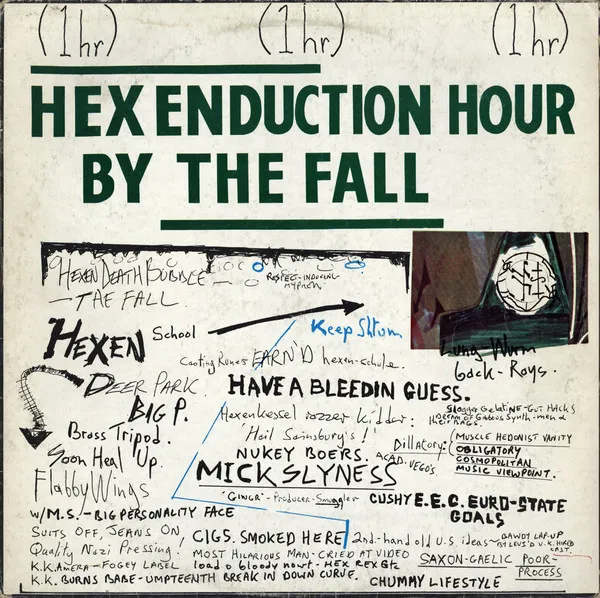
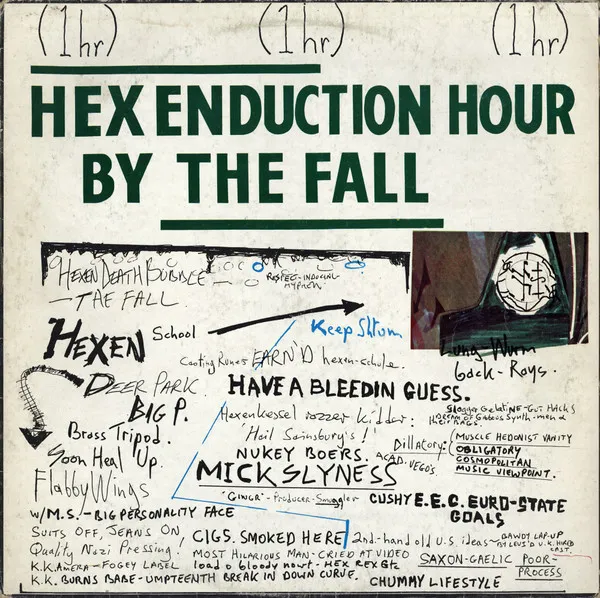
Even extreme experimentalists understood this rule. Mark E. Smith of The Fall strategically weaponized difficult, unlistenable tracks. Cuts like "WMC Blob 59" from Grotesque or the monolithic, concrete-hangover monotony of "And This Day" from Hex Enduction Hour scream anti-commercialism. They are deliberate barriers to entry that reward the obsessive listener while weeding out the casual tourist.
Official Statements & Industry Perspectives
The debate surrounding the utility of flawed tracks has long occupied producers, conceptualists, and musicians alike.
“Instead of having an album with a duff track on, just have the one good track on 12-inch vinyl repeated 14 times? I like this idea, but where’s the fun? I say, even if you have an album of 12 or 13 masterpieces, you’ve still got to have a questionable filler lurking around to make it all worthwhile.”
— Luke Haines, Musician and Cultural Commentator
Contrasting this perspective was the late, legendary recording engineer and producer Steve Albini. Long before the internet made unbundling and playlisting the dominant mode of listening, Albini advocated for radical efficiency in recorded media—arguing against the artificial padding of albums with sub-par material simply to meet arbitrary format lengths.
However, musicologists argue that Albini’s utopian vision of zero-filler music strips the listening experience of its human vulnerability. Perfection is sterile; flaws are what make a recorded artifact feel lived-in.
Future Outlook: The Death and Rebirth of the Album Sequence
As the music industry transitions fully into an ephemeral, streaming-first ecosystem, the traditional album format faces an existential crisis. Algorithms actively encourage the unbundling of tracks, favoring individualized playlists over the structured journey of Side One and Side Two.
Yet, as vinyl sales continue to surge across global markets, a new generation of listeners is rediscovering the physical ritual of dropping a needle onto wax—warts and all. The modern vinyl revival proves that listeners do not just want convenience; they want texture, ceremony, and narrative friction.
The duff track may occasionally frustrate, and it will certainly continue to divide opinion in record shops and online forums alike. But as long as artists strive to build complex, multi-layered musical statements, the sacred flaw will remain our most trusted guide—proving that greatness, much like humanity itself, is defined just as much by its stumbles as by its leaps.