Executive Overview
As the boundaries between physical and digital worlds continue to blur, cultural institutions face an urgent imperative: how to engage a generation raised on screens without losing the visceral, acoustic power of live performance. Enter the Philharmonia Orchestra and its groundbreaking immersive project, Virtual Orchestra: Play Along.
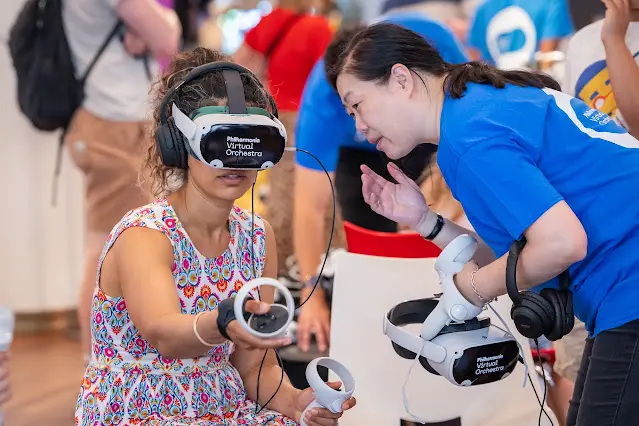
Set to debut at the Southbank Centre’s prestigious Creative Intelligence festival in September 2026—an event drawing thematic inspiration from the historic Festival of Britain 75 years ago—this initiative represents a radical evolution in classical music accessibility. Designed primarily for children and young people, the experience invites users to step past the proscenium arch, pick up a virtual percussion instrument, master it through guided tutorials, and ultimately perform side-by-side with world-class musicians on the stage of the Royal Festival Hall.
The project arrives at a critical cultural juncture. Across the United Kingdom, participation in school music programs has faced a worrying decline, mirrored by drops in GCSE Music entries over recent years. By combining state-of-the-art virtual reality (VR) headsets, ultra-high-definition 12.5k 3D 360-degree cinematography, and object-based spatial audio, the Philharmonia is not merely offering an entertaining gimmick. It is deploying cutting-edge technological R&D to combat systemic barriers to arts education. Backed by a £99,284 grant from the Innovate UK and Department for Culture, Media and Sport (DCMS) Create Growth Programme, and developed in close collaboration with elite industry partners, Virtual Orchestra: Play Along redefines what it means to experience, learn, and perform orchestral music in the twenty-first century.
Detailed Chronology: From Concept to Concert Hall
The realization of Virtual Orchestra: Play Along is the culmination of years of technological experimentation, meticulous audio-visual capture, and rigorous educational piloting. Understanding its trajectory reveals the immense engineering and artistic vision required to place a virtual timpanist directly into a live, professional symphony orchestra.
April 2025: Capturing the Acoustic Masterpiece
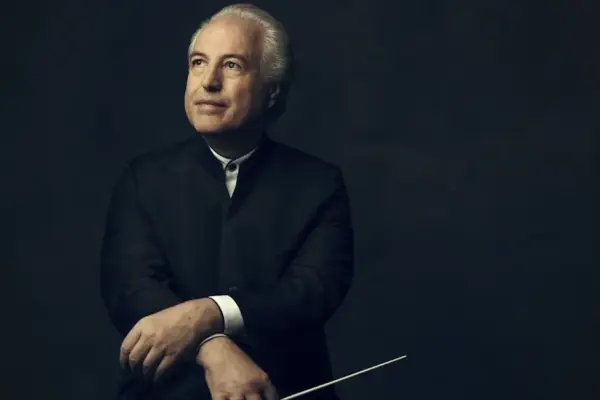
The foundation of the VR experience was laid in the spring of 2025 on the iconic stage of London’s Royal Festival Hall. Under the baton of Principal Conductor Santtu-Matias Rouvali, the Philharmonia Orchestra performed the exhilarating finale of Gioachino Rossini’s William Tell Overture.
However, this was no ordinary concert recording. Production teams deployed an array of specialized 3D 360 cameras to capture the performance at an astonishing, ultra-high 12.5k resolution. This cinematic fidelity ensures that when a participant dons a VR headset, the visual immersion is indistinguishable from reality—every bow stroke, brass valve press, and conductor cue is rendered with pristine clarity.
Simultaneously, the audio engineering team undertook a monumental task. Live audio was recorded and mixed utilizing advanced object-based spatial audio techniques. This raw multi-track data was subsequently converted to higher-order Ambisonics. The result is a soundscape that faithfully maps the true acoustic depth and physical geometry of the Royal Festival Hall. Every individual instrument occupies its precise coordinate in a three-dimensional acoustic space, capturing the highest spatial resolution currently achievable in digital media.
Research, Development, and the Creator Grant
Following the capture phase, the Philharmonia was named among 272 creative sector recipients of the Innovate UK / DCMS Create Growth Programme in 2025. The ensuing £99,284 grant supercharged the project’s Research and Development (R&D) phase.
Collaborating with percussionist Tom Edwards, Meta Camera, and acoustic technology specialists Schallgeber, the Philharmonia focused heavily on the tactile and interactive elements of the software. Because percussion instruments—such as cymbals, timpani, and the triangle—rely heavily on physical timing and kinetic feedback, the development team had to ensure that virtual interactions felt authentic and responsive to users of all skill levels.
The Classroom Pilots: Testing the Waters
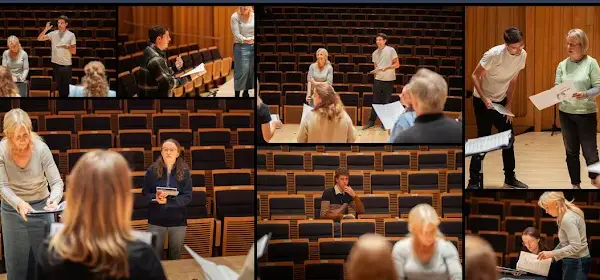
Before rolling out the experience to the wider public, the Philharmonia tested its pedagogical framework in the real world. A pilot programme was deployed with a Year Seven cohort drawn from 11 schools across Leicestershire, Derbyshire, and Lincolnshire.
Concurrently, the orchestra developed a comprehensive, curriculum-linked program tailored for Key Stage 3 students. This included structured teaching resources and Continuing Professional Development (CPD) support for educators, ensuring that the technology could be seamlessly integrated into existing school timetables rather than treated as a standalone novelty.
September 2026: The Creative Intelligence Premiere
The culmination of this multi-year journey takes place from September 11 to 13, 2026, at the Southbank Centre’s Creative Intelligence festival. The festival explores how artists, digital innovation, and artificial intelligence are radically reshaping contemporary society. As the Philharmonia’s flagship contribution, Virtual Orchestra: Play Along will open its digital doors to festival-goers, offering them a direct, participatory role in symphonic performance.
Supporting Context & Metrics
To fully appreciate the significance of the Philharmonia’s initiative, one must examine the socio-educational landscape of the UK arts sector, alongside the staggering technical parameters defining the project.
The Educational Imperative: Reversing the Decline
For over a decade, music educators and policymakers have sounded alarms over the marginalization of creative subjects within mainstream schooling. Government statistics highlight a concerning downward trend in GCSE Music entries, driven by funding pressures, curriculum prioritization of core STEM subjects, and reduced access to physical instruments in underprivileged areas.

| Metric / Indicator | Context & Data Source | Philharmonia Intervention |
|---|---|---|
| GCSE Music Entries | Experiencing sustained downward pressure and volatility over the past decade across UK secondary schools. | Development of a Key Stage 3 curriculum-linked programme and teacher CPD resources. |
| Grant Funding | £99,284 awarded via the Innovate UK / DCMS Create Growth Programme (2025). | Funded extensive R&D, software optimization, and regional school pilot testing. |
| Video Resolution | Ultra-high 12.5k cinematic resolution via specialized 3D 360-degree camera arrays. | Eliminates visual fatigue and delivers photorealistic immersion within the Royal Festival Hall. |
| Audio Fidelity | Object-based spatial audio rendered into higher-order Ambisonics. | Accurately maps instrument placement across a true three-dimensional acoustic geometry. |
By targeting Year Seven students—a critical transition age when many young people decide whether to pursue creative hobbies—the Philharmonia’s programme bypasses traditional barriers to entry. Costly private music lessons, the physical transport of heavy percussion gear, and intimidating concert hall etiquette are all temporarily dissolved inside the virtual workspace.
The Anatomy of Immersive Sound
Standard stereo or even surround-sound recordings treat an orchestra as a flattened sonic wave hitting the listener from the front. Virtual Orchestra: Play Along utilizes higher-order Ambisonics to construct a living, breathing acoustic ecosystem.
When a user stands virtually on the stage of the Royal Festival Hall, turning their head to the left allows them to hear the crisp, metallic shimmer of the violins up close, while the deep, resonant thrum of the double basses anchors the right side of the soundstage. This spatial accuracy is vital for education; it teaches young users how individual sections of an orchestra lock together rhythmically and harmonically in a real acoustic environment.
Official Statements and Industry Insights
The philosophy driving Virtual Orchestra: Play Along bridges high art and democratic accessibility. Marta Génova, the Philharmonia Orchestra’s Head of Digital Product and Experience, articulates this shift in vision:
"For over a decade, the Philharmonia Orchestra has pioneered immersive musical experiences, and Virtual Orchestra: Play Along takes that work into a new phase where we ask audiences to participate rather than observe. For the first time in our VR work, users can take up a virtual instrument, develop skills through guided practice, and perform with the orchestra onstage, among the musicians, in concert."
Génova emphasizes that the project is rooted in collaborative innovation, noting:
"Through R&D collaboration with percussionist Tom Edwards, Meta Camera and Schallgeber, we have developed new ways to connect artists and audiences, reducing barriers to engagement and making cultural spaces more welcoming to participants."
This sentiment is echoed by the festival organizers at the Southbank Centre. By situating the project within the Creative Intelligence festival—an event explicitly honoring the 75th anniversary of the historic Festival of Britain—the curators are drawing a direct line between the post-war optimism of 1951 and today’s digital frontier. Just as the original festival sought to showcase British scientific and artistic ingenuity to lift the national spirit, the 2026 iteration looks to artificial intelligence, extended reality, and digital collaboration to reinvigorate the cultural imagination.
Future Outlook: The Next Movement for Classical Music
As Virtual Orchestra: Play Along prepares for its high-profile premiere at the Southbank Centre in September 2026, industry watchers are already looking toward the broader implications of the project.
Scaling Digital Arts Education
The success of the initial pilot across Leicestershire, Derbyshire, and Lincolnshire schools proves that immersive technology can be integrated into formal educational frameworks. The logical next step for the Philharmonia is the national—and potentially international—scaling of the curriculum-linked VR package. By partnering with educational distributors and regional music hubs, the orchestra could deploy these virtual toolsets to hundreds of schools that lack the resources to bring students to central London concert halls.
The Evolution of the Concert-Goer
For decades, classical music institutions have fretted over an aging demographic. Traditional concert formats, while magnificent, can occasionally feel prescriptive and inaccessible to younger generations unaccustomed to the formal rituals of classical performance.
By flipping the script—turning passive consumers into active, virtual performers—the Philharmonia is cultivating a new kind of audience member. Someone who has stood virtually inside a symphony orchestra, struggled with the timing of a triangle strike, and felt the acoustic power of a live brass section vibrating through spatial audio is far more likely to buy a ticket for a physical concert later in life.
Pioneering the Future of Immersive Performance
Technologically, the project sets a new high watermark for cultural sector R&D. The successful fusion of 12.5k video capture with object-based spatial audio proves that virtual reality is no longer limited to gaming or niche digital art installations; it is a viable, high-fidelity medium for the preservation and reinterpretation of classical masterworks.
As artificial intelligence and spatial computing continue to advance at a breathless pace, projects like Virtual Orchestra: Play Along ensure that symphony orchestras will not be left behind in the digital age. Instead, they stand poised at the very vanguard of creative intelligence—proving that even centuries-old traditions can find dynamic, thrilling new life in the metaverse.