Executive Overview
The global music community received a definitive reality check regarding the live circuit landscape when Glastonbury Festival co-organizer Emily Eavis officially ruled out an Oasis appearance for the 2027 festival. Following the monumental announcement of their expansive 2027 tour—which spans the UK, Ireland, mainland Europe, and the United States—speculation reached a fever pitch. Hopeful fans scrutinized tour date matrices, noting a tantalizing scheduling gap on the Sunday of Worthy Farm’s iconic weekend.
However, any lingering pipe dreams of Liam and Noel Gallagher walking out onto the Pyramid Stage to close out the festival have been thoroughly dismantled. Eavis addressed the rumors directly in response to an eager fan on social media, closing the book on months of fervent bookmaker speculation and fan theories. This confirmation aligns precisely with previous statements made by frontman Liam Gallagher, who dismissed the notion with characteristic bluntness on digital platforms.
For an event that traditionally relies on monumental headliners to drive its cultural footprint, the absence of Oasis represents a significant plot twist in the 2027 festival season. While the band continues their lucrative victory lap following their triumphant 2025 live reunion, Worthy Farm will have to look elsewhere for its premier drawing power. As Eavis locks in her trio of mystery headliners—while simultaneously putting to bed rumors of a Madonna booking—the festival landscape enters an intriguing phase of anticipation and redirection.
Detailed Chronology: From Reunion Triumphs to Tour Realities
The 2025 Comeback and the 2026 Respite
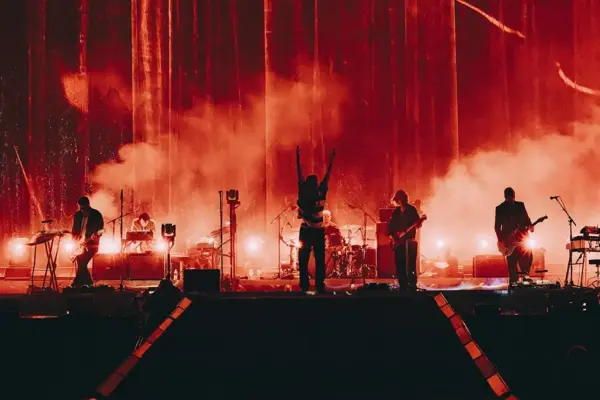
To understand the logistical impossibility of an Oasis appearance at Glastonbury 2027, one must examine the band’s meticulously curated timeline. Following their explosive, critically acclaimed live reunion in 2025—a landmark cultural event that grossed an estimated £300 million—the Gallagher brothers wisely opted for a strategic breather, taking the entirety of 2026 off from touring.
This hiatus was designed to preserve the fragile peace between the famously volatile siblings and to build anticipation for the next phase of their comeback: a massive 38-date international stadium and arena trek slated for the summer of 2027. Ahead of their initial reunion run, the band issued a characteristic warning to their global fanbase: "Come see. It will not be televised." While that decree held true for the live experience itself, the feverish atmosphere was ultimately captured and immortalized in their concert documentary film, Don’t Look Back in Anger, released earlier this month.
The 2027 Tour Matrix and the Glastonbury "Gap"
When Oasis dropped their expansive 2027 itinerary, music sleuths immediately went to work cross-referencing dates. The band was locked in to play high-profile concerts at Manchester City’s Etihad Stadium on the Friday and Saturday nights that directly coincided with the operational window of Glastonbury Festival.
Because their schedule left Sunday wide open without a concrete booking, the rumor mill went into overdrive. Fans deduced that the Gallaghers could easily helicopter down from Manchester to Somerset to deliver a historic Sunday night Pyramid Stage closing set.
Yet, physical geography and logistical pacing tell a very different story. The Gallagher brothers, both now firmly in their 50s, adopted a strict pacing strategy throughout their 2025 reunion tour, deliberately avoiding playing three consecutive nights. Replicating the grueling physical and emotional toll of a modern Oasis stadium set immediately after back-to-back nights in Manchester—followed by a high-pressure headline slot at the UK’s most scrutinized festival—was always an athletic and logistical bridge too far.
A Shared History at Worthy Farm
The relationship between Oasis and Glastonbury stretches back to the formative years of Britpop. The band made their Worthy Farm debut back in 1994, performing as fresh-faced up-and-comers on the NME Stage (now known as the Woodsies Stage) just before the release of their generation-defining debut album, Definitely Maybe.
Recognizing their meteoric rise, organizers invited them back the very next year to headline the Pyramid Stage in 1995—a legendary set memorably augmented by an onstage appearance from Robbie Williams, who had recently departed Take That. They returned to top the bill once more in 2004, delivering a performance fraught with the trademark tension that ultimately dictated their operational lifespan prior to their 2009 Paris meltdown.
During the long, barren years of the sibling feud, both Liam and Noel frequented Worthy Farm as solo artists, testing the waters of the festival’s forgiving and enthusiastic crowds independently. Yet, despite past triumphs and solo excursions, a unified return to the Pyramid Stage under the Oasis banner will not materialize in 2027.
Supporting Context & Metrics: Economics, Demographics, and the Festival Market
The Financial Disconnect Between Oasis and Glastonbury
At the core of the festival booking dynamic lies a fundamental economic truth: Glastonbury Festival does not compete on standard commercial market rates. While the event offers unparalleled cultural prestige, global media exposure via the BBC, and an unmatched artistic platform, it traditionally pays its headliners a fraction of what they can command on a commercial stadium tour.
An entity as commercially lucrative as an active Oasis reunion tour operates on an entirely different financial stratosphere. Having already hauled in an estimated £300 million from their 2025 comeback shows, the band’s commercial imperatives are vast. While money is rarely the sole motivator for legacy acts wanting to play Worthy Farm, the sheer financial disparity between a boutique festival fee and a global stadium tour footprint creates an inevitable barrier to entry.
Navigating the Rumor Mill: Who Is Playing?
With Oasis officially out of the running, the speculative market for the 2027 Glastonbury headliners remains wide open. Last year’s festival featured blockbuster headline sets from The 1975, Neil Young, and Olivia Rodrigo, alongside Rod Stewart anchoring the coveted Sunday afternoon "legend slot."
For the upcoming festival cycle, bookmakers and industry insiders have thrown an eclectic mix of global superstars into the conversation. Perennial rumors continue to swirl around Taylor Swift and Madonna, alongside heavyweight contenders like Harry Styles, Sam Fender, Ed Sheeran, Sabrina Carpenter, and Fred Again..
Further down the odds boards, alternative rock and pop royalty—including Radiohead, Pulp, Florence and the Machine, Rihanna, Lady Gaga, Chappell Roan, and Eminem—frequently populate fan forums. Industry chatter also points toward potential headline considerations for Charli XCX, Raye, Bad Bunny, Adele, Miley Cyrus, Kendrick Lamar, Justin Bieber, Bruce Springsteen, and Little Simz.
Official Statements and Industry Insights
Emily Eavis Puts the Rumors to Bed
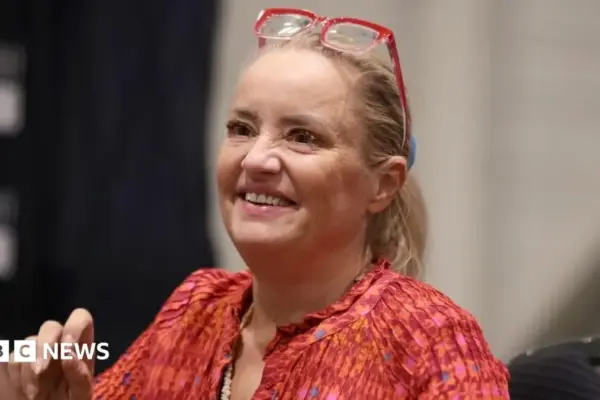
The definitive end to the Oasis-Glastonbury speculation came through direct, unvarnished communication from festival co-organizer Emily Eavis. Replying directly to a persistent fan on Instagram who pleaded, "Please say you’ve got Oasis," Eavis offered a swift and unambiguous reality check:
"Sorry Jimmy, not this time!"
This public dismissal corroborated prior statements made by Liam Gallagher. Responding to a fan-site on X (formerly Twitter) last month that flagged the band as bookmakers’ favorites to headline Worthy Farm, the frontman pulled no punches:
"It’s not happening. So all you croc wearing flag waving [people] can calm […] down."
Sorting Through the Madonna Speculation
Eavis has been equally proactive in managing expectations regarding other high-profile acts. Speaking candidly with broadcaster Katie Razzall on BBC Radio 4’s PM programme, Eavis addressed persistent whispers surrounding the Queen of Pop:
"No, it’s definitely not Madonna, I’ll tell you that."
However, she was quick to reassure ticket-holders that the artistic curation for the upcoming summer is firmly on track.
"But we have got three [other] headliners and we’re very excited about it—it’s all coming together really well," Eavis confirmed.
The status of global megastar Taylor Swift remains a perennial talking point. Swift was originally locked in to headline the historic 50th-anniversary edition of Glastonbury in 2020, only for the event to be canceled entirely due to the global Covid-19 pandemic. Like Madonna, Swift has yet to make her anticipated debut at Worthy Farm. When quizzed directly on whether Swift might finally take to the stage, Eavis offered a knowing laugh, deflecting further line-up inquiries. For now, the pop icon remains firmly in the category of a "definitely maybe."
Future Outlook: The Festival Circuit Post-Oasis
The exclusion of Oasis from the 2027 Glastonbury bill highlights a broader evolution in the live music ecosystem. Mega-acts of the 1990s and 2000s are increasingly capable of generating unprecedented revenue entirely independent of festival infrastructure. For Oasis, the mechanics of a global stadium tour outweigh the communal utility of a festival headline slot, proving that even the most culturally significant reunions can outgrow the traditional festival circuit.
As Emily Eavis and her team finalize their trio of mystery headliners for the upcoming summer, the festival faces the challenge—and the opportunity—of defining its cultural currency without the safety net of Britpop’s most famous sons. Glastonbury has long thrived on its ability to manufacture its own mythology independently of the mainstream touring market.
For fans holding tickets to the 2027 festival, the absence of the Gallagher brothers simply shifts the spotlight onto the next generation of musical innovators and boundary-pushing headliners. Meanwhile, ticket holders for the Oasis international tour can rest assured that they are witnessing a masterclass in arena-rock spectacle—even if Worthy Farm’s iconic Pyramid Stage will remain without them for at least another cycle.