Executive Overview
History is written by the victors, but the canon of classical music is too often curated by the survivors of shifting artistic paradigms. While luminaries such as Wolfgang Amadeus Mozart, Ludwig van Beethoven, and Franz Joseph Haydn dominate the historical consciousness of the Viennese Classical period, their contemporary landscape was populated by brilliant iconoclasts whose contributions have been unjustly eclipsed by time.
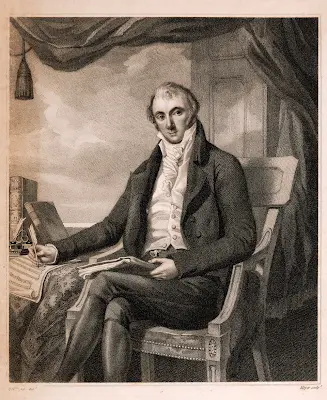
Among the most fascinating of these forgotten masters is Joseph Wölfl (1773–1812), a Salzburg-born virtuoso pianist and composer whose physical stature was matched only by the sheer magnitude of his keyboard technique. A prodigy linked directly to the Mozart family lineage, Wölfl evolved into a celebrated cosmopolitan artist. His career trajectory traced the turbulent political and cultural shifts of Europe at the turn of the nineteenth century, taking him from the salons of Vienna and the newly partitioned Poland to revolutionary Paris and the bustling, industrialized musical hub of Regency London.
Though contemporaries regarded Wölfl as a pianist of peerless execution—endowed with an impossible reach and a terrifyingly idiosyncratic physical presence—his legacy extends far beyond his showmanship. Wölfl was a prolific composer across every major genre of his day, leaving behind operas, symphonic works, pioneering piano concertos, and an unprecedented body of chamber music for the newly revolutionized pedal harp and piano.
Now, more than two centuries after his untimely death in London, Wölfl’s luminous footprint is finally stepping back into the light. Thanks to dedicated musicological research and the advocacy of contemporary recording labels like Toccata Classics—championed by artists such as pianist Adalberto Maria Riva and the acclaimed mother-daughter ensemble Duo Praxedis—the musical world is rediscovering a visionary whose art defined an era of unprecedented instrumental innovation.
Detailed Chronology: From Salzburg Prodigy to London Master
The Early Years and the Mozart Connection (1773–1795)
Born in Salzburg in 1773, Joseph Wölfl was positioned at the very heart of the European musical epicenter during its golden age. As a young boy, his immense raw talent brought him into close contact with the city’s foremost musical households. Wölfl received foundational instruction from Leopold Mozart, the formidable patriarch of the Mozart family, and studied composition with Michael Haydn, the younger brother of Joseph Haydn. Furthermore, he honed his burgeoning keyboard skills under the tutelage of Mozart’s sister, Maria Anna (Nannerl).
By 1790, the seventeen-year-old Wölfl traveled to Vienna to perform before Wolfgang Amadeus Mozart himself. Welcomed into the master’s circle as a refined and exceptionally gifted pianist, Wölfl may have taken direct lessons from the composer, absorbing the expressive depth and structural clarity that would later anchor his own mature writing.
Following this formative Viennese period, Wölfl established himself as a successful freelance musician, traveling to Poland. He enjoyed widespread acclaim and professional stability there until the geopolitical cataclysm of the Third Partition of Poland in 1795 abruptly altered the region’s cultural patronage systems, prompting his return to the Austrian capital.
The Viennese Triumph and Operatic Success (1795–1801)
Back in Vienna, Wölfl quickly re-established his professional momentum. He made a splash in the theatrical world with the premiere of his opera Der Höllenberg at the Theater auf der Wieden. The production featured a libretto by Emanuel Schikaneder—the visionary impresario and librettist best known for crafting the text of Mozart’s The Magic Flute.
Wölfl rapidly diversified his output, cementing a stellar reputation as both a pianist and a prolific composer of operas, piano works, and chamber music. His ambitions soon carried him beyond Vienna on extensive concert tours across the major cultural centers of Germany. During this period, a personal recommendation from Constanze Mozart—the composer’s widow—paved the way for a crucial alliance with the legendary publishing firm Breitkopf & Härtel, which soon became the primary publisher of Wölfl’s growing catalogue.
Throughout the late 1790s and the early years of the new century, Wölfl continued to produce stage works and instrumental compositions, steadily expanding his European footprint.
The Cosmopolitan Traveler: Paris and London (1801–1812)
By 1801, Wölfl had relocated to Paris. In the vibrant artistic climate of the French capital, he stood out immediately, dazzling audiences with his dual mastery as a virtuoso pianist and a sophisticated composer of orchestral, operatic, and chamber music.
Seeking new horizons, Wölfl crossed the English Channel in 1805, arriving in London—a city rapidly transforming into one of the most lucrative and dynamic musical marketplaces in the world. He swiftly entered into a lifetime contract with Johann Peter Salomon (1745–1815), the celebrated German-born impresario and violinist best remembered for bringing Joseph Haydn to London in the early 1790s.
Under Salomon’s guidance, Wölfl received prestigious commissions and quickly ascended to the upper echelons of London’s musical society. It was during this fertile London period, spanning from 1805 to 1810, that he produced the most significant and expansive portion of his oeuvre. His sphere of influence also extended into pedagogy; among his most notable British students was the young Cipriani Potter (1792–1871), who would go on to serve as the highly influential Principal of the Royal Academy of Music for 27 years.
Tragically, Wölfl’s meteoric rise was cut short. He died in 1812 at his home in Marylebone, which was then a fashionable, well-to-do suburb of London. Despite his sudden passing at the age of 38, publishers maintained a vigorous interest in his work, issuing fresh editions of his compositions well into the final decades of the nineteenth century.
Supporting Context & Metrics: Virtuosity, Innovation, and Repertoire
The Physical Phenomenon: Anatomy of a Virtuoso
To understand Wölfl’s impact on the contemporary piano scene, one must look through the eyes of those who witnessed him at the keyboard. The renowned Czech composer and pianist Václav Jan Tomášek, recalling a performance from 1799, left behind a vivid, almost surreal description of Wölfl’s physical attributes and performance style:
.png)
"Wölfl played a concerto of his own composition with unprecedented clarity and precision, such as, with the tremendous span of his hands, no one else could possibly have done it. […] A pianist who measures six feet in length, whose fingers are incredibly long and can reach the span of a 13th without effort, who is also so thin that everything about him rattles like a scarecrow, who, with the most incredible ease, with a touch that is weak, albeit pleasant, performs all difficulties, impossible for other pianists, without losing his calm posture, who often knows how to bind entire passages in moderately fast tempo with one and the same finger… such a pianist is surely unique."
Tomášek’s recollections also highlight the fierce critical debates surrounding virtuosity at the turn of the century. While some critics viewed Wölfl’s colossal physical gifts and gymnastic prowess as lacking the "masculine strength" and profound emotional gravity demanded by purists, none could deny his revolutionary approach to the instrument. His technical capacities allowed him to execute fingerwork and polyphonic textures that rendered standard etudes of the era obsolete.
The Piano Concertos and the Mozartian Legacy
Wölfl’s contribution to the concerto genre is a vital bridge in keyboard history. Between 1802 and 1809, he composed six piano concertos that closely mirror the later, revolutionary style of Wolfgang Amadeus Mozart.
However, Wölfl’s concertos introduced a distinct modern evolution: they capitalized on the expanded range of the pianoforte, which manufacturers had begun to extend shortly after Mozart’s death. This expanded sonic landscape allowed Wölfl to explore richer harmonic colors, denser textures, and unprecedented dynamic contrasts.
The Pedal Harp Revolution and the Piano-Harp Duos
Perhaps Wölfl’s most historically unique and enduring contribution to chamber music lies in his pioneering exploitation of the pedal harp.
The turn of the nineteenth century marked a watershed moment for harp construction. The invention of the single-action pedal harp around 1800 made performance in all keys possible, paving the way for Sébastien Erard’s patented double-action pedal system in Paris and London (1801–1802). These engineering breakthroughs transformed the harp from a diatonic folk instrument into a fully chromatic vehicle capable of sophisticated artistic expression.
Recognizing this potential, Wölfl encountered leading harp virtuosi in both Paris and London. Uniquely among the major masters of the Viennese Classical period, he forged a massive, high-caliber body of repertoire for the combination of harp and piano—two instruments rapidly becoming staples of middle-class domestic music-making.
His notable works in this genre include:
- Grand Duo pour Harpe et Piano in F major, Op. 29: Composed in Paris in 1804 and dedicated to a harpist who had performed in Queen Marie Antoinette’s private concerts.
- Grand Duett for the Harp and Piano Forte in B flat major, Op. 37: Composed in London in 1806 and dedicated to François-Joseph Dizi (1780–1840), one of the foremost harp virtuosi of the era. Its premiere at the King’s Concert Rooms in Hanover Square was a triumphant public success.
- Second Duett in E flat major, Op. 44: Dating from 1807, premiered at a benefit concert featuring Wölfl at the piano and the harp-playing Miss Gautherot.
In 1807, Wölfl published Bouquet de Flore, a collection of seven compositions dedicated to his pupils. Demonstrating his entrepreneurial spirit, Wölfl engraved the music himself onto copper plates and financed the publication independently. Two pieces from this volume were specifically scored for harp and piano. Alongside substantial sonatas for solo harp and for flute and harp, these works stand as a monumental testament to the maturation of harp technique and chamber composition during the Regency era.
Official Statements and Musicological Insights
Modern scholarly and artistic revival efforts have been crucial in bringing Wölfl’s achievements back to public awareness. Much of the foundational context regarding his chamber works and historical milieu stems from comprehensive program notes provided by musicologists Margit Haider-Dechant and Hermann Dechant, whose collaborative research has offered contemporary listeners a window into Wölfl’s creative universe.
Furthermore, the dedicated efforts of recording imprints such as Toccata Classics have ensured that Wölfl’s scores are no longer confined to dusty archives. Following critically acclaimed discs of Wölfl’s solo piano music performed by Adalberto Maria Riva, the label has turned its programmatic focus toward the composer’s innovative duos for piano and harp.
These works are brought to vibrant life by Duo Praxedis—comprising harpist Praxedis Hug-Rütti and pianist Praxedis Geneviève Hug. Since 2010, this mother-daughter ensemble has championed the rediscovery of forgotten nineteenth-century repertoire for their unique instrumental pairing, proving that Wölfl’s experiments in chamber textures possess enduring vitality and immense aesthetic value.
Future Outlook
As the classical music community continues to diversify its programming and re-evaluate the margins of the traditional canon, figures like Joseph Wölfl offer a thrilling frontier for discovery. No longer dismissed as a mere technical anomaly or a historical footnote to Mozart and Beethoven, Wölfl is steadily reclaiming his status as a titan of early nineteenth-century music.
The upcoming release of the Complete Duos for Harp and Piano by Duo Praxedis on Toccata Classics represents a major milestone in this ongoing rehabilitation. By pairing archival scholarship with world-class performance—culminating in live presentations at historical sites such as the Wölfl-Haus in Bonn—modern interpreters are breathing new life into scores that have slumbered for over two hundred years.
For performers, scholars, and avid listeners alike, Wölfl’s oeuvre offers a rich, unmined vein of Classical-era brilliance. As more of his symphonies, concertos, and chamber pieces find their way back to the modern concert stage and recording studio, the musical world is finally learning to appreciate the full, towering stature of the Salzburg giant whose fingers once stretched effortlessly across the horizons of his art.