Executive Overview
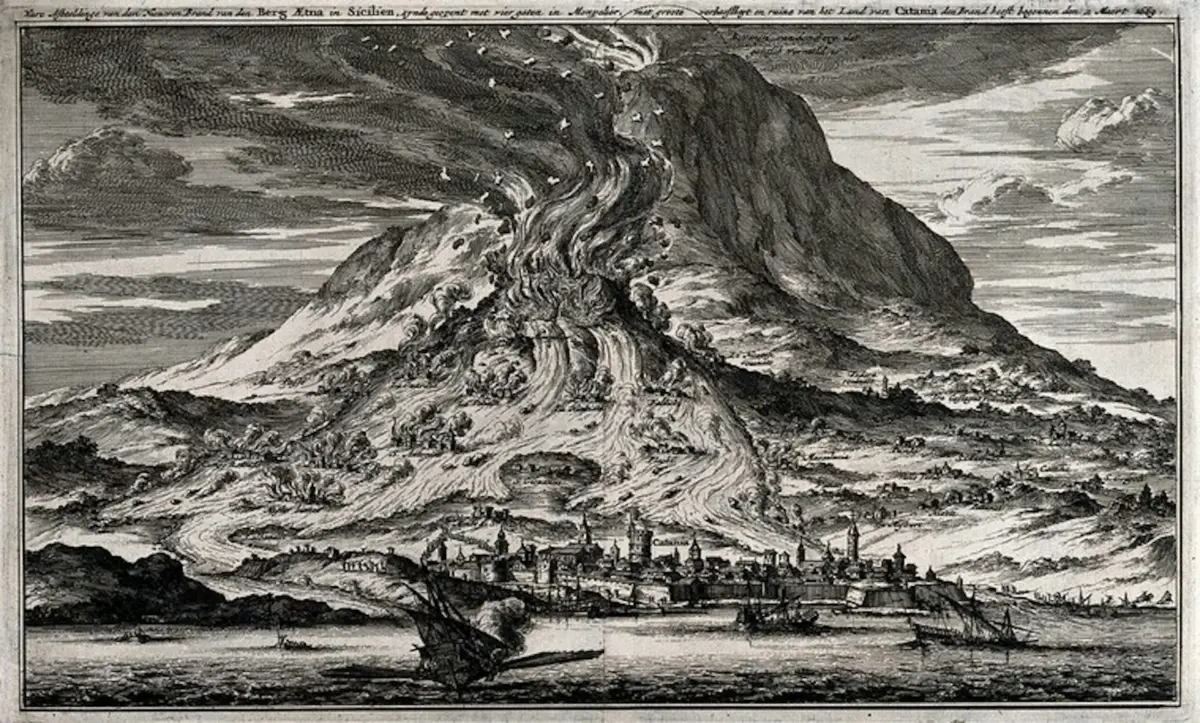
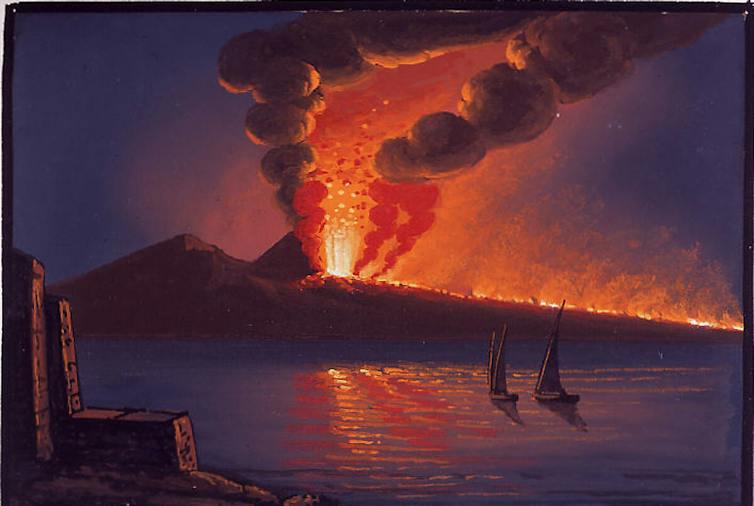
When humanity envisions the terrifying might of a volcanic eruption, the imagination typically conjures images of localized destruction: rivers of incandescent lava consuming agrarian villages, or choking clouds of ash burying entire civilizations in a matter of hours. The harrowing fate of Pompeii’s inhabitants following the cataclysmic eruption of Mount Vesuvius in AD 79 remains etched into the collective human consciousness, serving as a timeless monument to sudden, fiery annihilation.
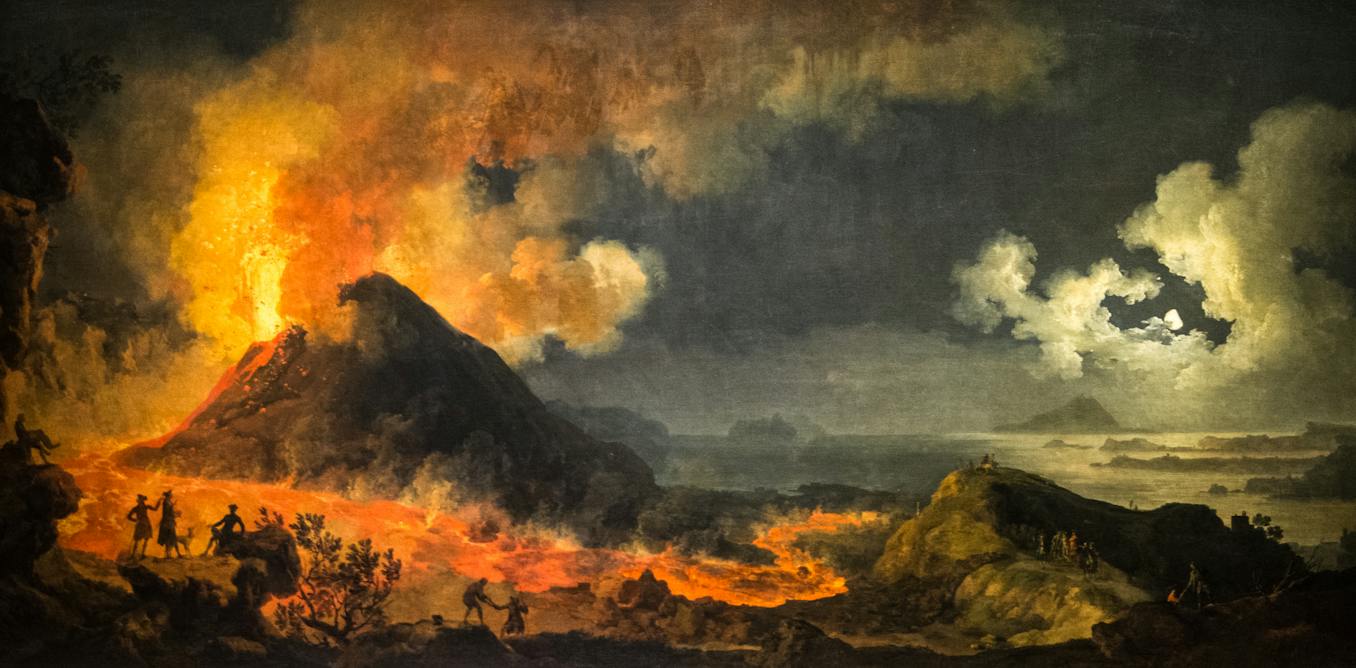
However, looking solely at immediate, localized thermal and pyroclastic devastation severely underestimates the true planetary reach of volcanism. Massive eruptions do not merely alter local topography; they act as profound disruptors of the Earth’s climatic engine. When super-volcanoes or high-latitude eruptions rupture the crust, they vent colossal volumes of sulfur dioxide gas and microscopic ash particles high into the stratosphere. While the heavy ash particles rapidly precipitate out of the air within weeks, sulfur gases undergo complex chemical transformations, reacting with water vapor to form long-lived sulfate aerosols.
These aerosol veils encircle the globe, hanging suspended in the upper atmosphere for years. By reflecting incoming solar radiation back out into space, they rob the planet of its warmth, driving catastrophic climatic cooling, collapsing agricultural yields, triggering continent-wide famines, and indirectly facilitating the explosive spread of lethal pandemics.
By analyzing the frozen archives of the Earth—long cylindrical ice cores drilled from pristine glaciers in Greenland and Antarctica—scientists can reconstruct a high-resolution timeline of atmospheric pollution stretching back hundreds of thousands of years. Combined with medieval chronicles, monastic annals, and archaeological excavations, this paleoclimatic data reveals a sobering truth: isolated volcanic outbursts on one side of the globe have repeatedly plunged distant civilizations into darkness, starvation, and societal collapse. Two historic milestones stand out in this grim chronicle: the mysterious, protracted twilight of AD 536 and the devastating, unyielding chill of the AD 1258 Samalas eruption.
Detailed Chronology: The Great Historical Disruptions
AD 536: "The Worst Year to Be Alive"
The middle of the sixth century was a period of profound geopolitical transition, yet nothing prepared the contemporary world for the atmospheric horror that began in the spring of AD 536. Historians and climatologists now frequently designate this era as the single "worst year to be alive" in recorded human history. Though the exact geological source of the eruption remains a subject of intense scientific debate—with some researchers pointing to high-latitude eruptions in Iceland or North America—its climatic signature was undeniably global.
For eighteen agonizing months, a thick, dry fog shrouded Europe, the Middle East, and vast swathes of Asia, cutting off the warmth and brilliance of the sun. Contemporary observers left behind haunting testimonies of a world losing its light. Procopius, a prominent Byzantine historian residing in Rome, documented the strange optical anomaly with chilling precision:
"The Sun gave forth its light without brightness, like the Moon, during this whole year, and it seemed exceedingly like the Sun in eclipse, because its rays were not clear."
From Constantinople, the Byzantine administrator and writer John Lydus echoed these observations, recording that "the Sun became dim… for nearly a whole year." Another anonymous contemporary writer—historically believed to be John of Ephesus—provided an even more claustrophobic account of the perpetual gloom:
"The Sun was dark and its darkness lasted for eighteen months; each day it shone for about four hours, and still this light was only a feeble shadow."
The atmospheric veil choked off solar energy, causing summer temperatures in the Northern Hemisphere to plunge by an unprecedented 1.5°C to 2.5°C. This initiated the coldest decade in the past two millennia—a climatic downturn now recognized as the precursor to the Late Antique Little Ice Age.
Agriculture across Eurasia collapsed almost immediately. In Ireland, contemporary chronicles such as the Annals of Ulster and the Annals of Inisfallen recorded a stark, terrifying reality: a sudden and absolute "failure of bread."
Worse still, this initial catastrophe was not an isolated event. Ice-core records demonstrate that the AD 536 eruption was closely followed by two further massive volcanic explosions in AD 540 and AD 547. This relentless triple-punch of sulfur injections locked the Northern Hemisphere into a prolonged deep freeze.
The resulting societal shockwaves—characterized by mass migrations, desperate food shortages, and acute malnutrition—created ideal vectors for biological disaster. Historians and epidemiologists suggest that this prolonged climatic misery directly catalyzed the emergence of the Justinianic Plague (AD 541–549). As populations starved and migrated in search of sustenance, grain shipments inadvertently ferried plague-infected rats and fleas across trade routes, igniting one of the most lethal outbreaks of bubonic plague in human history and helping to dismantle the remnants of the Eastern Roman Empire.
AD 1258: "There Was No Summer During Summer"
If the sixth century established the vulnerability of the ancient world to atmospheric shocks, the thirteenth century demonstrated that medieval societies were equally ill-equipped to handle the wrath of the subterranean world. In the year AD 1257, a colossal cataclysm rocked the planet: the eruption of Mount Samalas on the island of Lombok, Indonesia.
Ranked by volcanologists as one of the most violent and voluminous eruptions of the past two thousand years, Samalas ejected an unimaginable volume of material into the stratosphere. Analysis of polar ice cores reveals that the Samalas event deposited twice the volume of sulfur aerosols into the global atmosphere as the infamous eruption of Mount Tambora in AD 1815—an event responsible for the nineteenth-century "Year Without a Summer."
Northern Europe was already staggering under the weight of unseasonably heavy rains and severe weather when the stratospheric veil from Samalas arrived, sealing the continent’s fate. The spring and summer of AD 1258 offered no respite, transforming agrarian economies into zones of absolute despair.
Jean d’Essey, the bishop of Coutances in Normandy, captured the profound meteorological inversion in his regional reports:
"There was no summer during summer. The weather was very rainy and cold at harvest time, neither the crop harvest nor the grape harvest were good."
In France, the contemporary monk and chronicler Richer of Senones noted that the warmth of the sun was physically incapable of piercing the dense stratospheric blanket. He observed that "so great a thickness of clouds covered the sky throughout that whole summer that hardly anyone could tell whether it was summer or autumn."
Nowhere were the catastrophic effects of the Samalas eruption more thoroughly documented than in England. Chronicling the year AD 1257, the English Benedictine monk Matthew Paris recorded the unfolding tragedy in his annals, defining it as a "barren and wretched year" that claimed the lives of a "great multitude of people… from hunger." Paris observed that the persistent climatic stress induced "chronic illnesses," leaving the population physically devastated and unable to withstand even minor ailments.
As spring turned to early summer in 1258, unyielding cold and torrential rains across April, May, and June arrested crop growth entirely. The ensuing wheat shortage triggered an apocalyptic famine across the English countryside. Paris wrote a harrowing description of the human toll:
"Owing to the scarcity of wheat, a very large number of poor people died; and dead bodies were found in all directions, swollen and livid… in pigsties, on dunghills and in the muddy streets."
Supporting Context & Metrics: Societal Collapse and Archaeological Evidence
The sheer scale of mortality during the AD 1258 famine overwhelmed the administrative machinery of medieval England. Local coroners, legally mandated to perform formal inquests to establish the precise cause of every sudden or suspicious death, found themselves utterly overwhelmed. Paupers and destitute laborers were perishing of starvation in such staggering numbers that local officials could no longer keep pace with the bureaucracy of death.
The crisis reached such an acute stage that King Henry III was forced to intervene. In April 1258, the Crown issued administrative directives to suspend coroners’ inquests in cases where no explicit foul play was suspected, simply because the sheer volume of starvation victims rendered investigations impossible.
Simultaneously, the Annals of Burton recorded a vast influx of displaced rural vagrants migrating toward towns and cities in a desperate search for charitable alms. This rural-to-urban flight severely magnified the crisis in major metropolitan centers. London, drawing thousands of desperate souls fleeing starvation in the surrounding villages, quickly became a focal point of the catastrophe.
The Chronicles of the Mayors and Sheriffs of London detailed the breakdown of the urban safety net:
"In this year, there was a failure of the crops; upon which failure, a famine ensued, to such a degree that the people from the villages resorted to the City for food; and there, upon the famine waxing still greater, many thousand persons perished; many thousands more too would have died of hunger, had not corn just then arrived from Germany."
Other regional chronicles, such as the Tewkesbury Annals penned by the monks of Tewkesbury Abbey, placed the localized death toll from the famine at a staggering 20,000 individuals—an astronomical figure for a medieval monastic catchment area.
Mass Graves and Archaeological Verification
The literary accounts of mass mortality are not mere hyperbole penned by distressed chroniclers; they are firmly grounded in modern archaeological evidence. When Matthew Paris reported that "when several corpses were found, large and spacious holes were dug in cemeteries, and a great many bodies were laid in them together," he was describing mass casualty management protocols executed during the height of the crisis.
Decades of archaeological excavation have successfully unearthed these very sites. At the historic hospital of St Mary Spital in London, excavations have uncovered mass burial trenches containing approximately 2,300 skeletons dating precisely to the mid-thirteenth century. Osteological analysis connects these victims directly to the cascading environmental stressors of the period—specifically the severe European drought of 1252 followed immediately by the catastrophic Samalas famine of AD 1257–1258. Isotopic testing of teeth and bones reveals severe childhood malnutrition, systemic stress, and the telltale physiological markers of long-term starvation.
Official Statements and Scientific Consensus
Modern volcanology, climatology, and paleoclimatology view historical eruptions not as isolated geological anomalies, but as essential pieces of a complex, interconnected Earth system.
In a recent synthesis on stratospheric aerosol impacts, leading paleoclimatologists emphasized the precision of ice-core data in validating ancient chronicles:
"The synchronization between high-resolution polar ice-core sulfate spikes and contemporaneous medieval chronicles provides undeniable proof of the teleconnections linking tropical and high-latitude volcanism to European societal collapse."
Furthermore, epidemiological experts studying the correlation between climate change and pathogen dispersion note that volcanic cooling events serve as severe systemic shocks. A leading geo-archaeological researcher remarked:
"When we look at events like AD 536 and AD 1258, we are observing how environmental stress acts as a force multiplier. Volcanoes do not simply starve populations by ruining crops; they induce mass displacement, compromise human immune systems through malnutrition, and create the exact socioeconomic conditions required for pandemics to sweep across continents."
Future Outlook: Lessons from the Deep Past
As modern society navigates an era of unprecedented technological complexity and accelerating climate volatility, the lessons of AD 536 and AD 1258 carry an urgent contemporary resonance. While modern agricultural systems are vastly more resilient than those of the sixth or thirteenth centuries, globalized food supply chains remain deeply vulnerable to sudden systemic shocks.
Volcanologists actively monitor high-risk volcanic systems across the globe—such as the Campi Flegrei in Italy, Yellowstone in the United States, and various sub-surface calderas in the Pacific Ring of Fire—using advanced satellite geodesy, seismic sensors, and gas emission spectrometry. Yet, a truly cataclysmic stratospheric eruption occurring today would present unprecedented challenges to global aviation, satellite communications, global supply chains, and international food security.
The historical record serves as an undeniable reminder: the Earth’s crust is intimately connected to the delicate atmospheric envelope that sustains human civilization. Volcanic forces operating in remote, uninhabited regions possess the capacity to plunge advanced societies into darkness, disrupt global weather systems, and trigger widespread humanitarian crises. Understanding these ancient cataclysms is not merely an exercise in historical curiosity; it is a vital prerequisite for planetary preparedness in the twenty-first century and beyond.