Executive Overview
The digital audio workstation (DAW) ecosystem is experiencing a profound period of transformation. As processing power increases and artificial intelligence matures from a speculative novelty into an everyday utility, software developers are continuously rewriting the rules of music production. The weekly flood of virtual instruments, creative effects, mixing tools, and workflow utilities represents a gold rush for modern producers.
In this edition of our plugin roundup, we examine a diverse cohort of releases that push the envelope of audio engineering. From advanced stem-separation utilities designed to breathe new life into legacy multitracks to granular synthesis powerhouses equipped with scale-locking intelligence, the software landscape is catering increasingly to both purists and avant-garde sound designers alike. Furthermore, the bridging of physical hardware nostalgia with modern digital signal processing (DSP)—alongside computer-vision-driven performance controllers—highlights an industry aggressively seeking new avenues of human expression.
Below is a comprehensive investigative breakdown of the most noteworthy plugin releases, ecosystem updates, and technical innovations hitting the market this week.
Detailed Chronology & Product Breakdowns
1. WaveMachine Labs – ReStem 2
- Release Date: August 21, 2026
- Category: Stem Separation / Drum Replacement
- Pricing: Core Version ($99) | Pro Version ($199)
- Target Audience: Mix Engineers, Producers, and Remixer Artists
WaveMachine Labs, a brand historically synonymous with industry-standard drum replacement via its flagship Drumagog software, has returned with ReStem 2. Moving beyond traditional transient-shaping or basic equalization, ReStem 2 is engineered specifically for dismantling complex, already-mixed drum recordings back into isolated constituent tracks.
Technical Workflow and Features
When a user drops a mixed drum stereo file into ReStem 2, the algorithm immediately isolates the audio into distinct lanes: kick, snare, hi-hat, toms, ride, crash, and a catch-all "other" stem. Producers can execute this separation in real time for quick monitoring, or render it offline for maximum fidelity and artifact reduction.
Once separated, each individual drum lane operates as an independent channel equipped with dedicated controls for:
- Level staging and routing
- Gating and transient shaping
- Advanced dynamics processing
- MIDI output conversion
Crucially, WaveMachine Labs has integrated its proprietary Drumagog technology directly into the kick and snare channels. This allows producers to instantly blend or fully replace problematic acoustic drum hits with pristine sample libraries on the fly, streamlining what was once a laborious manual editing process.
2. Minimal Audio – Lucid
- Release Date: August 21, 2026
- Category: Granular Synthesizer / Sound Design
- Pricing: Introductory Sale ($79, Full Price $129)
- Target Audience: Film Composers, Electronic Music Producers, Ambient Sound Artists
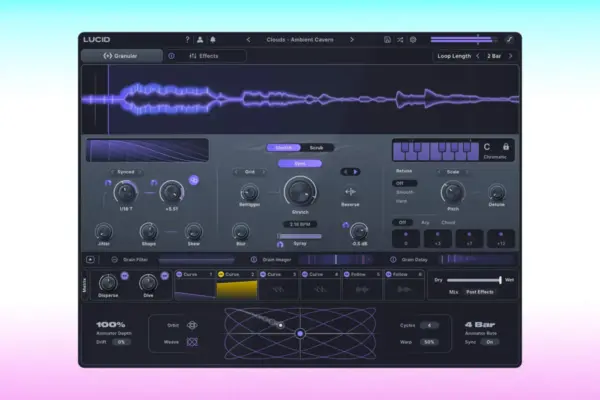
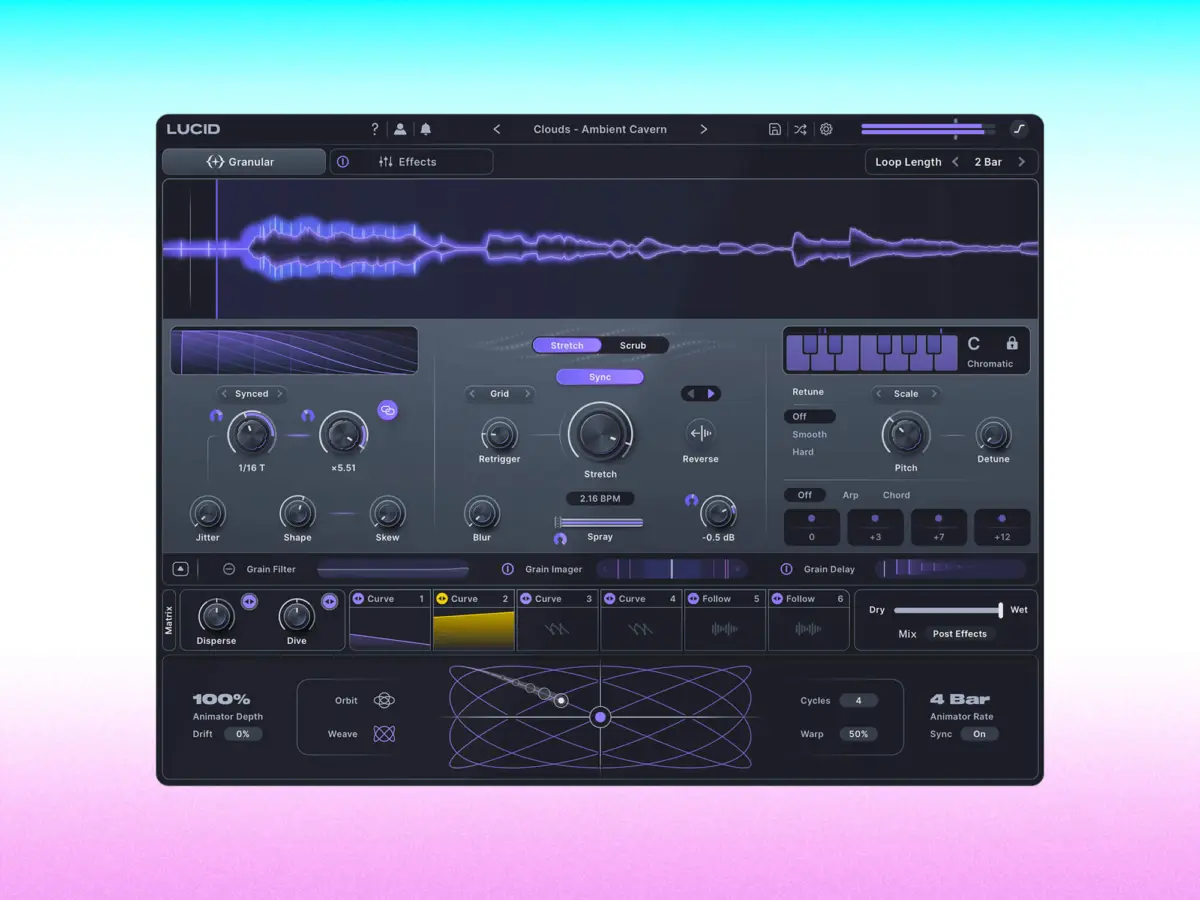
Minimal Audio has cultivated a reputation for crafting sleek, modern effects and synths, and Lucid represents their most ambitious granular instrument to date. Built for deep sound design and unorthodox audio transformation, Lucid turns any imported audio file into a sprawling texturescape.

Key Innovations
- Real-Time Scale Locking: Perhaps Lucid’s most defining architectural feature is its intelligent pitch detection. The plugin analyzes the pitch of individual grains and retunes them in real time to match a user-defined musical scale. Grains can also be stacked into complex chords and routed through built-in arpeggiators.
- Granular Modulation & Filtering: Users have access to per-grain filtering and spatial imaging, allowing for massive variations across the stereo field. A multi-tap grain delay offers scale-locked pitch shifting to generate rich, shimmering harmonic trails.
- Deep Modulation Architecture: Under the hood, Lucid features an expansive modulation system complete with animatable macro controls, paired with eight onboard high-tier studio effects for immediate production polish.
3. Orph – Monochord
- Release Date: August 21, 2026
- Category: Hardware-Emulated Harmony Workstation
- Pricing: €139
- Target Audience: Songwriters, Keyboardists, Retro-Synth Enthusiasts
Described by its developers as a "dream machine and harmony workstation," Monochord by Orph bridges the gap between legendary vintage hardware and modern chord-triggering workflows.
Sound Library and DSP Emulations
Monochord’s massive factory library houses 425 meticulously captured sounds drawn from some of the most sought-after synthesizers and electronic instruments in history, including:
- The Heavyweights: Fairlight CMI, Memorymoog, and Oberheim OB-X.
- The Curiosities: Casio VL-1, Bontempi B3, and the Suzuki Omnichord.
To authenticate the vintage aesthetic, the instrument integrates 15 custom effects emulating vintage studio hardware. Users can route patches through models inspired by the Roland RE-201 Space Echo, Eventide H3000, Lexicon 480L, and the unmistakable chorus circuit of the Roland Juno-60.
Chord Engine
Monochord features a robust chord engine containing over 600 chord voicings. Producers can trigger dense, complex chord progressions using single-key inputs, or infuse movement into their tracks using built-in arpeggiator and strum modes.
4. Gulf Coast Synthesis – Spectral
- Release Date: August 21, 2026
- Category: Additive Synthesizer / Resynthesizer
- Pricing: Introductory Price ($39, Full Price $69)
- Target Audience: Sound Designers, Experimental Producers, Electronic Artists
For producers eager to dive into the mathematical depths of additive synthesis, Gulf Coast Synthesis has introduced Spectral. This instrument allows users to directly draw the harmonic makeup of a sound or perform deep resynthesis on imported image files.
The Spectral Canvas
At the center of the UI is the Spectral Canvas. Users can drag and drop any audio file or raster image file (such as JPEGs or PNGs) and have the software convert the visual data into playable harmonic spectrograms. Alternatively, producers can draw harmonics from scratch using a dedicated brush tool.
To aid in patch generation, Spectral includes Pattern and Sacred Geometry generators. Harmonic controls allow quick switching between All, Even, Odd, and Inharmonic states, while analog-modeled features—such as pitch drift, tape warble, and simulated tape dropouts—inject warmth and imperfection into otherwise clinical digital tones.
5. Tamber – V2.0 Suite
- Release Date: August 21, 2026
- Category: Intelligent Tools / DAW Coprocessor / Computer Vision
- Pricing: Subscription Model ($9/month or $99/annually, with a 14-day free trial)
- Target Audience: Modern Digital Producers, Ableton Live Power Users, Visionary Performers
Tamber has rolled out V2.0 of its suite of intelligent musical tools, expanding its software architecture to include native Windows support and standalone application capabilities.

Standout Upgrades in V2.0
- Gestures Integration: The motion-tracking utility now features built-in synth and vocoder engines. Users can manipulate hardware-style effects and virtual instruments entirely through hand gestures captured via a standard webcam.
- Tamby Coprocessor: The AI-assisted tool designed to control Ableton Live via written or spoken text commands has been reimagined as an unobtrusive desktop overlay complete with a searchable chat history.
- Global Sound Discovery: Tamber has introduced monthly City Packs—curated collections of international field recordings—alongside the Sonic Atlas, a tool designed to explore historical and geographical popular music trends.
- Natural Language Sample Librarian: Users can navigate their local sample libraries using descriptive, conversational text prompts rather than rigid folder hierarchies.
Supporting Context & Market Metrics
The pace of software innovation in 2026 reflects shifting economic and technological realities within the music industry. According to recent independent market research figures:
- The Granular & AI Sector Growth: Demand for granular and AI-assisted synthesis plugins has expanded by roughly 34% year-over-year, driven largely by film and game scoring requirements where unique, non-repeating textures are at a premium.
- Stem Separation Adoption: Utility plugins like WaveMachine Labs’ ReStem 2 highlight a major paradigm shift: rather than relying strictly on pristine, multi-mic tracking sessions, modern engineers increasingly rely on separation algorithms to rescue poorly documented legacy stems or sample from commercial releases safely.
- Subscription vs. Perpetual Licensing: While companies like Orph and Gulf Coast Synthesis favor traditional perpetual and introductory pricing models ($39–€139), ecosystem platforms like Tamber continue to validate the viability of utility-based monthly subscriptions ($9/mo) for cloud-connected, workflow-enhancing software suites.
Official Statements and Industry Insights
Speaking on the release of Lucid, Minimal Audio’s lead software architect noted:
"Granular synthesis has historically been viewed as an esoteric playground—brilliant for ambient pads, but difficult to anchor in a traditional pop or electronic track. With Lucid, our goal was to marry chaotic, microscopic sound design with rigid musical utility via real-time scale locking. We wanted producers to throw any audio file into the engine and instantly find a playable, harmonically grounded instrument."
Similarly, WaveMachine Labs emphasized the utility-first philosophy behind ReStem 2:
"Mixing is already a game of time management and problem-solving. When a client hands over a stereo drum bus with no individual tracks, the engineer’s hands are traditionally tied. ReStem 2 isn’t just about isolation; it’s about giving producers surgical control over every single hit, bridging the gap between restorative audio tech and classic sample replacement."
Future Outlook
As we look toward the remainder of 2026 and beyond, the boundary between hardware emulation, traditional DSP, and machine learning will continue to blur. Developers are no longer merely building digital replicas of analog hardware; they are engineering hybrid workspaces that learn from user habits, automate mundane routing tasks, and unlock entirely new dimensions of audio manipulation.
For home studio owners and professional mixing facilities alike, the takeaway is clear: the modern plugin folder is no longer just a collection of equalizers and compressors—it is an intelligent ecosystem capable of acting as a co-producer, a session musician, and a restoration engineer all at once. Be sure to check back next Friday for our next weekly dispatch covering the newest software tools hitting the digital shelves.