Executive Overview
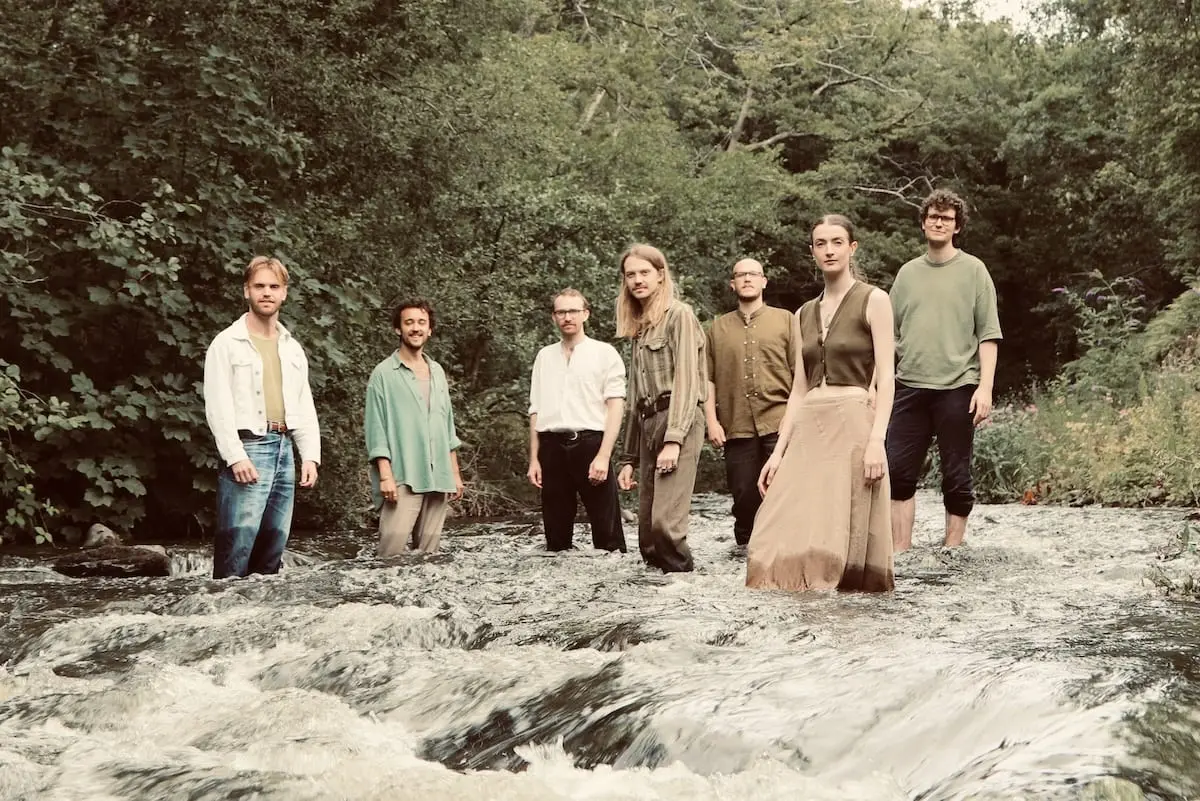
In the contemporary landscape of boundary-pushing British music, few outfits bridge the chasm between avant-garde jazz and ancient folkloric tradition with the seamless grace of the Leeds-based septet Awen Ensemble. Comprising seven formidable instrumentalists and vocalists, the collective first captured the attention of critics and contemporary jazz purists alike with their 2024 debut full-length, Cadair Idris. Steeped heavily in Welsh mythology and the rugged topography of the British Isles, that opening statement was lauded by reviewers as an audacious, highly promising synthesis of modern jazz frameworks and mythic folk essences. Critics reached for elevated comparisons, invoking the pastoral ECM-era compositions of Keith Jarrett colliding with the sophisticated acoustic resurgences of Pentangle.
Rather than resting on the laurels of their critically acclaimed debut, Awen Ensemble embarked on an expansive, geographic, and ancestral odyssey. Reflecting the rich Celtic heritage woven directly into the lineage of their lineup—spanning Welsh, Irish, and Scottish roots—the ensemble has charted a circular, trans-national journey across the Celtic fringe. This trajectory manifested initially in their exploration of Scottish folk history via their subsequent EP, Dùthchas, and now culminates in an immersive voyage to Ireland for their latest release, The Walls Around Ballyfin.
Self-released on September 9th, The Walls Around Ballyfin is anchored by its evocative title track, a piece with a remarkable backstory that bridges centuries of family heritage and oral tradition. Described aptly as a "forgotten folk song," the lead single rescues a lost lyrical artifact penned by the great-grandfather of drummer Eddie Bowes in County Laoise, Ireland. While the historic verses survived the passage of time, the original melody had long vanished into the ether. To resurrect the song, Bowes collaborated with vocalist Amy Clark, forging a gossamer, timeless melody designed to marry seamlessly with these inherited words.
To mark the arrival of this deeply personal project, Awen Ensemble has launched an intimate, highly anticipated string of live performances across the United Kingdom, bringing their genre-fluid soundscapes to legendary jazz spaces and historic local pubs alike. With an expansive lineup featuring Amy Clark on vocals, Emyr Penry Dance on trumpet, Saul Duff on tenor saxophone, Ruari Graham on guitars, Glen Leach on piano, Joe Wilkes on upright bass, and Eddie Bowes on drums, the septet stands at an exhilarating crossroads of modern jazz innovation and traditional storytelling.
Detailed Chronology: From Mythic Welsh Mountains to the Heart of County Laoise
The Genesis: Cadair Idris and the Welsh Mystique
The narrative of Awen Ensemble is inextricably bound to place, landscape, and ancestral memory. In 2024, the Leeds septet introduced themselves to the wider musical ecosystem with Cadair Idris, an album named after the towering mountain fortress in Snowdonia associated in legend with the giant Idris and said to drive those who spend the night on its slopes either mad or prophetic.
From its opening notes, Cadair Idris established Awen Ensemble’s signature methodology: treating modern jazz not as an exercise in academic abstraction, but as a living, breathing storytelling medium. Gareth Thompson, reviewing the record for KLOF Magazine, perfectly crystallized the project’s ambition by designating it as an audacious and promising debut. Thompson famously likened their soundscape to "Keith Jarrett’s more pastoral compositions for ECM meets Pentangle’s reunion classic Open The Door (Spindrift, 1985)." This cross-pollination of modal jazz sophistication with the intricate, interwoven acoustic textures of British folk revivalism gave the ensemble an unmistakable voice.
On Cadair Idris, the group utilized their instrumental fluency—the fiery interplay of Emyr Penry Dance’s trumpet and Saul Duff’s tenor saxophone balanced against the rhythmic bedrock of Joe Wilkes and Eddie Bowes—to evoke ancient mist, rugged crags, and age-old lore. Yet, even as the final echoes of the Welsh mountains faded from the studio monitors, the ensemble’s collective gaze was already shifting outward.
The Trans-Celtic Pivot: Dùthchas and Scottish Roots
With Welsh, Irish, and Scottish lineages distributed organically among the band members, Awen Ensemble’s artistic mandate naturally expanded into a circular pilgrimage across the Celtic nations. This transition materialized in their follow-up EP, Dùthchas, a Gaelic concept denoting deep-rooted hereditary attachment to a specific land, its culture, and its lore.
On Dùthchas, the septet turned their creative lens toward Scottish folk history. The EP served as a crucial stylistic bridge, proving that their jazz-folk fusion was not a one-off gimmick tied exclusively to Welsh geography, but rather a sustainable, deeply felt ethos. The arrangements grew more intricate, the improvisational spaces more conversational, and the thematic commitment to unearthing forgotten histories solidified into a core band philosophy.
Resurrecting the Past: The Genesis of The Walls Around Ballyfin
The latest chapter in this ongoing trans-Celtic journey brings the ensemble across the Irish Sea to County Laoise for their new EP, The Walls Around Ballyfin. At the center of this release is the title track, a collaborative resurrection of a piece that bridges personal genealogy with collective cultural memory.
The song’s origins trace back to the great-grandfather of drummer Eddie Bowes, who penned the original lyrics while living in Ballyfin, a picturesque village nestled at the foot of the Slieve Bloom Mountains in County Laoise. While the poetic integrity of the verses remained intact down through the generations, the original musical arrangement had been utterly lost to time, a casualty of oral history and shifting eras.
Faced with a fragment of literary history, Eddie Bowes and vocalist Amy Clark undertook the delicate task of musical archaeology. Rather than attempting to fabricate a strictly "authentic" period-accurate tune that might feel academic or stiff, the duo focused on crafting a "gossamer melody with a timeless sensibility." This sensitive approach allowed the inherited words to breathe organically within a contemporary acoustic framework.
The resulting single is a masterclass in dynamic restraint and emotional resonance. From the opening moments, Amy Clark’s soft, expressive staccato cuts through the mix with striking clarity. She is swiftly anchored by Joe Wilkes’s mesmeric, hypnotic upright bassline, which sets a steady, meditative pulse. As the track unfolds, the sonic landscape broadens with the introduction of Ruari Graham’s warm acoustic guitar and Glen Leach’s rich, enveloping harmonium. The collaborative arrangement manages the rare feat of honoring a centuries-old domestic relic while maintaining the sophisticated, forward-thinking aesthetic that defines Awen Ensemble’s broader catalog.
Supporting Context & Metrics: The Anatomy of a Modern Jazz Collective
The Personnel Matrix
To fully comprehend the depth of Awen Ensemble’s sound, one must examine the individual pedigree and collective chemistry of its seven members. Operating as a septet in an era where economic and logistical pressures often force musicians into smaller, more streamlined units, Awen Ensemble embraces a rich, orchestral density.
- Amy Clark (Vocals): Serving as the emotional epicenter of the ensemble, Clark possesses a vocal instrument capable of navigating both the stark demands of traditional folk storytelling and the improvisational freedom of modern jazz. Her phrasing relies on delicate staccato textures and emotional nuance rather than over-singing.
- Emyr Penry Dance (Trumpet) & Saul Duff (Tenor Saxophone): This front-line horn pairing acts as the wind cutting through the ancient valleys. Their interplay ranges from searing, modal counter-melodies to warm, harmonized choruses that evoke the classic Blue Note era filtered through a pastoral lens.
- Ruari Graham (Guitars): Balancing acoustic fingerpicking traditions with subtle electric textures, Graham provides the rhythmic and harmonic bridge between the band’s folk roots and its jazz ambitions.
- Glen Leach (Piano & Harmonium): Leach’s keyboard work provides foundational harmonic depth. Whether utilizing the percussive clarity of the piano or the drone-heavy, ecclesiastical warmth of the harmonium, he colors the background with rich, atmospheric hues.
- Joe Wilkes (Upright Bass): Wilkes is the stabilizing anchor of the ensemble. His basslines are not merely functional timekeepers; they are hypnotic, melodic counter-forces that propel the compositions forward.
- Eddie Bowes (Drums): Beyond his role as the rhythmic heartbeat of the band, Bowes’s genealogical connection to County Laoise provides the thematic impetus for The Walls Around Ballyfin. His drumming avoids heavy-handed bombast, favoring brushwork, subtle cymbal work, and polyrhythmic textures that complement the folk-jazz hybrid.
Tour Infrastructure and Live Performance Metrics
Translating such a delicate, nuanced studio sound to the live stage requires a delicate balance of acoustic intimacy and dynamic amplification. To celebrate the release of The Walls Around Ballyfin, Awen Ensemble organized a targeted, high-profile UK tour spanning early-to-mid September 2024.
The routing reflects the band’s growing stature within the British independent music circuit, moving deliberately through premier jazz and creative music spaces:
- September 3: Peggy’s Skylight (Nottingham) – A renowned jazz venue offering an intimate listening-room environment ideal for the septet’s dynamic shifts.
- September 13: The Cardigan Arms (Leeds) – A historic, community-rooted venue in their home base of Leeds, grounding the tour in the city of their origin.
- September 17: Vortex Jazz Club (Dalston, London) – A globally recognized crucible for adventurous improvised and contemporary music, offering a prestigious platform for the capital’s cognoscenti.
- September 22: Brume (Manchester) – Capturing the vibrant North-Western creative scene to cap off the promotional run.
Official Statements & Artistic Vision
In interviews and accompanying press materials, the members of Awen Ensemble have consistently emphasized that their music is not merely an academic exercise in genre fusion, but a deeply personal exploration of identity, memory, and geography.
Reflecting on the creation of The Walls Around Ballyfin, the collaboration between drummer Eddie Bowes and vocalist Amy Clark has been highlighted as a pivotal moment of artistic maturation. In conceptualizing the song, the duo sought to avoid the trap of pastiche.
"When you are dealing with lyrics handed down through generations, there is an immense weight of responsibility," the ensemble notes in production notes. "You want to honor the ghost of the words without freezing them in amber. The challenge was to find a melody that felt as though it had always belonged to those verses, even if the original tune was lost to the mists of time."
This philosophy underpins the entire Awen project. By allowing Celtic mythology, regional folklore, and personal family genealogies to inform contemporary jazz composition, the band actively pushes back against the rootless abstraction sometimes found in modern instrumental music. For Awen Ensemble, jazz is a language, but folk history is the native soil from which that language draws its nutrients.
Future Outlook: The Horizon for Awen Ensemble
As The Walls Around Ballyfin hits streaming platforms and independent record shelves on September 9th, 2024, Awen Ensemble stands at an enviable vantage point within the contemporary British music ecosystem. They have successfully transitioned from the localized curiosity of their Welsh-mythology debut (Cadair Idris) to a broader, pan-Celtic artistic identity that embraces Scottish folk history (Dùthchas) and Irish genealogical storytelling.
Looking ahead, the logical trajectory of the septet points toward an even more expansive synthesis of regional European folk traditions with advanced improvisational composition. The logistical triumph of maintaining a seven-piece acoustic-electric ensemble on the modern touring circuit speaks volumes about the band’s dedication, communal ethos, and growing audience demand.
Furthermore, the critical acclaim garnered across national jazz publications and independent music blogs suggests that Awen Ensemble is uniquely positioned to bridge the historical gap between jazz audiences and folk enthusiasts. As festivals and concert halls increasingly seek out artists who defy rigid genre categorizations, Awen Ensemble’s myth-infused, rhythmically sophisticated, and emotionally resonant catalog offers a compelling blueprint for the future of British creative music. Whether they turn their focus next to the folklore of Cornwall, the Isle of Man, or deeper continental lineages, one thing remains certain: wherever Awen Ensemble sets sail next, listeners will be more than willing to follow them into the mist.