Executive Overview
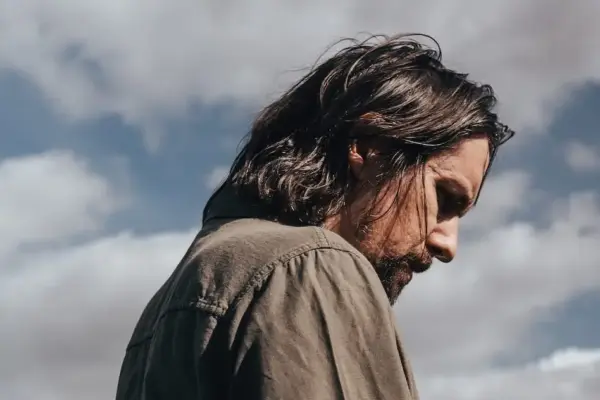
In less than a decade, multi-instrumentalist, singer, and musical historian Jake Blount has mapped a trajectory through American roots music that most artists could only hope to span over a lifetime. Erupting onto the national scene with his blistering 2018 debut EP, Reparations, and his critically lauded 2020 full-length breakthrough, Spider Tales, Blount established himself as a vital bridge between historical old-time music and the deeply rooted traditions of Black, Indigenous, and queer American communities. His early work utilized stark, rousing fiddle and banjo arrangements alongside haunting vocal interpretations to reframe the standard narrative of American folk music.
Following a daring departure into the realms of afrofuturism—showcased on his acclaimed 2022 release The New Faith and his 2024 collaborative masterwork Symbiont with Mali Obomsawin—Blount has executed a stunning, highly anticipated creative pivot. His latest self-released album, Single-Footing Horse (slated for release on September 18, 2026), marks a triumphant homecoming to the musical ecosystem that first nurtured him: traditional Appalachian string band music.
However, this is no simple exercise in nostalgia. By stripping away some of the broader, genre-bending avant-garde experimentations of his recent past and focusing exclusively on his core competencies as a fiddler and vocalist, Blount has achieved something remarkably profound. Single-Footing Horse is a masterclass in collaborative string band execution. Featuring a stellar cast of modern roots luminaries, the fifteen-track collection honors the historical intersections of African-American blues and Appalachian folk while injecting the repertoire with a thrilling, contemporary pulse. Blount’s latest project proves that deep-diving into historical forms can be just as radical, politically charged, and experimentally rigorous as any futuristic conceptual art.
Detailed Chronology: From Rooted Revivals to Afrofuturistic Horizons
To fully appreciate the scope of Single-Footing Horse, one must trace the rapid, uncompromised evolution of Jake Blount’s career. His early recordings introduced modern audiences to the uncomfortable truths of American roots history. Through songs like his haunting, deeply felt rendition of "Where Did You Sleep Last Night" and a raucous instrumental reimagining of "Rocky Road to Dublin," Blount earned widespread critical acclaim within the global roots music community. He did not merely play historical tunes; he interrogated them, illuminating how traditional fiddle and banjo music was historically shared, shaped, and at times segregated by race and class.
As his profile expanded, so too did his sonic palette. His third and fourth major releases—The New Faith (2022) and Symbiont (2024)—represented a dramatic, left-turn expansion into afrofuturism. During this era, Blount’s work grew wilder, incorporating a diverse array of modern and sacred influences, including gospel, blues, hip-hop, spoken word poetry, and fractured folk experimentalism.
Music critics frequently drew comparisons to avant-garde contemporaries like jazz innovator Matana Roberts. Yet, where Roberts approached similar thematic and historical landscapes through a foundation of free jazz and modern composition, Blount’s artistic anchor remained firmly tethered to folk traditions. This foundational grounding allowed him to pivot effortlessly between stark Appalachian field hollers and sprawling, sci-fi-inflected socio-political conceptual albums without losing his artistic identity.
Now, with Single-Footing Horse, Blount has come full circle. Returning to the specific, high-octane variety of old-time mountain music played by historic Appalachian string bands, he demonstrates a mature artistically confident enough to look backward in order to leap forward. By narrowing his primary performance focus exclusively to the fiddle and his soaring vocals, Blount has cleared a path for a deeply collaborative, highly focused exploration of the American string band canon.
Supporting Context & Metrics: The Anatomy of a Collaborative Masterpiece
True to the communal spirit of traditional string band music, Single-Footing Horse is a profoundly collaborative effort. The fifteen tracks featured on the album—ranging from globally recognized traditional standards to obscure, dust-covered gems—are brought to life by an elite cohort of modern roots musicians. The lineup includes legendary fiddler Judy Hyman and banjo-uke player Jeff Claus (both renowned members of the seminal roots outfit The Horseflies), alongside skilled guitarist Ethan Hawkins, bassist Felix Sartori, and banjo player Cap Cooke.
By imposing a strict self-limitation—stepping away from the multi-instrumental approach that characterized his earlier solo work to focus entirely on fiddle and voice—Blount unlocked new dimensions within his playing. This constraint gifted his bandmates the freedom to lean into their own specialized proficiencies, resulting in an album with an extraordinary dynamic range and a palpable sense of communal joy.
Track-by-Track Breakdown & Musical Architecture
The album wastes no time establishing its high-velocity parameters. The opening track, "Grand Forks," sets a breathless standard for the record. Driven by quick-fingered banjo picking and Blount’s high, swooping, crystal-clear fiddle leads, it acts as a blueprint for the majority of the album’s arrangements.
While the tempo across the record rarely flags, Blount proves himself to be a fiddler of remarkable nuance, capable of shifting emotional atmospheres with subtle phrasing:
- "Snowshoe" offers a light, airy, and frisky romp that evokes a brisk journey through a pristine winter landscape.
- "Abe’s Retreat" is characterized by quick, high, and twisty melodic turns that radiate sustained, kinetic energy.
- "Hannah at the Springhouse" introduces a vernal pastoralism, its structured elegance bordering on the baroque.
- "Biddy" utilizes dual fiddles to weave a captivating, dizzying harmonic swirl.
- "Garfield’s Blackberry Blossom" plays out as an exhilarating, cartoonish cat-and-mouse chase between the fiddle and the banjo.
Interspersed among these breakneck instrumentals are deeply historical vocal numbers that anchor the project in human experience. "Country Blues," adapted from the legendary repertoire of Dock Boggs, stands out as a historic touchstone. As one of the earliest recorded songs to successfully synthesize African-American blues and Appalachian folk forms, Blount’s modern interpretation captures the fraught, high-tension atmosphere of 1920s America—an era defined by financial instability, systemic poverty, and virulent racial injustice.
Another standout moment is "Pork Fat Makes My Chicken Tan," adapted from a unique interpretation by The Horseflies. The track pairs a sultry, slithery fiddle arrangement with an unexpectedly playful vocal refrain, creating one of the album’s most memorable stylistic juxtapositions. Similarly, the instrumental title track, "Single-Footing Horse," showcases an impressive display of sustained stamina and continuously evolving melodic variation.
The ultimate emotional crescendo arrives with the final track, "When the Angels Call My Name." Recorded live with an entirely different ensemble, this closing piece serves as a slow, tender, and aching lament. Featuring a short, weeping electric guitar solo by Augustus Tritsch that cuts straight to the core, and vocals from Blount that are drenched in raw emotional resonance, the track confirms that Single-Footing Horse possesses just as much depth, potency, and experimental daring as Blount’s past afrofuturistic explorations.
Official Statements & Artistic Vision
Speaking on the conceptual framework of Single-Footing Horse, Blount and his collaborators have emphasized the importance of dismantling historical artificial barriers within American music. For decades, the music industry systematically segregated roots music along racial lines—marketing Black string bands as "race records" and white Appalachian performers as "hillbilly music," despite the two groups constantly learning from, borrowing from, and playing alongside one another.
By gathering an eclectic, multi-generational band of musicians to tackle this shared repertoire, Blount is engaging in a quiet form of historical activism. As reflected in production notes and early promotional materials surrounding the self-released album, Blount’s mission remains rooted in restitution: giving proper credit to the marginalized creators who built the foundation of American folk music while demonstrating that these traditional tunes are living, breathing art forms capable of infinite reinvention.
In focusing exclusively on the fiddle, Blount has allowed himself to be transformed from a solitary auteur orchestrating grand conceptual statements into an active participant in a living conversation. "The string band is a democratic unit," notes a recent production brief regarding the album’s collaborative ethos. "By stepping back from the multi-instrumental control booth, Blount lets the collective heartbeat of the band take over."
Future Outlook: The Legacy of Single-Footing Horse
As the roots music community prepares for the September 18, 2026 self-release of Single-Footing Horse, the broader implications for Jake Blount’s career are immense. By bridging the gap between his earlier historical scholarship, his radical afrofuturistic departures, and now, traditional string band mastery, Blount has secured his status as one of the most intellectually curious and technically gifted artists working in American music today.
The album challenges listeners to reconsider what constitutes "experimental" music. While synthesizer pads and spoken-word soundscapes are often equated with artistic progression, Blount demonstrates that re-examining the frantic, lightning-fast interplay of a traditional Appalachian string band can be equally revolutionary. By proving that personal expression, historical reclamation, and socio-political commentary can co-exist within a framework of joyous, technically brilliant dance tunes, Jake Blount has not only come full circle—he has redrawn the boundaries of the map he first set out to explore.