Executive Overview
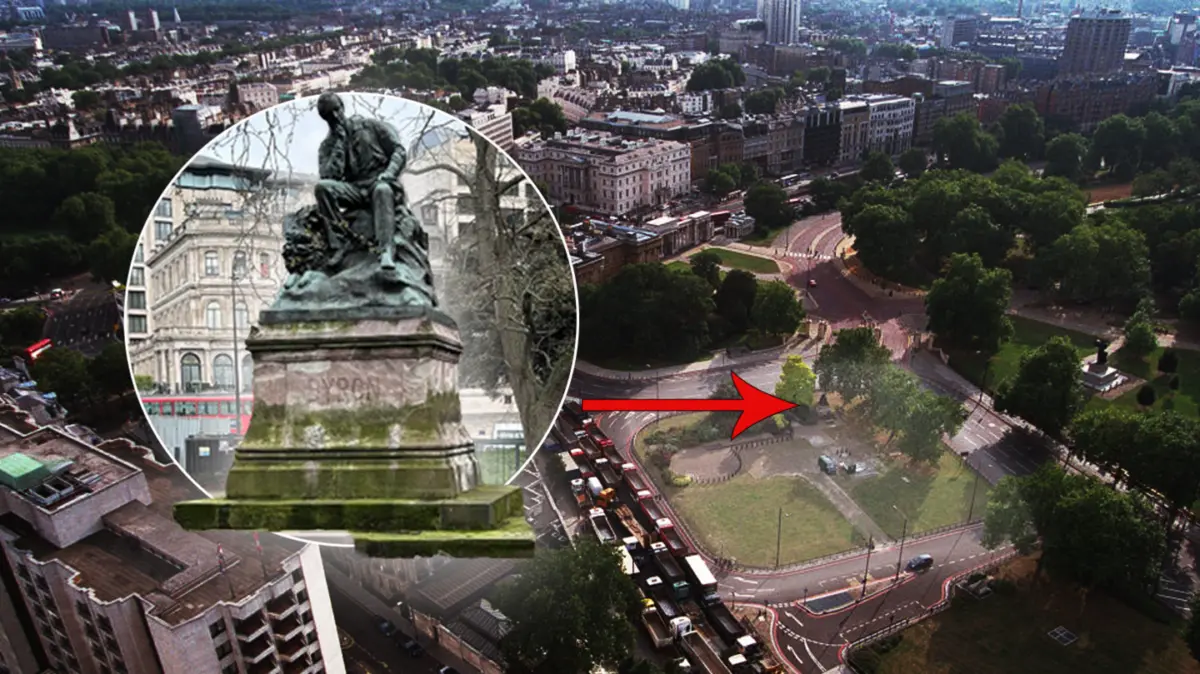
Nearly seventy years after it was relegated to an inaccessible traffic island, the national memorial statue of the celebrated 19th-century Romantic poet Lord Byron has been triumphantly restored and relocated to its rightful home within Hyde Park. Unveiled by the Duke of Gloucester at a ceremony this month, the Grade II-listed monument has emerged from decades of grime, neglect, and urban obscurity.
The successful rescue mission is the culmination of a six-year campaign spearheaded by the Lord Byron Society. Overcoming a complex labyrinth of administrative hurdles, regulatory clearances, and funding challenges, the project ultimately cost upwards of £400,000. Funded significantly by a £230,000 grant from The National Lottery Heritage Fund alongside crucial public and private donations, the endeavor united conservationists, local authorities, and historians. Today, the monument stands once again in full public view, serving as a tangible tribute to one of Britain’s most flamboyant, politically radical, and literarily gifted sons.
Detailed Chronology: From Royal Approval to Urban Marooning
The modern rehabilitation of Lord Byron’s memorial brings full circle a turbulent history that began in the Victorian era, suffered through 20th-century urban planning policies, and was finally corrected in the 21st century.
1880–1959: The Golden Era and Royal Sanction
Following the death of George Gordon Byron, 6th Baron Byron, in 1824, public sentiment in Britain experienced a protracted evolution. Initially viewed with immense societal suspicion due to his scandalous personal life, radical political alignments, and fierce anti-establishment poetry, Byron’s cultural standing gradually rose to towering heights. By the late 19th century, a national push to honor the poet materialized.
In 1880, after securing rare and special permission directly from Queen Victoria, a national memorial statue of Lord Byron was erected near Hyde Park. For decades, the sculpture enjoyed a prominent, accessible setting where pedestrians could admire the craftsmanship and contemplate the legacy of the man Lady Caroline Lamb famously dubbed "mad, bad and dangerous to know."

1960s–2018: The Traffic Island Exile
The fortunes of the Byron monument shifted dramatically in the early 1960s. Amid post-war modernization and a surging automobile culture in London, city planners undertook major infrastructural overhauls of the Park Lane corridor. New arterial roads sliced through the historic parkland landscape, fundamentally altering pedestrian pathways.
Caught in the crosshairs of this car-centric urban design, Byron’s statue was marooned on an isolated traffic island. Cut off from the park by roaring lanes of traffic, the memorial became completely inaccessible to the public. Over the ensuing decades, out of sight translated directly out of mind. Exposed constantly to heavy vehicle emissions, the Portland stone and metalwork accumulated thick layers of soot and dirt. The once-proud national monument languished in utilitarian anonymity, shielded from appreciative gazes by high-speed traffic and concrete barriers.
2018–Present: The Campaign and Restoration
The turning point arrived six years ago when the Lord Byron Society initiated a formal campaign to rescue the poet from his traffic-bound exile. Recognizing that the statue had fallen into an unacceptable state of neglect, society members lobbied municipal bodies and heritage organizations relentlessly.
Navigating the administrative framework required securing delicate permissions from both The Royal Parks and Westminster City Council. Once legal and logistical sign-offs were secured, a specialized multidisciplinary team of stone masons, conservation architects, and heritage experts was assembled. The team undertook meticulous cleaning, structural assessment, and restorative interventions before safely transporting the heavy sculpture across the transport divide and back into the serene greenery of Hyde Park.
Supporting Context & Metrics: The Cost of Conservation
Rescuing a 19th-century monument from decades of urban decay is neither a simple nor an inexpensive endeavor. The repatriation of the Byron statue offers a fascinating case study in modern heritage conservation, blending art history, civil logistics, and financial engineering.

Financial Breakdown
- Total Project Cost: Exceeding £400,000.
- Core Funding: A foundational grant of £230,000 awarded by The National Lottery Heritage Fund.
- Supplemental Revenue: Generous donations from private benefactors, literary enthusiasts, and members of the Lord Byron Society.
Stakeholders and Expertise
The logistical execution required precision engineering to avoid damaging the historical fabric of the Grade II-listed statue. Conservation specialists utilized non-destructive cleaning techniques to strip away decades of accumulated hydrocarbon particulate matter—the byproduct of millions of vehicles passing the Park Lane island since the 1960s. Stone masons reinforced the structural integrity of the base, while landscape architects worked closely with The Royal Parks to seamlessly integrate the monument into its new, highly accessible parkland setting.
Official Statements and Cultural Significance
The unveiling ceremony drew considerable attention from cultural figures, civic leaders, and literary scholars, all of whom emphasized the enduring relevance of Byron’s life and work.
Lord Robin Byron, president of the Lord Byron Society, expressed profound relief and enthusiasm during the unveiling event:
"We are all extremely grateful that our plea to rescue Byron and put him back into full public view was met with so much support by everyone involved."
Reflecting on the educational and cultural objectives behind the grueling six-year campaign, Lord Robin Byron added:

"Our sincere hope is that the statue will encourage people to explore Byron’s poetry and also his letters, which are so accessible and give a brilliant insight into his engaging personality and fascinating inner life."
Byron in Historical Perspective
Born in London’s Holles Street (just off Oxford Street) in 1788, George Gordon Byron captured the imagination of Europe during the height of the Romantic movement. His sweeping narrative poems—such as Childe Harold’s Pilgrimage and Don Juan—defined an era of emotional intensity, individualism, and existential questioning.
Yet, Byron was never merely a sedentary man of letters. Driven by a deep commitment to liberty and romantic nationalism, he abandoned the comforts of British aristocratic society to champion foreign struggles for freedom. In 1823, he traveled to Greece to aid insurgents fighting a war of independence against the Ottoman Empire. Tragically, his life was cut short when he succumbed to a severe fever in Missolonghi in April 1824, cementing his martyrdom in the eyes of European liberals and philhellenes.
Future Outlook: A New Chapter for Hyde Park’s Literary Heritage
The return of the Lord Byron statue to Hyde Park represents far more than a simple geographical shift; it marks a reclamation of London’s rich literary history. For nearly seventy years, one of Britain’s most dynamic literary icons was hidden in plain sight, swallowed by the roar of 20th-century traffic engineering.
Now, positioned securely within the accessible landscape of the park, the monument is poised to engage a new generation of Londoners and international visitors. Heritage advocates hope that the statue will serve as a physical anchor for educational programs, walking tours, and literary seminars. By drawing foot traffic rather than vehicular bypassers, the memorial fulfills its original 19th-century mandate: to invite reflection on a brilliant, flawed, and profoundly influential poet whose words continue to echo across the centuries.