
Executive Overview
In the high-altitude valleys of the Ecuadorian Andes, language is often a visceral reaction to the elements. When a sudden Andean gale sweeps down from the snow-capped volcanoes, locals instinctively cry out, "Achachay!"—an involuntary verbal shiver triggered by piercing cold. Conversely, when the equatorial sun beats down mercilessly on the dry basins, the exclamation shifts to "Arraray!" These two iconic idioms, rooted deeply in the Quichua language and absorbed into regional Andean Spanish, capture the polar extremities of a dramatic landscape.
It is precisely this thermal duality that forms the conceptual and emotional bedrock of "Achachay," the latest single by Los Angeles-based, Ambato-born artist and producer BRITTA. Rather than treating these linguistic relics as mere regionalisms, BRITTA weaponizes them as a metaphor for profound desire. In her sonic universe, "Achachay" becomes a love song about longing for someone with such consuming intensity that the lover experiences both the freezing void of absence and the feverish burn of obsession simultaneously.
Yet, beyond its lyrical conceit, the single represents a masterclass in transnational genre-blending. BRITTA meticulously weaves the delicate, high-pitched laments of the traditional Ecuadorian requinto guitar with the heavy, pressurized low-end of contemporary trap percussion and coastal Afro-Ecuadorian rhythms. The result is a striking piece of alternative pop that refuses to choose between the sacred traditions of the global South and the sleek, high-gloss production aesthetics of the global North.
This comprehensive report explores the genesis of "Achachay," tracing BRITTA’s artistic evolution from the central Andes to the studios of Southern California. We will examine the musicological architecture of the track, contextualize her innovative sampling methodologies within the broader landscape of modern Latin alternative music, and evaluate the trajectory of an artist who is actively redrawing the sonic boundaries of Ecuadorian identity on the global stage.
Detailed Chronology: From Ambato to Los Angeles
Roots in the Central Andes
To understand the sophisticated cultural synthesis present in "Achachay," one must trace the geographic and musical lineage of its creator. Born in Ambato—a city nestled in the central Andean valley of Ecuador, famously known as the "Land of Three Palms" and historically celebrated for its resilience following devastating earthquakes—BRITTA absorbed the rich, melancholic acoustic traditions of the Ecuadorian highlands from an early age.
The Andean sonic landscape is one of stark contrasts. It is defined by the haunting timbre of wooden flutes (quenas and zampoñas), the rhythmic pulse of indigenous percussion, and, above all, the ubiquitous presence of stringed instruments introduced during the colonial era but rapidly indigenized. Among these, the requinto—a smaller, higher-tuned variant of the classic Spanish guitar—holds a position of supreme reverence. It is the weeping voice of pasillos, sanjuanitos, and albazos, capable of cutting through the thin mountain air with crystalline clarity.
Growing up amidst these acoustic traditions, BRITTA developed an early appreciation for the emotional weight embedded in regional folklore. However, her musical education was not confined to traditional preservationism. Like many members of the millennial and Z generations in Latin America, her sonic diet was heavily supplemented by global pop, electronic dance music, and American alternative scenes. This duality—the pull of indigenous heritage versus the gravitational force of international pop culture—would eventually become the defining tension of her artistic identity.
Transnational Migration and the L.A. Crucible
The decision to relocate from Ambato to Los Angeles marked a critical turning point in BRITTA’s professional trajectory. Moving to Southern California thrust the young producer into one of the world’s most vibrant and hyper-competitive melting pots of contemporary music production.
Los Angeles serves as a premier global hub for Latin alternative and urban music production, attracting diasporic artists seeking to redefine the parameters of Latinidad. Far from diluting her connection to Ecuador, the physical displacement catalyzed a profound introspection. Distance sharpened her perspective, transforming the traditional sounds of her homeland from an everyday background environment into a rare, precious cultural archive waiting to be recontextualized.
In the isolation and creative intensity of her L.A. studio spaces, BRITTA began experimenting with the intersection of electronic production and Andean folklore. She did not approach traditional music as a museum piece to be preserved under glass; rather, she treated it as raw material—sonic clay to be molded, distorted, and fused with modern beat-making techniques. This period of intense experimentation laid the groundwork for a string of releases that would systematically bridge the geographical and stylistic gap between the high Andes and the West Coast of the United States.
The Breakthrough Path: "NON3" and the Evolution of Modern Folklore
Before the release of "Achachay," BRITTA’s methodology was vividly demonstrated in her breakout single, "NON3 (no te dejes avecilla)." On this track, she took the albazo—a characteristically fast, triple-time traditional dance song form from the Ecuadorian highlands—and completely reengineered its structural DNA.
Rather than hiring session musicians to replicate the form, BRITTA turned inward, sampling her own voice singing a traditional albazo melody. She then chopped, pitched, and layered these vocal fragments over a driving, hypnotic house music beat. The resulting track was both a nod to her ancestral roots and a thoroughly modern club banger. "NON3" demonstrated her unique capability to translate the rhythmic cadence of traditional 6/8 and 3/4 Andean meters into the strict 4/4 grid of electronic dance music without losing the syncopated swing that gives indigenous Latin rhythms their emotional pulse.
With "Achachay," BRITTA applies this same rigorous conceptual framework to the Latin alternative space. Moving away from the pure house arrangements of "NON3," the new single embraces a more spacious, atmospheric alt-pop sensibility, allowing the organic textures of string instruments and coastal percussion to breathe alongside contemporary trap sub-bass frequencies.
Supporting Context & Metrics: The Anatomy of "Achachay"
Musicological Architecture: The Convergence of Strings and Sub-Bass
From a production standpoint, "Achachay" is a masterclass in dynamic contrast and sonic restraint. The track opens with an exposed, unadorned requinto line. In traditional Andean music, the requinto is often accompanied by dense layers of rhythm guitars (charrangos or standard acoustic guitars) and heavy bombo drums. BRITTA strips away this traditional safety net, presenting the requinto with pristine isolation. The high-tuned strings ring out with a bright, piercing clarity that immediately evokes the crisp, biting air of the high-altitude páramo.
Underneath this organic melodic line, however, lies a thoroughly modern rhythmic foundation. BRITTA introduces percussion elements drawn specifically from Ecuador’s tropical Pacific coast—regions characterized by Afro-descendant populations whose musical traditions, such as the marimba and bombos del currulao, offer a rhythmic counterweight to the melancholy of the highlands. This coastal percussion is fused with a heavy, pressurized trap low-end. The sub-bass holds a steady, unyielding pressure throughout the track, anchoring the floating, ethereal vocal delivery.
The Vocal Performance: Living in the State of Anticipation
Vocally, BRITTA adopts a restrained, highly controlled delivery that mirrors the thematic content of the song. Instead of soaring belting or aggressive rhythmic delivery, her vocals stay fixed at the precise point of anticipation. There is a sense of held breath throughout the track—a vocal tension that refuses to fully resolve, perfectly encapsulating the psychological state of a lover caught between the freezing chill of doubt ("Achachay") and the burning fever of desire ("Arraray").
This vocal approach aligns "Achachay" with the broader stylistic shifts happening within the global alternative pop landscape—artists like Rosalía, Arca, and FKA Twigs, who use vocal manipulation and micro-dynamics to convey intense emotional states. Yet, BRITTA’s incorporation of specific regional idioms grounds the performance in a deeply personal cultural geography.
Linguistic Preservation as Musical Identity
The strategic use of Quichua-derived Andean Spanish idioms in the lyrics of "Achachay" serves a dual purpose. On one hand, it functions as an authentic emotional shorthand; words like achachay and arraray carry visceral, somatic meanings that standard Spanish translations simply cannot replicate. They describe physical sensations—temperature, shivers, sweat—that bypass intellectual processing and strike directly at the nervous system.
On the other hand, these idioms act as a cultural anchor. In an era of hyper-globalized streaming where Latin pop often homogenizes regional linguistic variations into a standardized, pan-Latino vernacular, BRITTA’s intentional preservation of Ecuadorian idioms asserts a distinct local identity. The lyrics carry as much of the song’s structural and cultural weight as the requinto and the coastal percussion. They remind listeners that Latin America is not a monolith, but a mosaic of hyper-specific micro-cultures, each with its own emotional lexicon.
| Element | Traditional Root | Contemporary Adaptation | Sonic Result in "Achachay" |
|---|---|---|---|
| Melody | Andean Requinto Guitar | Alt-Pop Isolation & Reverb | Bright, piercing high-end lines evoking mountain air. |
| Rhythm | Pacific Coast Afro-Ecuadorian Percussion | Trap Low-End & Sub-Bass | Heavy, pressurized beat balancing syncopation and weight. |
| Lyrical Lexicon | Quichua-derived Andean Idioms (Achachay / Arraray) | Introspective Alt-Pop Lyricism | Somatic emotional shorthand for desire and longing. |
| Production Ethos | Albazo / Andean Folk Structures | Electronic/Club Hybridization | Minimalist, spacious arrangement maintaining high tension. |
Official Statements & Artistic Vision
The Philosophy of Transnational Hybridization
In discussions surrounding her creative process, BRITTA has consistently emphasized that her music is not an academic exercise in ethnomusicology, but an organic extension of her lived experience as a bicultural artist navigating two vastly different worlds.
"When you grow up in the Andes, the weather speaks to you through your language," BRITTA reflects when discussing the origins of her latest work. "You don’t just say ‘it’s cold’; you say ‘achachay’ because the cold has a physical body that touches you. I wanted to take that exact feeling—that somatic shock—and apply it to the way we experience love, distance, and longing in modern life."
This perspective highlights a crucial evolution in how contemporary Latin American artists view their heritage. Rather than viewing traditional folklore and modern electronic production as mutually exclusive entities to be kept in separate artistic boxes, producers of BRITTA’s generation view them as fluid, interchangeable components of a single, expansive palette.
Bridging the Global North and South
Operating out of Los Angeles while maintaining deep creative tethers to Ecuador places BRITTA at the vanguard of a new wave of diasporic creators. These artists are uniquely positioned to challenge traditional center-periphery dynamics in the global music industry. Instead of exporting raw traditional music to the North to be polished and commercialized by foreign producers, artists like BRITTA retain total creative autonomy, executing the synthesis themselves from the inside out.
Industry analysts have noted that tracks like "Achachay" resonate strongly with international audiences precisely because they offer something genuinely novel: a synthesis of organic, non-Western acoustic textures with the high-production standards of contemporary Western pop. The track does not pander to foreign expectations of what "Andean music" should sound like (such as the clichéd pan-flute arrangements often marketed to tourists); instead, it presents an authentic, contemporary Ecuadorian reality—one where young people listen to trap and house music while retaining the linguistic and emotional cadence of their ancestors.
Future Outlook: The Horizon for BRITTA and Latin Alternative
Redefining the Parameters of Latin Alternative
As "Achachay" gains traction across streaming platforms and independent radio stations, its broader implications for the Latin alternative genre are becoming increasingly clear. The single challenges the industry to expand its definition of what constitutes "alternative" music. For too long, the Latin alternative tag has been dominated by indie-rock bands from major cultural capitals like Buenos Aires, Mexico City, and Bogotá.
By centering the sonic vocabularies of the Ecuadorian Andes and the Pacific coast, BRITTA is helping to decentralize the Latin alternative map, proving that vital, cutting-edge innovation can emerge from regions historically overlooked by major label scouts. Her methodology opens up exciting new pathways for other Andean and indigenous artists seeking to merge traditional folk forms with electronic music production without falling into the trap of superficial world-music tokenism.
Upcoming Projects and Live Instrumentation
Looking ahead, BRITTA’s roadmap involves expanding the sonic world established in "Achachay" into a broader body of work. Industry insiders hint that her upcoming releases will continue to explore the intersection of regional Ecuadorian string arrangements and heavy electronic bass music, with plans to incorporate live instrumentation into her upcoming tour dates.
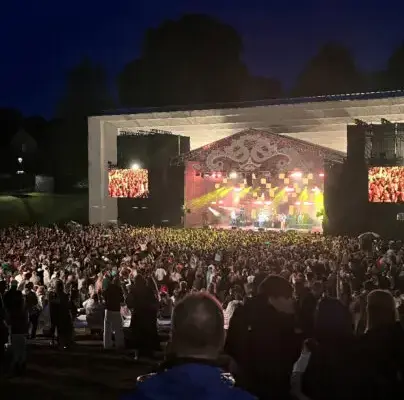
Translating the intricate production of tracks like "Achachay" into a live performance setting presents both a challenge and an opportunity. By bringing traditional instruments like the requinto onto alternative club and festival stages, BRITTA aims to create a visceral, immersive live experience that physically mirrors the thermal extremes of her native landscape—moving audiences seamlessly from the freezing atmospheric tension of the highlands to the burning pulse of the coastal beat.
Conclusion
"Achachay" is far more than a well-crafted pop song; it is a cultural artifact of the 21st-century diaspora. By fusing the linguistic shivers of the high Andes with the heavy, pressurized low-end of L.A. production, BRITTA has crafted a musical space where tradition and modernity dialogue on equal terms. As she continues to chart her unique course across the global music landscape, her work serves as a powerful reminder that the most compelling art is born precisely where different worlds collide, freeze, and burn.