The evolution of modern popular music is rarely a straight line; rather, it is a complex web of cultural convergence, technological shifts, and deeply personal epiphanies. In a recent retrospective interview conducted by Michael Heatley—tied to the release of The Roaring Waves via InsideOutMusic by legendary guitarists Steve Hackett and Steve Rothery—the conversation drifted far beyond modern production techniques. Instead, it unspooled into a nostalgic, highly revealing audit of the foundational vinyl and shellac that shaped the artistic sensibilities of some of rock’s most influential architects.
Spanning a culturally seismic period from 1964 to 1978, this curated list of ten seminal releases—ranging from Motown floor-fillers to avant-garde folk, and orchestral pop epics to British invasion mainstays—highlights the sonic blueprints of art rock and progressive music. Far from a mere list of adolescent favorites, these records served as early acoustic academies for musicians who would later redefine the boundaries of songcraft in bands like Genesis and Marillion.
This deep dive examines the historical context, artistic resonance, and enduring legacy of these ten records, exploring how a teenage encounter at a London funfair or a dimly lit blues club in Eel Pie Island translated into decades of stadium-filling compositions.
Detailed Chronology: A Sonic Education (1964–1978)
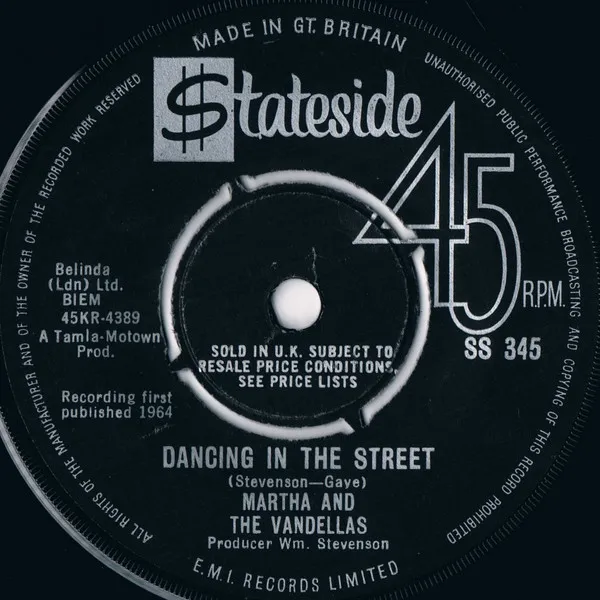
1. Martha & The Vandellas – Dancing In The Street (Stateside SS 345, 7”, UK, 1964) — £20
The Memory: A 14-year-old future guitar maestro first encounters the track echoing across the grounds of the Battersea funfair. Amidst the awkward choreography of mid-1960s teenage social rituals—boys and girls standing rigidly on opposite sides, paralyzed by youthful anxiety—this towering Motown anthem offered a paradox: a global exhortation to move, played out against a backdrop of adolescent immobilization.
The Legacy: Years later, a meeting with Martha Reeves allowed for a long-overdue tribute. Described as the ultimate Motown track that "touched all the bases," it remains the quintessential clarion call to youth culture, blending unbridled energy with sophisticated arrangement.
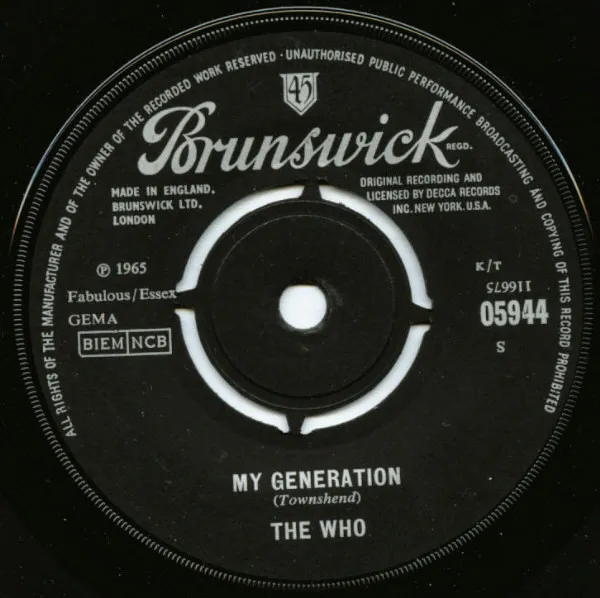
2. The Who – My Generation (Brunswick 05944, 7”, UK, 1965) — £20
The Memory: A masterclass in youthful defiance and sonic destruction. For many aspiring guitarists, the searing solo in the middle ground of the track was initially misidentified as six-string wizardry, only to be revealed as John Entwistle’s ferocious, pioneering bass work.
The Legacy: Untainted by the transient fashion constraints of the Mod or hippie movements—labels the artist purposefully bypassed due to age—My Generation endures on raw attitude alone. The Who quickly discarded their early Mod iconography, recognizing that such cultural pigeonholing would ultimately limit their expansive musical ambitions.
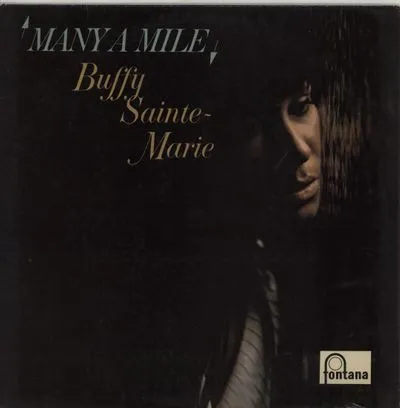
3. Buffy Sainte-Marie – Many A Mile (Fontana TFL 6047, LP, UK, 1965) — £5
The Memory: Discovered at age 15 through the cross-pollination of folk protest and television broadcasts (such as the 1965 BBC program Heartsong alongside Marianne Faithfull and Julie Felix), Buffy Sainte-Marie represented a unique emotional force. Her rendition of the traditional lyric “Must I Go Bound” on this sophomore LP is delivered with a trembling, all-encompassing sob.
The Legacy: Proving that political folk could be devastatingly intimate, Sainte-Marie’s vocal delivery offered a masterclass in emotional transference, melting the hearts of listeners and setting a high standard for emotive vocal performance.
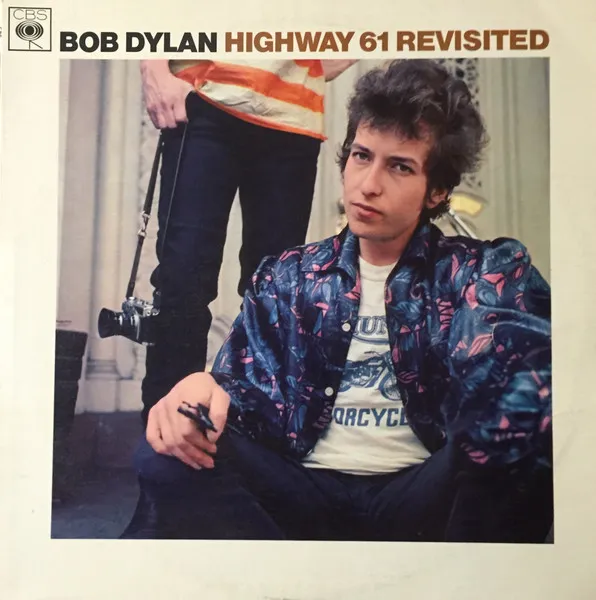
The Memory: A cultural divide bridged in a bedroom record-swap session. While an ardent "Dylanologist" friend obsessed over Dylan’s stripped-down acoustic troubadour origins, the future art-rocker initially gravitated toward the pyrotechnics of Cream and Jeff Beck.
The Legacy: The friction dissolved the moment Dylan plugged in, enlisting the talents of Mike Bloomfield and Al Kooper. Tracks like "Like A Rolling Stone" proved that lyrical intensity, when married to the dynamic interplay of electric guitars and keyboards, could elevate pop music into high literature.
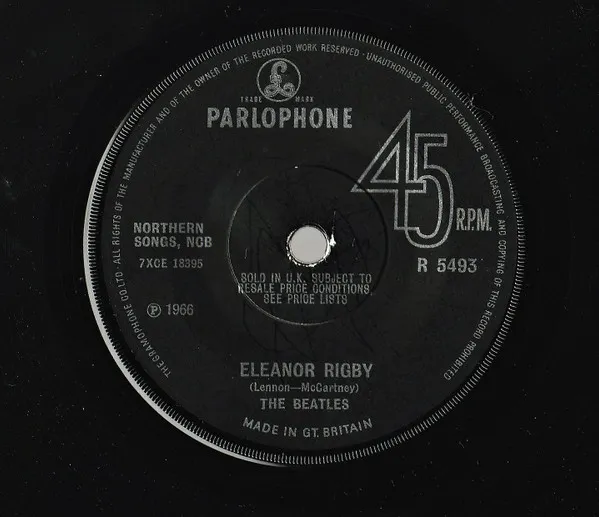
5. The Beatles – Eleanor Rigby (Parlophone R 5493, 7”, UK, 1966) — £15
The Memory: Hailed as arguably the finest rock song ever written due to its genre-defying hybrid nature. It occupies a liminal space: it is rock ’n’ roll, yet entirely orchestral; it is a pop single, yet a fly-on-the-wall mini-documentary drenched in poignant lyrical color.
The Legacy: The track set a daunting gold standard for narrative songwriting. Later discussions among bandmates—including Peter Gabriel during the formative days of Genesis—revealed just how exceptionally difficult it is to construct a convincing, concise narrative within a pop structure, making Eleanor Rigby an unmatched masterclass.
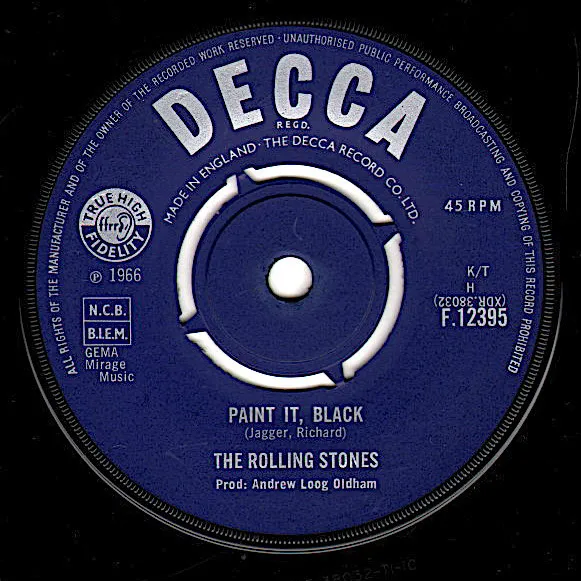
6. The Rolling Stones – Paint It, Black (Decca F 12395, 7”, UK, 1966) — £15
The Memory: A staple of heavy bedroom rotation during the mid-1960s, where young guitar players obsessively studied the interwoven licks of Brian Jones and Keith Richards.
The Legacy: Built on a brilliant two-part invention structure—featuring verses shadowed by a snake-charmer sitar line that bleeds effortlessly into an extended pseudo-chorus—the track showcases one of Mick Jagger’s most commanding, aggressive vocal performances, blending Eastern instrumentation seamlessly into the British Invasion canon.
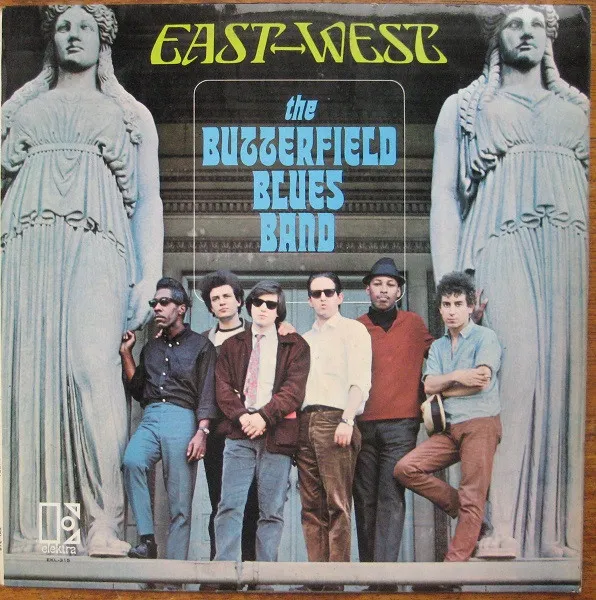
7. Paul Butterfield Blues Band – East-West (Elektra EKL 315, LP, UK, 1966) — £50
The Memory: An intimate, earth-shattering gig at Eel Pie Island in 1966 before an audience of barely 20 people. From the first blast of Paul Butterfield’s harmonica, the performance completely upended preconceived notions of blues interpretation.
The Legacy: While rooted in traditional blues, the ambitious title track—composed by Mike Bloomfield—sprawled across stylistic frontiers, incorporating Eastern, Western, Mexican, and Indian musical idioms. It remains a watershed moment in the cross-cultural cross-pollination of rock music.
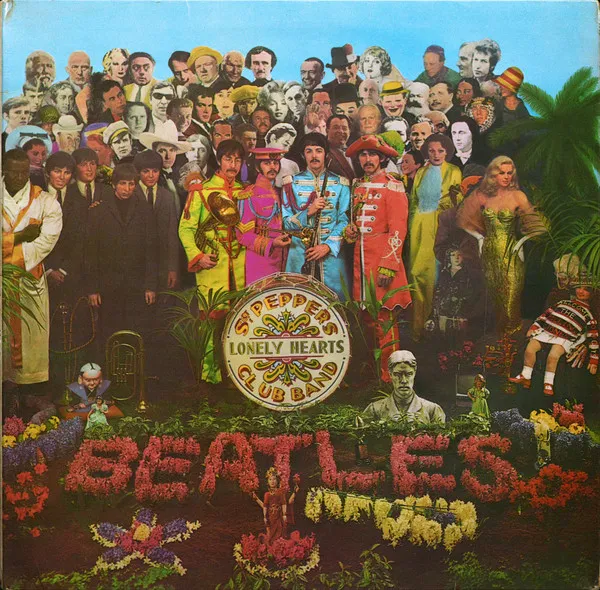
8. The Beatles – Sgt. Pepper’s Lonely Hearts Club Band (Parlophone PCS 7207, LP, UK, 1967) — £175
The Memory: A masterclass in subverting listener expectations. The title track begins with the mundane symphony tuning of an orchestra before a hard-charging rock band violently hijacks the frequency.
The Legacy: Featuring Paul McCartney’s stellar vocal work and a calculated understanding of dynamic space—knowing precisely when not to play—the album epitomizes 1960s magic realism. Tracks like "She’s Leaving Home" act as direct thematic bookends to "Eleanor Rigby," exploring the depths of domestic hopes and generational fears.
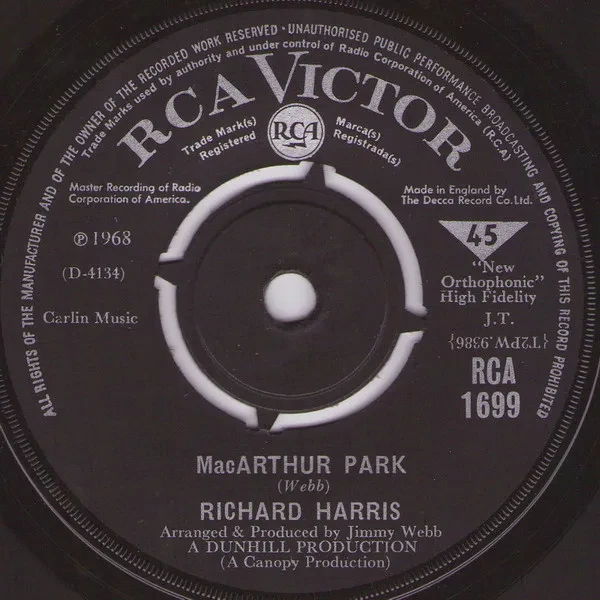
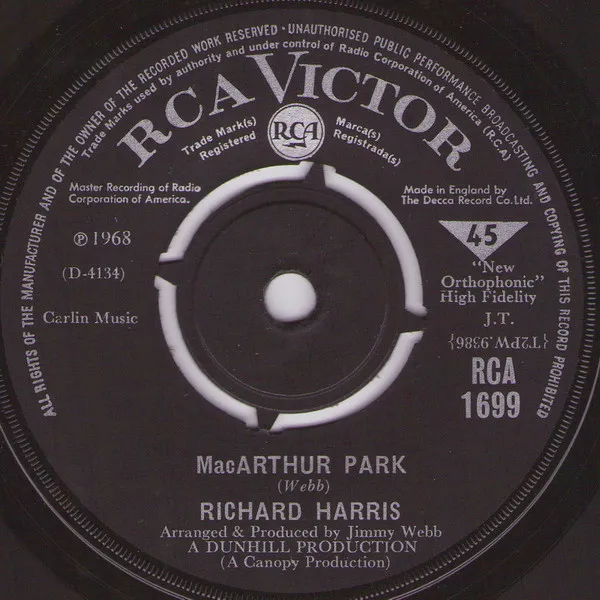
9. Richard Harris – MacArthur Park (RCA 1699, 7”, UK, 1968) — £3
The Memory: A theatrical powerhouse penned by a young Jimmy Webb. Actor Richard Harris approached the seven-minute epic not as a traditional pop tune, but as a dramatic vehicle requiring total emotional exposure.
The Legacy: With its sweeping chord sequences, grand orchestral arrangements, and sprawling multi-part structure, MacArthur Park provided a vital template for the burgeoning progressive rock movement. It offered bands like Genesis a license to explore complex storytelling, unusual time changes, and a blend of classical and modern instruments.
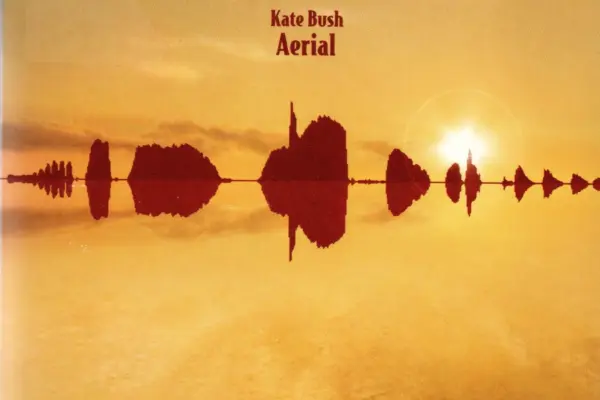
10. Kate Bush – The Man With The Child In His Eyes (EMI 2806, 7”, UK, 1978) — £15
The Memory: Written when Kate Bush was just 13 years old, this track signaled the arrival of a generational songwriting talent. Released from her landmark debut album, The Kick Inside, the song balances fantastical innocence with the tentative, mysterious dawn of romantic awakening.
The Legacy: Mirroring the precocious genius of Jimmy Webb, Bush utilized stark instrumentation and exquisite brass arrangements to convey deep emotional maturity, cementing her status as a singular visionary in British art-pop.
Supporting Context & Metrics: The Collector’s Marketplace
To understand the enduring footprint of these releases, one must examine their valuation within the modern vinyl collecting marketplace. While cultural impact cannot be measured in currency alone, the secondary market pricing reflects both scarcity and the reverence collectors hold for these specific pressings.
Artist & Title
Format & Catalog Number
Country & Year
Estimated Collector Value
Martha & The Vandellas – Dancing In The Street
7” (Stateside SS 345)
UK, 1964
£20
The Who – My Generation
7” (Brunswick 05944)
UK, 1965
£20
Buffy Sainte-Marie – Many A Mile
LP (Fontana TFL 6047)
UK, 1965
£5
Bob Dylan – Highway 61 Revisited
LP (CBS BPG 62572)
UK, 1965
£80
The Beatles – Eleanor Rigby
7” (Parlophone R 5493)
UK, 1966
£15
The Rolling Stones – Paint It, Black
7” (Decca F 12395)
UK, 1966
£15
Paul Butterfield Blues Band – East-West
LP (Elektra EKL 315)
UK, 1966
£50
The Beatles – Sgt. Pepper’s…
LP (Parlophone PCS 7207)
UK, 1967
£175
Richard Harris – MacArthur Park
7” (RCA 1699)
UK, 1968
£3
Kate Bush – The Man With The Child…
7” (EMI 2806)
UK, 1978
£15
Note: Market valuations fluctuate based on vinyl grading (Mint, Near Mint, VG+), sleeve integrity, and whether the copy is an original first pressing or a subsequent vintage reissue.
Official Statements & Industry Insights
Reflecting on the curation of these pivotal records, music journalist Michael Heatley emphasizes the connective tissue linking mid-century pop and folk experiments with modern progressive mastery:
"When you look at how modern artists construct conceptual albums or push melodic boundaries, you can trace those operational guidelines directly back to the mid-to-late 1960s. The willingness of artists like Bob Dylan, The Beatles, and Jimmy Webb to smash traditional radio constraints gave subsequent generations—such as the architects of progressive rock—the creative permission to explore long-form storytelling and multi-genre orchestration."
This sentiment is echoed in the ongoing collaborative work of Steve Hackett and Steve Rothery on The Roaring Waves (released via InsideOutMusic). Both guitarists represent a direct lineage of musicians who absorbed these foundational records during their formative years, subsequently translating the lessons of Motown energy, Dylan lyricism, and orchestral ambition into the modern progressive canon.
Future Outlook
As the physical music market continues to experience a sustained renaissance—driven by audiophiles and younger generations seeking tangible connections to musical history—the legacy of these ten foundational records remains secure.
The DNA of tracks like Eleanor Rigby, East-West, and MacArthur Park continues to course through contemporary art rock, ambient, and indie compositions. Furthermore, as veterans of the progressive rock movement like Hackett and Rothery continue to bridge generational divides through collaborative projects, the spotlight shines ever brighter on the vintage grooves that started it all. For collectors and music historians alike, revisiting these pressings is not merely an exercise in nostalgia, but an ongoing masterclass in the evolution of modern sound.