Executive Overview
In an era dominated by high-concept literary fiction, fast-paced thrillers, and algorithm-driven blockbusters, independent UK publisher Persephone Books is quietly leading a literary excavation project. By unearthing "lost" 20th-century novels written primarily by women, Persephone is introducing a 21st-century readership to a vital, overlooked artistic movement: "domestic feminism."
Coined by Persephone founder Nicola Beauman, domestic feminism acknowledges the profound significance of the domestic sphere to human life while fiercely rejecting the patriarchal assumption that the home should dictate or limit a woman’s entire existence. Beauman famously wrote about these works chronicling "the drama of the undramatic" and "the steadfast dailiness of a life that brings its own rewards."
The publisher’s latest contribution to this ongoing recovery mission is the republication of Dorothy Canfield Fisher’s 1926 masterpiece, Her Son’s Wife. Originally tipped to win the Pulitzer Prize, Canfield Fisher’s novel disappeared from mainstream consciousness for decades. Through Persephone’s new edition, contemporary readers are invited to reconsider a brilliant, once-celebrated American author who mastered the art of extracting profound psychological and existential drama from the mundane chores of daily life.
Detailed Chronology: The Life and Legacy of Dorothy Canfield Fisher
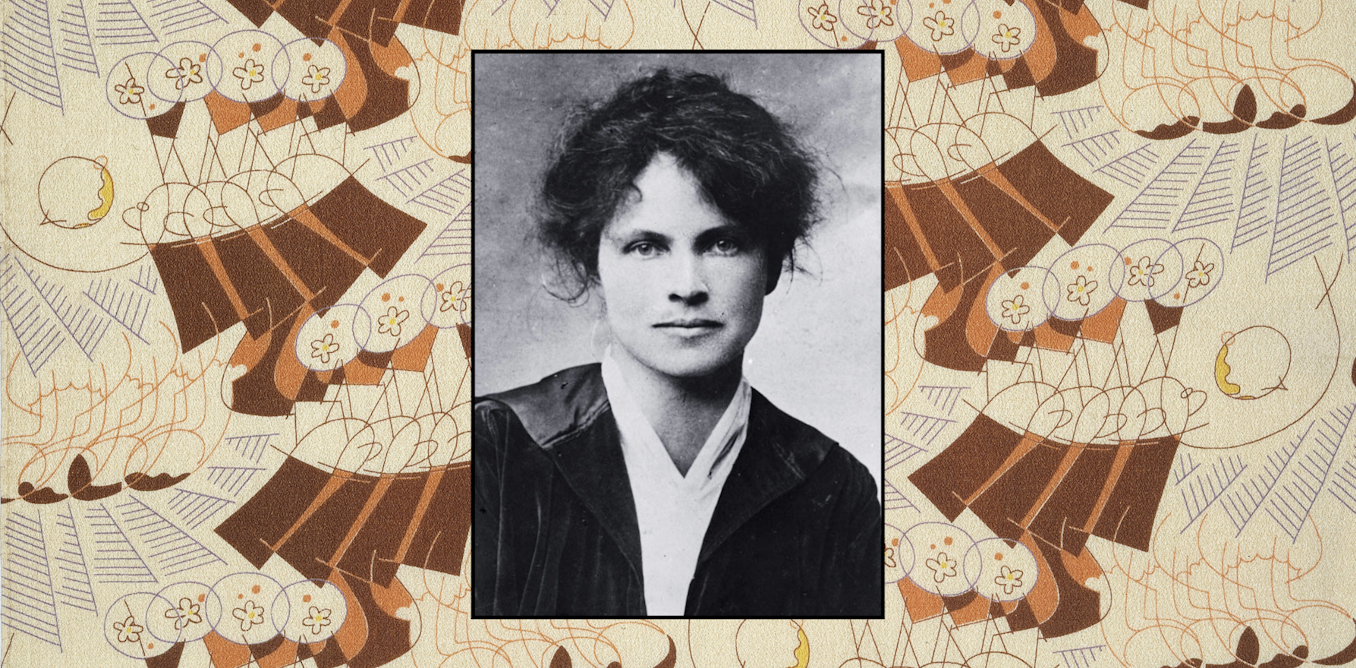
To understand the weight of Her Son’s Wife and its recent resurrection, one must examine the extraordinary trajectory of its creator. Dorothy Canfield Fisher was not merely a novelist; she was a cultural powerhouse, an educational reformer, and a central pillar of the early-to-mid 20th-century American literary establishment.
1924–1925: Crafting a Masterpiece at Mid-Life
Canfield Fisher wrote the vast majority of Her Son’s Wife between 1924 and 1925, working diligently at the age of 45. Intriguingly, 45 is also the exact age of her novel’s protagonist, Mrs. Mary Bascomb. Canfield Fisher deliberately chose this juncture to explore the moment "a woman of 45 meets calamity"—a point in the human timeline when societal conventions dictate that most lives are permanently "set" and unchangeable.
Writing the novel proved to be a grueling, psychologically taxing experience. Canfield Fisher found the process so emotionally draining that she frequently feared she would never reach the finish line. In correspondence with her publisher, she described the harrowing creative ordeal as a terrifying "hallucination," a testament to the deep emotional reservoirs she tapped into while mapping out Mary Bascomb’s stifled interior world.
1926: Peak Acclaim and Literary Stardom
When Her Son’s Wife was finally published by Harcourt and Brace in 1926, it was met with immediate, rapturous critical acclaim. It was serialized in the prominent American periodical Woman’s Home Companion and was heavily favored to win the Pulitzer Prize.
Simultaneously, 1926 marked another monumental milestone in Canfield Fisher’s career: the launch of the Book of the Month Club. As a founding member of its selection committee, Canfield Fisher served for 25 influential years. By 1950, the subscription service boasted a staggering one million members. Notably, Canfield Fisher was the sole woman on the founding committee, granting her immense power in shaping the literary tastes of the American reading public.
The Mid-Century Shift and Later Years
Despite her immense contemporary stature—including close friendships and literary exchanges with intellectual giants like Willa Cather and Robert Frost—Canfield Fisher gradually slipped out of the modern literary canon. Her books fell out of print, and generations passed without encountering her insightful explorations of female autonomy, education, and social reform.
1999–2026: The Persephone Revival
Canfield Fisher’s modern renaissance began toward the close of the 20th century, spearheaded by independent presses dedicated to feminist recovery. Persephone Books led the charge by republishing her 1924 novel The Home-Maker in 1999, followed by The Deepening Stream in 2021. Now, exactly a century after its initial publication, Her Son’s Wife (republished in 2026) joins Persephone’s prestigious catalog, cementing Canfield Fisher’s rightful place in literary history.
Supporting Context & Metrics: Analyzing Her Son’s Wife
Plot and Premise
Her Son’s Wife centers on Mrs. Mary Bascomb, a hardworking, meticulously organized widow. Her carefully constructed life is violently upended when her self-absorbed son, Ralph, unexpectedly returns from college with a new bride in tow: Lottie.
As the young couple moves into Mary’s home, abruptly taking over the domestic sphere she has kept pristine for years, Mary must fight to defend her physical and psychological space. The narrative weaves a complex web of generational conflict, maternal anxiety, and domestic territorialism.
Stylistic Brilliance: The Drama of the Undramatic
Canfield Fisher’s prose excels at capturing the quiet desperation and monumental emotional shifts hidden behind mundane tasks. Consider how Mary attempts to outrun her profound grief over her late husband’s death by losing herself in housekeeping:
“…she was terrified by it as a timid swimmer is panic-struck to feel deep water under him. To what, away from her traditional moorings, would it sweep her, if she let it have its way with her? By long practice she had learnt how to escape from it, filling her mind and hands with little material processes.”
This passage illustrates the core philosophy of domestic feminism: the home is not merely a site of patriarchal oppression or idle comfort, but a psychological battleground where women construct mechanisms for survival, resilience, and quiet resistance.
Furthermore, Canfield Fisher brilliantly bridges the gap between the mundane and the metaphysical. In an early scene, Mary steps out of her front door to check the mailbox:
“…from the box-like walls of her house into infinity. Over her head the sky rose, boundless and black.”
Though the moment is later contextualized simply as "a dark night in April," the uncanny, mystical glimpse of infinite blackness lingers in the reader’s mind, proving that Canfield Fisher viewed domestic spaces not as small, insignificant boxes, but as vantage points for viewing the vastness of the human condition.
The Spiritual Undercurrents
Scholarly research into Canfield Fisher’s life reveals deep spiritual influences underlying her domestic narratives. Though hesitant to formally label herself a Quaker throughout much of her life, she married into a Quaker family in 1907, became a member of an informal Quaker Meeting in Vermont by 1949, and found profound solace in the spiritual silence of Quaker Meetings for Worship. Scenes of quiet reflection, emotional restraint, and sudden existential clarity in her novels directly mirror these contemplative spiritual traditions.
Character Nuance and Moral Ambiguity
What elevates Her Son’s Wife above standard domestic melodrama is Canfield Fisher’s refusal to paint her characters in simple shades of black and white.
Mary Bascomb, while entirely sympathetic in her grief and industry, is undeniably self-righteous. Through her eyes, readers feel genuine frustration at Lottie—her messy habits, her superficial obsession with appearance, and her staggering ingratitude toward the woman providing her shelter.
Yet, Canfield Fisher forces readers to look deeper, examining the underprivileged, stifling background that forged Lottie. The emotional complexity reaches a devastating peak when Lottie breaks down, sobbing:
“It’s too mean. I don’t want anything bad. I just want to have things nice, the way anybody does. And you jump on me for it.”
By balancing readers’ sympathies precariously between Mary, Lottie, and Ralph, Canfield Fisher showcases her mastery of psychological realism.
Official Statements & Critical Commentary
Literary critics and researchers championing the re-release of Her Son’s Wife emphasize its enduring relevance to modern conversations surrounding mental health, family dynamics, and the hidden labors of home life.
Nicola Beauman, founder of Persephone Books and creator of the term "domestic feminism," has long advocated for the literary recognition of women’s domestic writing. In her foundational 1983 study, A Very Great Profession: The Woman’s Novel 1914-39, Beauman argued that these texts deserve celebration not in spite of their focus on the home, but precisely because of it. They document the quiet, uncelebrated resilience required to maintain a human life against the backdrop of societal change.
Academic researchers specializing in early 20th-century literature note that Canfield Fisher’s work anticipates modern debates about emotional labor, boundaries, and female autonomy. By positioning the home as a space of complex emotional negotiation rather than simple domestic bliss, Canfield Fisher dismantled 1920s patriarchal tropes from the inside out.
Future Outlook: The Resurgence of Forgotten Women Writers
The successful republication of Her Son’s Wife signals a broader, highly encouraging shift in the contemporary publishing landscape. Readers today are increasingly fatigued by hollow commercial formulas and are actively seeking out literature that offers deep psychological insight, historical empathy, and stylistic grace.
Independent publishers like Persephone Books are proving that literary history is vast, democratic, and full of hidden gems waiting to be rescued from out-of-print obscurity. As more 20th-century women writers are reintroduced to 21st-century shelves, our understanding of literary modernism is being fundamentally rewritten.
Looking ahead, the appetite for domestic feminism and the "drama of the undramatic" shows no signs of slowing down. By bridging a gap across a century of social change, Dorothy Canfield Fisher’s work demonstrates that human struggles—navigating grief, claiming one’s space, balancing familial duty with personal identity, and finding grace in daily routines—are entirely timeless. The modern reception of Her Son’s Wife confirms that this neglected classic has finally found the wide, appreciative audience it richly deserves.