Executive Overview
The landscape of modern music production has long been defined by a stark economic and technical divide. For decades, granular, note-by-note audio editing—specifically the capability to dive inside recorded waveforms, isolate individual notes within polyphonic chords, and surgically manipulate pitch, timing, and duration—was locked behind expensive, proprietary paywalls. Industry heavyweights like Celemony’s Melodyne and Antares’ Auto-Tune commanded significant financial investment, leaving independent producers, hobbyists, and cash-strapped bedroom artists to rely on rudimentary stock plugins or accept imperfect takes.
Enter Bubblegum, a revolutionary, zero-cost audio plugin developed by electronic music producer M Fusina under the banner of Your Smile is Art. Bubblegum shatters traditional industry barriers by offering a graphical, piano-roll-based pitch and time-editing environment that rivals commercial heavyweights—most notably in its native ability to handle polyphonic material. Operating on Windows and macOS in VST3 and AU formats (with a Linux version currently maturing in beta), Bubblegum allows users to manipulate individual notes played simultaneously within chords, correct out-of-tune performances, and completely reshape musical phrases without a re-recording session.
This release arrives at a watershed moment for audio software accessibility. With competitors like Antares recently introducing streamlined tools like Auto-Tune Go into mainstream digital audio workstations (DAWs) such as FL Studio—even extending access to free-tier cloud subscribers—the market is shifting rapidly toward democratization. However, while real-time tuning tools focus primarily on vocal pitch correction on the fly, Bubblegum takes a distinctly offline, surgical approach, putting deep, micro-editing control directly into the hands of anyone with internet access.
This in-depth investigative report explores Bubblegum’s genesis, technical workflow, operational modes, broader industry implications, and what this freeware seismic shift means for the future of audio production software.
Detailed Chronology: From Frustration to Freeware Phenomenon
To understand how a game-changing polyphonic pitch editor came to be released entirely for free, one must examine the project’s origins. Bubblegum did not emerge from a heavily funded Silicon Valley tech incubator or a legacy audio conglomerate with decades of market dominance. Instead, it was born out of personal frustration, necessity, and the DIY ethos of modern electronic music production.
The Spark: Overcoming Software Hurdles
Bubblegum was conceived and engineered entirely by electronic music producer M Fusina. Working independently under the pseudonym Your Smile is Art, Fusina encountered a roadblock familiar to many independent creators: software reliability issues. Following technical complications with a licensed copy of industry-standard pitch-correction software—specifically Melodyne—Fusina faced a professional dilemma. Rather than purchasing a costly replacement or abandoning advanced pitch manipulation workflows altogether, the producer decided to tackle the problem head-on by building a custom solution.
What began as a functional, personal utility designed to solve a localized workflow bottleneck gradually evolved into a comprehensive, standalone software project. Fusina recognized that while basic pitch correction was becoming more common, the specific subset of features governing polyphonic direct-note editing remained stubbornly expensive.
Development Milestones and Beta Testing
The development of Bubblegum required bridging complex digital signal processing (DSP) algorithms with an intuitive, responsive graphical user interface (GUI). Translating audio waves into discrete, editable blocks on a piano-roll timeline is an immensely challenging programming feat, particularly when attempting to parse overlapping frequencies in polyphonic chords.
- Early Prototyping: Fusina focused initially on monophonic detection accuracy, ensuring that single-line vocal and instrumental recordings could be reliably mapped and shifted without inducing severe digital artifacts or phase cancellation.
- Polyphonic Breakthrough: The critical engineering milestone came with the implementation of polyphonic analysis algorithms. Allowing the software to differentiate and separate individual notes occurring simultaneously within a single audio file elevated Bubblegum from a novelty utility to a legitimate production tool.
- Cross-Platform Deployment: Recognizing the diverse operating systems utilized by modern producers, Fusina prioritized multi-platform compatibility. The plugin was successfully compiled for Windows and macOS, supporting both VST3 and Audio Unit (AU) standards—the twin pillars of modern plugin architecture. Simultaneously, a Linux beta version was deployed to cater to the open-source and alternative-OS music community.
- The Public Release: Released quietly via the Your Smile is Art web portal on a "pay-what-you-want" model with optional donations, Bubblegum quickly caught fire across producer forums, Reddit communities, and social media platforms, sparking viral interest due to its unmatched cost-to-performance ratio.
Supporting Context & Metrics: The Mechanics of Bubblegum
To appreciate the technical achievement of Bubblegum, one must examine its underlying architecture, user workflow, and specific feature set. While it does not boast the sprawling ecosystem or decades of refinement found in high-end commercial suites, its operational depth is remarkably comprehensive.
Workflow and Interface Mechanics
Bubblegum operates via a capture-and-edit workflow that will feel immediately familiar to users of established pitch-correction platforms:
- Instantiation: The user loads the Bubblegum plugin onto any standard audio track within their DAW of choice.
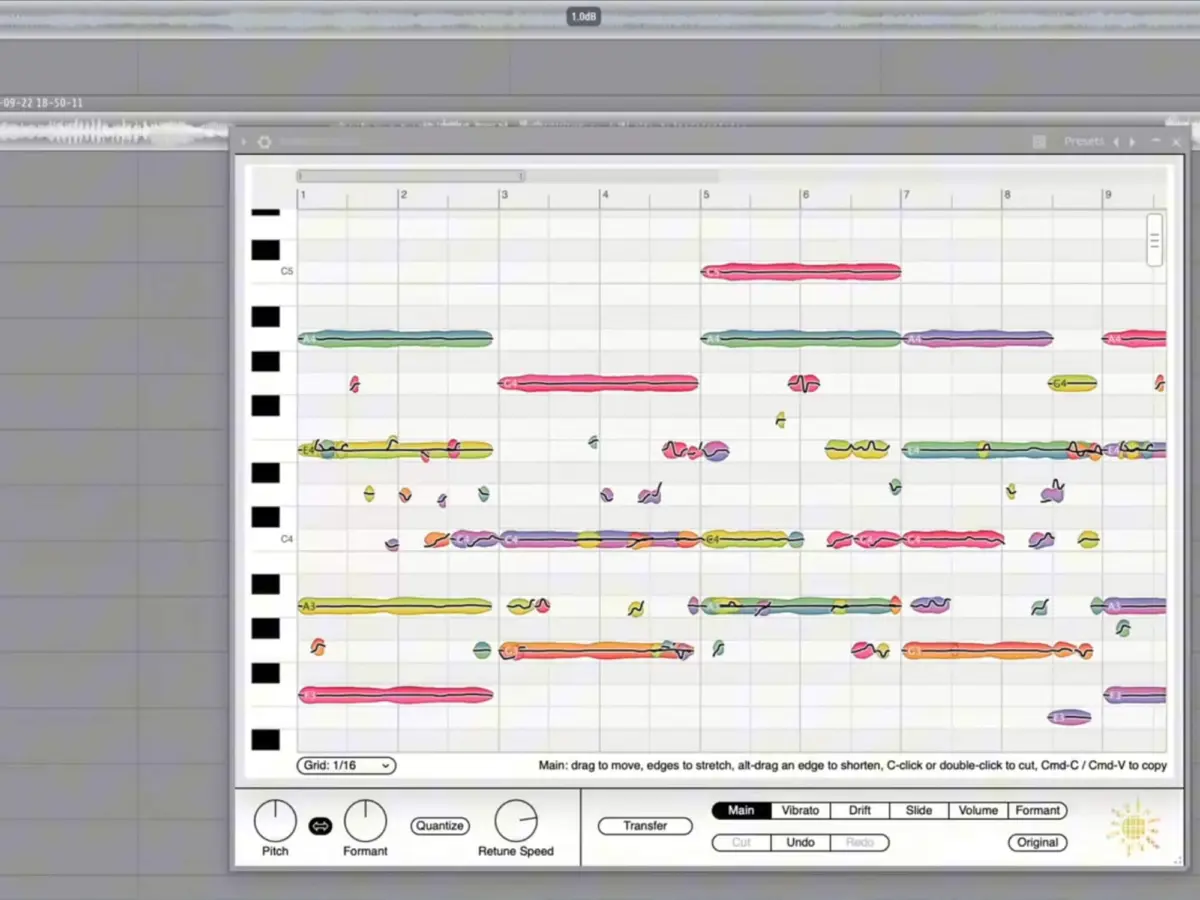
- The Transfer Phase: Utilizing the plugin’s dedicated Transfer function, the user plays back the DAW timeline, allowing Bubblegum to capture and ingest the incoming audio material in real time.
- Note Detection & Mapping: Once captured, the plugin’s internal algorithms analyze the audio data, translating waveforms into discrete, editable graphical shapes laid out across a piano-roll-style timeline.
- Direct Manipulation: Producers can click, drag, stretch, and reposition these individual graphical blocks to fix timing errors, adjust durations, or alter pitches.
Polyphonic Capability: The Holy Grail of Pitch Editing
The defining technical characteristic of Bubblegum—and the primary reason for its industry buzz—is its polyphonic functionality. Monophonic pitch editors, which have populated the freeware market for years, can only process one note at a time. If a vocalist harmonies with themselves on a single track, or if a guitarist strums a complex chord, monophonic algorithms become confused, resulting in warbling artifacts, chorusing glitches, or complete detection failure.
Bubblegum’s polyphonic engine breaks recorded audio down into individual constituent notes even when they are played simultaneously. This allows a producer to:
- Adjust the middle note of a recorded guitar or synth chord without altering the root or the top melody.
- Correct discordant notes within a multi-voice backing vocal stack recorded to a single stereo file.
- Reshape harmonic structures dynamically after the performance has been locked to disk.
Global Controls and Quantization
Beyond micro-editing individual notes, Bubblegum provides macro-level controls designed to speed up routine production tasks:
- Pitch and Formant Global Controls: Users can link these parameters to shift an entire recording’s pitch or alter its timbral character collectively, making it easy to achieve chipmunk effects, deep vocal transformations, or minor tuning adjustments across a whole phrase.
- Quantize Function: With a single click, detected pitches can be snapped automatically to the nearest chromatic semitone. This serves as an ideal baseline for rapid pitch correction before manual, fine-tuning adjustments are applied.
The Six Editing Modes
For producers seeking granular control over the emotional and sonic delivery of a performance, Bubblegum includes six distinct editing modes:
- Main Mode: The primary environment for general note repositioning, timing alignment, and pitch shifting.
- Vibrato Mode: Allows for the adjustment, exaggeration, or smoothing of natural vocal or instrumental vibrato.
- Drift Mode: Controls micro-fluctuations in pitch across the duration of a note, useful for taming unstable intonation or adding organic movement.
- Slide Mode: Manages the transitions and pitch bends between notes, ensuring smooth, natural-sounding portamento.
- Volume Mode: Gives engineers the ability to alter the gain of individual notes directly on the timeline, functioning as a localized clip-gain tool.
- Formant Mode: Adjusts the spectral envelope of individual notes independently of their pitch, preventing the classic "chipmunk" or "giant" audio artifacts when shifting notes drastically up or down.
Official Statements and Industry Reception
The release of Bubblegum has ignited significant discourse within online audio engineering communities, developer forums, and trade publications. While major corporate developers push subscription models and cloud-integrated ecosystems, independent developer M Fusina’s approach has been met with widespread acclaim.
Developer Philosophy and Community Response
In statements accompanying the release and subsequent updates, Fusina emphasized that Bubblegum was built out of a desire for creative freedom unencumbered by restrictive licensing checks, hardware dongles, or prohibitive price tags. The choice to release the software as freeware—supported purely by optional user donations—has cemented the developer’s reputation within the independent music tech community.
Industry commentators and early adopters have lauded the plugin’s interface clarity and stability. While professional mix engineers working in commercial multi-million-dollar studios will likely continue relying on the deep macro-features, advanced multi-track grouping, and intricate harmonic editing suites of flagship products like Melodyne Studio, the consensus among independent reviewers is clear: Bubblegum punches drastically above its weight class.
"Bubblegum proves that advanced audio restoration and pitch manipulation tools no longer need to be locked behind exclusive, high-cost paywalls. By bringing polyphonic note-level editing to the freeware market, Your Smile is Art has changed the baseline expectations for what independent producers should expect from free software."
— Independent Audio Technology Review
Comparative Market Positioning
To contextualize Bubblegum’s arrival, one must look at how legacy companies are responding to the demand for accessible pitch correction. Antares recently expanded the reach of its technology by integrating AutoTune Go into FL Studio, making real-time pitch correction available even to users on entry-level or free subscription tiers.
However, industry analysts point out a fundamental philosophical divergence between tools like AutoTune Go and Bubblegum:
- AutoTune Go is engineered primarily for real-time, transparent live tuning or stylized robotic pitch effects, acting as an active processor on an input channel.
- Bubblegum is an offline, forensic editing suite. It requires audio to be captured into its buffer, transforming recorded audio into visual objects that can be manipulated visually.
This makes Bubblegum a direct ideological competitor to Melodyne’s DNA (Direct Note Access) technology, making its zero-dollar price tag all the more disruptive to the established market hierarchy.
Future Outlook: The Democratization of DSP
As digital audio workstations continue to grow in power and plugin developers push the boundaries of what native CPU architectures can achieve, the release of Bubblegum signals a broader, permanent shift in the music software industry.
The Decline of the "Paywall Monopoly"
For decades, high-end Digital Signal Processing (DSP)—specifically pitch detection, audio-to-midi conversion, and polyphonic separation—represented a technological moat. Companies that mastered these algorithms could charge hundreds, sometimes thousands, of dollars for perpetual licenses or aggressive subscription tiers.
The success of Bubblegum, alongside other open-source and freeware audio initiatives, demonstrates that advanced DSP expertise is no longer the sole domain of legacy corporations. As independent developers gain access to sophisticated machine learning libraries, open-source audio frameworks, and more efficient programming languages, the barrier to entry for creating professional-grade audio tools has collapsed.
What Lies Ahead for Bubblegum and Your Smile is Art
Looking forward, the roadmap for Bubblegum includes stabilizing the Linux beta version, refining the polyphonic detection algorithms to handle even more complex audio material (such as full orchestral mixes or heavily distorted guitar walls), and optimizing CPU overhead for users running dense, multi-instance mixing sessions.
While M Fusina has not yet announced plans for commercial expansion or a paid "Pro" tier, the sheer volume of downloads and positive community feedback guarantees that Your Smile is Art will remain a developer to watch closely in the coming years.
Conclusion: A New Era for Bedroom Producers
Bubblegum is more than just a clever free utility; it is a symptom of a maturing music technology landscape where financial capital is no longer the primary determinant of creative capability. By removing the financial penalty for accessing polyphonic pitch and time correction, M Fusina has leveled the playing field, empowering a new generation of producers, songwriters, and audio engineers to realize their sonic visions without compromise.
For producers eager to test the software firsthand, Bubblegum is available for immediate download in VST3 and AU formats directly from the official Your Smile is Art website, with optional donations welcomed to support ongoing development.