In an era defined by instantaneous, high-fidelity streaming and frictionless digital consumption, a dedicated cadre of contemporary musicians is intentionally choosing to make their art as difficult to access as possible. Eschewing the ubiquitous, cloud-connected conveniences of platforms like Spotify and Apple Music, electronic producers and math-rock instrumentalists are pressing their latest albums directly into vintage gaming cartridges.
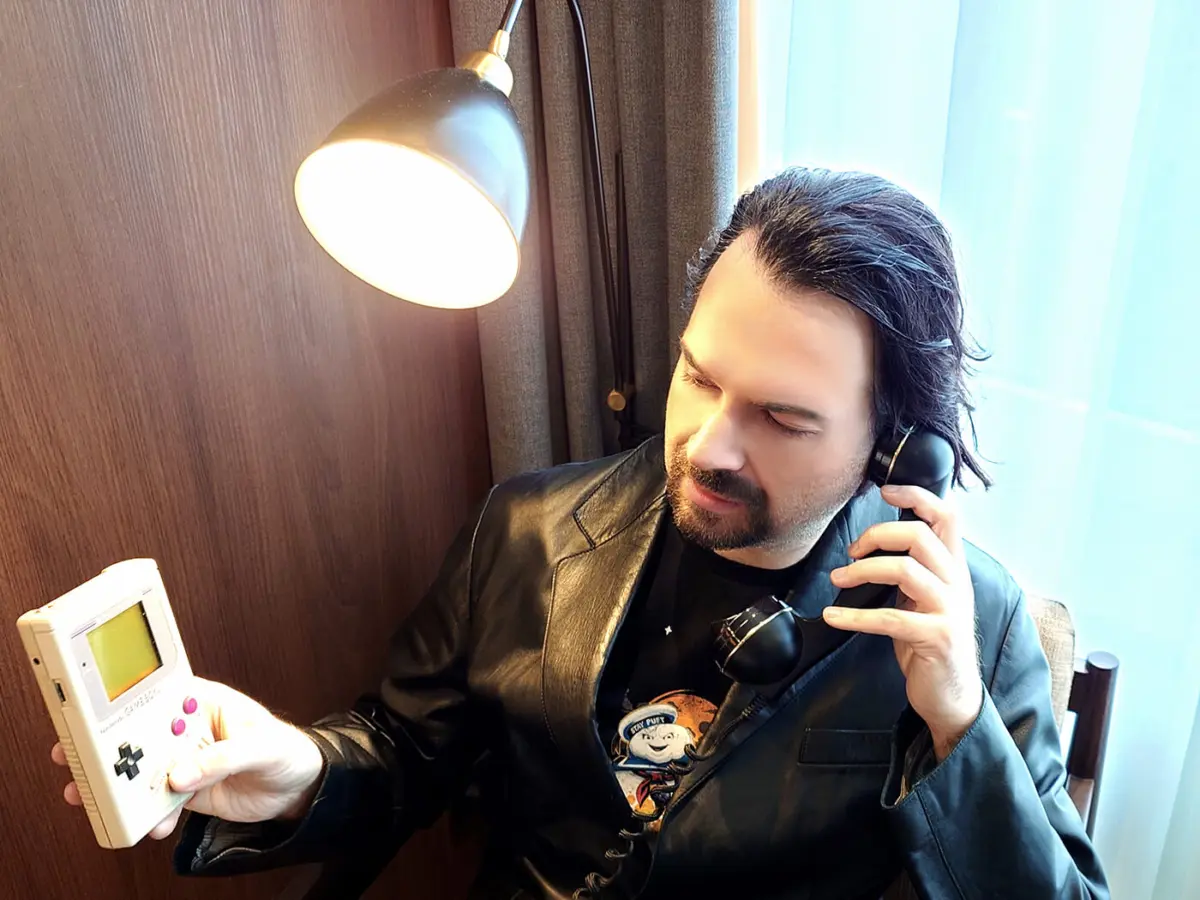
For veterans of the underground scene like German electronic producer Denis Karimani—better known by his moniker Remute—and Payson Power, guitarist for the math-rock outfit Daydream Plus, listening to an album requires tracking down surviving, decades-old hardware. Whether it is a Nintendo 64, a Sega Genesis, an Atari Jaguar, a Game Boy, or a classic Nintendo Entertainment System (NES), these physical relics of the late 20th century have been repurposed as modern music playback devices.
This movement represents far more than a superficial aesthetic gimmick or a nostalgic nod to pixel art. It is a rigorous, deeply technical artistic discipline that pits contemporary compositional ambitions against the severe, unforgiving hardware limitations of 8-bit and 16-bit sound chips. To translate complex, syncopated polyrhythms and lush harmonic structures into the code of vintage consoles, these artists must master tracker software—a specialized interface that feels less like a traditional Digital Audio Workstation (DAW) and more like low-level musical programming.
The resulting intersection of retro gaming preservation and cutting-edge underground music production has transformed hardware collecting into a treasure hunt, proving that artificial limitations can spark astonishing creative breakthroughs.
Detailed Chronology: From Ableton to 8-Bit Trackers
The journey from modern studio production to retro cartridge composition is marked by steep learning curves, paradigm shifts, and moments of sheer technical terror. For years, producers like Denis Karimani built their workflows around industry-standard software like Ableton Live, relying on the fluid, nonlinear environments of modern DAWs to drag, drop, loop, and manipulate audio in real time. However, shifting from a modern DAW to a classic tracker software upends every established assumption of music production.
"The philosophy of a tracker and the philosophy of a digital audio workstation are two worlds. They’re two languages," Karimani explains. "Everything has to be pre-planned, and every step has to be noted into the tracker."
A tracker operates much like musical coding. Because these vintage systems do not stream audio files or play back recorded WAVs in real time, every single note, volume envelope, and command must be meticulously written in exact sequence. If a single element falls even a fraction of a beat off, the entire structural integrity of the piece collapses. Karimani experienced this firsthand as he traveled backward through gaming history, tackling complex tracker environments for platforms as varied as the Nintendo 64, Atari Jaguar, and Sega Genesis. Each console demanded the mastery of an entirely new, often counterintuitive software suite—an undertaking Karimani plainly describes as "absolutely not easy to use."
This grueling compositional reality is equally apparent in the work of Daydream Plus. When guitarist Payson Power and bassist Kevin Sia decided to translate their mathematically intricate math-rock album Second to Last Day of Summer into an NES cartridge version titled Extended Forecast, they entered a masterclass in extreme technical reduction.
Using FamiTracker—a popular tracker designed to emulate the Nintendo Entertainment System’s Ricoh 2A03 sound chip—Power confronted a brutal architectural reality: the NES sound engine provides only four monophonic channels, plus a fifth auxiliary channel reserved for low-bitrate digital samples.
To emulate the sweeping, percussive strum of a complex guitar chord using monophonic channels, Power had to manually program individual notes across multiple tracks. Because the NES lacks the polyphonic grace of modern synthesizers, achieving a descending chordal quality required deploying up to six distinct virtual instruments, allocating one specific instrument per note. Furthermore, any advanced expression—such as an arpeggio or an automated volume envelope—demanded that a separate instrument be coded with those specific instructions baked into its root definition.
"If a user forgets to change the instrument and puts in a whole series of notes, all of them would have the same effect," Power notes, highlighting the unforgiving nature of the software. "And if that’s not what they wanted from the song, they would have to delete them all and replace them with the proper programming."
The technical hurdles compounded when dealing with the physical cartridges themselves. Unlike modern storage media, which readily absorb data updates without structural consequence, an old-school NES cartridge is highly sensitive. Any stray commands, dead code spaces, or improper memory hacks can instantly corrupt the data, rendering the cartridge unplayable.
To prevent catastrophic errors, Power adopted an intensely analog pre-production phase: he hand-wrote every single instrument track, note, and command onto physical, lined paper before manually copying the code line-by-line into FamiTracker.
"It’s gotta flow perfectly, and if there’s any dead space, or if you don’t have enough space, there are hacks to get around it, but they can mess up the cartridge," Power reflects. "It had to be 100% perfect. It was horrifying, but it was fun."
Supporting Context & Metrics: Architecture of the Sound Chips
To fully appreciate the staggering technical achievement behind cartridge albums like Extended Forecast and Karimani’s Technoptimistic, one must examine the hardware specifications and sonic limitations of the chips driving them.
The NES and FamiTracker Architecture
The Nintendo Entertainment System relies on the Ricoh 2A03 sound chip, which manages audio through five distinct channels:
Pulse 1 & Pulse 2: Two variable-width pulse (square wave) channels. These are traditionally assigned to lead and rhythm melodies. The NES allows developers to cycle through four built-in pulse widths (V00 through V03), where higher widths produce a thicker, buzzier sound, and lower widths offer a thinner, more focused tone. For fast-moving math-rock passages, Power utilized the thinnest setting (V00) on guitars to ensure sonic clarity, while reserving warmer, thicker widths (V02) for auxiliary treble instruments like simulated trumpets and saxophones.
Triangle Channel: A fixed-volume triangle wave channel situated an octave below the pulse channels. Bassist Kevin Sia utilized this channel to program deep, foundational basslines, extracting maximum warmth from a wave shape that inherently lacks high-frequency harmonics.
Noise Channel: Primarily utilized for percussive elements, generating pseudo-white noise for snares, hi-hats, and cymbal crashes. To inject organic texture into the digital soundscape, Power famously sampled a snare sound directly from the original MSX/NES stealth classic Metal Gear, expertly mixing it into the broader audio architecture.
DPCM Channel: A low-bitrate delta modulation channel capable of playing back short, raw audio samples.
The Sega Genesis and FM Synthesis
While the NES relies on simple pulse waves, the Sega Genesis introduced a radically different sonic palette powered by a Yamaha FM (Frequency Modulation) synthesizer chip (specifically the Yamaha YM2612). This hardware architecture became a foundational inspiration for Denis Karimani’s electronic music career.
When Karimani programmed his 2019 Sega Genesis album Technoptimistic, he utilized DefleMask, a remarkably versatile cross-platform tracker capable of emulating multiple retro sound chips. Within DefleMask’s Genesis editor, producers gain access to genuine FM synthesis workflows. The software allows users to assign up to four internal oscillators per instrument, routing them through eight distinct algorithmic signal paths.
By altering these algorithms, producers can shift dynamically between classic metallic FM bell tones and rich, additive synthesis textures where all four voice operators output simultaneously. This hardware-driven aesthetic gave 16-bit titles a gritty, futuristic edge that Karimani equates directly to the birth of early techno and underground electronic music.
Official Statements & Artist Perspectives
Despite the steep learning curves and the risk of hardware corruption, both artists express a profound sense of artistic liberation found within these self-imposed constraints. Rather than viewing retro chip architecture as a creative cage, they see it as an engine for clarity and focus.
"It’s totally not live music. It’s scripted music, and it’s a very different approach," explains Denis Karimani. "These limitations really force you to think about your music in another way, because you have to simplify everything. When you simplify your idea, and it still sounds cool, then it’s interesting. When you finally learn to speak the language of a tracker, you have full control of everything. That made it quite interesting for me, because it’s always the thrill of learning something new."
This creative philosophy is deeply rooted in the formative childhood experiences of both creators. Growing up in an era when video game soundtracks were not merely background accompaniments but masterclasses in catchy, loop-based composition, both Power and Karimani formed enduring emotional attachments to the bleeps, bloops, and synthesized arpeggios of their favorite titles.
Payson Power cites spending his childhood summers immersed in legendary titles across multiple generations of hardware—including Final Fantasy VII on the original PlayStation, Earthbound on the Super Nintendo (SNES), and DuckTales on the NES. The title of Daydream Plus’s album, Second to Last Day of Summer, is a direct homage to those school-free months spent exploring virtual worlds underpinned by unforgettable looping chiptune scores.
"I played DuckTales on NES every summer," Power shares. "The songs are just there in the background, going on loop, and man, [they’re] so good. I never get tired of them."
Similarly, Karimani’s exposure to the Yamaha FM sound chip embedded inside the Sega Genesis planted the seeds for his entire career as an electronic producer. The cold, digital precision of 16-bit video game music provided his first real glimpse into the sonic textures of techno.
Future Outlook: The Thrill of the Physical Hunt
There is a striking paradox at the heart of the retro-cartridge music movement. In an age dominated by social media algorithms, viral marketing campaigns, and frictionless digital distribution designed to maximize audience reach, artists who release music on vintage gaming cartridges are intentionally restricting their potential audience. By the sheer laws of hardware attrition, only a microscopic fraction of music listeners own fully functioning, 30-year-old game consoles capable of playing these physical releases.
Yet, this intentional friction has created a fiercely dedicated, highly engaged counter-culture. Whenever Denis Karimani drops a new cartridge release, his inbox fills with messages from eager fans who are actively hunting down rare, second-hand retro hardware just to experience his music in its native, physical format.
Rather than viewing the scarcity of functional consoles as a commercial barrier, Karimani sees it as an essential component of modern music appreciation.
"This makes me really happy," Karimani admits. "It’s an interesting path to hunt for the hardware to be able to listen to music. It makes the whole listening process more thrilling and more like an adventure."
As long as digital culture continues to race toward invisible, lossless, and weightless consumption, a counter-movement of dedicated sonic archaeologists will continue swimming upstream. By weaponizing the technical constraints of yesterday’s technology, artists like Remute and Daydream Plus are proving that true creative innovation often begins the moment you throw away the rulebook—and pick up an 8-bit instruction manual instead.