Executive Overview
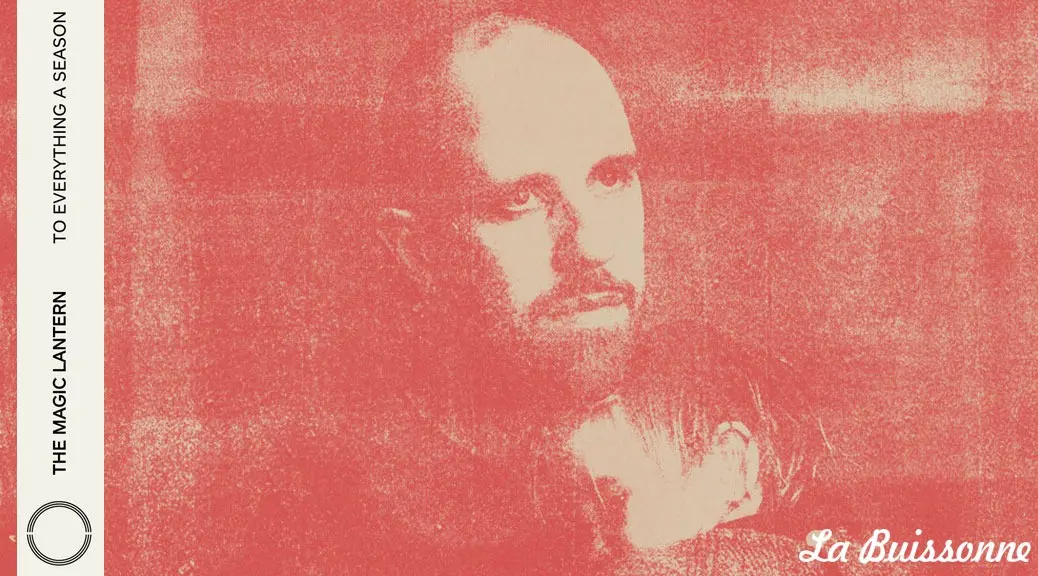
In the lifecycle of an artist, rare moments arrive where personal cataclysm and creative clarity converge to produce work of staggering resonance. For London-based, Australian-born singer-songwriter Jamie Doe—recording under the moniker The Magic Lantern since 2011—his fifth studio album represents precisely this kind of watershed moment. Born out of a crucible of profound transition, the record was forged during a breathless few months in which Doe experienced the birth of his daughter, followed six weeks later by the death of his father.
The emotional anchor of the entire project is a solitary, fleeting encounter: father and newborn granddaughter met just once, briefly, inside the sterile confines of a dementia nursing home. Every lyric, arrangement, and breath on this new release turns upon the pivot of that singular meeting—a breathtaking intersection of generational arrival and departure.
Recorded live over four intensely focused days at the world-renowned La Buissonne studios in Provence, France, the album finds Doe collaborating with an elite cadre of contemporary jazz instrumentalists. Produced by Fred Thomas—who also anchors the low end on bass—the ensemble features Matt Robinson on piano, Dave Hamblett on drums, Robin Fincker on clarinet and tenor saxophone, Kieran McLeod on trombone, and Matthieu Michel on flugelhorn.
While this lineup constitutes a formidable jazz septet by any metric, Doe deploys them with masterclass restraint. The compositions consistently prioritize lyrical space, allowing the emotional weight of Doe’s confessions to hang heavy in the air before the band swells to elevate the narrative.
This comprehensive review explores the anatomy of Doe’s latest masterpiece, examining its track-by-track architecture, the jazz pedigree driving its instrumentation, Doe’s dual life as an educator and curator, and an upcoming UK tour that promises to bring these intimate meditations into dimly lit rooms across the country.
Detailed Chronology: The Genesis of an Album
To understand the emotional gravity of The Magic Lantern’s fifth album, one must retrace the harrowing biographical timeline that birthed it. For most artists, the arrival of a first child is a seismic psychological shift, altering one’s relationship with time, legacy, and mortality. For Doe, this monumental domestic transformation was violently juxtaposed with the final chapter of his father’s life.
As Doe navigated the sleepless, adrenaline-fueled weeks of early fatherhood, his father was slipping away behind the closed doors of a dementia nursing home. In a poignant, heartbreaking bridge across generations, the infant daughter was brought to meet her grandfather. They met once. It was brief, silent in many ways, yet heavy with the unspoken weight of ancestry. Six weeks after that initial introduction, the elder Doe passed away.
Instead of retreating from the pain, Doe channeled this whirlpool of grief, awe, and existential vertigo into songwriting. The resulting material demanded an environment that could capture both raw vulnerability and sophisticated musicianship. Consequently, Doe and his band packed their instruments and traveled to the picturesque hills of Provence to record live at La Buissonne—a studio famed for its pristine acoustics and its ability to capture the organic breath of a room.
Over four days, the septet played together in real-time, eschewing modern digital overdubbing in favor of a raw, immediate performance style. The result is an organic sonic document where the creak of a piano stool, the breath through Fincker’s clarinet, and the tremor in Doe’s voice are preserved as testaments to human presence.
Lyrical Architecture and Musical Landscape
The album is structured across two distinct ideological halves, functioning much like a classic vinyl gatefold that separates the domestic, internal reckoning from the broader philosophical queries of inheritance and modern life.
Side One: Lineage, Fear, and the Digital Age
The record opens with "Trembling," a track that sets the tone for Side One. It captures a father speaking directly to his newborn child, stripped of bravado, openly confessing his own existential fears. It is an act of radical honesty, establishing that this album will offer no easy comforts or clichés about fatherhood.
The sequence continues with "Two In One," a direct address to Doe’s wife, Rhia. Within its delicate instrumentation, Doe weaves subtle, reverent nods to jazz history—invoking John Coltrane’s A Love Supreme and Miles Davis’s "Blue in Green." By placing his domestic reality within the sacred lineage of jazz greats, Doe elevates the intimate to the universal.
The thematic core of the record arrives with "Loops." In this mesmerizing composition, Doe reflects on a startling generational symmetry: he met his own grandfather at three weeks old in a nursing home, and now his daughter has met her grandfather under nearly identical circumstances. The song folds these bookended visits into a single, recurring figure of genetic inheritance, memory, and return. It is a stunning meditation on how time curls back upon itself.
The septet steps fully into the light on "Hear Me," where the ensemble stretches out behind lyrics exploring how fathers reach backward through generations of preceding fathers. The interplay between McLeod’s trombone and Michel’s flugelhorn creates a rich, mournful, yet comforting sonic pillow for Doe’s vocals.
Curiously, Side One closes with "Data Points." This track turns outward, engaging with the cold, hyper-connected world of screens, algorithms, and digital surveillance. While it sits somewhat oddly alongside the deeply personal narratives that surround it, it serves as a stark reminder of the modern noise from which Doe is trying to protect his young family.

Side Two: Domestic Realism and the Choice of Joy
Side Two pivots sharply back to the domestic sphere, offering some of the most emotionally arresting songwriting of Doe’s career.
"Love’s A Tailor" is perhaps the bravest piece on the record. Written and recorded with his wife’s full blessing, it offers an unflinching, unromanticized account of the grueling postpartum weeks. Doe details the hospital heat, the sudden waves of panic, and the slow, fraying edges of mental endurance during early parenthood. There is no sugarcoating here; it is an act of profound empathy for the partner carrying the physical and emotional burden of birth.
The geographical split that defines the life of an expatriate is explored on "Home." Divided between his current life in London and his origins in Australia, Doe closes the track with a poignant request: a plea for a future visit and a lemon plucked straight from his late father’s tree. It is a masterclass in specificity—using a single object to anchor a continent-spanning grief.
On "Sweetheart," Doe portrays a frightened man making a solemn promise not to become a danger to the person holding him up through the storm. It is a confession of fragility that redefines traditional masculine tropes of strength.
This leads directly into "Joy Is A Choice," a song that wrestles with a difficult existential question: Why is joy so painfully hard to choose when it is supposedly there for the taking? The answer arrives via a vivid childhood memory of his father swimming in the water, with children clinging recklessly to his back—a portrait of unconditional safety and playful strength.
The album concludes with "Epilogue," a wordless, miniature composition. After an hour of profound lyrical density, the silence of a wordless ending feels not only earned, but essential.
Supporting Context and Metrics: The Artist and Educator
Jamie Doe’s artistry does not exist in a vacuum. Beyond his output as The Magic Lantern, Doe is an established educator, imparting his craft to the next generation of musicians as a faculty member at both the prestigious Guildhall School of Music & Drama and the Institute of Contemporary Music Performance (ICMP). This pedagogical background informs his intricate yet accessible arrangements, where technical mastery is always subordinated to emotional communication.
Furthermore, Doe is an active curator within the vibrant London acoustic and jazz underground. He is the mastermind behind the "Festival of Feeling," a three-night residency hosted at Dalston’s intimate Servant Jazz Quarters. The festival serves as a cultural nexus, bringing together forward-thinking songwriters from London, Glasgow, Brazil, and Sweden. This collaborative spirit directly influences his touring lineups, which frequently feature multidisciplinary artists and cross-genre innovators.
Critical Reception and Production Metrics
- Recording Location: Studio La Buissonne, Pernes-les-Fontaines, Provence, France.
- Production Timeline: 4 days of intensive live recording.
- Ensemble Size: 7-piece core jazz septet (featuring bass, piano, drums, clarinet, tenor sax, trombone, flugelhorn, and vocal/acoustic guitar).
- Release Milestones: The Magic Lantern’s 5th studio album since his 2011 debut.
Official Statements and Artistic Vision
While formal press releases for the album emphasize the technical triumphs of recording live in Provence, Doe’s own reflections on the project center on the necessity of radical vulnerability in art.
In recent discussions surrounding the album’s creation, associates close to the production noted that the primary directive in the studio was space. Producer Fred Thomas reportedly urged the jazz heavyweights—players accustomed to complex harmonic explorations—to embrace minimalism, treating every silence as a note in itself.
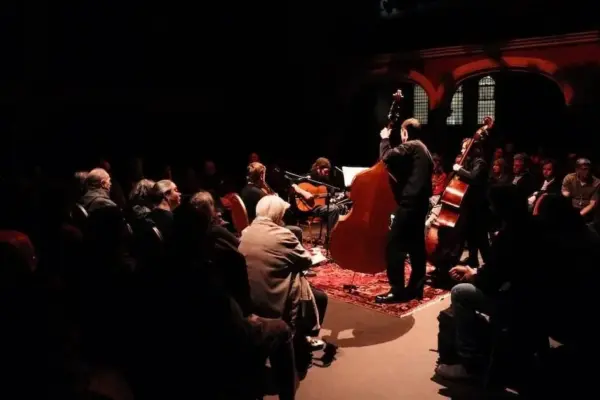
"The songs are built for a small room with the lights turned down low," notes reviewer Steve Williams. "That is where this music demands to be heard—requiring the listener to pull up a chair, close their eyes, and become one with the stories."
Doe’s willingness to document the unvarnished terror of postpartum strain in "Love’s A Tailor" and the agonizing dementia-facility goodbye in "Loops" marks a new benchmark for confessional songwriting in the contemporary British folk-jazz landscape.
Future Outlook: The Upcoming UK Tour
To bring these deeply intimate compositions to life, The Magic Lantern is embarking on a select series of live UK dates in the autumn and winter of 2026. Eschewing large, impersonal concert halls, Doe has curated a run of intimate venues and specialized spaces that mirror the hushed, contemplative atmosphere of the record.
Confirmed Tour Dates & Collaborators:
- Sunday, September 20, 2026 – Thornton Hough Village Club, South Wirral (Featuring special guest Reid Anderson)
- Friday, October 2, 2026 – The Harrison Pub & Hotel, London (Featuring special guest Tom O.C. Wilson)
- Thursday, November 26, 2026 – Pianodrome Bruntsfield, Edinburgh (Featuring an expansive bill including Finn Anderson, Jo Mango, Pippa Blundell, Matt Carmichael, and FaceOmeter)
- Sunday, November 29, 2026 – Chats Palace, London (Featuring a powerhouse collective featuring Sam Brookes, Samantha Whates, Lucine Musaelian, Fred Thomas, and Blythe Pepino)
These performances are expected to transcend standard concert formats, functioning more as communal gatherings of grief, storytelling, and musical craftsmanship. For audiences seeking music that refuses to shy away from the complex intersections of life, death, and birth, Jamie Doe’s upcoming tour is an unmissable cultural event of the 2026 calendar year.